
















Buying, Sizing & Material
Do you ship across Canada and US?
Yes, we ship across Canada and US.
What is your return policy?
You may return an item within 30 days of delivery, as long as it's in its original condition and original packaging — unused, unwashed, unaltered, and undamaged. Items showing any sign of use or modification won't qualify for a refund.
Who pays for return shipping?
You're responsible for return shipping costs, paid directly to the carrier. We're happy to help with carrier options, shipping rates, and return instructions to make the process easier.
How much will return shipping cost?
It varies based on your location, the item's size and weight, and the shipping method you choose, there's no flat rate.
Will I get my full purchase price back?
Refunds are issued to your original payment method for the merchandise total. Keep in mind a restocking fee may apply, and any free outbound shipping originally provided will be deducted.
How long does it take to get my refund?
Once your returned item arrives at our warehouse and passes inspection, refunds are typically processed within 3–5 business days.
What items can't be returned?
Used items, damaged items, sale or clearance items, gift cards or certificates, and customized or made-to-order items are all final sale and not eligible for return.
How do I start a return?
Go to My Orders in My Account, select the return option for the item, and complete the online return form with your preferred return and refund method. You'll get a confirmation email with full instructions, including a return label if applicable.
I started a return but changed my mind, can I cancel it?
Yes. As long as you still have the item in your possession, you can cancel the return request through My Orders.
Buying, Sizing & Material
What size rug do I need for my living room?
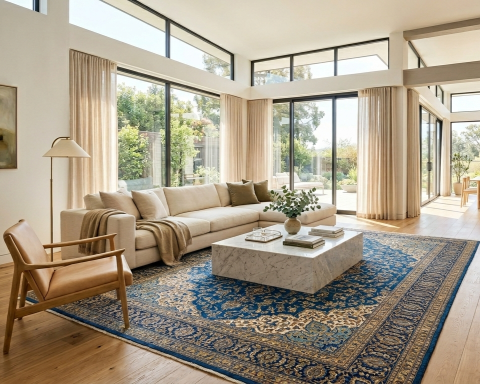
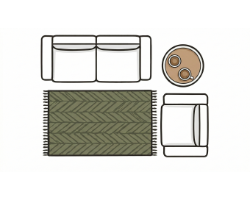
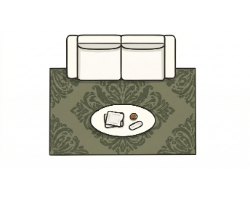
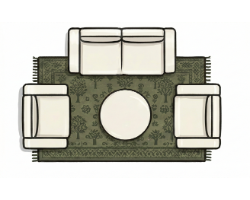
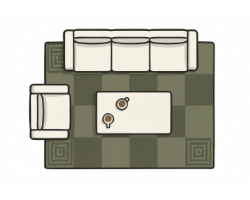
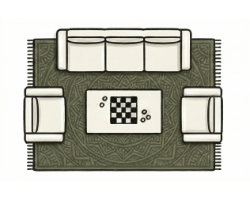
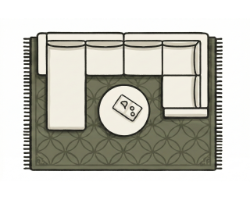
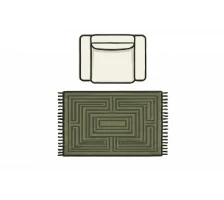
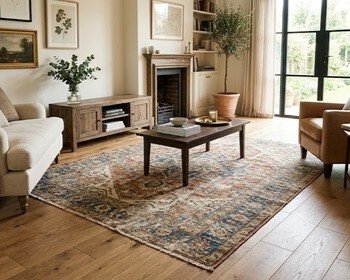
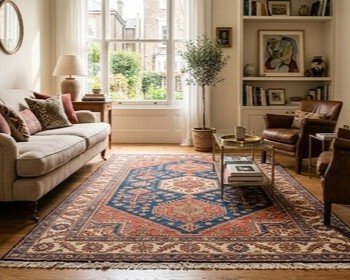
As a general rule, your rug should be large enough for the front legs of your sofa and chairs to rest on it. This anchors the seating area instead of making the rug look like an afterthought. For most living rooms, that means an 8x10 or 9x12 rug. Smaller rooms can work with a 5x7 rug centered under a coffee table.
What size rug should go under a bed?
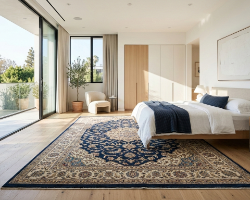
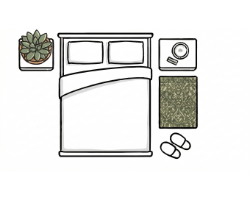
For a queen or king bed, choose a rug that extends at least 18-24 inches beyond each side of the bed, so it's visible when you step out. A 9x12 or 8x10 rug typically works well for queen and king setups; a 5x8 can work for a twin or under a daybed.
Do I need a rug pad?
Yes, a rug pad prevents slipping, protects your floor from friction damage, and significantly extends the life of the rug by reducing wear on the backing. It also adds cushioning, which matters more than people expect on hardwood or tile.
What's the difference between wool, synthetic, and jute rugs?
Wool rugs are durable, naturally stain-resistant, and soft underfoot, but cost more. Synthetic rugs (polypropylene, polyester) are budget-friendly, fade-resistant, and easier to clean, making them a strong choice for high-traffic or sunlit rooms. Jute and other natural fibers bring texture and an earthy look but are less forgiving with spills and moisture.
How do I clean my rug based on its material?
Wool rugs should be vacuumed regularly (avoid the beater bar) and spot-cleaned with mild, pH-neutral cleaners. Synthetic rugs are more forgiving and can usually handle stronger spot treatment. Natural fiber rugs like jute should stay as dry as possible — blot, don't soak, and avoid steam cleaning.
Are your rugs pet and kid friendly?
Many of our synthetic and low-pile options are built for high-traffic households with pets and children, they resist stains better and clean up faster than high-pile wool. If durability is your top priority, we'd point you toward our synthetic or flatweave collections.
Where should a rug be placed relative to furniture?
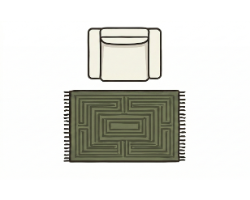
The most common approach is "all legs on" (every piece of furniture sits fully on the rug) for larger rugs, or "front legs on" for mid-sized rugs in smaller rooms. Avoid a rug so small that furniture surrounds it without touching it — this is the most common rug-sizing mistake.
How do I choose a rug color or pattern for my room?
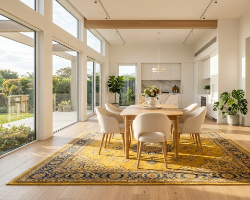
If your furniture and walls are already busy or patterned, a more neutral or subtly textured rug grounds the room. If your space is mostly neutral, a patterned or colorful rug becomes the focal point. As a rule, match the rug's dominant tone to an existing color already in the room (cushions, art, curtains) to tie the look together.
Can I use an indoor rug outdoors, or vice versa?
No, indoor rugs aren't built to handle moisture, UV exposure, or temperature swings, and will deteriorate quickly outside. Outdoor rugs are made with weather-resistant synthetic fibers and can technically be used indoors, but they often have a coarser feel underfoot than indoor-specific rugs.
Can I put a rug over a heated floor?
Yes, in most cases, but stick to thinner, breathable rugs (low-pile wool or flatweave) and avoid rugs with rubber or vinyl backings, since these can trap heat and degrade over time or limit heat transfer. Always check that the rug pad you use is also heat-safe.
