











Living Room Rugs: A Comprehensive Guide to Size, Placement, and Style
The right living room rug has the power to transform a space. It can instantly add warmth, style, and comfort to your home. These decorative floor coverings define and anchor your living room furniture. Choosing the perfect rug is more than just a decor decision; it significantly impacts the room’s overall aesthetic and functionality. However, finding that perfect rug requires more than a quick glance. You must consider factors such as rug size, shape, and the material choice to ensure it complements your existing décor and meets your lifestyle needs.
This guide aims to lead you through every step of choosing the perfect living room rug, covering size selection, furniture placement, material considerations, and design techniques like layering rugs. You’ll be well-equipped to make an informed decision and revamp your living space.
Rug Size Guide for Living Room Basics
Understanding the rug size guide for living room is the foundation for successful rug selection. The right size is critical for a balanced and visually appealing living room. A rug that is too small can make a room feel disjointed, while a rug that’s too large can make the space feel cramped. The appropriate size defines the seating area, anchors furniture, and creates a sense of cohesion.
Here are some standard rug sizes, including their dimensions in feet and inches:
- 2’x3′
- 3’x5′
- 4’x6′
- 5’x8′
- 6’x9′
- 8’x10′
- 9’x12′
- 10’x14′
Consider round rug sizes like 5′, 6′, 8′, and 10′ diameters as well.
The size of your rug directly affects your room’s visual balance. Think about how the rug will influence foot traffic. Selecting the right size makes your space feel inviting and functional.
Area Rug Under Sofa: The Different Approaches
Now, let’s explore area rug under sofa placement. This significantly impacts the look and feel of your living room. There are several popular methods, each with its unique advantages.
Method 1: “All Furniture on Rug”
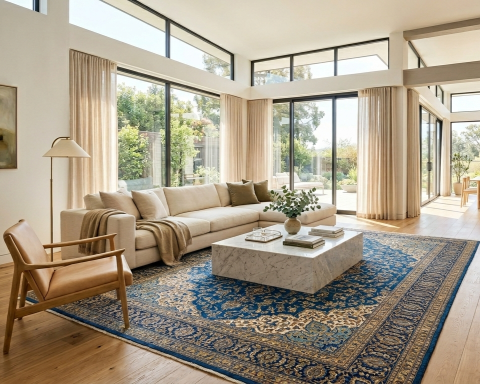
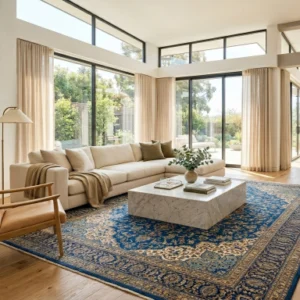
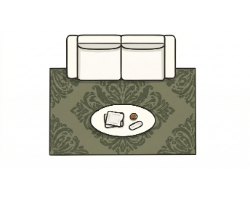
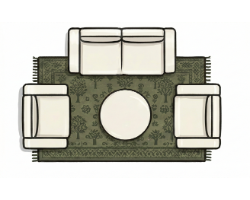
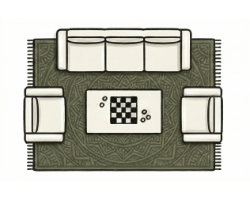
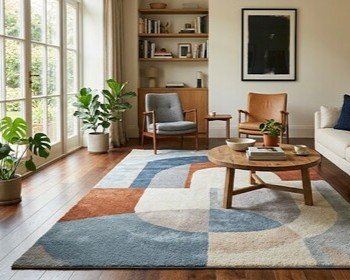
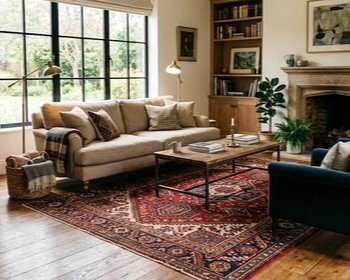
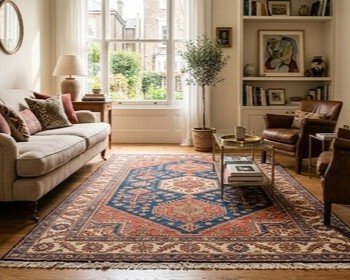
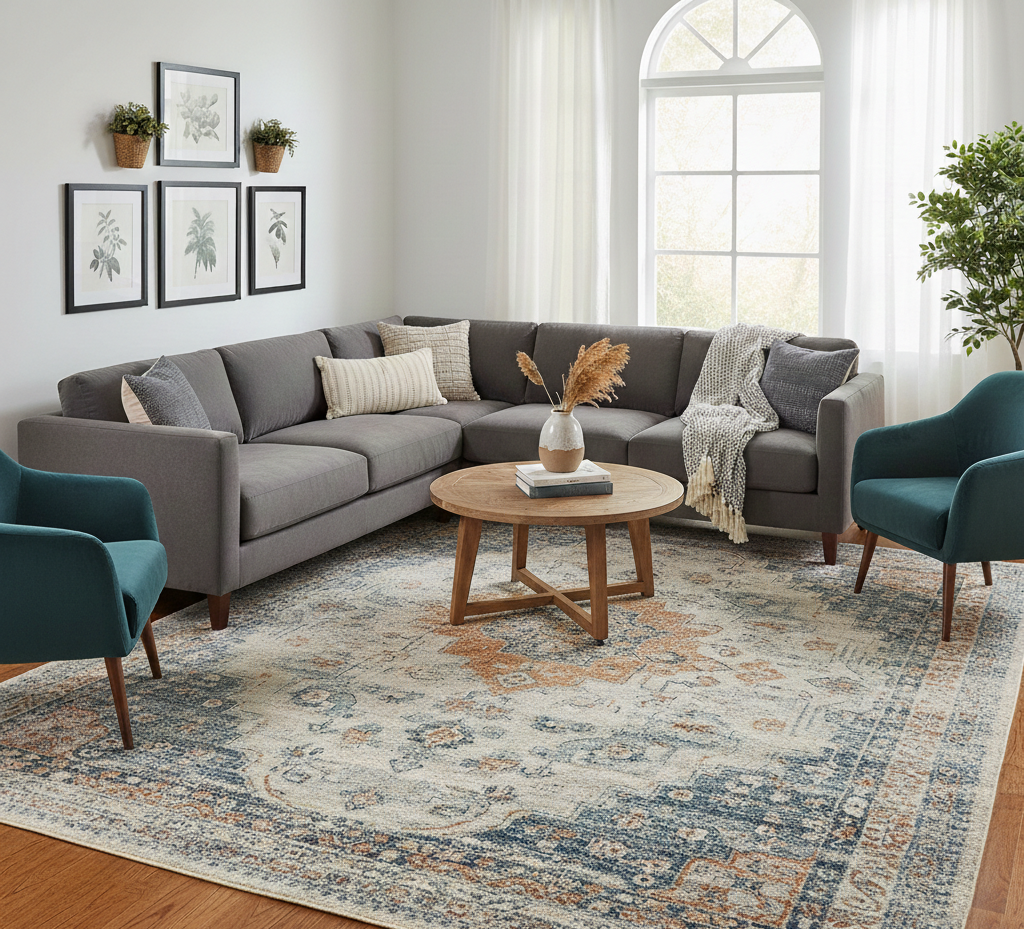
In this approach, all the front legs of the sofa and any other seating furniture are placed entirely on the rug. This method is best suited for larger living rooms or rooms with open floor plans. The “all furniture on rug” method creates a cohesive and unified seating area, making the space feel well-defined.
Method 2: “Front Legs on Rug”
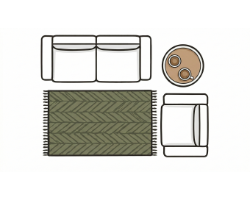
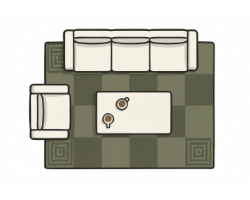
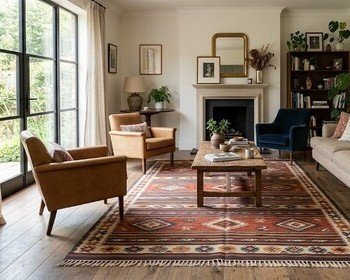
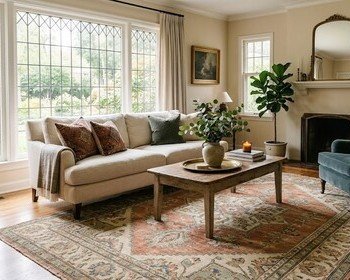
The “front legs on rug” method is a versatile option that works well in most living room sizes. Only the front legs of the sofa, and potentially other seating, are placed on the rug, while the back legs rest on the floor. This technique can help visually define the seating area while making the room feel more spacious than the “all furniture on rug” method.
Method 3: “No Furniture on Rug”
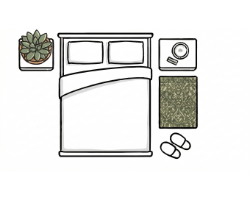
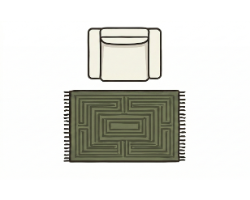
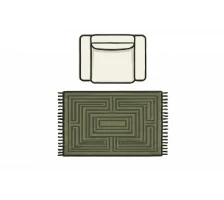
This is perfect for small spaces or when you want to visually open up the room. The rug sits in front of the sofa, with none of the furniture resting on it. This method works well when you want to highlight a beautiful rug design or pattern.
Living Room Rug Placement: Space-Specific Considerations
The size of your room heavily influences living room rug placement and size selection.
Living Room Rug Placement for Small Spaces
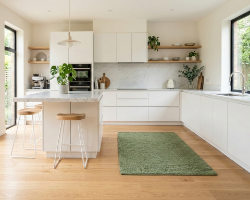
In small spaces, the goal is to make the room feel larger and more open. Consider a rug that leaves some floor space visible around the perimeter of the seating area. Choose a rug large enough to anchor the front legs of your sofa and any other seating but doesn’t extend too far beyond. Recommended rug sizes for small spaces are typically 5’x8′ or 6’x9′, depending on the size of the sofa and the room’s overall dimensions.
- Use lighter-colored rugs to reflect light and create the illusion of space.
- Avoid rugs that are too dark or have busy patterns, as they can make the room feel smaller.

Living Room Rug Placement for Large Spaces
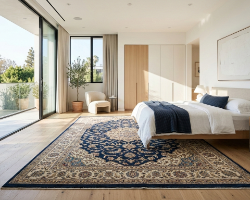
In large spaces, the goal is often to create a sense of coziness and define distinct zones. Choose a rug large enough to accommodate all furniture or at least all the front legs of the seating. Consider using multiple rugs to define different areas within the room (e.g., a seating area and a reading nook). Recommended sizes for large spaces are 8’x10′, 9’x12′, or larger, depending on the room’s dimensions and furniture arrangement.
- Darker-colored rugs can help ground the space and make it feel more intimate.
- Use a rug that is proportional to the size of the room and furniture.
- Use rugs to create zones within the room.
Layering Rugs: Adding Texture and Dimension
Layering rugs is a fantastic design technique to add visual interest and texture to your living room. It allows you to introduce different patterns, colors, and textures, creating a unique and personalized space.
How to Layer Rugs
- Start with a larger, neutral rug as the base layer. This can be a sisal, jute, or a solid-colored rug.
- Place a smaller rug with a bolder pattern, color, or texture on top.
- Ensure that the top rug is visually interesting and complements the base rug.
- Experiment with different textures and patterns to create a unique look.
Combining Different Styles, Patterns, and Textures
Here’s how to blend different rug styles:
- A patterned rug can be layered over a neutral rug to add visual interest.
- A shag rug can be layered over a flat-weave rug to add texture and depth.
- Make sure the rugs complement each other in terms of color and pattern.
Selecting Complementary Rugs
- Consider color palettes. You can choose rugs in similar tones or use contrasting colors for a bolder look.
- Think about patterns. Pair a patterned rug with a solid or subtly patterned rug.
- Consider texture. Combine different textures to add dimension.
Shape and Material Considerations
Now, let’s explore shape and material choices. These are crucial aspects of selecting the right rug. The shape and material can dramatically alter the feel of your room.
Different Rug Shapes and Their Impact
- Rectangular Rugs: The most common and versatile choice, ideal for defining seating areas and grounding furniture.
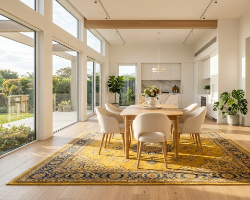
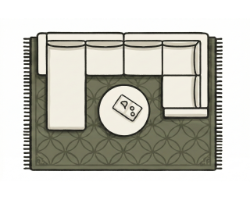
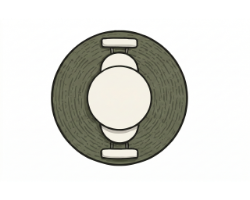
- Round Rugs: Add softness and can break up the formality of a space. Good for creating a cozy feel, and can work well under a round dining table.
- Square Rugs: Can be used to create a symmetrical look, work well in square rooms, and can anchor a square coffee table.
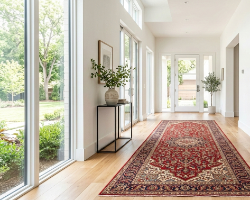
- Other Shapes: Consider oval, runner rugs, and irregularly shaped rugs. Oval rugs can be a good choice for smaller spaces. Runners can be used in hallways or to define a pathway.
Different Rug Materials and Their Properties
- Wool: Durable, soft, and naturally stain-resistant. A good choice for high-traffic areas.
- Cotton: Soft, affordable, and easy to clean. Ideal for casual living rooms.
- Synthetic (e.g., polypropylene, polyester): Durable, stain-resistant, and often more affordable than wool. Good for high-traffic areas and homes with children or pets.
- Natural Fiber (e.g., jute, sisal): Durable and add a natural, organic look. Can be less soft underfoot than other materials.
Choosing Materials and Shapes
- Consider durability: Choose a durable material for high-traffic areas.
- Consider maintenance: Think about how easy the rug is to clean and maintain.
- Consider comfort: Choose a rug material that feels comfortable underfoot.
- Match the shape to the space: The shape should be proportional to the room and furniture arrangement.
Visual Considerations & Practical Applications
The visual appearance of the rug is an important factor. Choosing a rug is not just about functionality; it’s also about aesthetics and how it influences the overall look of your living space.
Visual Examples of Rug Placement Methods
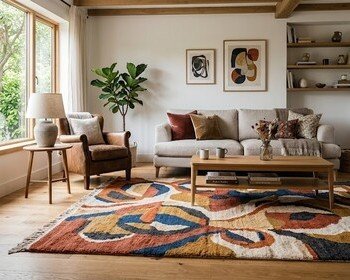
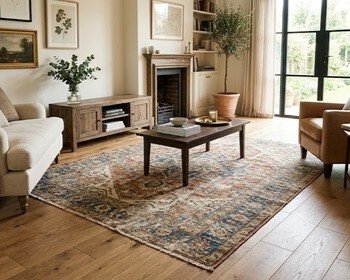
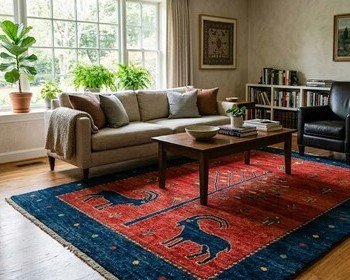
Refer back to the “all furniture on rug,” “front legs on rug,” and “no furniture on rug” sections.
Visual Lines
A rectangular rug can make a room feel longer. A round rug can add softness. Lighter colors make the room feel bigger. Consider your room’s existing layout and the desired effect when deciding on the shape and color of your rug.
Adjustments for Small and Large Rooms
- Small Rooms: Suggest using smaller rugs, light colors, and placement with the front legs.
- Large Rooms: Suggest using a larger rug, darker colors, and a rug that accommodates all furniture.
Practical Guidance
- Measure the living room and furniture.
- Consider the room’s use.
- Consider lifestyle.

Conclusion: Making the Right Choice
In summary, choosing the right living room rug involves careful consideration of size, placement, material, and shape. The perfect rug depends on individual circumstances. Consider your specific needs, lifestyle, and the unique characteristics of your living space to make an informed decision.
Ultimately, the right rug provides comfort and style. It can be the defining element that ties your living room together, creating a cohesive and functional space.
Here is a simple checklist:
Consider the color and pattern.
Measure your space and furniture.
Consider your lifestyle and traffic.
Choose the right size and shape.
Select a material that suits your needs.
