

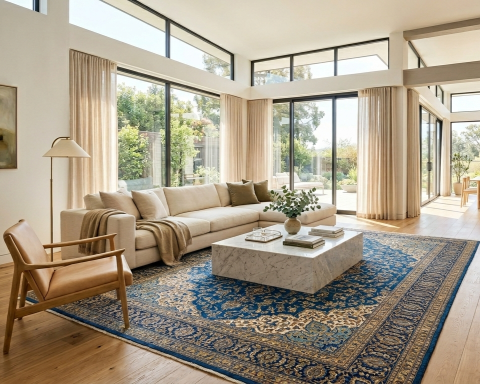
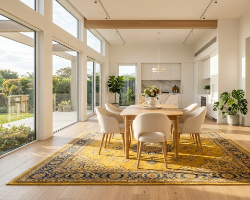
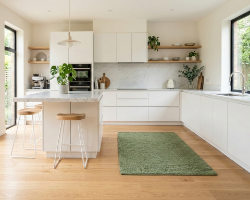
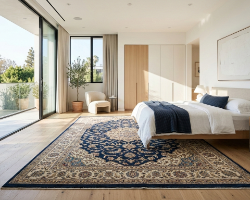
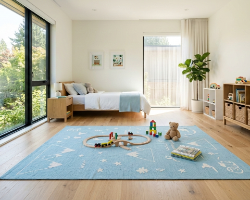
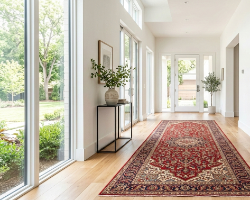
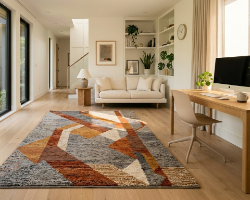
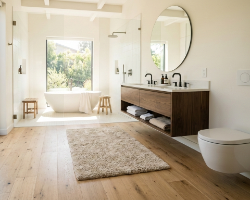


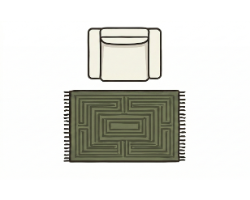
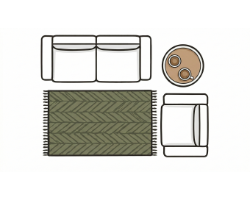
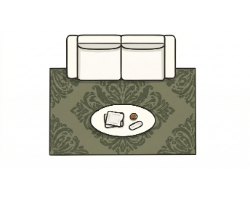
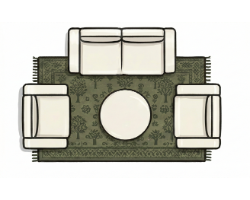
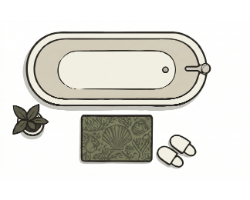
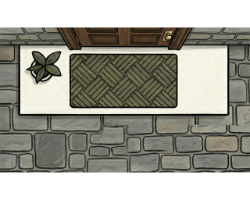
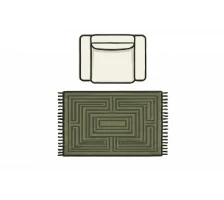


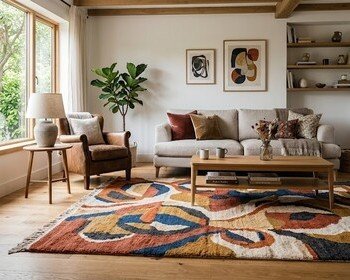
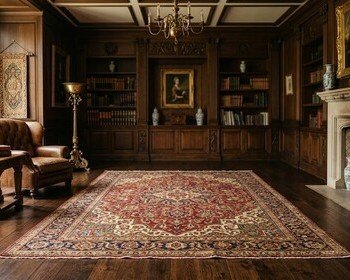
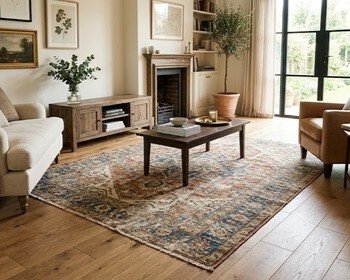
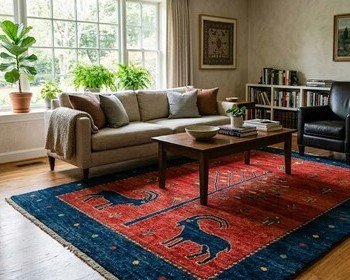
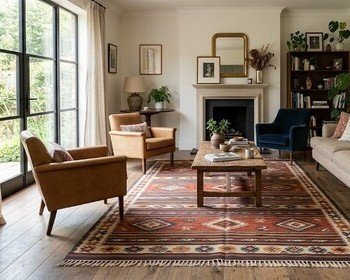


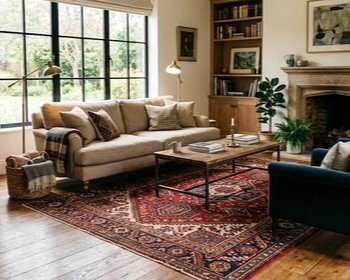
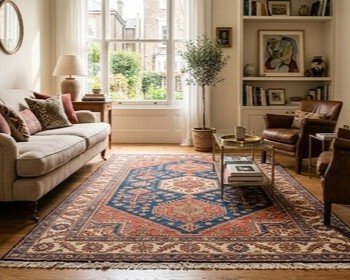
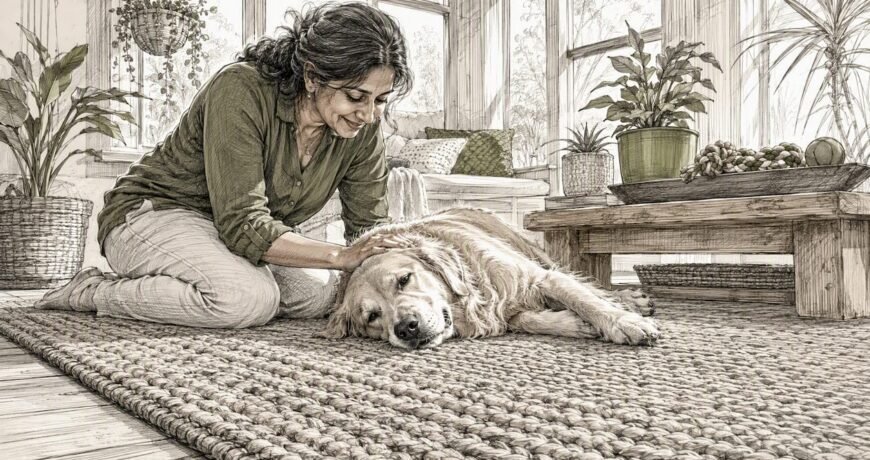
The best rugs for pets are machine-washable rugs with removable covers, low-pile synthetics (polypropylene, nylon, or polyester), and heavy-duty flatweaves. Reviews and home trials consistently confirm that machine-washable options lower long-term cleaning costs and make accidents far less damaging to a rug’s usable life. Before you buy anything, check three things on the product page: wash instructions, pile height, and backing type.
Quick picks by room:
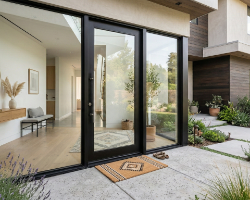
- Entryway: Low-pile polypropylene or outdoor-style flatweave, easy to hose off
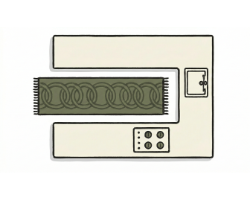
- Living room: Reversible machine-washable rug or short-loop synthetic with a busy pattern
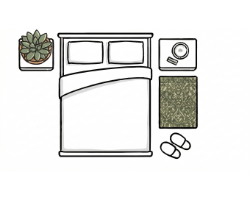
- Bedroom: Washable cotton or polyester flatweave with a non-slip pad underneath
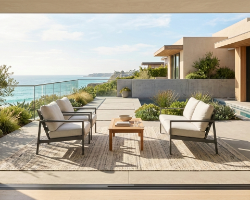
- Patio/porch: Indoor-outdoor polypropylene, mildew-resistant and water-resistant
Look for OEKO-TEX Standard 100 certification when chemical treatments concern you. It signals the textile is free of a wide list of harmful substances, which matters if your dog chews corners or your cat sleeps directly on the rug.
Table of Contents
- What features should you prioritize when shopping for pet-friendly rugs?
- How do rug materials compare for homes with dogs or cats?
- How does rug construction affect life with pets?
- How to clean pet messes from rugs without making them worse
- Where should you place rugs to reduce pet-related wear?
- Which outdoor rugs work best for dogs?
- What should you check before buying a pet-friendly rug?
- How to train your pets to reduce rug damage
- Key Takeaways
- The style-versus-function trap most pet owners fall into
- Rugsonlinemarket has the pet-friendly options you actually want to live with
- Useful sources
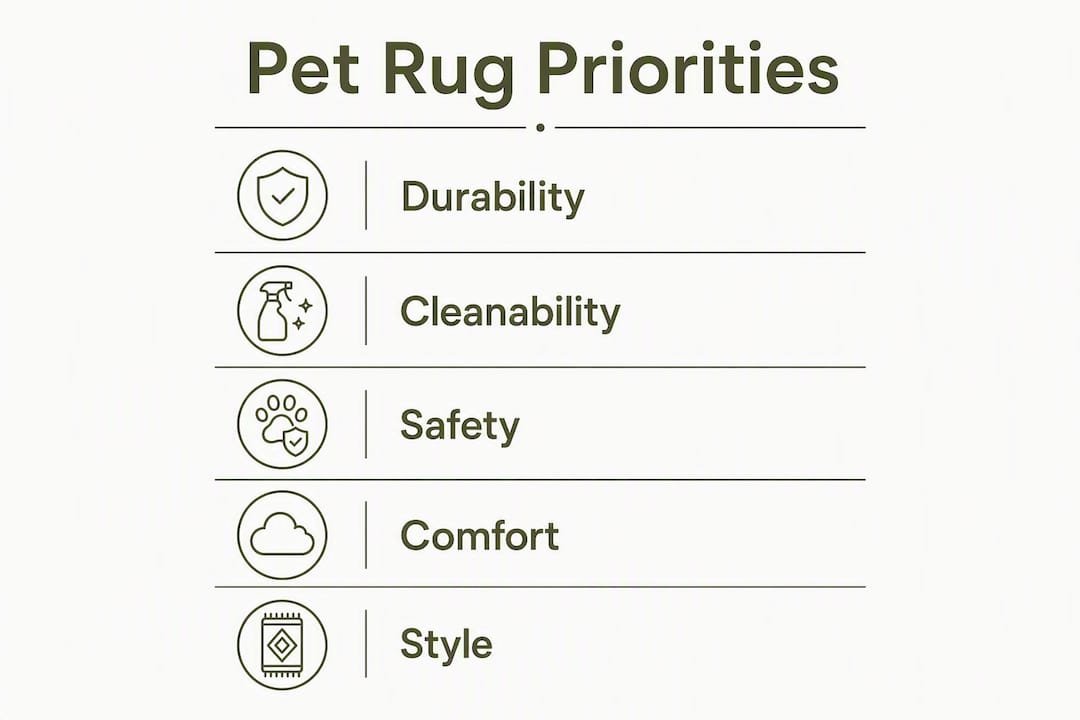
What features should you prioritize when shopping for pet-friendly rugs?
Six criteria separate a rug that lasts five years from one that looks ruined in six months.
- Washability. Machine-washable tops the list. A rug you can throw in the wash after an accident is categorically easier to maintain than one requiring professional cleaning every time.
- Low pile or flatweave. Pile height under half an inch keeps pet hair on the surface where a vacuum can grab it. High pile traps hair and dander deep in the fibers.
- Stain-resistant fibers. Polypropylene and solution-dyed polyester resist stains at the fiber level, not just through a surface coating that wears off.
- Durable, anti-slip backing. A rug that slides under a running dog is a hazard. Latex-free non-slip backings or a separate rug pad solve this without adding bulk that defeats machine-washable designs.
- Color and pattern strategy. Mid-tone colors (warm grays, taupes, earthy greens) and medium-density patterns hide hair and minor stains between cleanings. Solid white or solid black show everything.
- Realistic price-to-lifespan expectations. A $150 washable synthetic in a high-traffic zone will outlast a $400 untreated wool rug in the same spot. Budget for the room’s actual use, not its aspirational use.
Pro Tip: Treat any pet mess immediately. The window to prevent permanent staining or odor absorption is very short. Fast action, before the liquid sets into the backing, is the single most effective thing you can do for long-term rug longevity.
For chemical safety, look for OEKO-TEX Standard 100 certification or ask the retailer whether stain treatments are applied post-production. Some finishes off-gas or irritate pets who spend time on the floor.
How do rug materials compare for homes with dogs or cats?
Synthetics are easiest to clean; nylon is the most durable synthetic; wool is soft but more absorbent than any synthetic; jute and sisal are tough but traditionally hard to deep-clean. Here is how the main fibers stack up:

| Dimension | Polypropylene | Polyester | Nylon | Wool | Jute/Sisal |
|---|---|---|---|---|---|
| Durability/wear resistance | High | Moderate | Very high | High | High |
| Stain resistance | Excellent | Very good | Good | Fair | Poor |
| Pet hair repellence | Good | Good | Good | Moderate | Moderate |
| Pile height/comfort | Low–medium | Low–medium | Low–medium | Medium–high | Low (flat) |
| Washability | Machine-wash friendly | Machine-wash friendly | Spot-clean/some washable | Spot-clean only | Vacuum only* |
| Price/value | Low–mid | Low–mid | Mid | Mid–high | Mid |
| Style/color options | Wide | Wide | Wide | Wide | Limited (natural tones) |
| Indoor vs outdoor | Both | Indoor | Indoor | Indoor | Indoor |
| Slip resistance/backing | Varies | Varies | Varies | Varies | Varies |
*Traditional jute and sisal can only be vacuumed and spot-cleaned. However, newer washable “easy-jute” variants with non-slip backing and cold-water machine-wash instructions now exist, changing that tradeoff entirely.
Red flags by material:
- Avoid high-pile wool during house-training. It soaks up accidents faster than any synthetic.
- Avoid untreated sisal in rooms where accidents happen. It cannot be deep-cleaned.
- Avoid polyester with a very loose weave. Hair embeds in the gaps and resists vacuuming.
- For households focused on chemical safety, prioritize OEKO-TEX-certified options in any fiber category.
If you want to dig deeper into the wool vs. synthetic tradeoff, the fiber choice often comes down to where the rug lives and how much traffic it sees.
How does rug construction affect life with pets?
Low-pile, flatweave, and short-loop constructions are the most practical for pet households. Fringe and high-pile shag cause real problems that most buyers do not anticipate until it is too late.
- Fringe: Dogs and cats chew it. It also traps hair and is nearly impossible to clean without unraveling.
- High-pile shag: Hair disappears into it. Standard upright vacuums often miss what is embedded at the base of long fibers.
- Loop pile (Berber-style): Cats’ claws catch in the loops and pull them, creating snags that spread.
- Cut pile, low-profile: Hair sits on top, vacuums lift it cleanly, and spills do not wick down as fast.
- Reversible flatweave: Flip it when one side shows wear. This effectively doubles the rug’s usable life.
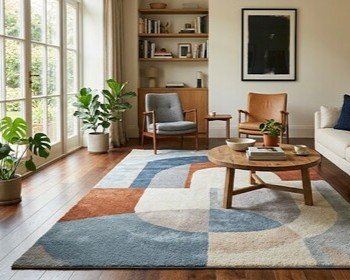
For style, medium-density geometric or abstract patterns in warm neutrals (taupe, brown, earthy green) hide daily pet hair between vacuuming sessions. Brown and taupe colorways are particularly forgiving in living rooms with dogs. A busy pattern also disguises the minor surface wear that accumulates around a dog’s favorite napping spot.
The comfort-versus-cleanability tradeoff is real. A plush rug feels great under a dog’s joints, but a low-pile flatweave is what you can actually keep clean. One practical middle ground: use a low-pile rug as the main floor covering and add a washable pet bed on top for the dog’s comfort.
How to clean pet messes from rugs without making them worse
Treat fresh messes immediately. The longer urine or vomit sits, the deeper it penetrates the backing, and untreated urine worsens over time as bacteria break down the compounds and intensify the odor.
Immediate response (for any wet mess):
- Contain the spill. Place dry towels around the edges to stop it spreading.
- Blot, do not rub. Press firmly with a clean cloth to pull liquid up, working from the outside in.
- Apply an enzyme cleaner. Enzyme-based products break down the organic compounds in urine, vomit, and feces at the molecular level. Spray generously and let it dwell for the time the label specifies.
- Blot again, then rinse lightly with cool water.
- Air-dry completely. If the rug is machine-washable, run it through a cold gentle cycle after the enzyme treatment.
Routine maintenance schedule:
- Weekly: vacuum with a suction-only or beater-bar attachment suited to the pile height
- Monthly: spot-check the backing for any odor that has migrated through
- Annually: professional deep clean for natural-fiber or high-value rugs
Pro Tip: Avoid hot water on stains. Heat sets protein-based stains (urine, blood, vomit) permanently. Always use cool or lukewarm water. Skip bleach on colored rugs and never use ammonia-based cleaners on urine stains, since ammonia smells like urine to a dog and can encourage repeat accidents in the same spot.
“Dedicated pet-odor protocols using enzyme-based and non-toxic treatments are the most reliable way to neutralize odors at the source rather than masking them. Professional rug cleaning for pet odors is worth scheduling annually for any rug that has absorbed multiple accidents.”
One hard warning: never soak a wool or jute rug. Over-wetting causes the fibers to shrink, the backing to delaminate, and mold to develop underneath. For jute rug cleaning, low-moisture spot treatment is the only safe method.
Where should you place rugs to reduce pet-related wear?
High-traffic zones and entryways need washable or low-maintenance rugs. Living rooms need a balance of durability and comfort. The placement decision is as important as the material choice.
- Use a rug pad under every rug in a pet household. A thin, latex-free pad adds slip resistance, cushions the rug against floor friction, and creates a barrier that simplifies spot-cleaning without adding bulk.
- Place washable runners in hallways and near exterior doors, where muddy paws do the most damage.
- In main living areas, pair a durable flatweave as the base layer with a smaller washable accent rug over the highest-traffic spot.
- Keep antique or premium wool rugs out of zones where pets eat, sleep, or have accidents. Antique and collectible rugs are not designed for the cleaning frequency a pet household requires.
Estimated cost and lifespan by rug type:
| Rug type | Typical price range | Expected lifespan (pet household) | Maintenance cost |
|---|---|---|---|
| Entry-level synthetic (polypropylene) | $150 | 3–5 years | Low (machine-wash or hose) |
| Mid-range washable (polyester/cotton) | $100–$300 | 4 years | Low (machine-wash) |
| Premium wool | $300 | 15 years (with care) | High (pro cleaning needed) |
Which outdoor rugs work best for dogs?
Outdoor polypropylene and indoor-outdoor flatweaves handle mud, damp paws, and easy rinsing better than any other option. They are built for UV exposure, moisture, and the kind of abuse that happens near a back door.
Features to look for in an outdoor rug for dogs:
- Water-resistant or waterproof backing to prevent mold underneath
- Mildew-resistant fibers (polypropylene is naturally resistant)
- Low-pile or flatweave surface that sweeps and rinses clean quickly
- UV-stabilized dyes so the color holds through sun exposure
Cleaning outdoor rugs:
- Shake or sweep off loose debris and hair.
- Hose the rug down thoroughly on both sides.
- Scrub with a soft brush and mild soap if needed.
- Rinse completely and hang or lay flat to air-dry before returning it to the floor.
For winter or extended wet seasons, roll the rug, store it dry, and replace it with a simple rubber-backed mat at the door. Storing a damp outdoor rug rolled up is the fastest way to create a mold problem.
What should you check before buying a pet-friendly rug?
Six quick checks on the product page will save you from a bad purchase.
- Wash instructions. Does it say machine-washable? Cold gentle cycle? If it says “dry clean only,” it is not a pet rug.
- Pile height. Under half an inch is ideal. Over one inch starts to trap hair.
- Fiber type. Polypropylene, polyester, or nylon for easy care; wool only if you accept the maintenance tradeoff.
- Backing. Non-slip or compatible with a rug pad? Check whether the backing is latex-free if allergies are a concern.
- Return policy. A 30-day return window gives you time to test the rug with your actual pets before committing.
- Chemical treatments. Ask whether stain-resistant finishes are applied and whether they carry OEKO-TEX or similar certification.
Questions worth asking before checkout:
- Is the top cover removable for separate washing?
- What is the exact pile height in inches?
- What cleaning methods does the manufacturer recommend?
- Are any chemical stain treatments used, and are they certified non-toxic?
Red flags that should stop a purchase:
- Vague cleaning instructions (“spot clean as needed” with no further detail)
- No return or exchange policy
- Visible fringe on a rug marketed for high-traffic or pet areas
- Reversible machine-washable rugs that list only “gentle cycle” without specifying water temperature
How to train your pets to reduce rug damage
Training reduces accidents and destructive behavior more reliably than any rug material. The rug is the last line of defense, not the first.
For dogs:
- Establish a consistent bathroom schedule, especially for puppies. Fewer accidents mean less stain risk on any rug.
- Use positive reinforcement immediately after outdoor bathroom trips. Timing matters: reward within seconds of the behavior.
- Place a designated chew toy near the rug’s edge if your dog gravitates toward corners. Redirecting the chewing behavior is faster than replacing fringe.
For cats:
- Keep nail-trimming on a regular schedule. Short claws do far less damage to loop-pile rugs.
- Place a scratching post near any rug your cat targets. Cats scratch to mark territory; giving them an approved surface nearby reduces rug scratching significantly.
- Avoid loop-pile constructions entirely if your cat is a confirmed scratcher. Cut-pile or flatweave gives claws nothing to catch.
A rug pad also discourages some pets from bunching or sliding rugs, which reduces the wear that comes from repeated repositioning.
Key Takeaways
The most reliable pet-friendly rugs combine machine-washable construction, low pile height, and solution-dyed synthetic fibers, with immediate spill treatment as the single most important maintenance habit.
| Point | Details |
|---|---|
| Best materials for pets | Polypropylene and polyester offer the easiest cleaning; nylon adds durability for heavy-traffic zones. |
| Construction matters | Low-pile, flatweave, and cut-pile constructions keep hair on the surface and claws from snagging. |
| Treat spills immediately | Fast action before liquid sets into the backing prevents permanent staining and odor. |
| Use a rug pad | A latex-free non-slip pad adds safety, reduces wear, and simplifies spot-cleaning under any rug. |
| Rugsonlinemarket | Carries washable rugs, runner rugs, and natural-fiber options with free shipping over $300 and 30-day returns. |
The style-versus-function trap most pet owners fall into
Most advice on pet-friendly rugs defaults to “just buy the cheapest washable synthetic and replace it often.” That is practical, but it misses something: the rugs you actually love to look at are the ones you keep, care for, and replace thoughtfully. A rug you resent is a rug you neglect.
The better frame is matching the rug’s material and construction to the room’s actual risk level. A polypropylene flatweave at the back door makes complete sense. But in a living room where your dog sleeps but accidents are rare, a well-chosen wool or natural-look rug with a washable accent layer on top is a legitimate choice, not a mistake. The key is knowing which rooms are high-risk and protecting those with washable, synthetic options, while giving lower-risk spaces the style you actually want.
What most buyers underestimate is how much color and pattern choice does the work. A medium-density abstract pattern in a warm neutral hides a week’s worth of dog hair between vacuuming sessions. That single decision reduces the daily visual friction of living with pets on rugs more than any fiber upgrade.
Rugsonlinemarket has the pet-friendly options you actually want to live with
If you have spent time reading this far, you know what you need: a washable rug that holds up to real pet traffic without looking like a utility mat. Rugsonlinemarket carries machine-washable rugs and pet-friendly flatweaves that meet the criteria covered here, alongside runner rugs built for high-traffic entryways and natural-fiber options for lower-risk rooms.

The collection spans polypropylene flatweaves, washable synthetics, and natural rugs, with enough color and pattern range that you are not choosing between “practical” and “attractive.” Orders over $300 ship free, returns are open for 30 days, and the 100% feedback guarantee backs every purchase. Browse the washable rugs collection or filter by runner size for entryways at rugsonlinemarket.com.
Useful sources
- The 10 Best Dog-Friendly Rugs of 2026 — The Spruce Pets: primary source for material testing, machine-washable recommendations, and OEKO-TEX guidance
- Rug Cleaning for Pet Odours That Lasts — Carpet Steam Melbourne: professional odor-treatment protocols and non-toxic product guidance (Australian market)
- Rugs Online Market — Premium Area Rugs & Home Decor Shop: brand policies, category offerings, and trust signals
