





































Yes, you can machine wash a rug labeled washable, as long as the care tag confirms it and your washer drum can actually hold it. The one rule that governs everything else: cold water, gentle or delicate cycle, mild bleach-free detergent, then air-dry flat. Skip that sequence and you risk shrinkage, backing damage, or a rug that never fully dries.
TL;DR:
- Washable rugs made from polyester or polypropylene tolerate machine washing better than natural fibers like wool or silk, which can shrink or be damaged.
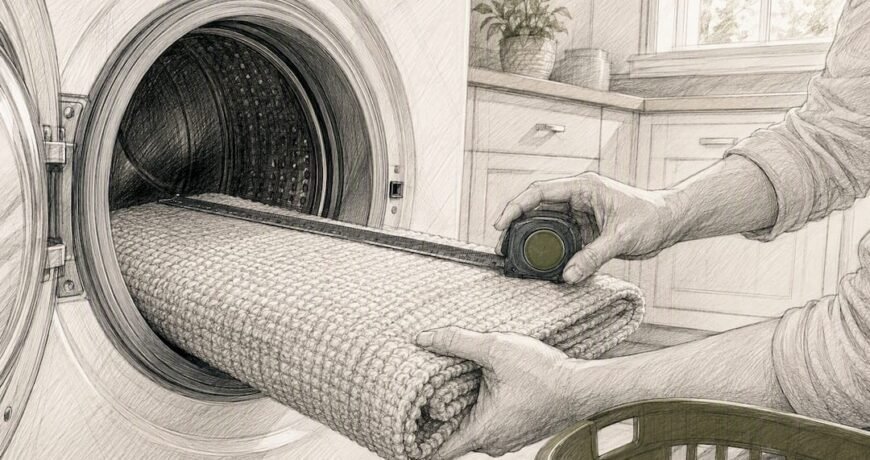
- Ensure the rug’s care label explicitly states it can be machine washed, and measure your washer’s drum to confirm it can accommodate the rug’s size without overstuffing.
- Pre-treat stains, vacuum both sides, and remove any hardware or trim before washing to prevent damage and clogs.
- Use cold water, a gentle cycle, mild dye-free detergent, and air-dry flat to prevent shrinkage, backing damage, and mildew.
- Regular vacuuming and spot cleaning are sufficient for routine maintenance, with full washes scheduled every one to six months based on traffic.
Table of Contents
- Which Rugs Are Truly Machine-Washable?
- How Do You Prep a Rug Before Washing?
- How Do You Machine Wash a Rug Step by Step?
- What If Your Rug Doesn’t Fit a Home Washer?
- How Should You Dry a Washable Rug?
- How Often Should You Wash a Rug?
- How Do You Fix Common Washable Rug Problems?
- What Do Rug Experts Say About Washable Rug Care?
- When Is a Washable Rug the Right Tradeoff?
- Shop Washable Rugs Built for Real Households
- Sources
- FAQ
Which Rugs Are Truly Machine-Washable?
Not every rug marketed as “washable” behaves the same way in a home machine. Some are single-piece constructions designed to go straight into the drum. Others are two-piece systems, a thin printed cover paired with a separate non-slip pad, and only the cover goes in the wash. Mixing those up is one of the fastest ways to ruin a rug or a washer.
Material matters just as much as construction. Polyester and polypropylene rugs tolerate machine agitation well because the fibers don’t absorb much water and dry fast. Some cotton blends do fine too, in smaller sizes. Wool, silk, jute, and shag rugs are a different story. Wool can felt and shrink under agitation, silk loses sheen and strength when wet, and jute practically never fully dries in a home machine, which invites mildew.
Before loading anything, check three things:
- The care label’s exact wording, not just a “machine washable” sticker on the packaging
- The rug’s folded or rolled dimensions against your washer’s drum capacity
- Whether it’s a single-piece rug or a cover-and-pad set
The Washington Post has flagged washer capacity as one of the most common failure points. A 5×7 rug that fits fine in a large-capacity front loader can jam a standard top loader’s agitator. If you’re unsure what size you’re working with, measuring against your washer before you buy saves a lot of frustration later.
How Do You Prep a Rug Before Washing?
Skipping prep is where most washable-rug problems start. A rug that looks clean on the surface can still be holding enough embedded grit to cause real damage once water hits it.
- Vacuum both sides outdoors. Dry soil and pet hair need to come out before any liquid touches the fibers. Skip this step and that grit turns into a dense sludge that can clog your washer’s drain pump mid-cycle.
- Shake out loose debris. A firm outdoor shake dislodges sand and crumbs vacuuming alone might miss.
- Test colorfastness. Dab a hidden corner with a damp white cloth and a drop of detergent. If color transfers, hand-wash instead of machining it.
- Remove trim, fringe clips, or loose hardware that could snag or tear in the drum.
- Pre-treat stains. Blot (never rub) organic stains like pet accidents, wine, or food with a clean cloth first, then dab a mild detergent or enzyme cleaner directly on the spot before the full wash. For wine specifically, a targeted stain-removal method works better than hoping the wash cycle handles it alone.
Skip bleach and fabric softener entirely. Bleach breaks down rug backing over repeated washes, and softener leaves a residue that actually attracts more dirt.
How Do You Machine Wash a Rug Step by Step?
Once the rug is prepped, the actual wash cycle is straightforward if you follow the settings that matter.
- Fold or loosely roll the rug to fit the drum without cramming it against the sides.
- Balance the load. If the rug is small relative to your machine, toss in a couple of old towels so the drum spins evenly instead of thumping.
- Set the water to cold. Hot water is what causes most shrinkage and color bleed.
- Choose the gentle or delicate cycle, and select a low spin speed if your machine offers the option. High spin can distort the shape and stress the backing.
- Add a small amount of mild, dye-free detergent. Rug fibers don’t need a full detergent-cap dose. Half the amount you’d use for a towel load is usually plenty.
- Run an extra rinse cycle. Leftover detergent makes rugs feel stiff or sticky and attracts dirt faster once it’s back on the floor.
- Skip the dryer unless the label explicitly allows low or air-only tumble. Even then, keep heat off.
Pro Tip: Run the empty rinse-and-spin cycle once first if you’ve never washed a particular rug before. It tells you whether your machine handles the size and weight without a detergent load riding on the outcome.
What If Your Rug Doesn’t Fit a Home Washer?
Oversized rugs and delicate weaves often need a different approach than tossing them straight into a home machine.
- Bathtub method: Lay the rug flat in the tub, work in a diluted mild detergent with a soft brush, then rinse repeatedly with a handheld showerhead until the water runs clear. Press water out with your hands or a towel. Never wring, since twisting distorts backing and shape.
- Laundromat commercial machines: Large-capacity commercial washers handle oversized washable rugs better than most home units. Choose the gentle cycle and cold water setting, and bring a large bag for wet transport since a soaked rug is heavier than it looks.
- Outdoor hose washing: Lay the rug over a clean surface, hose it down, scrub lightly with a soft brush and mild detergent, then rinse until no suds remain. Keep runoff away from garden beds if you’re using detergent.
- Professional cleaning: For wool blends, silk accents, or a rug with existing backing damage, a professional is safer than risking it in any washer. If your rug isn’t washable at all, Persian rug care requires a different maintenance approach entirely.
How Should You Dry a Washable Rug?
Air-drying flat is the safest method, full stop, and it’s the method Whirlpool and most rug manufacturers recommend across the board. Heat is the enemy of rug backing, so only use a low or air-only tumble setting if your specific care label says it’s allowed.
While the rug is still damp, smooth out curled edges by hand and press the shape back into place. Laying flat under a couple of heavy books or boards along the edges for the first hour or two keeps corners from curling as they dry.
- Set up a box fan or two aimed across the rug’s surface to cut drying time significantly
- Run a dehumidifier in the room if humidity is high
- Flip the rug halfway through drying so both sides get even airflow
- Check the floor underneath, too, since a damp spot trapped under a rug is exactly how mildew starts
A rug that feels dry on top can still be damp at the base of the pile. Consumer Reports’ washable rug testing found that incomplete drying is one of the more common reasons washable rugs disappoint owners, not the washing itself.
How Often Should You Wash a Rug?
Vacuuming is your weekly baseline, and it does more heavy lifting than most people realize. A full wash isn’t meant to be your primary cleaning method. It’s the deep reset you reach for occasionally.
- Vacuum weekly, and bump that to twice a week in homes with shedding pets or young kids tracking things in
- Heavy-traffic zones (entryways, kitchens, rooms with pets) benefit from a full wash every one to three months
- Moderate-traffic rooms like living rooms or hallways can stretch to every three to six months
- Low-traffic spaces such as guest rooms or formal areas often only need a wash once a year
- Spot-clean between full washes to handle fresh spills immediately, which spares the backing and pigments from unnecessary wash cycles
- Rotate rugs seasonally and use a thin gripper pad underneath to reduce wear and extend the interval between washes
Following this cadence lines up with what the Washington Post found in testing: convenience wins out for busy households as long as owners stick to cold-water washing and full air-drying rather than winging it.
How Do You Fix Common Washable Rug Problems?
Most washable-rug complaints trace back to one of a handful of fixable mistakes.
- Minor shrinkage or curled edges: Re-wet the rug lightly, reshape it by hand while damp, and lay it flat under weighted books along the edges until fully dry.
- Backing separation: A little lifting at the corners can sometimes be reglued with a fabric-safe adhesive, but widespread separation across the backing usually means it’s time to retire the rug.
- Musty smell or faint mildew: Rewash with a cup of white vinegar added to the rinse cycle, then dry completely with fans running. Never re-lay a rug that isn’t bone dry.
- Bunching or sliding underfoot: Add a non-slip rug pad. Thin gripper pads solve most bunching issues without adding bulk under doors.
Pro Tip: If a rug develops a smell within a day or two of drying, it wasn’t actually dry when you put it back down. Pull it up, dry it fully outdoors in direct sun if possible, and check the floor beneath before re-laying it.
What Do Rug Experts Say About Washable Rug Care?
Kian, who covers rug care and materials for Rugsonlinemarket, has spent years tracking how washable synthetics perform against natural-fiber rugs across different households and climates. The consistent finding: washable rugs reward owners who read the label carefully and punish the ones who guess.
Before buying, check the care tag listed on each product page, and measure your washer’s drum against the rug dimensions so you’re not guessing after delivery. If you’ve already got a stain to deal with, the wine stain removal guide walks through the exact steps.
When Is a Washable Rug the Right Tradeoff?
Washable rugs make the most sense for families with kids, pet owners, renters who can’t risk a security deposit, and anyone running a busy kitchen. You trade some plushness and a slightly thinner feel for the ability to just throw it in the wash. Edges can curl slightly over time, but a damp reshape under a weighted book usually fixes that. Wash only as often as the traffic demands. Overwashing wears out backing faster than the mess ever would.
— Kian
Shop Washable Rugs Built for Real Households
Rugsonlinemarket’s washable rug options are picked specifically for households that need something durable enough for kitchens, entryways, and playrooms without giving up style.

Every washable listing includes clear sizing details and care-tag information right on the product page, so you can match the rug to your washer before you buy instead of after. Free shipping is available on qualifying orders, and if the size or style isn’t right once it arrives, a 30-day return window makes swapping it out simple. Browse the washable rug collection now and check the listed dimensions against your washer’s capacity before you check out.
Sources
- Best washable rugs (Consumer Reports)
- What are washable rugs, and do they work? (Washington Post)
- How to clean a washable rug (Padloom)
- How to wash and clean rugs (Whirlpool)
FAQ
Can a washable rug actually be washed in the washing machine?
Yes, as long as the care label confirms it and the rug’s folded size fits your washer’s drum without overpacking it. Cold water and a gentle cycle are non-negotiable for preventing shrinkage.
Can I use dish soap like Dawn to wash my rug?
Dish soap isn’t recommended for machine washing because it can leave heavy residue or excess suds that damage some washer models, but a small diluted amount can work for hand-spot-treating grease stains before a proper wash.
How do you clean a washable rug day to day?
Vacuum both sides weekly, spot-treat spills as they happen, and reserve a full machine wash for every one to six months depending on how much traffic the rug sees.
Are washable rugs really as washable as advertised?
Mostly yes, but performance depends heavily on the specific brand, material, and whether you follow the cold-water and full-drying protocol. Consumer Reports found real variation in durability across brands even among rugs labeled the same way.
