

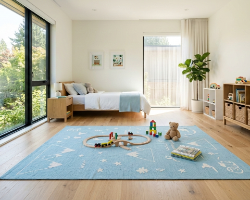
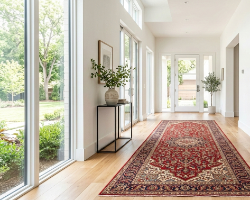
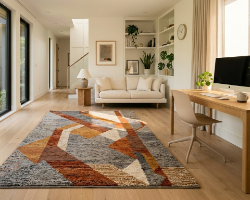
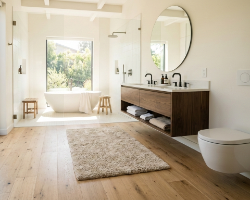


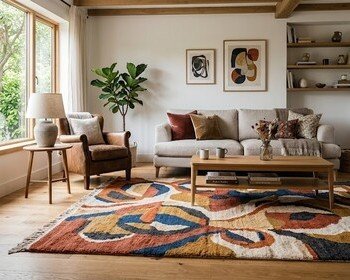
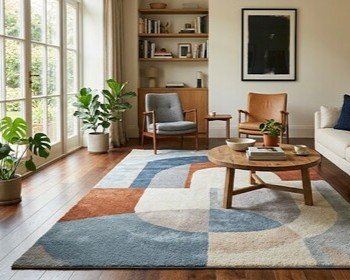
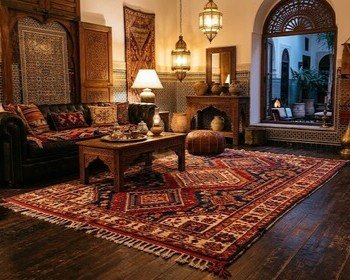
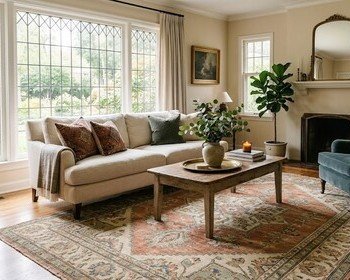
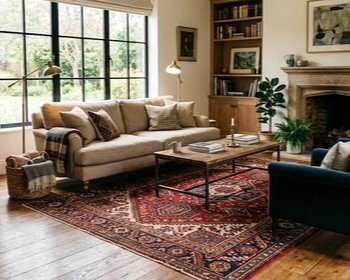
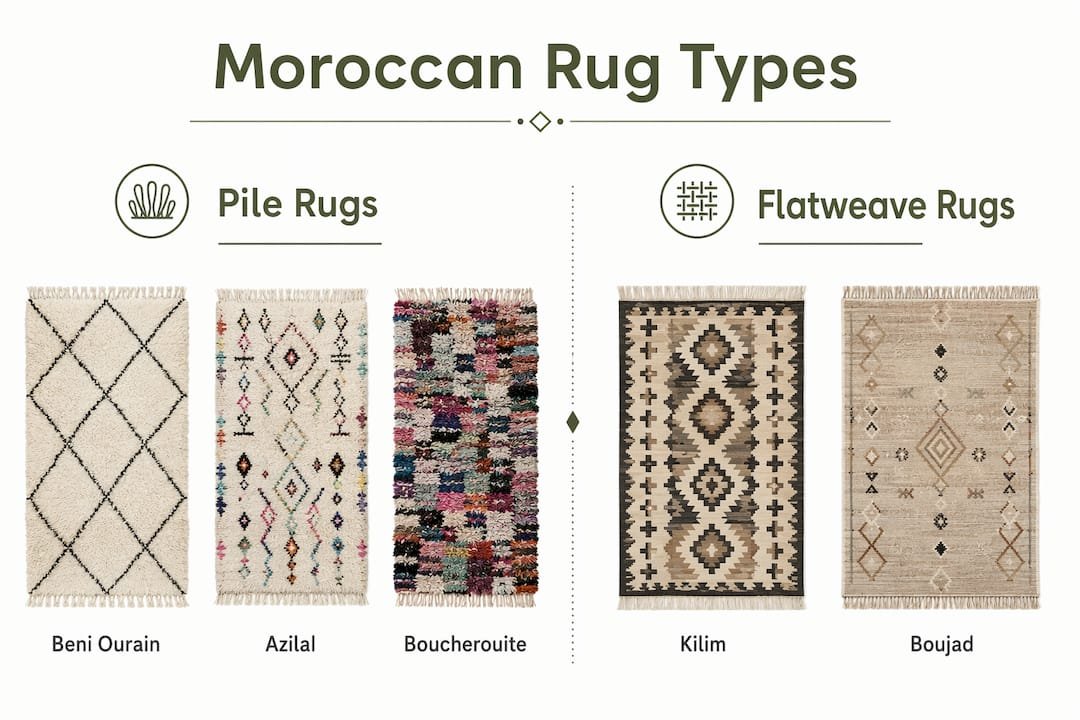
Moroccan rugs are handcrafted textiles woven by Berber and Amazigh artisans across Morocco’s mountain regions, plains, and desert edges. The best ones come from specific tribes and regions: Beni Ourain from the Middle Atlas, Azilal from the High Atlas, Boucherouite from recycled fabric traditions, Kilim (also called hanbel) from flatweave craft, and Boujad from the colorful Khouribga region. Each type carries its own character, construction method, and price point. Here is a quick orientation before you go deeper:
- Beni Ourain: Thick cream wool, sparse black or brown diamond patterns, plush pile
- Azilal: Lighter, colorful, abstract designs in pinks, yellows, and blues
- Boucherouite: Recycled fabric strips, vibrant and chaotic, prized by collectors
- Kilim: Flatwoven, no pile, geometric stripes and zigzags, light and practical
- Boujad: Bold, freeform patterns in warm reds and pinks, high-energy aesthetic
A genuine hand-knotted rug can last many decades, significantly longer than machine-made versions, which have a much shorter lifespan. That gap alone tells you why the choice of type and construction matters so much.
1. Beni Ourain: the classic that started the modern obsession
Beni Ourain rugs are the most internationally recognized Moroccan rug style, and they earned that status honestly. Woven by women of the Beni Ourain confederation of 17 Amazigh tribes in the Middle Atlas Mountains, these rugs feature undyed natural cream or ivory wool with sparse black or brown geometric diamonds and lines. The wool retains its natural lanolin, which gives it a slightly oily feel and a built-in resistance to dirt.
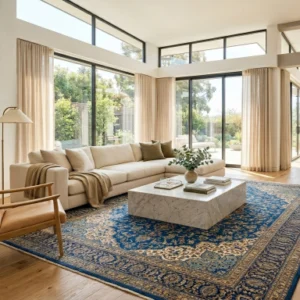
The pile is thick and plush, making Beni Ourain rugs ideal for living rooms, bedrooms, and home offices where you want a soft, neutral anchor. They suit minimal, Scandinavian, and mid-century modern interiors particularly well. What you are not getting with a Beni Ourain is a rug for a high-traffic hallway or a busy kitchen. The pile traps debris and the cream color shows stains.
Authenticity clues are specific: slight pattern irregularities prove handwork, and the wool should feel dense when you press it. Fakes are extremely common in tourist markets, so this check matters.
Pro Tip: Press the pile firmly with your palm. Genuine Beni Ourain wool springs back slowly because of its density and lanolin content. A machine-made imitation bounces back instantly and feels uniform.
2. Azilal: color and spontaneity from the High Atlas
Azilal rugs come from a different tribal group in the High Atlas region and feel nothing like Beni Ourain. They are lighter, less dense, and far more expressive in color. Pinks, yellows, blues, and reds appear against a white or cream base in abstract, asymmetrical compositions that make each piece genuinely one of a kind.
The designs are more spontaneous than structured. Weavers incorporate abstract symbols, free-form shapes, and personal visual language that has no fixed template. This makes Azilal rugs a natural fit for eclectic, maximalist, or artistic interiors where the rug is meant to bring energy rather than visual calm.
Azilal rugs are also lighter to ship and easier to live with in warmer climates than the thick Beni Ourain pile. If you want a Moroccan area rug that adds color to a neutral room without committing to a bold solid tone, Azilal is the practical and beautiful answer. For more ideas on pairing these with your interior, the boho area rug guide at Rugsonlinemarket covers complementary styles in detail.
3. Boucherouite: recycled fabric turned into collector’s art
Boucherouite rugs were born from necessity. When wool became scarce or expensive, Moroccan women began weaving with whatever fabric was available: cut-up clothing, cotton strips, synthetic fibers, and textile scraps. The result is bright, often chaotic, and visually arresting in a way that no wool rug can replicate.
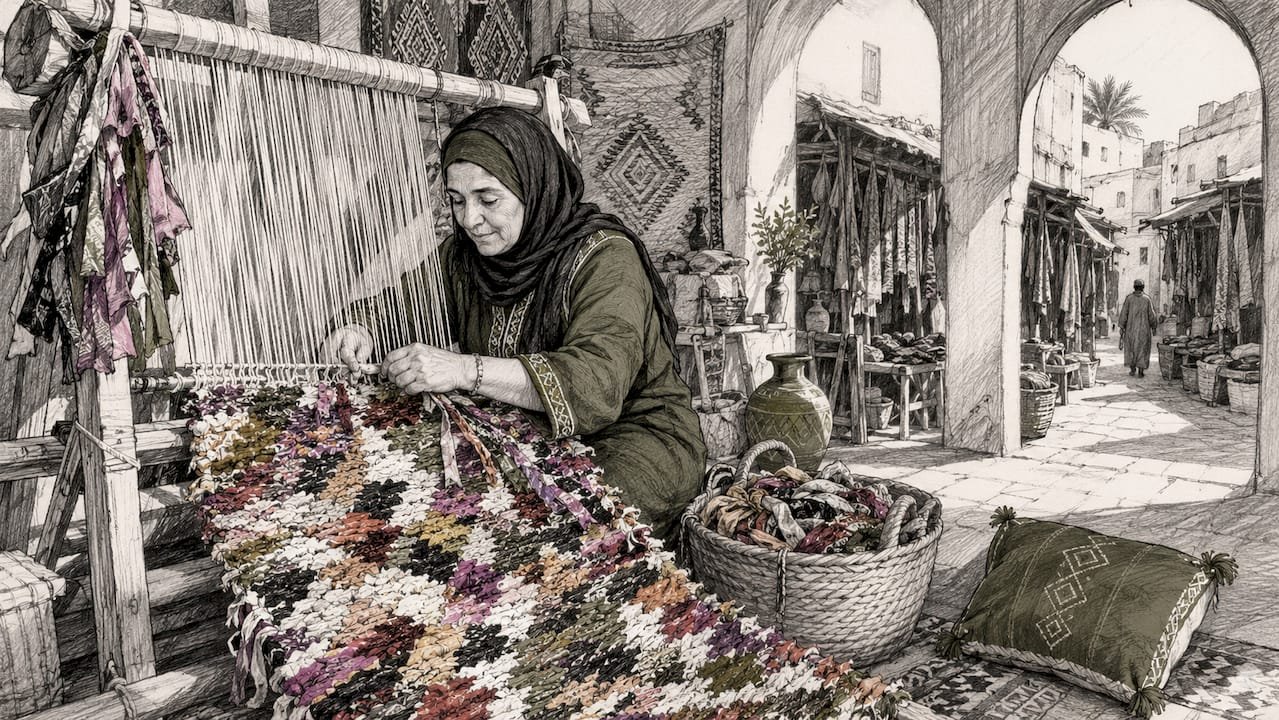
Art collectors have increasingly taken notice. Boucherouite pieces are now regarded as a form of outsider art, and their unpredictability is the point. No two are alike, and the color combinations follow no tribal convention. They work best as wall hangings, accent pieces, or decorative focal points rather than serious floor rugs in busy spaces. The mixed materials do not hold up to heavy foot traffic the way wool does.
Boucherouite rugs are also the most affordable entry point into authentic Moroccan weaving. Small Boucherouite pieces generally start at lower price points, making them accessible for buyers who want genuine handcraft without a large investment.
4. Kilim: the flatweave that serious decorators overlook
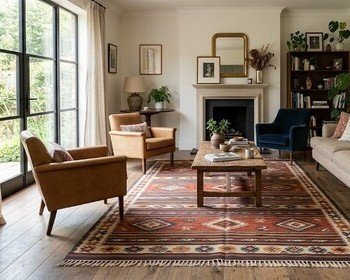
A Moroccan kilim is flatwoven, meaning it has no pile at all. The pattern comes from interlocking colored weft threads, producing bold geometric zigzags, diamonds, and stripes in earthy or vibrant tones. The term “kilim” is Turkish; in Morocco these rugs are often called hanbel.
Kilims are lighter, easier to clean, and more portable than pile rugs. They work exceptionally well in dining rooms, hallways, entryways, and warm climates where a thick pile rug would feel heavy and impractical. You can fold a kilim into a suitcase. You cannot do that with a Beni Ourain.
Hold a kilim up to the light as a quick quality check: tight, even weaving blocks light, while loose weaving lets it through in gaps. A well-made kilim is also reversible, which doubles its usable life. For high-traffic areas where you want the Moroccan aesthetic without sacrificing practicality, a kilim is the most sensible choice.
5. Boujad: bold, freeform, and underappreciated
Boujad rugs come from the Khouribga region of central Morocco and carry a visual energy that sets them apart from the more restrained Beni Ourain aesthetic. The patterns are freeform, often featuring large abstract shapes, eye motifs, and bold fields of warm red, pink, and orange. There is nothing subtle about a Boujad.
These rugs suit spaces that can handle a strong visual statement: a reading room, a studio, or a bedroom where the rug is the focal point rather than the background. Vintage Boujad pieces in particular have a softened, lived-in quality that new rugs cannot replicate. The colors mellow over decades into something genuinely beautiful.
Boujad rugs are less internationally marketed than Beni Ourain, which often means better value for buyers who know what they are looking at.
6. History and symbolism woven into every knot
Moroccan rug weaving traces back centuries to the Amazigh (Berber) people, who developed distinct textile traditions long before formal trade routes connected Morocco to the wider world. The patterns were never purely decorative. Geometric shapes, diamonds, and abstract symbols carried meaning related to tribal identity, protection, and spirituality. A weaver encoded her own experience, beliefs, and community into the design.
This is why no two authentic Moroccan rugs are identical. The irregularities that buyers sometimes mistake for flaws are actually the record of a human hand working through a pattern that lives in memory, not on paper. Azilal rugs are particularly known in academic textile circles as among the most original folk textile traditions still practiced anywhere.
Understanding this history changes how you look at a rug. The asymmetry is not a defect. It is the signature.
7. How materials and construction determine quality
What the wool tells you
The vast majority of authentic handmade Moroccan rugs use natural sheep wool. Wool is naturally resilient, soft, and contains lanolin, a natural oil that repels dirt and stains. High-quality Beni Ourain and Azilal rugs rely on this wool, which is why they hold up so well over decades. Cotton appears primarily in flatwoven kilim-style pieces and as the structural foundation in many pile rugs. It holds dye well and keeps the rug lighter.
Hand-knotted versus flatwoven
A hand-knotted rug is the gold standard. Each knot is tied individually, row by row, by a weaver. A medium-sized rug can take weeks or months to complete. The result holds its structure, maintains pile density over decades, and develops character with age. A machine-made rug, regardless of its “Moroccan style” label, is produced on a power loom and will not have the texture, depth, or longevity of a genuine piece.
The weaving process, step by step
- Wool preparation: Raw fleece is washed, carded, and spun by hand into yarn.
- Dyeing: Yarn is colored with natural plant dyes (saffron, indigo, henna, pomegranate, madder root) or synthetic dyes. Natural dyes add a notable price premium but hold value better and age beautifully.
- Warping the loom: Cotton or wool warp threads are stretched vertically on the loom to form the rug’s structural backbone.
- Knotting or weaving: For pile rugs, the weaver ties individual knots around warp threads row by row. For kilims, weft threads are interlocked horizontally.
- Cutting and finishing: Pile is trimmed to an even height. Fringes are left as natural extensions of the warp threads, not sewn on separately.
- Washing and drying: The finished rug is washed and sun-dried, which sets the dyes and softens the wool.
Pro Tip: Flip the rug over and examine the back. On a genuine hand-knotted piece, you will see slightly irregular knots and the fringe emerging directly from the warp threads. If the fringe is sewn on as a separate strip, the rug is an imitation.
8. How to choose the right Moroccan rug for your home
Match the style to the room’s mood
Beni Ourain suits calm, minimal spaces. Azilal fits artistic or eclectic rooms. Kilim works in high-traffic zones and warm climates. Boujad and Boucherouite work best as statement pieces in rooms that can carry bold color. Matching the rug’s energy to the room’s existing character is the single most important design decision you will make.
Get the sizing right
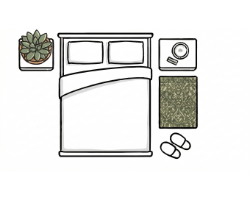
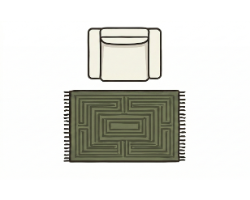
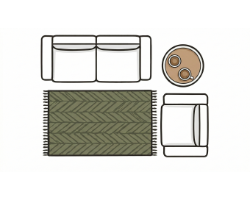
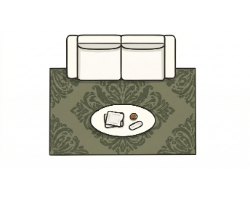
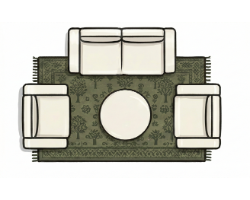
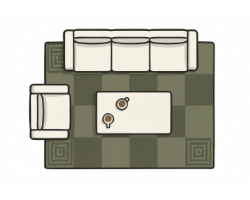
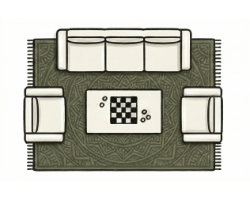
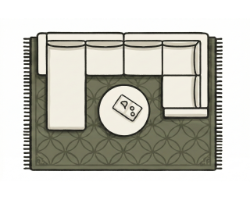
Standard US room sizing for rugs: an 8×10 or 9×12 for living rooms, with the front legs of all seating resting on the rug; an 8×10 under a queen bed; a runner approximately 2.5 feet wide for hallways. Going too small is the most common mistake buyers make. A rug that floats in the center of a room without anchoring the furniture makes the space feel unfinished. For more detailed guidance on sizing decisions, Rugsonlinemarket’s rug size and color guide covers room-by-room recommendations.
Key buying criteria
- Construction: Hand-knotted or handwoven only for long-term value
- Material: Natural wool with lanolin for pile rugs; cotton flatweave for high-traffic areas
- Dyes: Natural dyes for investment pieces; synthetic dyes are acceptable for everyday use
- Fringe: Must emerge from warp threads, not be sewn on
- Knot irregularity: Slight unevenness on the back confirms handwork
- Seller transparency: Ask directly about origin, tribe, and materials
Price ranges by type and size (USD)
| Type | 5×8 ft | 8×10 ft | 9×12 ft |
|---|---|---|---|
| Machine-made Moroccan pattern | — | Not applicable | Not applicable |
| Hand-tufted Moroccan style | — | Not applicable | Not applicable |
| Authentic handwoven (new) | — | — | Not applicable |
| Vintage Moroccan rug | — | Not applicable | — |
Care and maintenance basics
- Vacuum weekly on a low setting, pile side up, without a beater bar
- Rotate the rug every 6–12 months to even out wear and sun exposure
- Blot spills immediately with a clean cloth; never rub
- Professional cleaning every 2–3 years for wool pile rugs
- Keep out of direct sunlight to slow natural dye fading
9. Where to buy authentic Moroccan rugs in the U.S. market
What to look for in a seller
The U.S. market for Moroccan rugs has expanded considerably, and the quality range is wide. The most reliable sellers share a few consistent traits: they can name the rug’s region of origin, describe the weaving technique, and show you the back of the rug without hesitation. Sellers who cannot answer basic provenance questions are selling style, not substance.
Buying channels and trust signals
- Artisan-connected online retailers: Look for sellers who work directly with cooperatives or individual weavers and provide provenance details per rug
- Specialty rug dealers: Established dealers with physical showrooms often carry vintage and antique pieces with documented history
- Cooperatives and ethical importers: Buying directly from cooperatives ensures fair prices for buyers and artisans; tourist souk prices run 30–50% above cooperative prices for equivalent pieces
- Auction houses: For vintage and antique pieces, established auction houses provide condition reports and provenance documentation
Red flags to avoid
- Fringes that are sewn on rather than woven from warp threads
- Perfectly uniform patterns with no irregularity on the back
- Prices dramatically below market for the stated type and size
- Sellers who cannot name the rug’s region, tribe, or approximate age
- “Moroccan style” labeling without any mention of handcraft or origin
Authenticity checks you can do yourself
Flip the rug and look at the back. Hand-knotted rugs show individual knots with slight irregularity. Run your hand across the pile: genuine wool with lanolin feels slightly waxy, not plasticly. Check the fringe where it meets the rug body. On an authentic piece, the fringe is a direct extension of the structural warp threads. On an imitation, you will find a sewn seam.
Key Takeaways
Authentic Moroccan rugs made from natural wool with hand-knotted construction outlast machine-made alternatives by decades and hold their value in ways that mass-produced rugs simply cannot match.
| Point | Details |
|---|---|
| Construction determines longevity | Hand-knotted rugs last 50–100 years; machine-made versions last about 5–10 years under normal use. |
| Match style to room mood | Beni Ourain suits calm, minimal spaces; Azilal fits colorful, eclectic rooms; Kilim works best in high-traffic areas. |
| Natural dyes add lasting value | Natural-dye rugs carry a notable price premium but age more beautifully and hold resale value better than synthetic alternatives. |
| Size the rug to anchor furniture | Living rooms typically use larger rugs; queen bedrooms use medium rugs; hallways require runners of appropriate width for the space. |
| Rugsonlinemarket for U.S. buyers | Rugsonlinemarket offers a curated selection of handwoven area rugs with free shipping on orders over $300 and hassle-free 30-day returns. |
Why the “best Moroccan rug” question has no single answer
The conventional framing of this topic treats rug selection as a ranking problem: which type is best? But that framing misses the actual decision. A Beni Ourain in a warm, busy apartment with two dogs is a poor choice regardless of how beautiful it is. A Kilim in a cold, minimal bedroom feels thin and out of place. The rug that works is the one that fits the room’s function, the household’s lifestyle, and the buyer’s honest maintenance habits.
What gets underestimated consistently is durability as a design value. Buyers focus on pattern and color, which are the most visible qualities in a photograph, and underweight construction and material, which determine whether the rug looks good in five years or five months. A vintage Beni Ourain from the 1980s that has softened naturally over decades is a fundamentally different object from a new machine-made piece with the same visual pattern. The lived-in quality of genuine wool cannot be manufactured.
The other thing worth saying plainly: the price gap between authentic and imitation is not arbitrary. A hand-knotted rug from a skilled weaver in the Middle Atlas represents weeks of labor, generations of transmitted technique, and materials sourced from a specific landscape. Paying fairly for that is not naivety. It is judgment about what you are actually buying and how long you want it to last.
Rugsonlinemarket brings authentic handwoven rugs to your door
Finding a genuine Moroccan or handwoven area rug in the U.S. without traveling to a souk or trusting an unknown seller is harder than it should be. Rugsonlinemarket solves that directly: a curated collection of authentic handwoven rugs, including Moroccan styles, traditional Persian pieces, and natural-wool options, all available through a straightforward online shopping experience with real customer support behind it.
Free shipping applies to orders over $300, and returns are hassle-free within 30 days. The 100% feedback guarantee means you are not taking a risk on something you cannot see in person. Browse the full handwoven rug collection to find the style, size, and construction that fits your space, or use the rug size and color guide to narrow down your options before you buy.
