







Perfecting Living Room Rug Placement with Red Persian Rugs
A living room can truly come alive with the right elements, and few design choices have as much impact as the rug. From the moment you step into a room, a well-chosen rug can completely transform the space. Today, we’re diving deep into the art of living room rug placement, especially when considering the timeless elegance of Persian Rugs. These rugs aren’t just floor coverings; they’re pieces of art, steeped in history and craftsmanship. They bring a touch of luxury and sophistication to any living space, adding warmth and personality. Choosing the right rug is about more than just aesthetics, it’s about functionality, flow, and creating a harmonious environment. This comprehensive guide will help you master the techniques of living room rug placement, covering everything from rug size guides and strategies for placing your area rug under the sofa to the art of layering rugs and how Persian rugs can enhance your space. Understanding these principles is crucial to creating a cohesive and visually appealing room.
Understanding the Rug Size Guide for Living Rooms
Before you start picturing the perfect Persian Red Rug in your living room, you must understand the basics of rug sizing. What are the standard rug sizes? They are designed to fit the common dimensions of most living rooms, and selecting the right size is the first key step in achieving your desired aesthetic.
Here’s a list of standard rug sizes available:
- 5×8 feet
- 6×9 feet
- 8×10 feet
- 9×12 feet
- 10×14 feet
Now, let’s learn how to measure your living room for an area rug. You’ll want to carefully measure your space to determine which of these standard sizes will work best.
Here’s a step-by-step guide:
- Measure the Entire Room: Begin by measuring the entire living room, from wall to wall. This will give you an idea of the overall space you’re working with.
- Note Furniture Placement: Consider the current furniture layout. How do you want your furniture to interact with the rug? Will the sofa and chairs sit entirely on the rug, or will some of their legs be off?
- Measure Length and Width: Using a measuring tape, measure the length and width of the room. Note these dimensions.
- Consider Obstacles: Be mindful of doorways, walkways, and any other obstacles. You don’t want the rug to impede traffic flow.
- Sketch a Layout: Sketching the room layout will help you visualize the rug placement and how it will interact with your furniture.
The size of your rug will have a significant impact on the design of the room. A rug that’s too small can make the room feel disjointed, making the furniture appear to “float” unanchored. On the other hand, a rug that’s too large can overwhelm the room, making it feel cramped. The correct rug size, however, has the power to tie the room together, grounding the furniture and defining the seating area. The rug essentially becomes the foundation upon which your design rests, thereby enhancing the beauty of Persian Rugs and everything else in your living room. For more information on finding the right size rug, check out our guide on Persian Rugs: Size and Placement.
Area Rug Under Sofa: Decoding the Placement Strategies
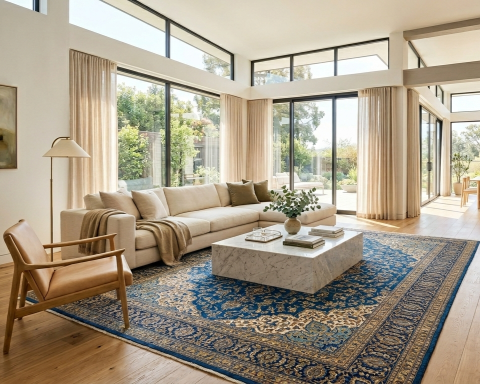
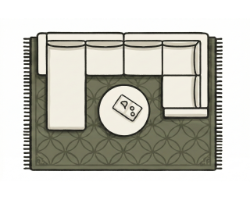
One of the most important decisions in living room rug placement is how to position the area rug under the sofa. There are several popular placement strategies, each with its own advantages and disadvantages. This choice impacts the overall look and feel of your living space.
Let’s look at the different options you have:
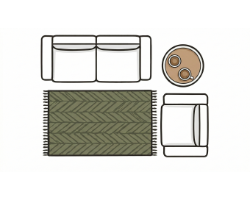
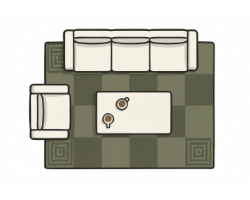
Option 1: Front Legs Only:
In this style, the front legs of your sofa and any other seating furniture rest on the rug, while the back legs remain off.
- Pros:
- This approach can make a smaller rug feel larger.
- It effectively defines the seating area, creating a cohesive space.
- It is generally more budget-friendly, as you need a smaller rug to achieve the look.
- Cons:
- If the rug is too small in relation to the room and sofa, it can cause the sofa to feel like it’s “floating.”
- It might not provide enough grounding for a very large sofa.
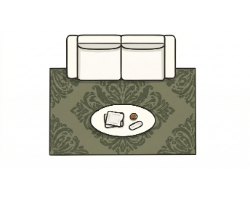
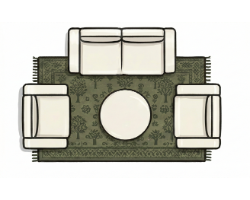
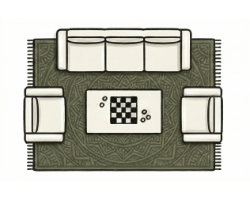
Option 2: All Legs on the Rug:
With this strategy, all legs of the sofa and other furniture are placed on the rug.
- Pros:
- This creates a cohesive and grounded feel throughout the room.
- This placement is ideal for larger rooms where you want to anchor all the furniture.
- It provides a luxurious and spacious look, giving the room a sense of openness.
- Cons:
- It requires a larger (and potentially more expensive) rug.
- If the rug is the wrong size or is too large, the room can feel smaller.
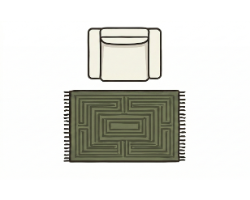
Option 3: No Furniture on the Rug:
In this option, the rug is placed in the center of the seating area, but none of the furniture legs sit on it.
- Pros:
- This makes it easier to clean and maintain the rug, as it is less exposed to wear and tear.
- It allows the rug’s pattern and design to be fully showcased.
- Cons:
- If not done carefully, it can make the room look ungrounded and disconnected.
When deciding how to place the area rug under the sofa, carefully consider your available space, the size of your furniture, and your personal design preferences. Think about how you want the room to feel, and choose the placement that best achieves that vision. For more tips, read our Mastering Persian Rug Placement in Your Living Room guide.
Living Room Rug Placement for Small Spaces
Decorating a small living room can be challenging, but the right living room rug placement can make a world of difference. Your selection of the rug will dictate how it will affect the overall aesthetics of the room.
Here are some rug selection tips:
- Size: In a small living room, a rug that extends slightly beyond the front legs of the sofa is often a great choice. You could also opt for a rug that fits all the furniture legs. Make sure to avoid rugs that are too small.
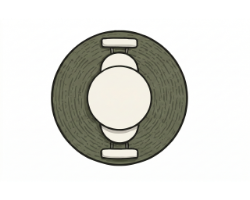
- Shape: Rectangular rugs are a safe bet. Consider square or round rugs to soften the space.
- Color and Pattern: Lighter colors and simple patterns will make the room feel larger. While dark colors can be used, they should be incorporated in a subtle way to avoid making the room feel smaller.
A well-placed rug can clearly define the seating area in an open-concept small living room, separating it from other zones such as the dining area. Use the rug to “anchor” the furniture and create a focal point.
In addition to those tips, consider these ideas:
- Color Palette: Use light and neutral colors for both the rug and the surrounding decor.
- Furniture Placement: Push furniture against the walls to maximize floor space.
- Mirrors: Mirrors will visually expand the room.
- Clutter: Minimize unnecessary items to maintain an open feel.
Living Room Rug Placement for Large Spaces
Large living rooms offer a lot of decorating opportunities, but they also present some unique challenges. It is easy to make a large room feel empty or disconnected. Living room rug placement is crucial to creating a cozy and inviting space in a large room.
Here are some rug selection tips:
- Size: Use a larger rug to ground the furniture and visually fill the space.
- Shape: Larger rooms can accommodate a wider variety of rug shapes, so feel free to experiment.
- Color and Pattern: Experiment with bolder colors, patterns, and textures to add visual interest and personality.
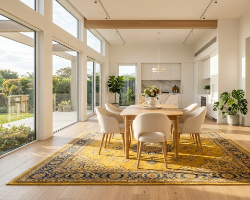
A rug can be used to delineate different zones within a large living room. For example, you can create a seating area and a reading nook. Use multiple rugs to further define these zones.
A large rug will help to “ground” the furniture and create a sense of cohesion in a large space. Place all furniture legs on the rug or at least the front legs for a connected look. Use the rug to create a focal point and draw the eye.
Layering Rugs: Adding Texture and Depth
Layering rugs is a fantastic way to add depth, texture, and visual interest to a living room. It’s a design technique that allows you to combine multiple rugs for a unique and stylish effect.
Layering involves placing one rug on top of another.
To combine textures and patterns effectively, follow these guidelines:
- Base Rug: Use a larger, neutral-colored rug as the base layer. Sisal, jute, or a similar textured rug can work well.
- Top Rug: Select a smaller rug with a more interesting pattern, color, or texture. This will be the focal point of the layering.
- Pattern Mixing: When mixing patterns, pair a geometric rug with a solid or a subtle pattern. Don’t be afraid to experiment, but ensure the patterns complement each other.
- Texture Mixing: Combine different textures, such as a wool rug with a silk or faux fur rug, for added depth.
Considerations:
- Size: The top rug should be smaller than the base rug.
- Placement: Experiment with different placements, such as centering the top rug or offsetting it.
- Functionality: Consider how the layering will affect the functionality of the room.
Layering can also create a cozy and inviting atmosphere, making a living room feel more lived-in and stylish. Layering Persian Rugs can add visual depth. Explore how to master this with our Mastering Persian Rug Placement: A Guide to Size, Style, and Layering guide.
Choosing the Right Rug Material and Style
As you plan the living room rug placement, consider the material and style of your rug.
Rug Materials:
- Wool: This material is durable, soft, and naturally stain-resistant.
- Silk: Silk is luxurious and delicate and often used in high-end rugs, including Persian Rugs.
- Synthetic (e.g., nylon, polypropylene): These are affordable, durable, and easy to clean.
Considerations: Highlight the pros and cons of each material, including durability, maintenance, and cost.
Rug Styles:
- Traditional (e.g., Persian Rugs, Oriental): Classic and intricate designs.
- Modern (e.g., geometric, abstract): Clean lines and contemporary designs.
- Transitional: A blend of traditional and modern elements.
- Shag: Plush, high-pile rugs.
Briefly touch on how each style complements different interior design schemes.
Durability and Lifestyle:
- Traffic: Consider foot traffic when selecting a rug. Recommend more durable materials for high-traffic areas.
- Lifestyle: Consider your lifestyle (e.g., pets, children) and choose a rug that can withstand daily wear and tear.
- Care Instructions: Always check the care instructions for each type of rug.
Conclusion: Mastering Living Room Rug Placement
In conclusion, living room rug placement is a key element of interior design. Whether you’re working with a small apartment or a large family room, the right rug can dramatically improve the comfort and aesthetics of your space. As we’ve seen, it’s about more than just choosing a beautiful Persian Rug; it’s about understanding how to integrate it into your living space effectively.
Let’s recap:
- Measuring the space.
- Considering rug size and shape.
- Choosing the appropriate placement strategy (area rug under sofa).
- Understanding the impact of rug size on the room’s aesthetics.
- Considering the room’s size (small vs. large) and how to adjust placement accordingly.
- Understanding the concept of layering rugs and how to combine textures and patterns.
- Choosing the right rug material and style.
The art of living room rug placement is a journey of discovery. For more, read our guide on Elevate Your Space: A Comprehensive Guide to Persian Rugs and Perfect Living Room Rug Placement.
So, experiment with different rug placements and styles. Find what works best for your unique space.
Remember, the right area rug (including those exquisite Persian Rugs) can transform your living room, complement your overall style, enhance comfort, and elevate your space.
