








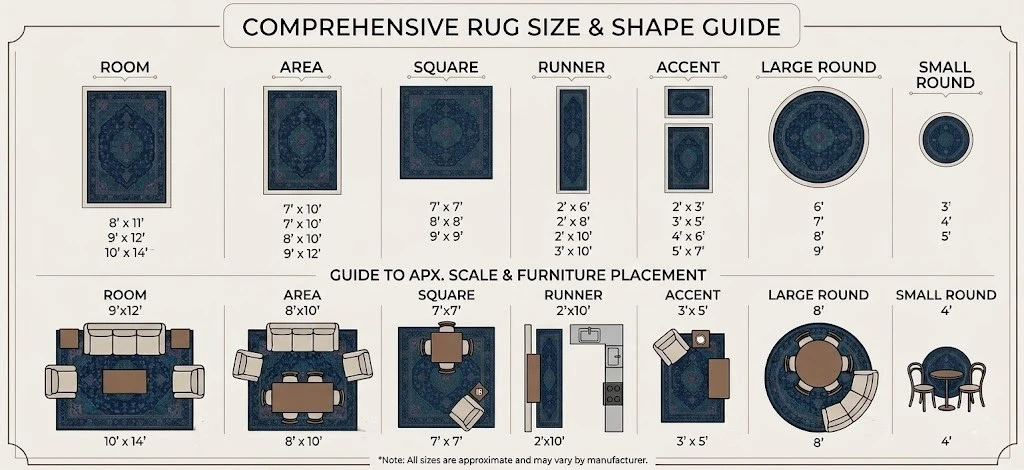
Rug Size Chart to Choosing the Perfect Rug
Choosing the right rug can completely transform a room. A well-chosen rug can tie everything together, define distinct zones, and dramatically boost the overall aesthetic appeal of your space. But a rug that’s too small? It can make your room feel disjointed, unbalanced, and even smaller than it is. That is why having the knowledge to select the correct rug is a crucial step in interior design. This comprehensive guide will walk you through everything you need to know, using a rug size chart to help you make the perfect choice. Let’s dive in and learn how to avoid common mistakes and create beautiful, functional spaces.
Understanding the Importance of Rug Size Charts
When it comes to interior design, a rug is more than just a floor covering. It’s a foundational element that can make or break the harmony of a room. This is why a rug size chart is an invaluable tool for any homeowner or interior design enthusiast. It provides a quick reference to standard dimensions and offers suggestions based on furniture arrangement and the room’s overall dimensions.
Choosing the wrong size can lead to several common problems. A rug that is too small can make your furniture feel out of proportion and the room as a whole appear smaller than it actually is. The financial consequences of selecting the wrong size can also be significant. You might need to replace the rug entirely, incurring unnecessary costs. Understanding how rug sizes affect the aesthetic and functionality of your rooms will help you create a space you love.
Rug Sizing Fundamentals: Avoiding Common Mistakes
To avoid the pitfalls of choosing an ill-fitting rug, it’s essential to grasp the basics of rug sizing. The goal is to ensure your room feels balanced and looks aesthetically pleasing.
Here are some fundamental tips applicable to any room:
- Measure the space: Before you even start browsing, accurately measure the entire room. Note the placement of doors, windows, and any fixed elements.
- Consider furniture placement: Decide how the rug will interact with your furniture. Will all the furniture sit on the rug, just the front legs, or none at all? This impacts the rug size you’ll need.
- Visualize: Use painter’s tape to mark out the dimensions of potential rug sizes on the floor. This lets you see exactly how the rug will fit within the space and interact with your furniture, giving you a clear visual before you commit to a purchase.
- Understand Standard Area Rug Sizes: Familiarize yourself with common dimensions like 5×8, 8×10, and 9×12. These standard area rug sizes will be your starting point.
By following these fundamental guidelines, you’re setting yourself up for success, ensuring your room is well-balanced and pleasing to the eye. For more information on this, check out our Rug Materials Guide: Your Comprehensive Guide to Choosing the Perfect Rug
Standard Area Rug Sizes Overview
Understanding standard area rug sizes is key to making informed decisions. Here’s a detailed breakdown of the most common dimensions and their typical applications:
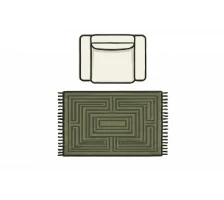
- 3×5 and 4×6: These smaller rugs are ideal for entryways, small seating areas, or in front of a sofa. They add a touch of warmth and style to more compact spaces.
- 5×7 and 6×9: Suitable for living rooms with smaller furniture arrangements or bedrooms. These sizes strike a balance between defining the space and not overwhelming it.
- 8×10: A versatile size that works well in living rooms, dining rooms, or large bedrooms. It can comfortably accommodate several pieces of furniture, defining a clear seating or dining area.
- 9×12 and Larger: Best suited for spacious living rooms or large bedrooms, these rugs can anchor large furniture arrangements, creating a cohesive and luxurious look.
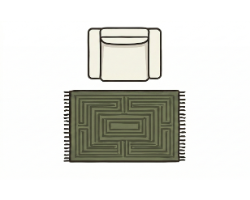
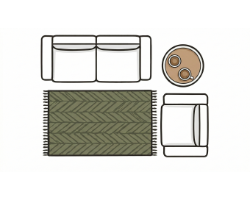
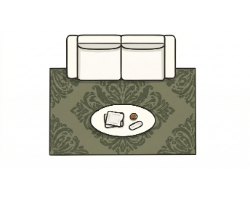
For a helpful visual aid, consider referencing a rug size chart or a graphic illustrating the dimensions and common uses of each size. A visual aid can significantly help in understanding the relationships between rug sizes and room configurations.
Rug Sizing for King Bed: A Bedroom Guide
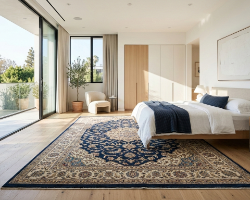
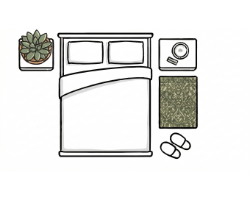
Let’s switch our focus to the bedroom, a space where the right rug can dramatically enhance comfort and aesthetics. When it comes to rug sizing for king bed setups, you have a few placement options to consider:
- All Furniture on the Rug: The rug extends far enough to accommodate the entire bed and nightstands. This creates a cohesive and luxurious look, making the bedroom feel unified.
- Front Legs on the Rug: Only the front legs of the bed and nightstands rest on the rug. The back legs are off the rug. This is a popular choice that anchors the bed while still allowing for floor space around the bed.
- Under Bed Only: The rug is placed primarily under the bed, extending only a few inches or feet beyond the foot of the bed. This is a good option when you want to add a touch of softness without covering the entire floor.
Based on these placement options, here are the rug size recommendations for king beds:
- All Furniture on the Rug: 9×12 or larger. The larger size ensures all furniture fits comfortably on the rug.
- Front Legs on the Rug: 8×10 rug, or a rug that is at least 2 feet wider than the bed.
- Under Bed Only: A rug that is a few feet wider and longer than the bed’s footprint.
Including diagrams illustrating each placement option can greatly help readers visualize these recommendations, making the process of choosing the right rug much easier.
8×10 vs 9×12 Rug: A Detailed Comparison
Choosing between an 8×10 vs 9×12 rug is a common dilemma, and the best choice depends on your space and needs.
- 8×10: This size often works well in smaller spaces, or as a starting point. It may be a cost-effective option for a smaller space, or a good starting point for a room, as it is relatively easy to find. However, in larger rooms with multiple seating arrangements, an 8×10 rug might seem a bit too small.
- 9×12: The 9×12 rug provides a more substantial presence, making a larger room feel more cohesive and grounded. It can anchor a large living room with multiple sofas and seating areas. It tends to provide a more luxurious feel.
The choice often comes down to your space.
- An 8×10 rug is a great choice for a living room with a smaller seating arrangement or a bedroom with a king size bed.
- A 9×12 rug is well-suited for a larger living room with multiple sofas and seating areas, or a dining room with a large table.
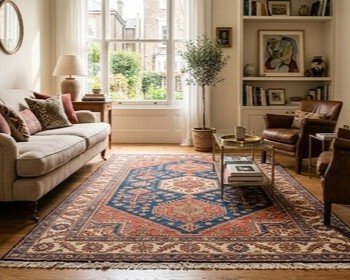
Consider including room mockups showcasing the difference in scale and impact between the two rug sizes to help readers visualize how they would work in their spaces. For more living room inspiration, check out our guide on How to place persian rug living room
Rug Size and Room Functionality
The size of your rug directly impacts the functionality of your space. Consider how rug size and room functionality intertwine when choosing your rug.
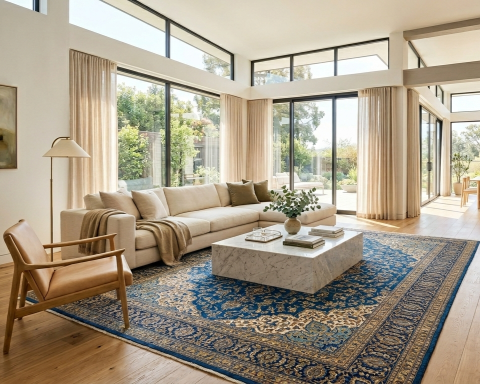
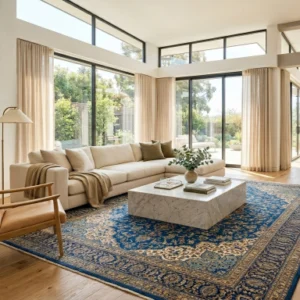
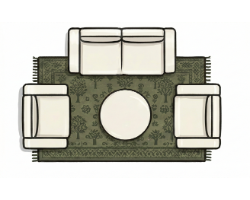
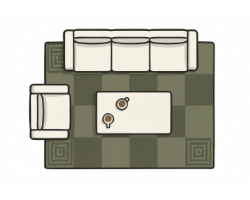
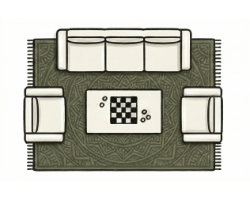
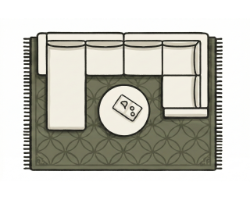
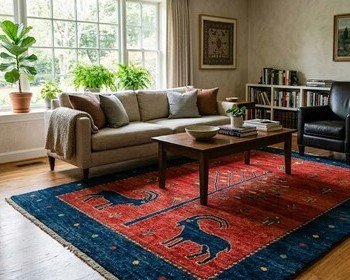
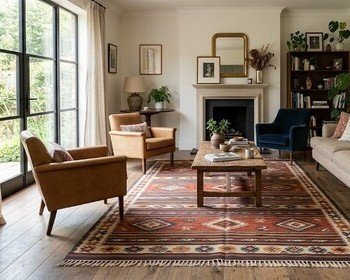
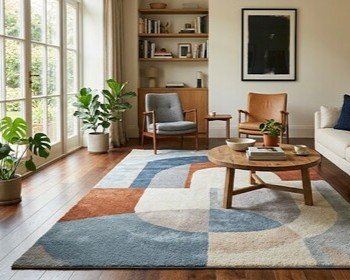
- Living Rooms: The rug should define the seating area, with the front legs of the furniture on the rug, or all legs. It’s important to consider how the rug’s edges affect walkways and traffic patterns. You can also get more tips in our Living Room Rugs: A Comprehensive Guide to Size, Placement, and Style blog.
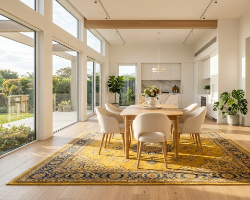
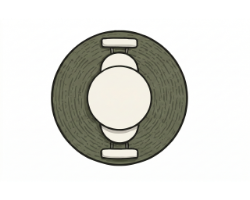
- Dining Rooms: A dining room rug should be large enough that chairs remain on the rug even when pulled out. This ensures comfort and ease of movement.
- Bedrooms: A rug placed under the bed should extend sufficiently beyond the bed to create a visual and functional balance. This placement allows for easy movement and a more comfortable experience.
Including visual examples like diagrams or illustrations demonstrating optimal furniture placement on a rug can greatly enhance understanding of these concepts.
Dining Room Rug Considerations and Clearance
When choosing a rug for your dining room, there are specific considerations to keep in mind. The primary goal is to ensure the rug complements the space functionally and aesthetically.
- Size Considerations: The rug needs to be large enough to accommodate the dining table and chairs, even when chairs are pulled out.
- Chair Movement: The rug should be at least 24-36 inches wider and longer than the table. This allows for chairs to be pulled out and moved without catching on the rug’s edge.
This focus on dining room rug clearance ensures that chairs slide smoothly and do not get stuck, improving the dining experience and making the space more comfortable.
Keep an eye out for potential deals like a “dining room rug clearance” to find great options at a lower price.
Conclusion: Making the Right Rug Choice
Choosing the perfect rug involves understanding the relationship between the rug and the room’s layout. By following the tips in this guide, you can confidently select a rug that enhances your space.
Remember to measure your space carefully, consider the furniture placement, and select the appropriate rug size. Refer to a rug size chart before your purchase to ensure you select the perfect rug.
Before making your final selection, consider the following:
- The room’s color scheme
- The amount of foot traffic
- Your personal preferences
For further assistance, consider exploring online rug size charts, interior design tools, or articles that may help you in the final decision.
Now, use a rug size chart before your purchase to ensure you select the perfect rug!
