




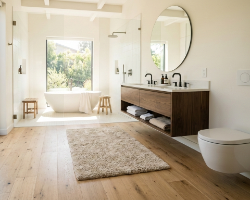

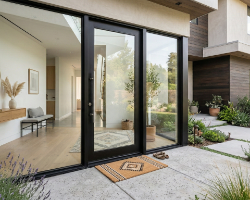







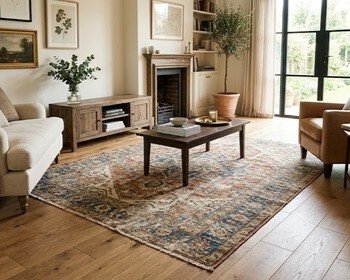







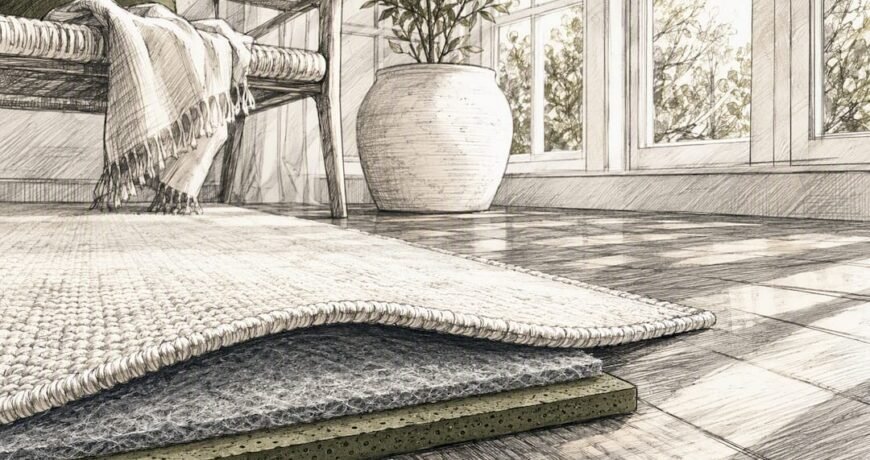
Yes, rugs are safe on hardwood floors, as long as you pair them with the right pad. The one rule that matters more than any other: always use a pad labeled safe for hardwood, whether that’s felt, natural rubber, or a felt and rubber combo. Skip that step and you risk scratches, slipping, or a sticky adhesive reaction with the finish. Get the pad right, and the rug actually protects the wood underneath it.
Key Takeaways
Rugs protect hardwood floors when paired with a hardwood-safe pad, sized correctly for the room, and maintained with regular cleaning underneath.
| Point | Details |
|---|---|
| Pad material matters most | Choose felt, natural rubber, or a felt+rubber hybrid; avoid PVC and solvent-based backings entirely. |
| Thickness balances comfort and clearance | Use 1/8 inch pads for tight door clearance, 1/4 inch for most rooms. |
| Size rugs to anchor furniture | Extend dining rugs 24–30 inches beyond the table and bedroom rugs 18–24 inches beyond the bed. |
| Clean underneath regularly | Lift rugs every month or two; trapped dirt causes more wear than foot traffic. |
| Rugsonlinemarket offers hardwood-safe picks | Washable and natural-fiber rugs ship free with 30-day returns. |
Table of Contents
- Quick Do’s and Don’ts for Rugs on Hardwood Floors
- Which Rug Pads Are Safe for Hardwood Floors?
- Rug Backings and Materials That Can Harm Hardwood
- How Should You Size and Place a Rug on Hardwood?
- Caring for Rugs on Hardwood and Fixing Common Problems
- Buying Checklist for a Hardwood-Safe Rug and Pad
- Sources
Quick Do’s and Don’ts for Rugs on Hardwood Floors
A few habits separate a rug that protects your floor from one that quietly wrecks it.
Do:
- Use a hardwood-safe pad under every rug, even small accent pieces.
- Vacuum underneath rugs every few weeks to keep grit from grinding into the finish.
- Choose low-pile or flat-weave rugs for entryways, hallways, and other high-traffic zones.
Don’t:
- Use PVC or plastic-backed rugs, or cheap PVC waffle pads, directly on wood.
- Let spills sit. Moisture that seeps under a rug can warp boards or dull the finish.
- Glue, tape, or otherwise adhere a rug directly to the floor.
Pro Tip: Before committing to a rug and pad combo long-term, set it in a hidden corner (a closet threshold works well) for a week and check underneath. If you see any tackiness or color change, return it before it touches your main living space.
Which Rug Pads Are Safe for Hardwood Floors?
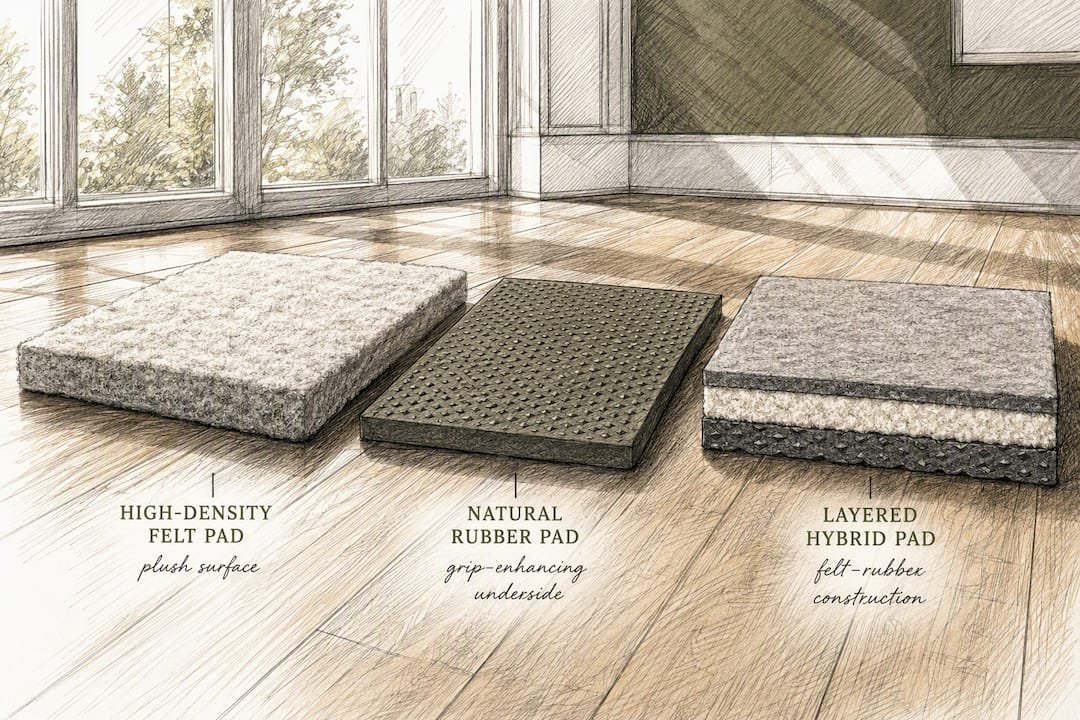
Felt, natural rubber, and felt+rubber hybrids are the three materials worth considering, and each solves a different problem. Felt cushions the rug and shields the finish from friction, but on its own it can let a rug creep across a smooth floor. Natural rubber grips the wood and stops that slide, though a rubber-only pad without a felt layer offers less padding underfoot. That’s why felt+rubber hybrid pads tend to top expert recommendations. They combine cushioning with traction, and neither layer carries the risk that PVC or solvent-based backings do.
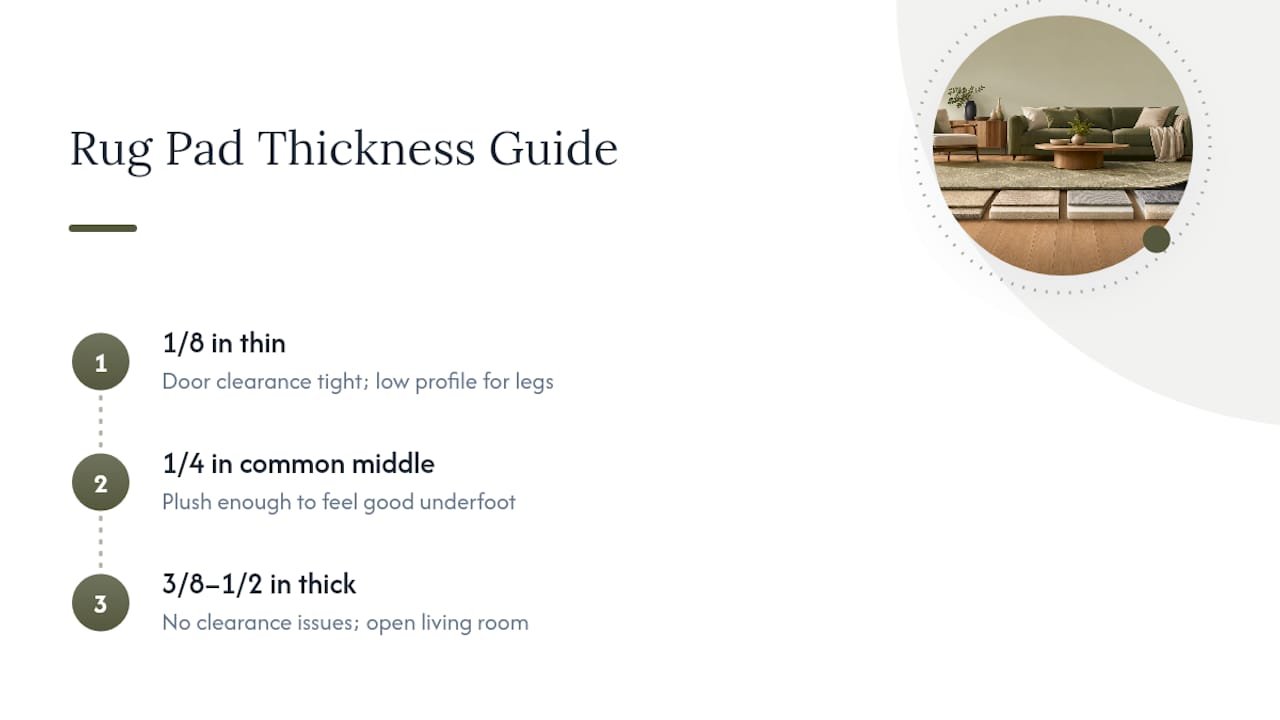
Thickness matters almost as much as material. Pads generally run from 1/8 inch up to 1/2 inch. A thin 1/8 inch pad makes sense where door clearance is tight or furniture legs need a stable, low profile. A 1/4 inch pad is the common middle ground, plush enough to feel good underfoot without creating a lip that trips anyone or throws off door swing. Anything thicker than 3/8 inch usually belongs under rugs in rooms with no clearance issues, like an open living room.
When you’re comparing pads, look for a few specific things: labeling that confirms it’s non-staining on hardwood, a breathable weave that doesn’t trap moisture against the wood, and an absence of solvent-based adhesives. One easy sizing rule: cut or order the pad one to two inches smaller than the rug all around, so the pad stays hidden and doesn’t peek out from the edges.
Pro Tip: If you go with a felt-only pad for extra cushioning, anchor the rug with furniture on at least two sides. Felt alone doesn’t grip the way rubber does, and an unanchored rug on a felt pad can shift underfoot.
Rug Backings and Materials That Can Harm Hardwood
The backing on the rug itself matters as much as the pad underneath it. A handful of materials show up again and again as the culprits behind stained or damaged finishes:
- PVC or vinyl-backed rugs, which can react with the floor’s finish over time, especially in warm or humid rooms.
- Latex-backed rugs, which sometimes leave a tacky residue that’s tough to remove without damaging the wood underneath.
- Synthetic adhesives used in some cheaper pads and rug backings, which can off-gas or bond to the finish itself.
Damage from these materials rarely shows up overnight. Watch for sticky residue when you lift a rug, a discolored patch shaped like the rug’s edges, a softened or gummy feel to the finish, or a faint grid pattern left by a waffle-style pad. Expert testing consistently flags cheap PVC waffle pads as a repeat offender for exactly this kind of grid staining. And never steam-clean a rug while it’s sitting on hardwood. The heat and moisture can push straight through to the wood, and carpet tape or solvent adhesives should stay off hardwood entirely.
How Should You Size and Place a Rug on Hardwood?
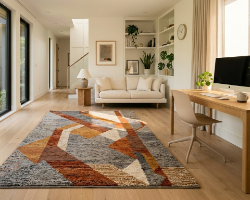
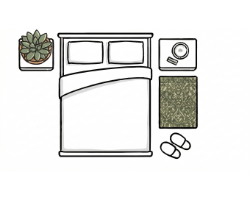
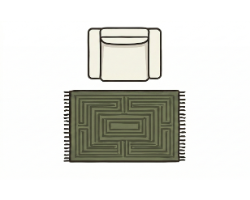
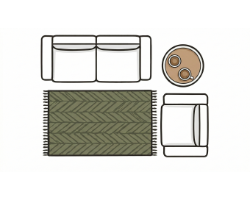
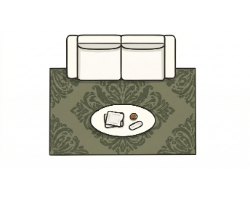
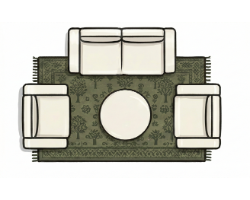
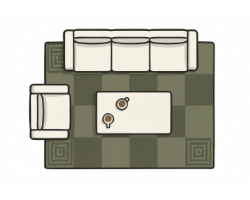
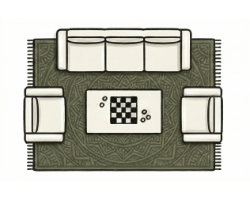
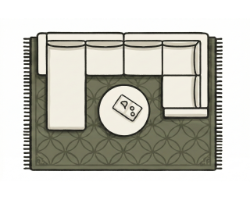
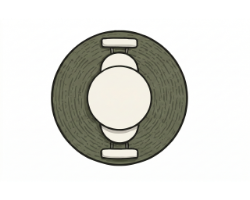
Sizing a rug correctly does double duty: it looks better, and it protects the floor from uneven wear. In a living room, get at least the front legs of your sofa and chairs onto the rug, or go bigger and land all four legs on it for a more grounded look. Dining room rugs need real margin. Extend the rug about 24 to 30 inches beyond the table edge so chairs stay on the rug even when pulled out. Bedrooms follow a similar logic. Extend the rug 18 to 24 inches beyond the bed for balanced coverage on both sides.
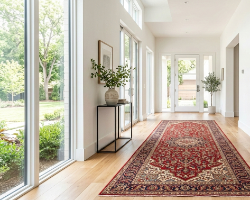
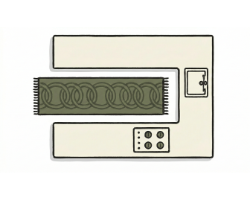
Runners in hallways should leave two to four inches of exposed wood on either side, and doorway clearance always deserves a check before you order. In open floor plans, one larger rug that ties a seating area together usually reads better and wears more evenly than several small mats scattered around, and it means you’re maintaining one pad system instead of five. Consistent sizing also reduces the dirt buildup and uneven sun fading that show up when a rug’s edge sits in the exact same spot for years. Our rug size chart breaks these measurements down room by room if you want exact numbers before you shop.
Caring for Rugs on Hardwood and Fixing Common Problems
A rug on hardwood needs a light maintenance rhythm, not a heavy one. Vacuum the rug itself weekly, and lift it every month or two to clean the exposed hardwood and the pad underneath. Dirt trapped beneath a rug does more long-term damage than most foot traffic ever does, since grit works like sandpaper against the finish every time someone steps on it.
When something spills, blot it immediately rather than rubbing, and avoid soaking the area. Dry the floor completely before setting the rug back down. If a spill is significant or the rug needs a deep clean, take it outside or to a professional cleaner rather than treating it in place. Steam cleaners and heavy wet-mopping can push moisture through the rug into the wood, which invites warping or mold under the pad. Our guide on removing rug stains walks through safer spot-cleaning steps if you’re dealing with a fresh spill right now.
A few troubleshooting notes worth keeping handy:
- Pad residue on the floor: a mix of warm water and a small amount of dish soap on a soft cloth usually lifts it without touching the finish.
- Curling rug edges: rolling the rug the opposite direction for a few days, or weighting the corners, typically flattens it back out.
- Discoloration or a soft, gummy finish: stop using that rug or pad immediately and call a flooring professional. That’s a sign the finish itself has been compromised.
Buying Checklist for a Hardwood-Safe Rug and Pad
Before you buy anything, whether in a store or online, run through a short set of questions. What is the rug’s backing material, and is it specifically labeled safe for hardwood floors? What’s the pad’s thickness, and does it match your door clearance and furniture setup? Does the listing disclose any adhesives or VOC content? And what’s the return policy if it turns out to be wrong for your floor?
Red flags to walk away from: plastic or PVC backing with no hardwood-safe labeling, adhesives that aren’t specified, a return policy that’s vague or nonexistent, or a pad marketed only “for carpet” with no mention of hardwood compatibility at all.
Pro Tip: Even after checking labels, test a corner sample for a week before you trust a new rug and pad combo in a high-visibility room. Labels tell you what a product should do. A week on your actual floor tells you what it will do.
Author Perspective on Recommended Combinations
If you ask me for one combination that gets it right most often, it’s a felt+rubber pad under a washable or natural-fiber rug. The felt protects the finish, the rubber stops slipping, and a washable top layer means spills and pet accidents don’t turn into a crisis. Pair that with proper drying, and it’s about as low-risk as rug ownership on hardwood gets.
Ready-Made Rug and Pad Options That Won’t Risk Your Floors
Finding a rug that’s genuinely safe for hardwood without guessing at backing materials or pad specs is the real friction point for most homeowners. Rugsonlinemarket carries washable and natural-fiber rugs built for exactly this, so you’re not stuck decoding vague listings or gambling on an unlabeled pad.

Browse the best washable rugs if your household deals with regular spills or pet traffic, or check the natural rugs category for wool and cotton options that pair well with a felt+rubber pad. Visit Rugsonlinemarket to find a rug and pad combination that fits your space and protects your hardwood from day one.
Sources
- Best Rug Pads for Wood Floors
- Rug on Hardwood Floors: Protection, Placement, and Care – Floor Chem Depot
Always check the pad’s own label before buying, and lean on Rugsonlinemarket’s rug guides for sizing and cleaning specifics.
