

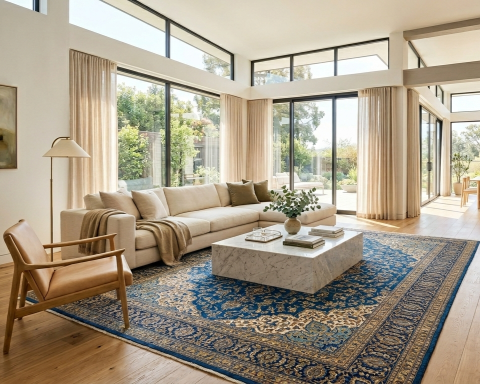
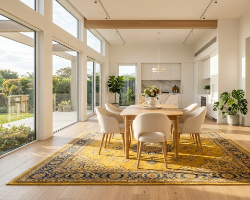
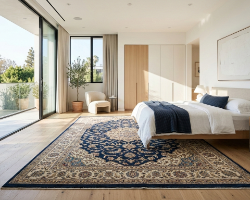









The best silk rugs are genuine, hand-knotted textiles made from 100% mulberry silk, distinguished by their regional origin, knot density, and design complexity. If you want the short answer before diving deeper: Persian silk rugs from Qum, Kashmir silk carpets, and Chinese silk rugs represent the pinnacle of the craft. Here is what separates a truly exceptional piece from an expensive imitation:
- Material: 100% mulberry silk, confirmed on the label. Terms like “art silk,” “bamboo silk,” or “viscose” signal synthetic substitutes.
- Construction: Hand-knotted, not machine-made or tufted. A hand-knotted 8’ x 10’ rug can take over a year to complete.
- Knot density: 200+ knots per square inch (KPSI) is the hallmark of fine craftsmanship and lasting value.
- Origin: Recognized weaving centers include Qum (Iran), Tabriz (Iran), Isfahan (Iran), Nain (Iran), Kashmir (India), and Suzhou (China).
- Design: Intricate floral, medallion, or pictorial motifs with tight, precise detail only achievable at high knot counts.
- Care requirements: Silk rugs need low-suction vacuuming, no beater bars, and professional cleaning every 2–3 years.
What are the best silk rugs by region?
Regional origin shapes nearly everything about a silk rug: the knot style, the color palette, the motifs, and the price ceiling. These are the major traditions worth knowing.
Persian silk rugs
Persian silk rugs from Iran are widely regarded as the gold standard. Four cities dominate:
Qum (Qom): The most celebrated source of pure silk rugs in the world. Qum weavers use Persian (Senneh) knots at extraordinary densities, producing pieces with photographic-level detail. Floral medallions, hunting scenes, and garden designs are common. A Qum silk rug is rarely a floor piece; most collectors display them on walls.
Tabriz: Tabriz rugs often combine silk pile with a wool or cotton foundation, making them slightly more durable for light foot traffic. The city’s weavers are known for medallion-and-corner compositions and a broad, sophisticated color range. Tabriz also produces all-silk pieces, though they are less common than Qum’s output.

Isfahan: Isfahan silk rugs feature exceptionally refined arabesque and floral patterns, often with a central medallion surrounded by intricate vine scrollwork. The city’s long weaving tradition produces pieces with a balanced, formal elegance that suits both traditional and transitional interiors.
Nain: Nain rugs typically use a cream or ivory ground with blue and navy accents. Silk is woven into the pile alongside wool to add sheen and definition to the fine floral and arabesque patterns. True all-silk Nain pieces exist but are rare.

Pro Tip: When buying a Persian silk rug, ask for the city of origin in writing. “Persian” alone tells you nothing about quality; “Qum, 100% silk” tells you almost everything.
Kashmir silk rugs
Kashmir, in northern India, produces some of the most technically accomplished silk rugs outside Iran. Kashmiri weavers use the Persian knot and achieve knot counts that rival Qum. The designs draw heavily from Persian traditions but often incorporate distinctive local motifs: the paisley (boteh), the chinar leaf, and elaborate floral borders. The color palette tends toward jewel tones: deep reds, sapphire blues, and emerald greens. A quality Kashmir silk rug for a living room setting typically measures 5’ x 8’ or 6’ x 9’ and represents a serious long-term investment.
Chinese silk rugs
Chinese silk rugs, particularly those from Suzhou and Ningxia, follow a completely different aesthetic tradition. Where Persian rugs favor dense, all-over patterns, Chinese pieces often feature open fields with central medallions, pictorial scenes (dragons, phoenixes, landscapes), or Art Deco-influenced geometric designs. The Fenghua knot used in Chinese weaving creates a distinctive sculptural pile, with motifs that appear almost three-dimensional. Chinese silk rugs tend to have a softer, more lustrous sheen than their Persian counterparts. You can browse a hand-knotted Chinese silk rug to see this quality firsthand.
Turkish silk rugs
Turkish silk rugs, especially those from Hereke, are among the rarest and most valuable in the world. Hereke weavers use the Turkish (Ghiordes) knot, which is symmetrical and produces a particularly dense, durable pile. Hereke silk rugs are characterized by extremely fine weaving, often exceeding 400 KPSI, with miniature floral and medallion patterns. They are almost exclusively collector pieces. Other Turkish regions, including Kayseri, produce more accessible silk-blend rugs with bolder geometric patterns.
Modern silk rugs
Contemporary designers have embraced silk for abstract, minimalist, and transitional pieces that work in modern interiors. These rugs often use silk alongside wool or bamboo fiber (though bamboo fiber is not genuine silk) and may be machine-woven. The key distinction: a modern hand-knotted silk rug from a recognized workshop holds value; a machine-made “silk-look” piece does not. For silk rugs in a living room with a contemporary aesthetic, look for hand-knotted pieces with abstract or geometric patterns in neutral palettes.
How materials and construction determine silk rug quality
The fiber and the weaving method are the two variables that determine everything else: texture, luster, durability, and price.
Silk types compared
| Silk Type | Source | Luster | Durability | Typical Use |
|---|---|---|---|---|
| Mulberry silk | Bombyx mori silkworm | Layered, shifting glow | Excellent with proper care | Fine hand-knotted rugs |
| Tussah (wild) silk | Wild silkworms | Matte, earthy tone | Good | Rustic or tribal rugs |
| Art silk (viscose/rayon) | Wood pulp or petroleum | Uniform, plastic-like shine | Poor; pills and stiffens | Budget machine-made rugs |
| Bamboo silk | Bamboo cellulose | Similar to viscose | Poor | Marketed as eco-friendly alternative |
Mulberry silk is the only fiber that earns the “luxury silk rug” designation without qualification. It comes from silkworms fed exclusively on mulberry leaves, producing a continuous filament of exceptional fineness and strength. Real silk ages gracefully, maintaining luster and texture over years, while synthetics tend to pill, lose color, or stiffen.
Construction methods
- Hand-knotted: Each knot tied individually by a weaver. The gold standard for quality and longevity. A small rug can take months; a large piece, years.
- Hand-tufted: A tool punches loops of yarn through a backing. Faster and cheaper, but lacks the structural integrity of hand-knotted work and typically lasts 10–20 years.
- Machine-made: Produced in hours. Fringes are sewn on rather than being extensions of the foundation. Knots on the back align in perfect rows, a clear sign of machine weaving.
- Foundation material: Most fine silk rugs use a cotton foundation, which provides dimensional stability without adding weight. Some high-end pieces use a silk warp and weft throughout.
The pile height also matters. Silk rugs are typically woven with a short, tight pile that maximizes detail and produces the characteristic directional sheen: the rug appears lighter from one angle and darker from another.
What do the designs and symbols in silk rugs mean?
Silk rug designs are not decorative accidents. Every motif carries meaning rooted in Persian, Indian, or Chinese cultural traditions, and understanding them helps you choose a piece that resonates beyond its visual appeal.
Common motifs and their meanings:
- Medallion (Shamsa): A central sunburst or floral medallion represents the cosmos, the sun, or divine order. Found in Tabriz, Isfahan, and Kashan rugs.
- Boteh (Paisley): A teardrop-shaped motif symbolizing a leaf, a flame, or a cypress tree bent by wind. Central to Kashmiri design and Persian tribal work.
- Herati pattern: A fish-in-a-diamond repeat motif common in Persian rugs, symbolizing water and abundance. The “fish” (mahi) are actually stylized leaves.
- Tree of Life: A vertical tree with spreading branches represents immortality and the connection between earth and heaven. Common in Persian and Caucasian rugs.
- Dragon: In Chinese silk rugs, the dragon symbolizes imperial power, good fortune, and protection. Five-clawed dragons were historically reserved for the emperor.
- Phoenix: Paired with the dragon in Chinese pieces, the phoenix represents the empress, feminine power, and renewal.
- Hunting scenes (Shah Abbas): Elaborate Persian compositions depicting royal hunts symbolize power, nobility, and the triumph of order over chaos.
- Floral arabesques: Continuous vine-and-flower scrollwork in Persian rugs represents paradise (the Persian word “pairidaeza” is the root of “paradise”).
Color carries equal weight. Red traditionally signals joy and prosperity in Persian rugs; blue represents spirituality and the divine; ivory or cream grounds suggest purity and refinement. In Chinese rugs, gold and yellow historically indicated imperial status, while blue-and-white combinations reflect the influence of Chinese porcelain traditions.
How to choose and care for the best silk rugs
Selecting the right rug
Buying a silk area rug well requires checking several things before you commit:
- Verify the label: Labels not stating “100% silk” or “100% mulberry silk” are almost never genuine silk. “Art silk,” “bamboo silk,” and similar terms signal synthetics or cellulose-based imitations.
- Check the back: Hand-knotted rugs show slightly uneven knots on the reverse. Machine-made rugs have perfectly uniform rows.
- Assess the sheen: Authentic silk shows a layered, water-like luster that shifts with the viewing angle. Synthetic fibers produce a flat, uniform, plastic-like shine.
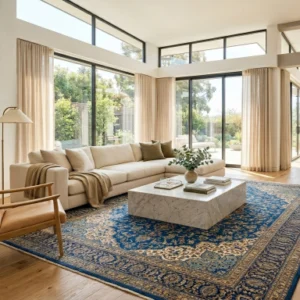
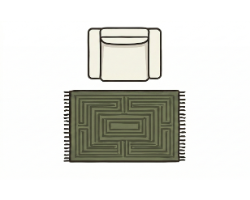
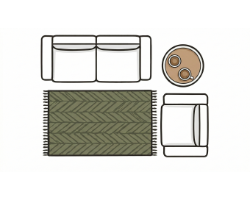
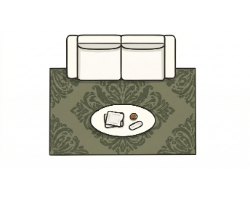
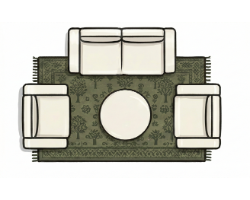
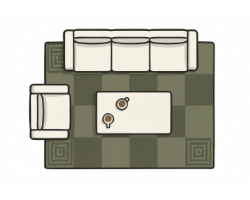
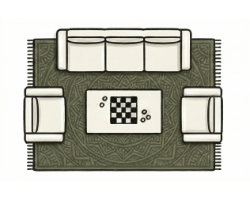
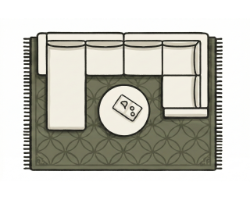
- Size for the room: For a living room, a 8’ x 10’ or 9’ x 12’ rug anchors a full seating arrangement. A 5’ x 8’ works well under a coffee table in a smaller space. For sizing guidance, Rugsonlinemarket’s rug size and color guide covers the key rules for every room type.
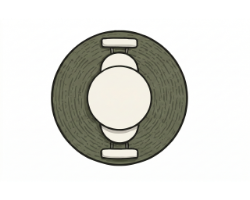
- Placement: Silk rugs perform best in low-traffic areas: formal living rooms, bedrooms, studies, or as wall hangings. High-traffic hallways and dining rooms accelerate wear.
Caring for silk rugs
Silk fiber has no elasticity, making it sensitive to moisture, heat, harsh chemicals, and aggressive vacuuming.
- Vacuuming: Use a canister vacuum with adjustable suction and a soft parquet floorhead. Canister vacuums cause 78% less fiber stress than uprights with beater bars. The Miele Complete C3 Marin is a well-regarded option for this purpose.
- Beater bars: Disable them entirely. Standard upright vacuums with spinning brushes immediately damage silk fibers, causing fraying and bald spots.
- Fringes: Never vacuum the fringes directly. The fringes are warp threads critical to the rug’s structure; brush them gently with a soft horsehair brush instead.
- Spills: Blot immediately with a clean, dry cloth. Never rub. Avoid enzymatic cleaners, which degrade silk fibers through acidity.
- Rotation: Rotate the rug 180 degrees every three months to distribute wear and prevent uneven fading from sunlight.
- Professional cleaning: Schedule professional cleaning every 2–3 years. Specialists use pH-neutral silk shampoo and air-dry the rug flat. Hot water extraction destroys silk fibers and should never be used.
Pro Tip: For routine maintenance, vacuum a silk rug once every one to two weeks in low-traffic rooms, and once a week in moderate-use spaces. Always move the vacuum head slowly in the direction of the pile, never against it.
How to identify real silk and avoid common scams
Fake silk in the rug market is widespread. A genuine hand-knotted silk rug can be 10 to 20 times more expensive than a synthetic imitation, which creates strong incentives for mislabeling.
The most reliable identification tests:
- Luster test: Tilt the rug under natural light. Real silk produces a shifting, multi-tonal glow that changes from light to dark as the angle changes. Synthetic fibers maintain a uniform, mirror-like shine regardless of angle.
- Touch test: Real silk feels warm and slightly grippy in your hand. Synthetics feel cold and slippery.
- Sound test: Rub two sections of real silk together briskly. Genuine silk produces a distinctive crisp rustling called “silk scroop.” Synthetics crackle or make no sound.
- Burn test: With the seller’s permission, pull a few fibers from an inconspicuous area and hold them to a flame. Real silk burns slowly, smells like burning hair, and leaves a crushable ash. Synthetic fibers melt, bead into a hard plastic ball, and smell like burning plastic.
- Knot count: Request the KPSI specification. Rugs with 200+ KPSI indicate fine craftsmanship consistent with authentic Persian and Kashmiri silk work.
Common scam terms to avoid: viscose, rayon, bamboo silk, modal silk, cactus silk, lyocell silk, faux silk, banana silk, and art silk. None of these are genuine silk, regardless of how they are marketed.
The FTC’s textile labeling requirements are clear: a rug must accurately state its fiber content. If a seller cannot or will not provide a label stating “100% silk” or “100% mulberry silk,” treat that as a red flag. Rugsonlinemarket’s silk rug care guide also covers authenticity markers worth reviewing before you buy.
Silk vs. other luxury rug materials:
| Material | Luster | Durability | Best Use | Price Range |
|---|---|---|---|---|
| 100% mulberry silk | Exceptional | High (with care) | Low-traffic, display | High to very high |
| Wool | Moderate | Very high | All-traffic areas | Moderate to high |
| Silk-wool blend | Good | High | Light to moderate traffic | Moderate to high |
| Cotton | Low | Moderate | Casual, washable rugs | Low to moderate |
| Viscose/art silk | Uniform, flat | Low | Short-term decorative use | Low |
Wool rugs, including hand-knotted Persian wool pieces, are the practical alternative for households with children or pets. They offer comparable craftsmanship and regional heritage at lower price points, with far greater tolerance for foot traffic and cleaning.
Where to buy authentic silk rugs you can trust
Buying a luxury silk rug online or in person requires choosing sellers who can document what they are selling.
What to look for in a trusted seller:
- Clear fiber content labeling (“100% mulberry silk” stated explicitly)
- Documented region of origin and weaving center
- Knot count or KPSI specification available on request
- Return policy that allows home inspection (at least 30 days)
- Transparent pricing that reflects genuine hand-knotted production costs
- Expertise in Oriental and Persian rugs, not just general home decor
Marketplaces and seller types:
Established Oriental rug dealers with physical inventory and in-house expertise remain the most reliable source for high-value pieces. They can provide provenance documentation, condition reports, and professional appraisals. For buyers who prefer online purchasing, the key is finding retailers who specialize in handmade rugs rather than general home goods platforms, where mislabeling is harder to police.
Rugsonlinemarket carries a curated selection of authentic handmade rugs, including silk and silk-blend options, with free shipping on orders over $300 and a 30-day return window. The full rug collection includes Persian, Indian, and Chinese hand-knotted pieces across a range of sizes and price points, with detailed product descriptions that specify materials and construction.
Price as a quality signal: A genuine hand-knotted silk rug measuring 5’ x 8’ from a recognized weaving center rarely costs less than several thousand dollars. If a price seems too low for what is being described, the fiber or the construction method is almost certainly not what the label claims.
Rugsonlinemarket offers expert guidance on selecting the right piece for your space, with a 100% feedback guarantee and a collection that spans traditional Persian styles to contemporary designs. Browse the premium rug shop to find authentic options that match your room, your style, and your budget.
Key Takeaways
The best silk rugs combine 100% mulberry silk, hand-knotted construction, and a knot density exceeding 200 KPSI, with regional origin (Qum, Kashmir, Hereke, Suzhou) as the primary driver of value and authenticity.
| Point | Details |
|---|---|
| Material is non-negotiable | Only “100% mulberry silk” on the label confirms genuine fiber; all other terms signal synthetics. |
| Knot density signals quality | Authentic Persian silk rugs with 200+ KPSI indicate fine craftsmanship and lasting value. |
| Region shapes everything | Qum, Kashmir, Hereke, and Suzhou each produce distinct styles, knot types, and price tiers. |
| Vacuuming requires care | Canister vacuums cause 78% less fiber stress than uprights with beater bars; disable beater bars entirely. |
| Professional cleaning matters | Deep cleaning every 2–3 years with pH-neutral shampoo and air drying preserves silk luster and structure. |
