
































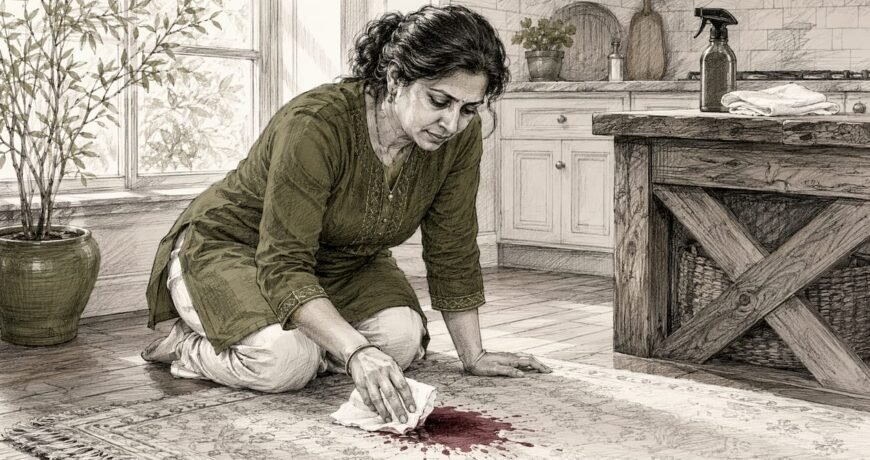
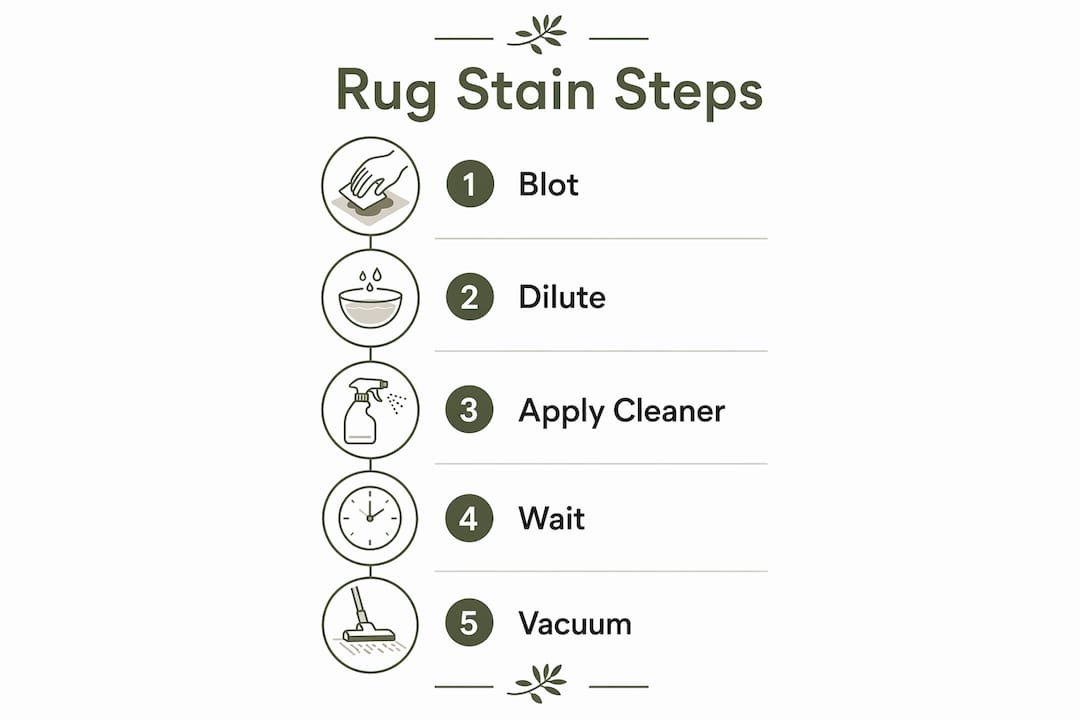
The fastest way to remove rug stains is to blot immediately, use cold or lukewarm water, and match your cleaning method to both the stain type and your rug’s material. Scrubbing, soaking, or grabbing a harsh cleaner first are the moves that turn a manageable spill into a permanent problem.
Keep these core principles in mind before you touch any stain:
- Blot, never rub. Rubbing pushes stains deeper into the pile and distorts the fibers.
- Work from the outside in. Start at the stain’s edge and move toward the center to contain it.
- Use cold or lukewarm water. Hot water sets protein stains and can shrink or felt wool fibers.
- Test every cleaner first. Apply to a hidden corner and wait a few minutes before treating the stain.
- Control moisture. Over-wetting causes browning, mold, and odor that outlast the original stain.
- Dry thoroughly. Use a fan or open windows after cleaning to prevent mildew.
How do you remove rug stains step by step?
The method changes depending on what spilled and what your rug is made of. Here is how to handle the stains most homes see regularly.
Wine and coffee
Get wine out of a rug by blotting immediately with a dry white cloth. Do not press so hard that the liquid migrates deeper into the foundation. Once you have absorbed as much as possible, lightly dampen the area with cold water and blot again. If color remains, mix a small drop of mild dish soap in cool water, dab sparingly, then rinse with a water-dampened cloth and blot dry. On richly dyed or delicate artisan rugs, test first because dye movement is possible.
Coffee follows the same logic. Tannin stains leave a yellow-brown cast if they dry fully, so repeat gentle blotting before the spot sets. If milk or sugar was in the drink, rinse lightly and blot thoroughly. Sticky residue left behind attracts more dirt over time.
Pet urine
Treat pet stains promptly by blotting up as much liquid as possible first, then applying cold water to dilute the urine and blotting again. Follow with an enzyme cleaner labeled for pet accidents. Enzyme cleaners break down odor-causing organic matter rather than just masking it, which is why they outperform general household sprays on urine. After treatment, blot dry and allow the area to dry completely. If odor returns once the rug dries, the accident likely reached the backing or pad beneath, and surface treatment alone will not resolve it.
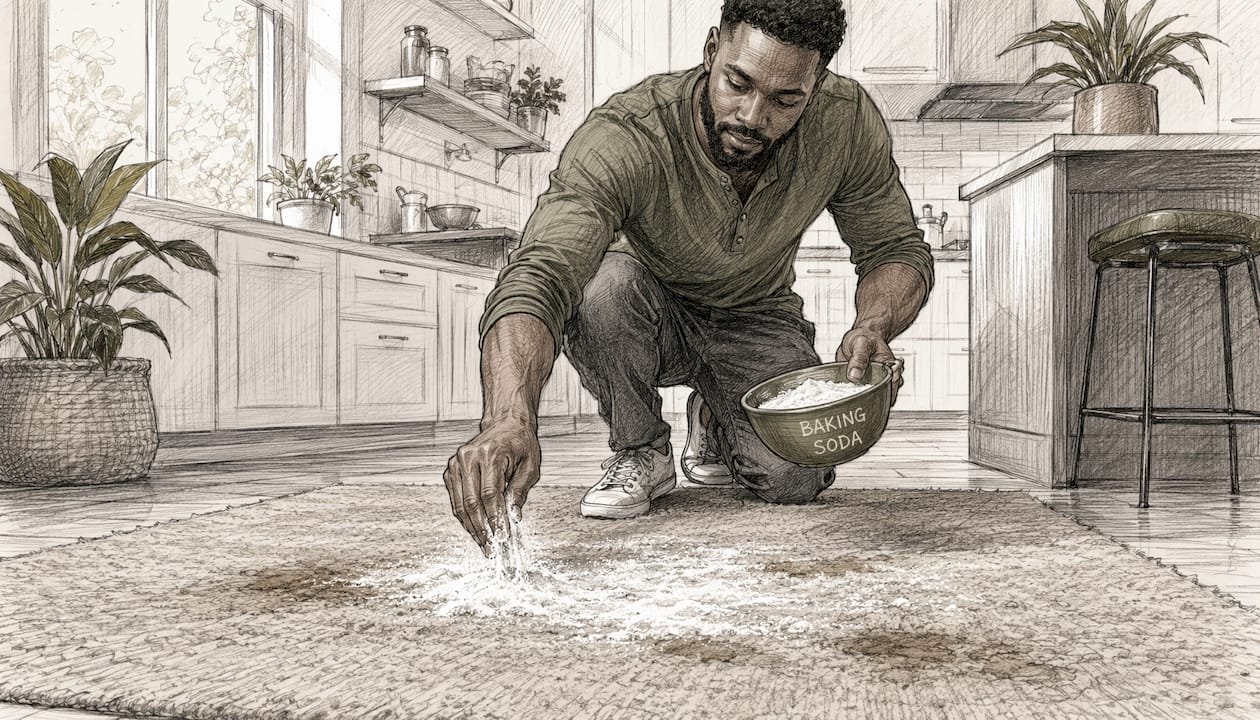
Pro Tip: Sprinkle baking soda over the treated area after the enzyme cleaner dries, let it sit for a few hours, then vacuum. It pulls residual odor out of the fibers without adding moisture.
Grease and food spills
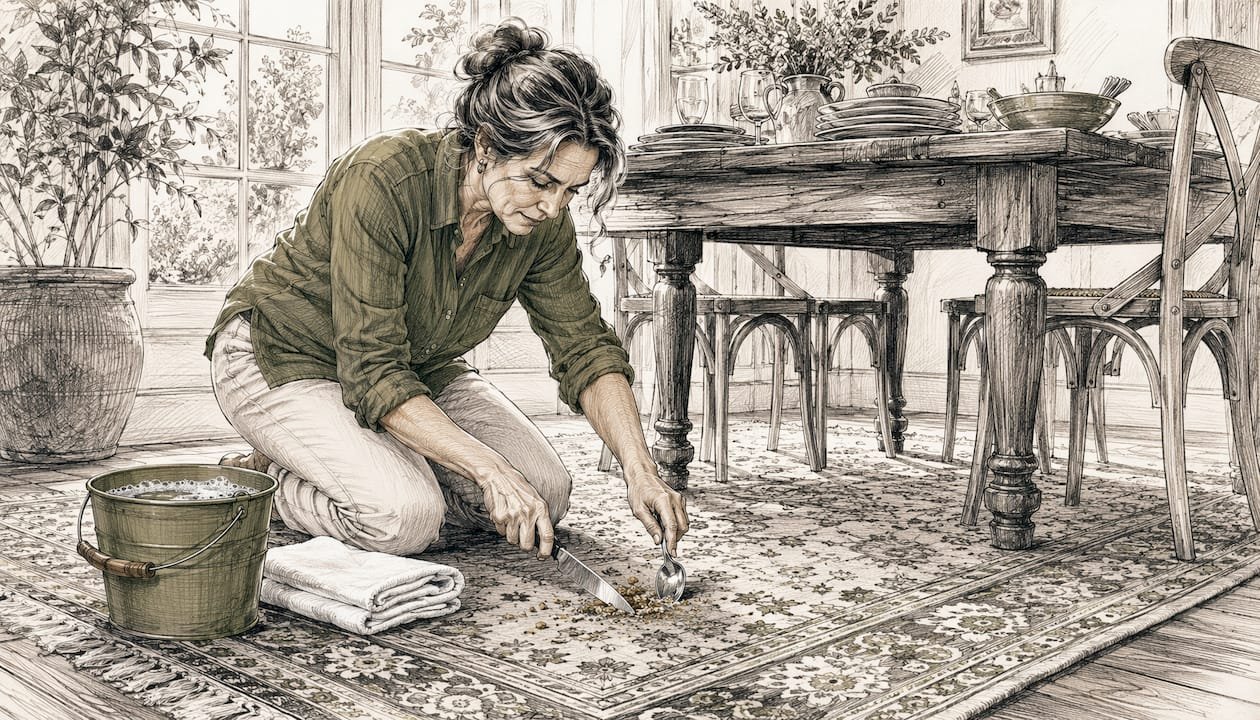
Scrape away solids with a spoon or dull knife before introducing any liquid. Blot gently with a dry cloth to lift as much grease as possible. Then apply mild dish soap diluted in cool water with a cloth, not poured directly onto the rug. Oil spreads if the cloth is too wet, so work slowly and blot between passes. Rinse lightly and blot until the cloth comes away clean.
Mud and dried stains
Let wet mud dry completely before you do anything. Vacuuming or scraping damp mud spreads it further. Once dry, vacuum up loose soil, then use a soft brush to break apart any compacted dirt. If a shadow remains, dab lightly with water and a small amount of mild soap, then blot dry.
Old stains need a longer dwell time. Apply your cleaning solution, let it sit briefly, then blot. Repeat rather than scrubbing harder.
Rug material matters
- Wool: Tolerates mild soap and cold water well. Avoid hot water and alkaline cleaners, which cause felting.
- Synthetic (nylon, polyester): Generally the most forgiving. Mild soap, enzyme cleaners, and even diluted hydrogen peroxide on light-colored synthetics are usually safe after spot testing.
- Silk and viscose: Absorb moisture unevenly and brown easily. Blot only, use as little liquid as possible, and escalate to professional care quickly. See silk rug care tips before attempting any home treatment.
- Jute and sisal: Water causes browning and fiber distortion. Dry blotting and professional cleaning are the safest options.
What mistakes make rug stains worse?
Most cleaning failures come down to a handful of repeatable errors. Knowing them is half the battle.
- Scrubbing or rubbing. This spreads the stain, distorts the pile, and pushes pigment deeper into the foundation.
- Using hot water. Heat permanently sets protein-based stains like blood, egg, and dairy, and can shrink natural fibers.
- Over-wetting. Applying too much liquid saturates the rug foundation and creates mildew that is harder to fix than the original stain.
- Skipping the spot test. Color bleeding on hand-dyed or vintage rugs can be irreversible. Always test on a hidden area first, especially on antique or hand-knotted pieces.
- Waiting too long. The longer a stain sits, the more it bonds with the fibers. Fresh spills lift in minutes; dried ones may take multiple treatments.
- Not drying thoroughly. Damp rugs attract bacteria and develop persistent odors. Always use a fan or ventilated space after cleaning.
- Using too much cleaning product. Residue left in the fibers attracts dirt and creates a sticky patch that looks worse over time.
Carpet cleaning professionals consistently flag over-wetting as the single most damaging mistake homeowners make. A light touch with liquids, repeated if needed, beats a heavy soak every time.
Which household products actually work on rug stains?
You do not need a cabinet full of specialty products. A few well-chosen items handle most situations.
Baking soda is the best starting point for dried spills and odors. Sprinkle it on the affected area, let it sit for several hours, then vacuum. It absorbs residual moisture and deodorizes without adding liquid or risking fiber damage.
White vinegar diluted with water (roughly one part vinegar to two parts water) works as a versatile stain remover and odor neutralizer. It is particularly useful for pet accidents and tannin stains. Avoid using it on wool in high concentrations, as the acidity can weaken fibers over time.
Hydrogen peroxide can lift stubborn organic stains on light-colored synthetic rugs, but use it cautiously. It can bleach or discolor darker fibers, so spot testing is non-negotiable. Never use it on wool, silk, or richly dyed rugs.
Clorox 2 Color Safe Bleach is formulated for use on colorfast fabrics and can be an option for synthetic rugs with set-in stains, but always check the rug’s care label and test on a hidden spot first. It is not appropriate for wool, silk, or natural fiber rugs.
Enzyme cleaners are the right tool for pet urine, blood, and other organic stains. They break down the compounds causing the odor rather than covering them up, which is why the smell does not return after the rug dries.
Mild dish soap diluted in cool water handles greasy and food-based stains effectively. Use only a drop or two per cup of water. Rinse thoroughly afterward, since soap residue left in the pile attracts dirt.
Pro Tip: Place a folded white towel over the treated area and set a heavy book on top for 15–20 minutes. The weighted blotting draws deep moisture up through the towel rather than leaving it in the rug foundation. Move the weight every few minutes to avoid re-depositing what the towel has absorbed.
For antique, silk, or hand-knotted rugs, the safest household approach is dry blotting only. The same care principles that apply to Persian rug cleaning apply to any high-value piece: when in doubt, call a professional before attempting a home remedy. The same logic applies to upholstery. If you want to understand how fabric type affects stain resistance more broadly, stain-resistant fabric options for sofas follow similar principles to synthetic rug fibers.
The easier long-term fix: choose a rug built for real life
If stains are a recurring problem in your home, the rug itself may be part of the answer. Rugsonlinemarket’s washable rug collection includes options designed specifically for high-traffic areas, households with pets, and families with kids. These rugs handle spills without the same risk of permanent damage that delicate natural fiber pieces carry.

Browse the full collection at Rugsonlinemarket and filter by material, pile height, and room type to find a rug that fits both your space and your lifestyle.
Key Takeaways
Blotting immediately with cold water and the right cleaner for your stain type prevents most spills from becoming permanent damage.
| Point | Details |
|---|---|
| Blot first, always | Use a clean white cloth and work from the stain’s edge toward the center. |
| Cold water only | Hot water sets protein stains and can shrink wool or natural fibers permanently. |
| Match cleaner to stain | Enzyme cleaners for pet urine, dish soap for grease, baking soda for odors and dried spills. |
| Control moisture | Over-wetting saturates the rug foundation and causes mildew harder to fix than the original stain. |
| Dry completely | Use a fan or ventilated area after every cleaning session to prevent odor and bacteria. |
