











A stair runner instantly improves safety, cuts down noise, and transforms a plain stairway into a design feature. The best choices generally fall into five families: natural-texture (sisal, jute), bold pattern (geometric, Persian, stripes), trimmed and edged custom builds, ombré or color-blocked runs, and washable options for high-traffic households. What follows is a scan-ready gallery of ideas, then the sizing, material, installation, and care rules that keep any of them looking sharp for years.
TL;DR:
- Wool remains the best option for high-traffic staircases due to its stain resistance and durability, while washable fibers are preferable for mudrooms and basements.
- Proper sizing generally involves a 27 or 36-inch width with 3 to 4 inches of exposed wood on each side, adjusted for staircase width and shape.
- Patterns should be scaled to the staircase’s geometry, with small repeats or tonal designs favored for curved stairs and large patterns centered on straight runs.
- Waterfall installation creates a modern, seamless look, while French cap offers a traditional, tailored finish, with edges finished by folding or binding for durability.
- Regular cleaning includes weekly vacuuming with an upholstery attachment and professional deep cleaning every 12 to 18 months to maintain appearance and lifespan.
Table of Contents
- Stair Runner Ideas to Copy in Your Own Home
- How to Choose the Right Stair Runner Material, Width, and Pattern
- Installation Styles, Edge Finishes, and Stair Rods Explained
- Keeping a Stair Runner Clean and Looking Sharp
- Publisher Perspective: What Rugs Online Market Recommends
- Shop Stair Runners at Rugs Online Market
- Sources
- FAQ
Stair Runner Ideas to Copy in Your Own Home
Stair runners do three jobs at once: they reduce noise, add grip, and protect the wood underneath, while also functioning as one of the highest-impact decorative moves in a house. A hallway rug gets noticed. A stair runner gets walked on twenty times a day and seen from three different angles, which is exactly why the pattern and material choice below matter more than most homeowners assume.
Here are the concepts worth stealing, organized loosely by aesthetic.
- Natural sisal, full run. Undyed sisal reads clean and organic against painted white risers. It suits craftsman, farmhouse, and coastal homes, but keep in mind it can feel rough underfoot and tends to snag on rings or heels, so foot-traffic patterns matter before you commit.
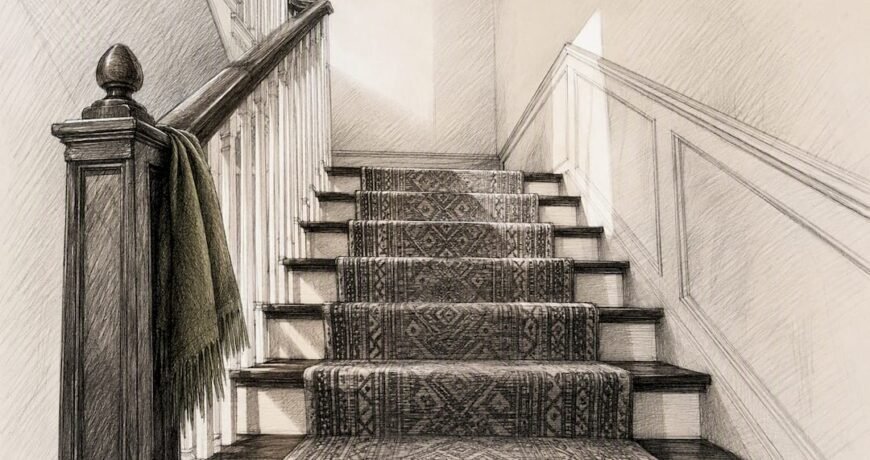
- Classic wool herringbone. A tight herringbone weave in oatmeal or charcoal wool is the safest bet for a main staircase that gets daily use. Wool holds up to years of foot traffic and resists stains naturally.
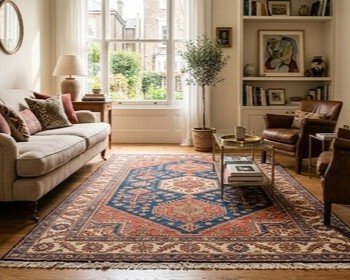
- Persian or Oriental medallion runner. A deep red or navy Persian-style runner turns a plain staircase into a focal point, especially in traditional or transitional homes with dark wood treads. Center the medallion pattern on the most visible run of stairs rather than letting it fall awkwardly at a landing.
- Bold geometric. Black-and-white chevron or diamond patterns work in modern and mid-century homes. Because geometrics repeat in tight intervals, they hide dirt and wear better than solid colors.
- Classic stripes. Two-tone or three-tone stripes running the length of the stair are the most forgiving pattern for beginners. They read as intentional even on a budget runner, and vertical stripes visually lengthen a short staircase.
- Two-tone edging on a solid field. A plain wool or wool-blend runner with a contrasting binding, think navy field with a mustard edge, is one of the simplest upgrades available. Designers increasingly use bold trims and contrasting bindings as a low-cost way to make a neutral runner feel custom.
- Ombré gradient. A runner that shifts from pale blush at the top step to deep terracotta at the bottom (or vice versa) adds movement without competing with wall art or a patterned entry rug.
- Color-blocked treads. Rather than one continuous runner, some homeowners use individual tread-sized rug pieces in alternating colors. It is unconventional, but it reads as art in a home with otherwise minimal decor.
- Painted runner illusion. For a temporary or ultra-budget option, painters tape and floor paint can mimic a runner directly on the wood. It is not a substitute for an actual rug’s cushioning or noise reduction, but it works as a stopgap in a rental.
- Stair rods over a plain runner. Brass or matte black stair rods at each tread junction add a formal, old-world detail. Stair rods clamp the runner in place at the tread and riser without adhesive, so removal for cleaning is simple.
- Wide-reveal showcase. On a staircase with beautiful hardwood, going with a narrower runner (24 to 27 inches) and showing more wood on each side highlights the treads themselves rather than covering them.
- Narrow-stair small-scale pattern. On tighter staircases, oversized florals or large geometric repeats look cramped. A small, tight repeat, think a quarter-inch check or micro-dot, scales appropriately.
- Washable indoor-outdoor for mudroom stairs. Basement stairs, mudroom entries, and homes with kids or pets do better with a washable polypropylene runner that can be hosed off or machine washed.
- Flatweave for a minimalist home. A flatweave runner in a single neutral tone suits Scandinavian or modern interiors that want texture without visual noise. Flatweaves also sit lower profile, which helps on stairs with limited headroom clearance.
- Patterned runner to disguise wear. Busy patterns, particularly tonal geometrics or Persian-style florals, hide foot traffic and pet hair far better than a solid runner in a light color.
- Leather or linen trim accent. A wool runner finished with a leather binding along the edges adds a tailored, almost architectural look, especially with black iron balusters.
- Custom non-repeat runner. For long staircases with landings, a handwoven custom runner without an obvious pattern repeat lets the design flow continuously instead of breaking awkwardly where two standard-width pieces meet.
- Flame-stitch pattern. This zigzag, almost brushstroke-like pattern is a recurring favorite in design-forward stair runner collections because it reads as traditional and contemporary at once.
- Jute with cotton binding. Jute offers a softer hand than sisal at a lower price point than wool, and a cotton binding keeps the edges from fraying under a vacuum.
- Monochrome tonal texture. A single-color runner in a subtly textured weave (think cut-and-loop wool) adds depth without introducing pattern at all, which suits homes where the stairs sit in a busy sightline from the kitchen or living room.
How to Choose the Right Stair Runner Material, Width, and Pattern
Picking a runner comes down to three decisions: what it is made of, how wide it should be, and whether the pattern actually suits your staircase’s shape. Get those three right and almost any style on the list above will look intentional.
Material first. Wool is the standard recommendation for a main staircase because it resists stains naturally, holds its color, and takes decades of foot traffic without flattening. Wool blended with nylon or a wool-sisal blend is a smart move for households with kids or pets since the synthetic fiber adds abrasion resistance without sacrificing wool’s look. Polypropylene and other washable fibers are the right call for mudroom entries, basement stairs, or vacation rentals where spills are frequent and replacement cost matters more than luxury feel. Sisal and jute bring texture and an organic look but can feel rough underfoot and are prone to snagging, so they suit lower-traffic staircases better than a family’s primary route between floors.
Width and reveal come next. Standard runner widths run 27 inches and 36 inches, matched to typical stair widths. As a rule of thumb, leave 3 to 4 inches of exposed wood on each side of the runner for a balanced look, more reveal on a wide staircase, less on a narrow one. This partner guide on sizing runners for hallways and stairs breaks down the measuring process step by step if your staircase has an unusual width or a curved section.
Pattern scale depends on your stair geometry. Complex repeats frequently break awkwardly on winders, the curved or pie-shaped treads found on many turning staircases, so a softer, non-repeating pattern or a small-scale design works better there than a large motif. On a long straight run, center the most interesting part of a large-scale pattern on the visual focal point of the staircase, usually the midpoint a visitor sees first from the entry.
- Identify your traffic level. Heavy daily use points toward wool or a wool blend; occasional use opens the door to sisal or a decorative jute.
- Measure your stair width. Most staircases fall between 30 and 42 inches wide; subtract 6 to 8 inches total for the reveal to land on your runner width.
- Check for winders or curves. If your staircase turns, favor small-scale or tonal patterns over large repeats.
- Match the pattern to your existing decor. Pull one color from your entry rug or wall paint rather than introducing a completely new palette.
- Confirm washability if kids or pets are in the house. A washable option ages better than wool under constant spills.
Pro Tip: If you’re torn between two widths, size up rather than down. A slightly wider runner with a tighter reveal reads more custom than a narrow runner that looks like an afterthought on a wide staircase.
Installation Styles, Edge Finishes, and Stair Rods Explained
Two installation styles dominate the market, and the difference is visible the moment you look at the front edge of each step. Hollywood, or waterfall, installation lets the runner flow directly over the stair nose without tucking into the crevice between tread and riser, creating a smooth, continuous look that shows more of the pattern per step. French cap, also called European tuck, wraps the runner into that crevice, producing a tailored, more traditional finish with a visible fold at each step. Waterfall tends to suit modern homes; French cap suits traditional or period homes where a crisper, more formal line fits the architecture.
Edge finishing affects both looks and lifespan.
- Folded-under (infinity) edge, where the runner’s raw edge is folded back and stitched, gives the cleanest, most invisible finish.
- Serged edge wraps the raw edge in matching or contrasting thread, a durable and affordable standard finish.
- Fabric binding in cotton or linen adds a visible frame around the runner, often in a contrasting color.
- Leather or linen trim dresses up a plain wool runner without changing the field pattern.
Stair rods remain purely decorative. They clamp the runner at the tread-riser junction rather than provide structural support, so they add style and make removal for cleaning easier, but they are not a substitute for a properly padded, professionally tacked installation. Budget for one rod per step when pricing this option, since costs scale directly with staircase length.
Padding matters more than most people expect. Use a felt or rubber pad no thicker than 3/8 inch, anything thicker turns treads mushy underfoot and becomes a trip hazard, and cut the pad about 1/2 inch narrower than the runner on each side so it never peeks out from beneath the edge. A staircase with more than 12 to 14 steps, a curve, or winders is usually worth handing to a professional installer, since a crooked Hollywood install is far more noticeable than a crooked hallway rug.
Keeping a Stair Runner Clean and Looking Sharp
A stair runner takes more abuse per square foot than almost any other rug in the house, but the maintenance routine is genuinely simple once it becomes a habit.
- Vacuum weekly using an upholstery attachment rather than a beater bar, which can catch loose fibers along the edges and fray a runner over time.
- Spot-clean spills immediately with a mild detergent and cold water; blot rather than rub, and skip harsh bleach-based cleaners on wool, sisal, or jute since they can discolor natural fibers permanently.
- Schedule professional cleaning every 12 to 18 months for wool and other natural-fiber runners, which is the interval most home-care guides recommend to keep fibers from matting and colors from dulling.
- Rotate or flip washable runners on the same seasonal schedule if the manufacturer allows it, evening out wear on the most-used middle steps.
- Check the binding and edges every few months for fraying, especially near the top and bottom steps where foot traffic pivots.
A runner that has gone flat, lost its pile in the center of each tread, or developed a permanent stain usually needs replacing rather than repairing. A frayed edge or a loosened tack strip, on the other hand, is typically a quick professional fix rather than a full replacement. Natural fibers like jute need their own low-moisture cleaning approach; these jute-specific cleaning steps are worth bookmarking if that is the material you chose for your stairs.
Publisher Perspective: What Rugs Online Market Recommends
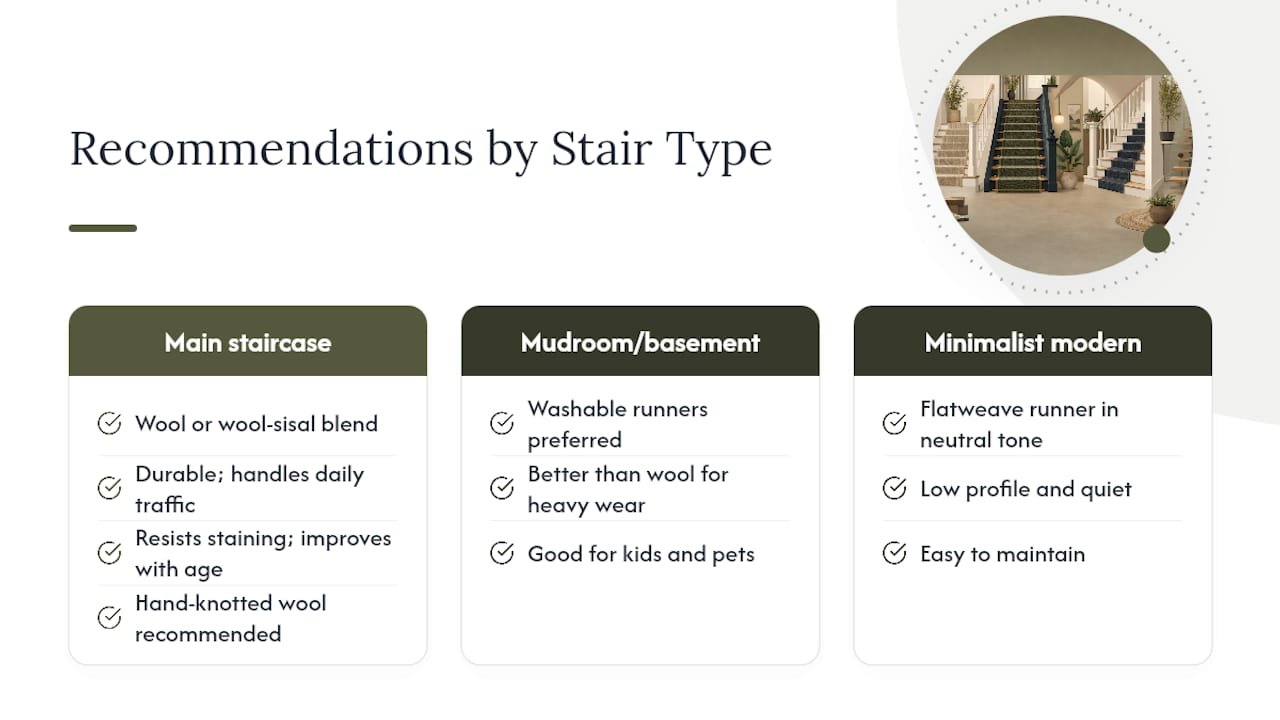
For a main staircase that carries daily traffic, wool consistently wins. It handles years of use, resists staining, and looks better with age rather than worse, which is why Rugsonlinemarket steers most homeowners with a primary staircase toward wool or a wool-sisal blend. A hand-knotted wool runner shows the kind of craftsmanship that holds up under a install of this kind, tight, durable, and forgiving of pattern-matching across multiple treads.
For mudroom stairs, basement entries, or homes with young kids and pets, washable options make more sense than a wool investment that will take a beating. For minimalist, modern homes, a flatweave runner in a neutral tone tends to be the better fit, low profile, easy to maintain, and quiet against a pared-back interior.
— Kian
Shop Stair Runners at Rugs Online Market
Rugsonlinemarket is the direct route to the exact styles covered above, without spending weekends comparing showroom swatches or waiting on a custom order from a workroom you’ve never dealt with before.

The runner rugs category is the fastest starting point if you already know your width and length. If sisal, jute, or another organic texture caught your eye in the gallery above, the natural rugs collection narrows things down by fiber. Households leaning toward a washable option for a mudroom or basement staircase can start with the washable rug picks instead. Browse the runner category now and match a width to your measurements before you commit to a pattern.
Sources
- Staircase Runner Ideas: 10 Ways to Transform Your Treads | Livingetc
- Stair Runner Ideas: Styles, Materials, and Installation Tips – D and G Flooring
- 30 Stair Runner Ideas to Elevate Both Comfort and Style | The Spruce
- Top 10 stair runner styles | HGTV
FAQ
Are stair runners still fashionable?
Yes. Style families like flatweave, geometric, stripe, and sisal remain consistently recommended across modern, coastal, and traditional homes, and custom non-repeat runners have become a growing trend for high-end staircases.
Is it a good idea to put a runner on the stairs?
Yes, for most homes. A runner reduces noise, improves grip, and protects the wood underneath while adding a clear decorative upgrade, though bare stairs may suit homes prioritizing a minimalist hardwood look over cushioning and sound reduction.
What are the current trends in stair runners?
Bold contrasting bindings, flame-stitch and geometric patterns, and custom non-repeat designs that flow across landings without visible seams are among the most notable current directions in stair runner design.
How wide should a stair runner be?
Most homes use a 27 inch or 36 inch runner, leaving roughly 3 to 4 inches of exposed wood on each side for a balanced reveal, with wider runners suited to broader staircases.
How often should a stair runner be professionally cleaned?
Every 12 to 18 months for wool and other natural fibers, combined with weekly vacuuming using an upholstery attachment rather than a beater bar.
