










































A small runner typically ships for $19 to $70, a 6×9 runs $78 to $284, and an 8×10 or larger often crosses into freight territory above $400. The single biggest factor pushing that number up or down isn’t distance, it’s dimensional weight: how tightly the rug is rolled and packaged. Ship non-urgent orders ground, and get a real freight or white-glove quote before assuming parcel rates apply to anything 9×12 or bigger.
TL;DR:
- Shipping a rug tightly rolled and weight-efficiently can significantly reduce dimensional weight surcharges, especially for larger sizes like 8×10 or bigger.
- Costs vary from $19 for small runners up to over $500 for a 9×12, with freight or white-glove delivery generally required for oversized or fragile rugs.
- Carrier pricing depends on both actual weight and dimensional weight, with zone-based and cubic-volume surcharges adding to the final cost.
- Shipping large or oversized rugs often involves extra fees such as liftgate, inside delivery, or crating, which can raise costs by hundreds of dollars.
- Using ground shipping with consolidation, proper packing, and avoiding high declared value coverage offers the lowest overall delivery costs.
Table of Contents
- How Much Does It Cost to Ship a Rug by Size?
- How Do Carriers Actually Price a Rug Shipment?
- How Should You Pack a Rug to Cut Shipping Costs?
- When Does a Rug Need Freight or White-Glove Delivery?
- What’s the Cheapest Way to Ship a Rug?
- How Do You Get an Accurate Rug Shipping Quote?
- The Gap Between Advertised Rates and What You Actually Pay
- Buy and Ship in One Step Without the Freight-Quote Guesswork
- Where to Verify Current Rug Shipping Rates
- Sources
- FAQ
How Much Does It Cost to Ship a Rug by Size?
Rug shipping cost swings hard based on two things: how big the rolled package ends up being and how far it travels. Aggregated carrier data puts the full range for rug shipping fees anywhere from $18.99 to $515.57, depending on size and route. That’s a wide spread, but the table below narrows it down by the sizes people actually buy.
| Rug size | Local/regional parcel | Interstate parcel | Freight likely? |
|---|---|---|---|
| 2×6 runner | $19–$40 | $40–$70 | Rarely |
| 4×6 | $31–$60 | $60–$105 | Rarely |
| 6×9 | $78–$150 | $150–$284 | Sometimes |
| 8×10 | $100–$220 | $220–$400 | Often |
| 9×12 | $150–$280 | $280–$500+ | Usually |
These numbers assume a tightly rolled rug in basic protective packaging, shipped via ground service to a residential address. Change any one of those variables and the price moves. A loosely rolled 8×10 wrapped in a bulky cardboard tube can weigh in “dimensionally” more than a queen mattress, even though the actual rug weighs 40 pounds.
Antique or fragile rugs cost more to ship for reasons that have nothing to do with size. Insurance premiums run higher, packaging needs extra padding, and many shippers refuse to compress or fold pieces with brittle fibers, which keeps the packed dimensions larger than a comparable new rug. Oversized rugs headed to rural or remote ZIP codes also see a bump, since carriers tack on extended-area surcharges independent of the base rate.
How Do Carriers Actually Price a Rug Shipment?
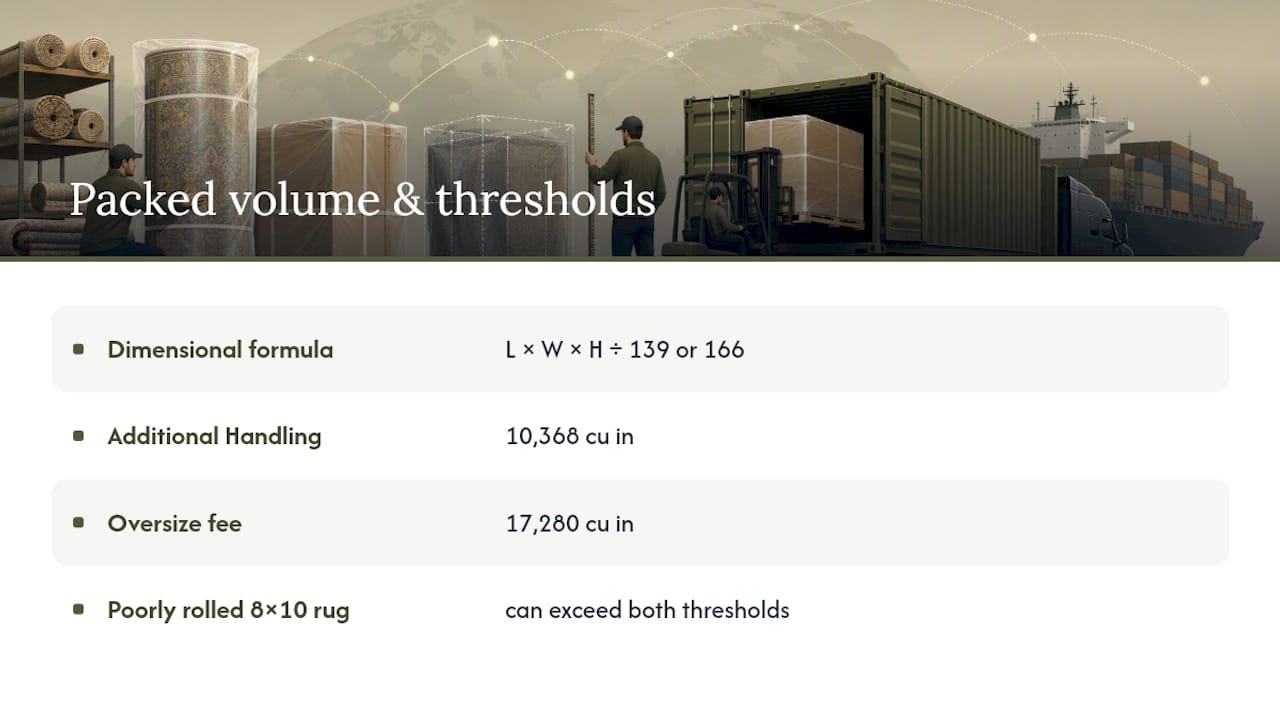
Carriers don’t charge by the pound alone. They charge by whichever is bigger: actual weight or dimensional weight. Dimensional weight is calculated by multiplying the length, width, and height of the packed box or tube, then dividing by a carrier-specific divisor (commonly 139 or 166 for domestic US shipments). A rug rolled loosely into a 6-foot tube with a 14-inch diameter can generate a dimensional weight two or three times its actual weight, and you get billed for whichever number is higher.
Zone pricing adds the second layer. Parcel carriers split the country into shipping zones based on distance from the origin ZIP code, so a rug moving 200 miles costs less than the same rug moving 2,000 miles, even at identical dimensional weight. Freight carriers price differently, using freight class and mileage bands instead of the parcel zone system, which is one reason a freight quote can look wildly different from a parcel estimate for the same rug.
2026 brought sharper cubic-volume surcharges into the mix. Packages crossing specific cubic-inch breakpoints, roughly 10,368 cubic inches for Additional Handling fees and 17,280 cubic inches for Oversize fees, trigger extra charges regardless of actual weight. A poorly rolled 8×10 rug can clear both thresholds easily. Before trusting any online estimate, run the actual packed dimensions through a live tool like the USPS Postage Price Calculator or a carrier’s own rate page. Estimates based on rug size alone, without real packed measurements, are little more than guesses.
How Should You Pack a Rug to Cut Shipping Costs?
Packing tight is the cheapest thing you can do. A rug rolled loosely into a wide tube can add a full oversize surcharge that a snug roll would have avoided entirely.
- Vacuum the rug and lay it face down on a clean, flat surface before rolling.
- Roll it tightly around a sturdy tube or cardboard core, rolling with the pile direction when possible to keep fibers from crushing.
- Wrap the roll in a breathable fabric sleeve rather than plastic. Ventilated wrapping prevents moisture buildup that can cause mildew during transit.
- Add rigid corner protectors or padded caps to both ends to prevent crushing.
- Secure the wrap with stretch film or packing tape, being careful not to compress the roll so tightly that it distorts the pile.
- Measure the finished roll’s length and diameter, then weigh it on a bathroom or shipping scale.
Materials checklist: breathable fabric sleeve, cardboard shipping tube or triple-wall cardboard, foam corner caps, stretch wrap, strong tape, and a shipping label holder.
Pro Tip: If you’re shipping an antique or high-value rug, photograph every side and corner before it leaves your hands. Dated photos are the fastest way to settle a damage claim without an argument.
When Does a Rug Need Freight or White-Glove Delivery?
Parcel carriers generally cap out around 108 inches in length plus girth combined, and most set weight limits near 150 pounds per package. A rolled 9×12 or larger rug frequently exceeds one or both, which pushes it into LTL (less-than-truckload) freight or pallet shipping instead of standard parcel service.
Freight shipments come with fees parcel shipping doesn’t have. A liftgate fee, usually $50 to $100, applies if the delivery truck lacks a ramp and you don’t have a loading dock. Inside delivery, getting the rug past the curb and into the house, adds another charge, and scheduling a specific delivery appointment (rather than a delivery window) often costs extra too.
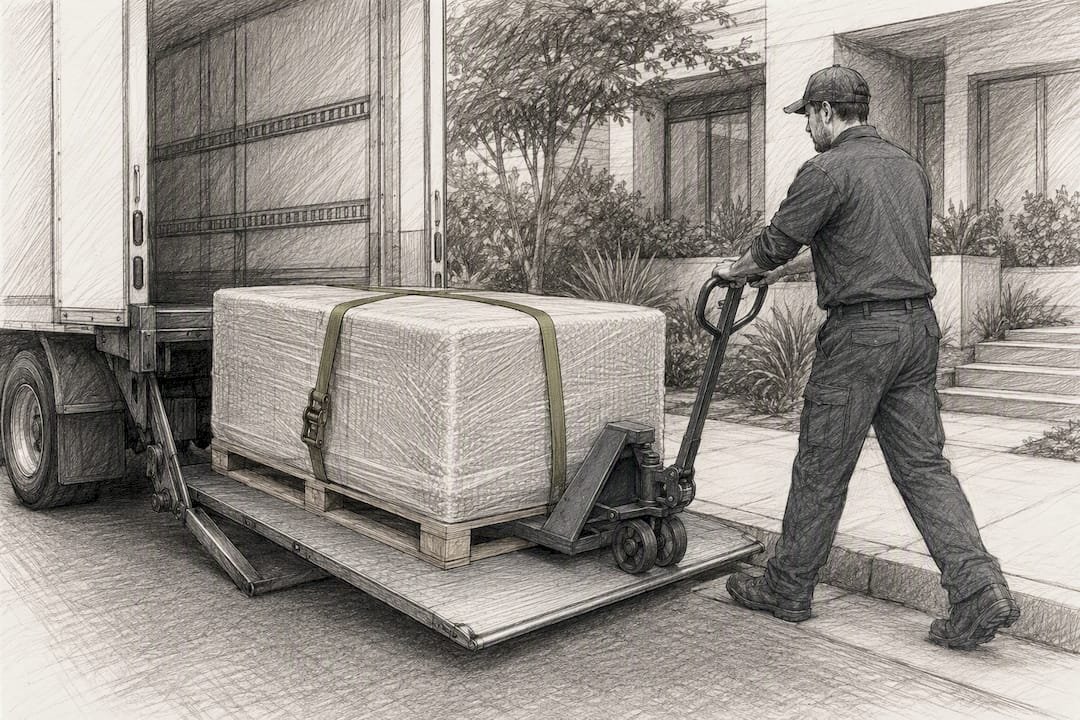
White-glove service goes further: unpacking, placement in the room, and debris removal, typically for a premium of $75 to $200 or more over standard curb delivery. For rugs that are unusually fragile or high-value, crating adds real protection at an added cost, often $100 to $300 depending on rug size, and most freight brokers can arrange it on request.
What’s the Cheapest Way to Ship a Rug?
Ground shipping beats expedited service by a wide margin for anything that isn’t time-sensitive. Switching from overnight or two-day air to standard ground can cut costs by roughly 70% on comparable packages, since speed premiums are almost entirely separate from the base rate.
A few other moves make a real dent in the final invoice:
- Roll the rug as tightly as the fibers allow; every inch of diameter you shave off reduces dimensional weight.
- Consolidate multiple rugs into one shipment when possible instead of paying separate base rates and surcharges twice.
- Check whether the retailer offers a free-shipping threshold. Some retailers ship free on orders over a certain amount, which can often beat even a discounted carrier rate for mid-size purchases.
- Compare quotes across carriers using a rating tool like Goshippo rather than accepting the first number you see.
- Skip paying for high declared value coverage on standard rugs. Declared value increases the carrier’s premium and isn’t the same as independent shipping insurance, so check what’s already covered by default before adding more.
How Do You Get an Accurate Rug Shipping Quote?
Getting a quote that actually holds up means giving carriers real numbers, not estimates.
- Measure the packed roll’s length and diameter, then weigh it, after wrapping, not before.
- Note the declared value you want covered and ask whether that’s separate from any base insurance included.
- Confirm which optional services apply: liftgate, inside delivery, or a scheduled appointment window.
- Ask each carrier for an itemized quote, not just a bottom-line total, so you can see where surcharges hit.
- Collect quotes from at least two or three sources (a parcel carrier, a freight broker, and a rating platform) using the identical packed dimensions and weight for each.
The Gap Between Advertised Rates and What You Actually Pay
Some retailers offer free shipping on orders over a certain amount and use packaging designed to keep dimensional weight down without sacrificing protection. Orders that fall outside standard parcel limits may be routed to freight or white-glove delivery rather than forced into a parcel quote that won’t hold up at the counter.
That distinction matters more than most shoppers realize going in. A carrier’s advertised base rate almost never matches the delivered price once dimensional weight, zone distance, and any oversize surcharge get added. Some retailers build pricing around real packed dimensions from the start, so the number a customer sees at checkout reflects the actual shipping cost.
— Kian
Buy and Ship in One Step Without the Freight-Quote Guesswork
Shopping and shipping separately means measuring, packing, and quoting a rug on your own after you’ve already bought it; understanding the cost of custom drapes and packaging can help anticipate how custom packaging or install services affect delivery costs. Some retailers skip that entire step by including shipping costs in the price for orders over a certain amount, with packaging handled professionally.

Runners and mid-size rugs almost always ship the cheapest, and the runner rug collection is a solid place to start if budget and shipping cost both matter. Buyers who want a lower-maintenance long-term option, and fewer future shipping headaches from professional cleaning and returns, should look at the washable rug lineup instead. Some retailers handle returns within 30 days with no hassle, making sizing a rug for a specific room less of a gamble than it might initially seem.
If you’re weighing a large statement piece for a living room or dining room, it’s worth reading through the verification steps for buying rugs online before you check out, since getting the size and material right the first time avoids a second shipment altogether. For rugs 9×12 or larger, or rugs going to locations with limited delivery access, it is advisable to request a freight quote directly rather than assume standard shipping applies. Start by browsing the full rug shop to compare sizes against the ranges above before you commit.
Where to Verify Current Rug Shipping Rates
Run your own packed dimensions through the USPS Postage Price Calculator for parcel rates, or compare multiple carriers at once through Goshippo. For packaging materials and rolling technique, the FreightAmigo wrapping guide covers sleeve types and padding in more depth.
Sources
- How much does it cost to ship a rug? complete price breakdown
- How To Ship A Rug: Complete Guide & Cost Savings
- How to Ship a Rug safely in 2026 | FreightAmigo
- USPS Postage Price Calculator
FAQ
How Much Does It Cost to Ship a 9×12 Rug?
A 9×12 rug typically costs $150 to $280 for local or regional delivery and $280 to $500 or more for interstate shipping, often requiring freight service rather than standard parcel.
What Is the Average Cost to Ship a Rug?
Average rug shipping cost ranges from about $19 for a small runner to over $500 for a large 9×12 rug, with most mid-size rugs (4×6 to 6×9) falling between $31 and $284 depending on distance.
How Much Does UPS Charge to Ship a Rug?
UPS pricing for rugs follows standard dimensional weight and zone rules, so costs land within the same general ranges as other parcel carriers. Check UPS’s own rate tool with your exact packed dimensions for a firm number rather than relying on a size-based estimate.
What Is the Cheapest Way to Send a Rug?
Ground shipping with a tightly rolled package is consistently the cheapest option, since it avoids both express-speed premiums and dimensional-weight penalties from loose packing. Buying from a retailer with a free-shipping threshold, like orders over $300 at Rugsonlinemarket, can eliminate the shipping cost entirely for qualifying orders.
