





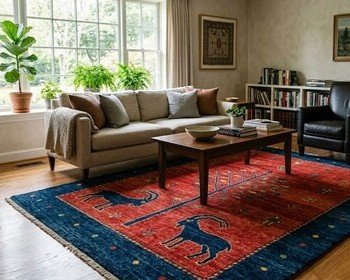
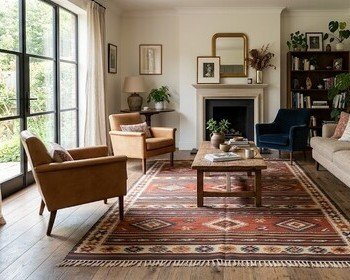
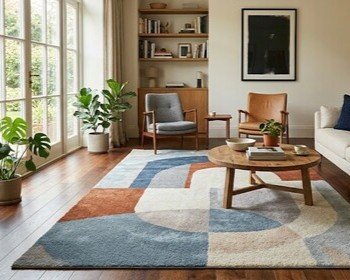

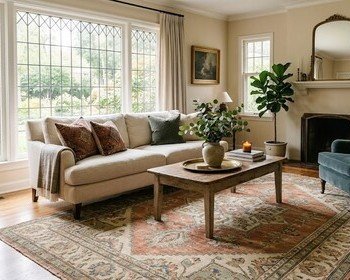
Expect to pay roughly $80 to $400 for a mid-size 5×8 area rug, with synthetics at the low end and hand-knotted wool climbing well past $2,000. That extra cost is easy to forget, and it’s usually where a “great deal” stops looking so great.
TL;DR:
- Synthetic rugs cost between $25 and $100 for 3x5s and $200 to $500 for 8×10 sizes, suitable for low-traffic areas and lasting 3 to 7 years.
- Hand-knotted wool rugs, for example, a 5×8 can exceed $1,800, often taking months to produce and lasting 15 to 25 years with proper care.
- The total cost of a rug includes pad, delivery, tax, and cleaning, which can add 20-50% to the initial price depending on size and material.
- Investing in mid-range wool offers better long-term value than cheaper synthetics, especially for main living spaces, due to durability and lifespan.
Table of Contents
- What Do Area Rug Prices Look Like at a Glance?
- What Drives the Price of an Area Rug?
- How Much Should You Budget by Size and Material?
- How Do You Calculate the Real Total Cost?
- Where Should You Cut Cost, and Where Should You Spend?
- Does the Price Match the Value? A Publisher’s Take
- Ready to Shop Smarter for Your Next Rug?
- Sources
- FAQ
What Do Area Rug Prices Look Like at a Glance?
Size is the first lever, material is the second, and the two together explain almost every price tag you’ll see while shopping.
| Size | Budget (synthetic) | Mid-range (wool/blend) | Premium (hand-knotted) |
|---|---|---|---|
| 3×5 | $25–$100 | $100–$300 | $400 |
| 5×8 | $80–$250 | $250–$600 | $700–$1,800 |
| 8×10 | $200–$500 | $500–$1,200 | $1,500–$2,800 |
| 9×12 | $300–$700 | $700–$1,700 | $2,000+ |
Each tier reflects a different build, not just a different price:
- Budget synthetics are machine-made from polypropylene or polyester, usually flat-woven or low-pile.
- Mid-range rugs mix machine-tufted wool, wool blends, or better synthetics with denser backing.
- Premium rugs are hand-knotted or hand-tufted from wool or silk, often with natural dyes.
Pro Tip: Divide the sticker price by square footage before you fall for a “cheap” 9×12. A $700 rug at 108 square feet runs about $6.50 per square foot, which is actually pricier per foot than a $400 5×8. Per-square-foot ranges typically run $2 to $6 for budget synthetics and $12 to $40+ for premium hand-knotted pieces, according to Well Built Florida’s cost guide.
What Drives the Price of an Area Rug?
Material is the biggest factor. Synthetic fibers like polypropylene and polyester cost less to produce and hold up fine under moderate foot traffic, which is why they dominate the budget tier. Wool costs more to source and spin, but it resists stains, springs back from furniture dents, and can last decades with basic care. Silk sits at the top, prized for sheen and softness rather than durability, and it’s usually blended with wool or cotton to keep it from crushing.
Construction method matters just as much as fiber. A machine-made rug can be produced in minutes on a power loom. Hand-tufted rugs are punched by hand through a fabric backing, a process that takes hours. Hand-knotted rugs are woven knot by knot on a loom, sometimes taking months for a single large piece, according to the Rug Cost Guide from Kurlon. That labor gap is the single biggest reason a hand-knotted 8×10 can cost ten times what a machine-made version does.
Beyond fiber and labor, a few smaller factors move the number:
- Pile height and density (thicker, denser rugs use more raw material)
- Backing quality (latex versus natural fiber backing)
- Natural versus synthetic dyes
- Import costs and retailer markup
Pro Tip: If a “hand-knotted” rug is priced like a machine-made one, ask about knot density and country of origin before buying. Unusually low prices on hand-knotted claims often signal loose knots or blended, lower-grade wool.
How Much Should You Budget by Size and Material?
Numbers get more useful once you see them by size and fiber together, since a 5×8 wool rug and a 9×12 synthetic can land in the same price range for very different reasons.
These ranges track closely with what Design Transition Studio’s pricing breakdown and Well Built Florida’s U.S. buyer guide both report for the American retail market.
Lifespan tells the rest of the story. A budget synthetic in a moderate-traffic room typically lasts three to seven years before fading or fraying at the edges. A well-made wool rug can run 15 to 25 years with occasional professional cleaning, and hand-knotted wool pieces routinely outlast the furniture around them. That gap changes the real math: a $1,200 wool 8×10 that lasts 20 years costs about $60 a year, while a $400 synthetic replaced every five years costs $80 a year over the same stretch. Higher upfront cost often produces the lower annualized cost, which is the opposite of how most people shop.
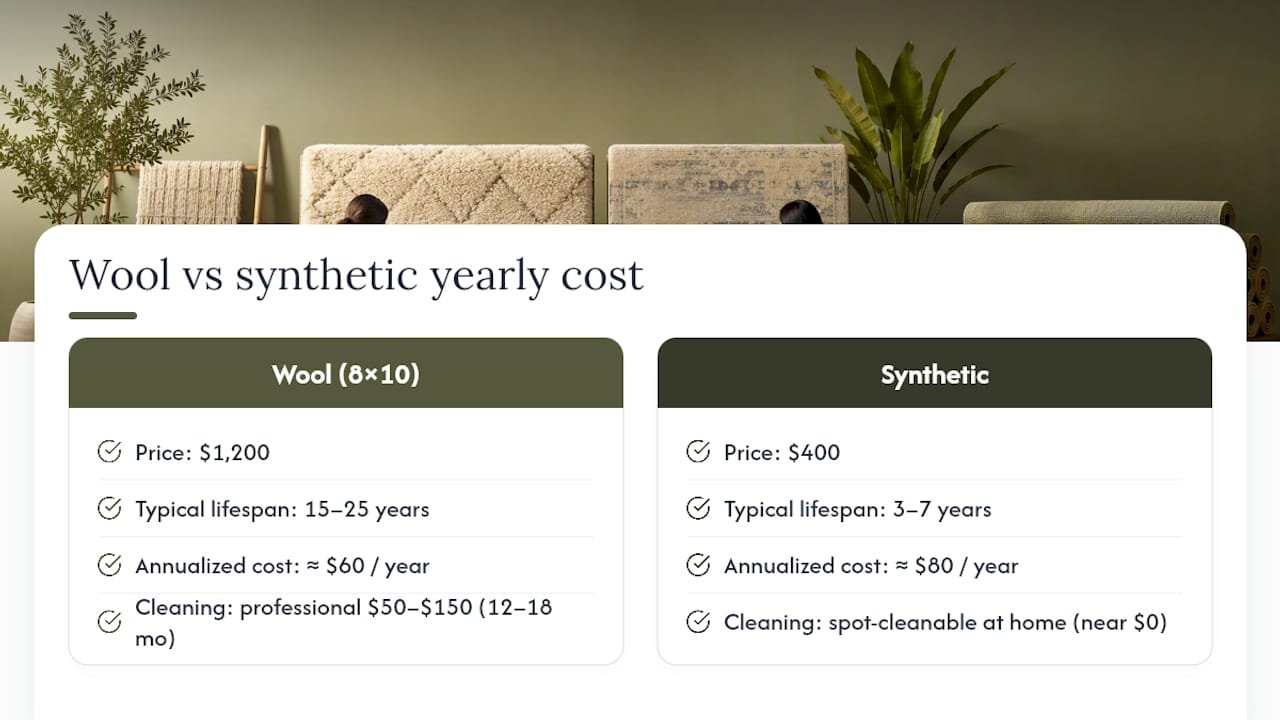
Maintenance costs scale with the same logic. Synthetic rugs are usually spot-cleanable at home for close to nothing. Wool needs professional cleaning every 12 to 18 months, typically $50 to $150 depending on size, based on figures from the rug cost guide. Silk and antique hand-knotted rugs often require specialty cleaners, which can run higher still.
How Do You Calculate the Real Total Cost?
The rug’s price tag is rarely the number you’ll actually pay. A more honest formula looks like this:
- Rug price (from the ranges above)
- Plus rug pad ($20 to $80 depending on size)
- Plus delivery ($0 if free-shipping threshold is met, otherwise $100 to $500 for large rugs, per Design Transition Studio)
- Plus sales tax (varies by state, typically 5% to 9%)
- Plus expected cleaning over five years (roughly $0 for synthetics, $150 to $450 for wool)
Three quick examples show how that adds up:
- Budget 5×8: $180 rug + $30 pad + $40 delivery + $18 tax + $0 cleaning = about $268 total
- Mid-range 8×10: $650 rug + $50 pad + $0 delivery (free-shipping threshold met) + $46 tax + $150 cleaning = about $896 total
- Premium 9×12: $2,800 rug + $70 pad + $250 delivery + $196 tax + $300 cleaning = about $3,616 total
Notice the pattern: bigger rugs lower your cost per square foot but raise your total spend every time. A 9×12 at $2,800 works out to around $26 per square foot, cheaper per foot than a small premium accent rug, but it’s still the biggest line item in any budget by a wide margin. Retailers offering financing, such as Affirm’s installment plans, have become common precisely because that jump from a few hundred dollars to a few thousand catches a lot of shoppers off guard.
Where Should You Cut Cost, and Where Should You Spend?
A few habits shave real money off the upfront price without touching quality where it doesn’t matter:
- Shop end-of-season sales (January and July tend to bring the deepest markdowns)
- Stack promo codes with free-shipping thresholds, which retailers commonly set between $100 and $350
- Choose washable synthetics for kids’ rooms, entryways, and pet-heavy spaces
- Check remnant bins and runner sizes for odd-shaped rooms, since off-sizes often sell at a discount
Spend more where the rug earns its keep every day: the main living room, a dining room under a table that gets moved constantly, or any piece you’d consider passing down. A guide to matching fiber and room use makes the same case, recommending mid-range wool for primary living spaces and reserving cheaper synthetics for high-mess zones.
Before buying, ask the retailer: What’s the knot count (for hand-knotted claims)? Is the pad included or separate? What’s the return window? A design guide on rugs is a useful gut check if you’re weighing a design-forward splurge against a safer, cheaper pick.
Pro Tip: If you’re mid-renovation, factor in old carpet removal too. Floor prep costs can add several hundred dollars if you’re pulling out wall-to-wall carpet before laying down a new area rug.
Does the Price Match the Value? A Publisher’s Take
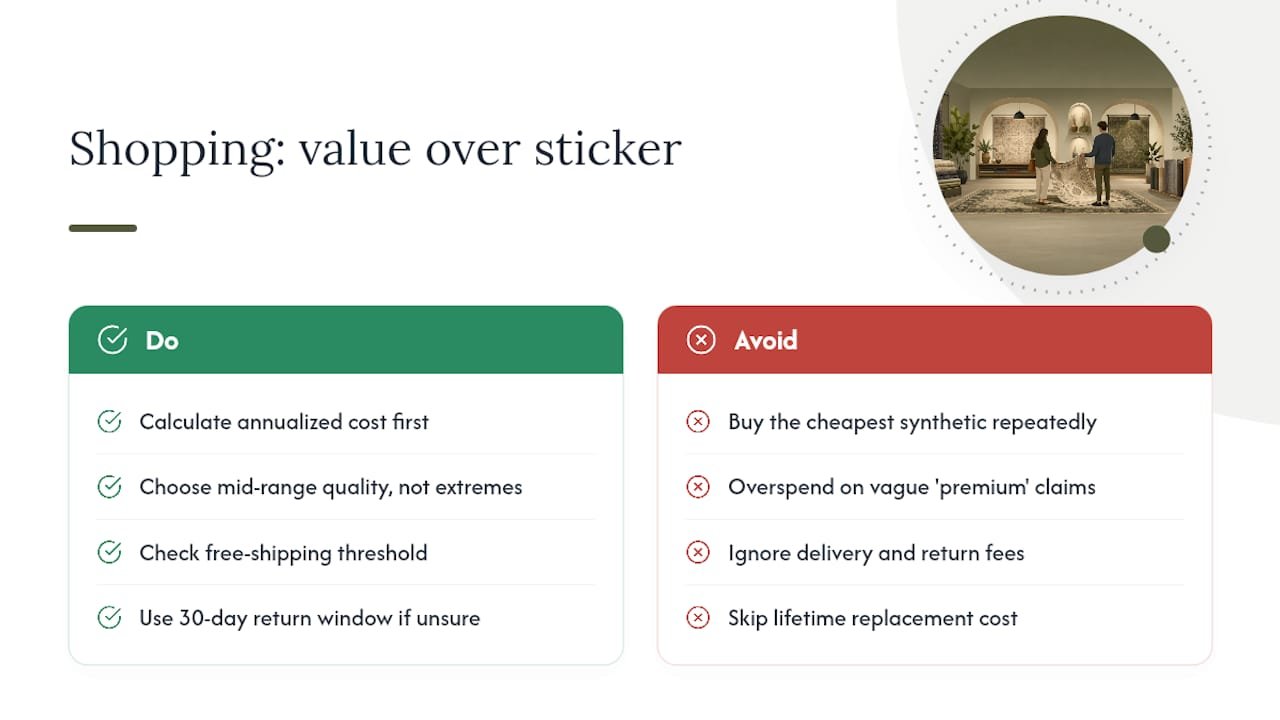
Most rug shoppers overcorrect in one direction or the other. Either they buy the cheapest synthetic in the room and replace it three times over a decade, or they overspend on a “premium” rug that turns out to be a mid-grade hand-tufted piece marked up on vague provenance claims. The smarter move sits in the middle: know your annualized cost before you know your sticker price.
The market offers a wide range, from budget-conscious synthetics to hand-knotted wool and silk pieces, spanning various traditional and modern styles. Free shipping on orders over a certain amount and a 30-day return window reduce some common risks in online rug shopping, like delivery fees and return difficulties. Such policies can affect the total cost compared to some other retailers.
— Kian
Ready to Shop Smarter for Your Next Rug?
Once you know your budget band, the fastest way to close the gap between “browsing” and “buying” is shopping by size and material instead of scrolling endlessly. The catalog is often organized by size and material to help narrow down choices.
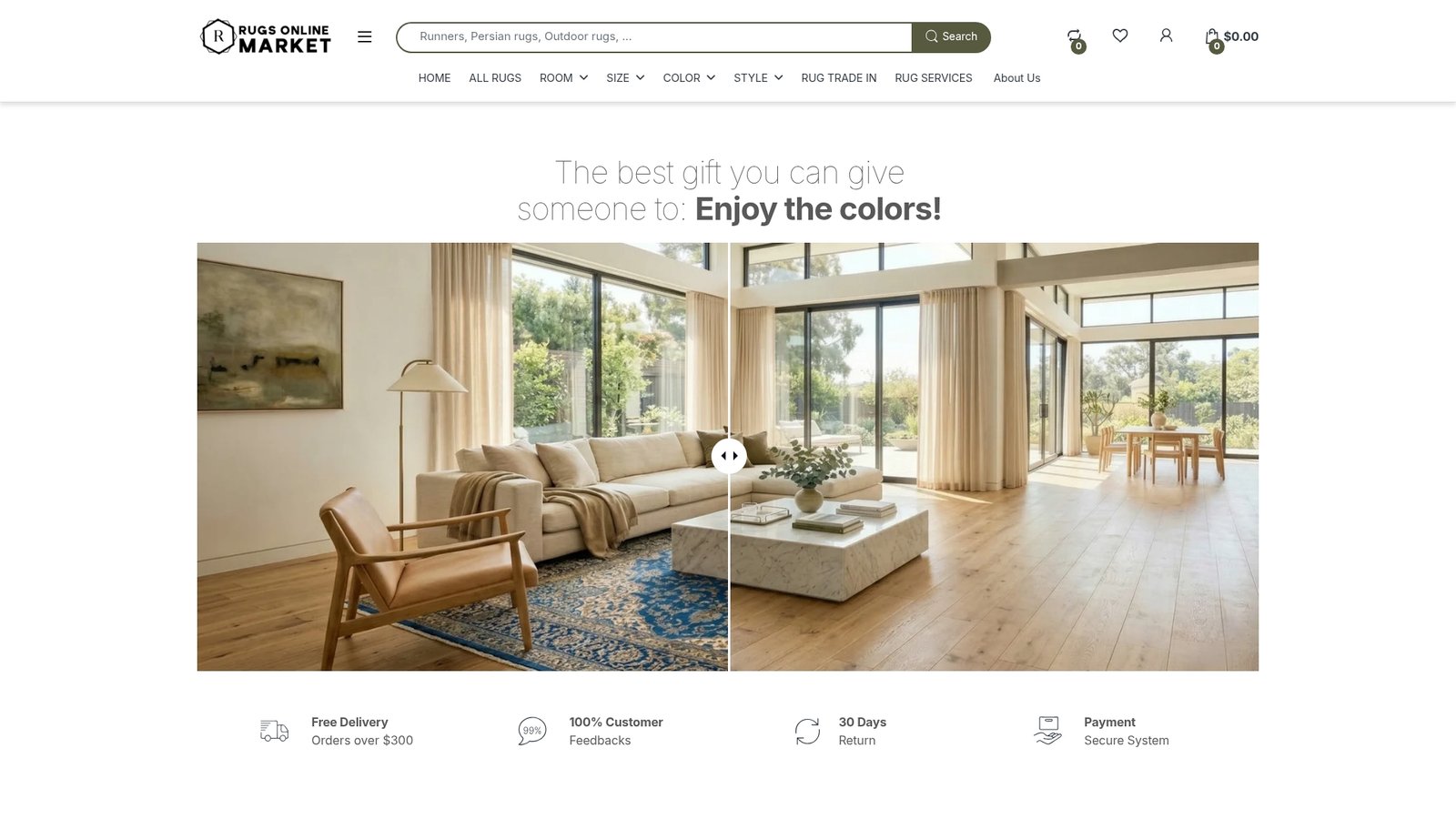
If durability and long-term value matter more than a rock-bottom price, the natural fiber rugs collection is the place to start. It leans into the wool logic covered above: higher upfront cost, lower cost per year. If you’re outfitting a hallway or need a specific footprint, browse 5×7 area rugs to see real pricing at that exact size instead of extrapolating from a table. Orders over a certain amount may qualify for free shipping, and return windows are sometimes offered, reducing the risk of buying without seeing the rug in person.
Sources
- Average Rug Cost 2026 | Official Site
- Average Rug Price and Cost Guide for U.S. Buyers – Well Built Florida
- Best Price on Area Rugs 2026 – Design Transition Studio
- How Much Does an Area Rug Cost?
FAQ
What is the average price of an area rug?
Most area rugs fall between $80 and $600, depending heavily on size and material, with a typical 5×8 landing around $250 in the mid-range tier.
What is a reasonable price to pay for a rug?
A reasonable price depends on room use: $100 to $300 for a synthetic in a low-traffic space is fair, while $500 to $1,200 for wool in a main living area reflects realistic mid-range pricing.
What is a good price for an 8×10 rug?
A good price for an 8×10 runs $200 to $500 for synthetic, $500 to $1,300 for wool, and $1,800 to $4,000 for hand-knotted, based on current U.S. retail ranges.
What is the average cost of a 9×12 rug?
A 9×12 rug typically costs $300 to $700 for synthetic, $700 to $1,700 for wool, and $2,500 or more for hand-knotted pieces, before pad, delivery, and tax are added.
