






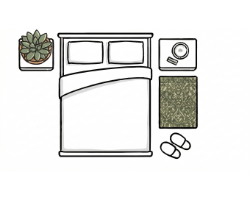
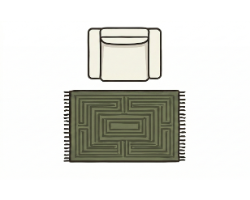
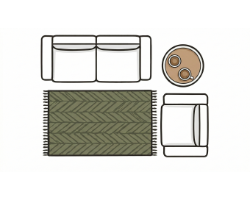
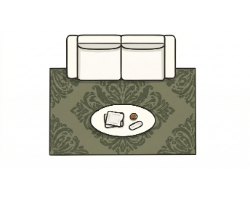


















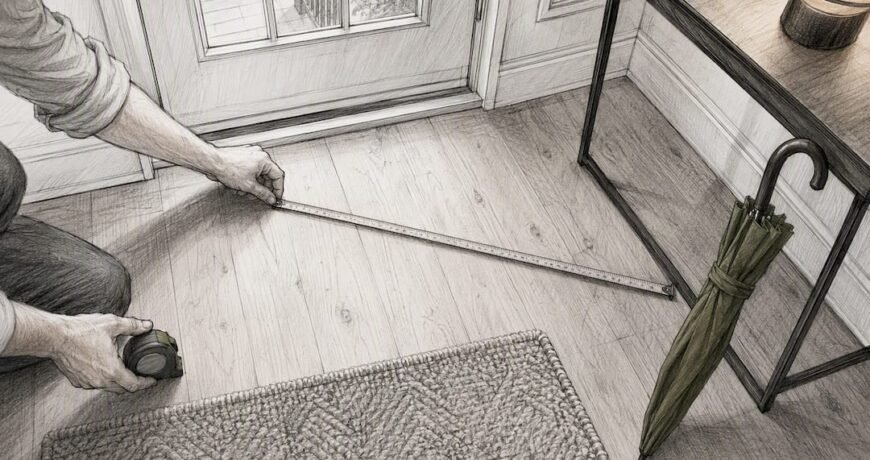
For most entryways, a low-pile flatweave runner or a 3’x5’ low-profile rug in wool or a solution-dyed indoor-outdoor fiber gives you the best mix of style and durability. Before you shop, check two things: how much clearance your door swing allows, and whether your entry deals with regular moisture or mud. Get those right, and everything else, style, pattern, color, comes down to preference.
TL;DR:
- Entryway rugs should be large enough to allow the door to close fully on them without exposing bare floor, with 3’x5’ as the minimum size.
- Flatweave wool, low-pile wool, and indoor-outdoor fibers are the most durable materials for high-traffic or moisture-prone entryways.
- Layering a washable mat inside the door and choosing low-profile, non-slip rugs can significantly extend the rug’s lifespan and ease maintenance.
- Runners are ideal for narrow hallways, while patterned or vintage rugs efficiently hide dirt and wear in busy, outdoor, or mud-prone spaces.
- Proper sizing involves measuring the space, considering door clearance, and selecting a rug that fits proportionally to prevent a cramped appearance.
Table of Contents
- Entryway Rug Ideas That Actually Work in Real Homes
- How to Size and Place an Entryway Rug Correctly
- Which Rug Materials Hold Up Best at the Front Door
- Keeping an Entryway Rug Clean Without Losing Your Mind
- Styling an Entryway Rug to Match Your Home’s Architecture
- What I’ve Learned Selling Entryway Rugs to Homeowners
- Where to Start Shopping for Your Entryway Rug
- Sources
- FAQ
Entryway Rug Ideas That Actually Work in Real Homes
A good entryway rug idea has to survive boots, strollers, dog paws, and rain before it earns a single compliment. The style inspiration from The Spruce leans on layering, pattern mixing, and smart material swaps to balance looks with wear. Here are the approaches worth trying, organized by the space they solve.
- Runner for narrow hallways. A runner in the 2’x6’ to 2’6"x10’ range fits most center-hall entries. Keep the pile low so it doesn’t bunch against the door.
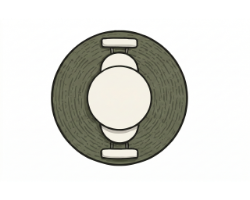
- Round rug under a central fixture. If your foyer has a pendant light or a round table as its anchor, a circular rug repeats that geometry and reads intentional rather than accidental.
- Layered mat and decorative rug. Set a plain washable mat right inside the door, then place your good rug a step or two behind it. This is the single best trick for muddy seasons.
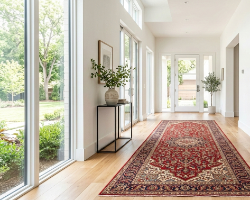
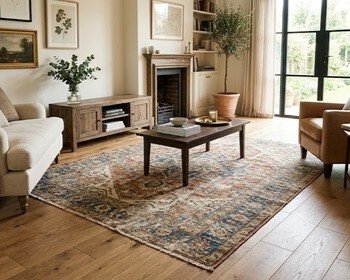
- Vintage or Persian runner. Faded colors and busy patterns hide dirt and scuffs far better than solid tones, and they age gracefully instead of looking worn out.
- Indoor-outdoor washable rug. For rainy climates or households with kids and pets, a fully washable polypropylene or performance-poly rug takes the daily abuse so your good pieces don’t have to.
- Jute or sisal for texture. These natural fibers add warmth and a relaxed, organic look, but they stain easily and struggle in wet climates. Reserve them for covered or dry entries.
- Patterned wool rug. Wool naturally resists soil and hides footprints between vacuuming sessions, which makes it one of the most forgiving materials for a heavy-traffic foyer.
- Striped runner for proportion. A rug with stripes running the length of a hallway can make a narrow entry feel longer; horizontal stripes can visually widen a tight space.
- Neutral textured rug for minimalist entries. A subtle weave in oatmeal or greige adds depth without competing with clean, simple decor.
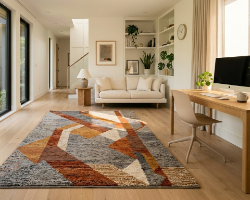
- Bold abstract rug for a statement entry. If your foyer has plain walls and simple furniture, an abstract or graphic pattern can carry the whole look on its own.
- Braided or farmhouse rugs. These reversible, tightly woven rugs hold up well underfoot and are easy to flip or rotate for even wear.
- Oversized rug linking foyer to adjacent rooms. When your entry flows directly into a living area, sizing up lets one rug visually connect the two spaces instead of creating a hard stop.
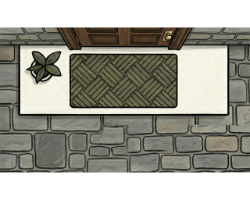
- Slim-profile mat for tight spaces. In apartment entries or narrow vestibules, a flat woven mat layered over a stone or tile floor gives texture without eating up walking room.
How to Size and Place an Entryway Rug Correctly
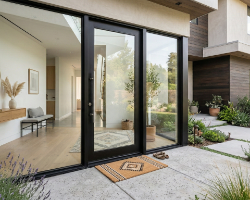
The standard guideline: you should be able to close the front door and step fully onto the rug without your foot landing on bare floor. Anything smaller than that tends to feel like an afterthought rather than a real design choice, according to entryway sizing guidance from Rug Sizing.
Here’s what that looks like in real dimensions:
- Small entries: 3’x5’ is the practical minimum; anything smaller reads as token rather than intentional.
- Narrow hallways: runners in widths proportionate to the space, typically narrow runners cut to length for the space.
- Larger foyers: rugs sized proportionally to the room, often requiring larger dimensions depending on square footage and furniture placement.
- Leave some visible floor between the rug’s edge and the walls or furniture legs to frame the space and prevent the rug from appearing cramped.
- Measure your door’s swing arc, then add your rug’s pile height plus pad thickness. If the total interferes with the door, switch to a flatweave or a thin low-profile pad, since thin, low-pile rugs avoid catching on doors where clearance is tight.
- Before buying, tape out the rug’s approximate footprint on the floor and evaluate the flow and fit in your entryway.
Which Rug Materials Hold Up Best at the Front Door
Not every fiber belongs at an entrance. The materials that consistently perform well in high-traffic spots are flatweave wool, low-pile wool, and solution-dyed indoor-outdoor fibers, since designers point to these as the most durable and easiest to clean under constant foot traffic.
- Wool: naturally resilient, soil-resistant, and long-wearing, though it costs more upfront.
- Indoor-outdoor/performance fibers (polypropylene, solution-dyed nylon): built for cleanability and moisture, ideal for wet or high-traffic climates.
- Jute and sisal: tough underfoot but sensitive to moisture, so keep them away from direct rain or snow exposure. Our jute cleaning guide covers safe, low-moisture upkeep if you go this route.
- Skip silk and high-pile shag at entries. Both crush and stain quickly under regular shoe traffic.
- Add a non-slip rubber or felt pad underneath any entryway rug. It stops sliding on hard floors and adds a small cushioning buffer that extends the rug’s life.
Keeping an Entryway Rug Clean Without Losing Your Mind
Entryway rugs take more abuse per square foot than almost any other rug in the house, so the maintenance routine matters as much as the material choice.
- Vacuum at least once a week, twice during rainy or snowy stretches.
- Spot-clean spills immediately with a damp cloth and mild soap before they set into the fibers.
- Machine-washable rugs can go straight into a home washer on cold, gentle cycle. Our washable rug care guide walks through avoiding backing damage.
- Wool and hand-knotted rugs need professional cleaning about once a year, since experts recommend annual professional service for wool and high-end pieces rather than home washing.
- Layer a cheap washable mat right inside the door during muddy months to intercept the worst of the dirt before it reaches your primary rug.
- Rotate the rug every few months if you notice compressed pile or shedding in one spot.
Pro Tip: Keep a second, inexpensive washable mat in the closet during winter. Swap it in the moment snow or mud season starts, and swap your better rug back in once the weather clears. It’s a five-minute habit that saves your good rug months of wear.
Styling an Entryway Rug to Match Your Home’s Architecture
Shape should follow the room, not the trend. A round rug reads best under a centered light fixture or table, while long, linear hallways almost always call for a runner rather than a square rug forced into an awkward footprint.
- Scale your pattern to the room: busy tile or hardwood floors pair better with simpler rugs, and plain floors can handle bolder patterns.
- Choose neutrals when your entry already has strong color or art; save bold patterns for plainer spaces.
- Anchor the vignette with a bench, console table, or mirror positioned at the rug’s edge, not floating in the middle.
- For curved staircases or odd alcoves, a custom shape or a natural-fiber runner often works better than fighting the space with a standard rectangle.
What I’ve Learned Selling Entryway Rugs to Homeowners
Kian has spent years watching customers make the same sizing mistake: buying a rug that looks right in a photo but leaves half the entry floor bare. The fix is almost always simpler than people expect, size up one increment and drop down in pile height. The catalog reflects that lesson, weighted toward flatweave and washable options because that’s what actually survives a real front door.
— Kian
Where to Start Shopping for Your Entryway Rug
Once you know your size and material, shopping gets a lot faster. The catalog is organized so you can filter by exactly the categories this guide covers, starting with runner rugs for hallways and natural rugs for jute and sisal textures.

If you want a rug that skips the guesswork on cleaning, browse the curated washable rug picks, chosen for households with kids, pets, or wet-weather entries. Vintage lovers can check the antique collection for patterned pieces that hide daily wear.
The buying flow is simple: measure your space, pick a material based on your climate and traffic, filter for low-profile and non-slip options, then check the fine print. Start with the runner rugs category if a hallway is your main challenge, or browse the full collection to compare materials side by side. And if your entry’s door style and finish need a rethink too, this guide on choosing an interior door style pairs well with your rug decision.
Sources
- Entryway Rug Sizing: First Impressions Count
- Ask Veronica: How do I choose a rug for the foyer?
- Entryway and foyer rugs: first impressions that last | Kapetto
- 25 Entryway Rug Ideas to Make a Stylish First Impression
FAQ
What Type of Rug Is Best for an Entryway?
A low-pile wool or solution-dyed indoor-outdoor rug performs best because it resists soil and stands up to daily foot traffic without excessive wear.
What Are Some Good Rugs for Entryways?
Flatweave runners, round rugs under central fixtures, layered washable mats, and patterned wool rugs all work well, depending on your entry’s shape and traffic level.
What Is the Best Rug for a Front Door Entrance?
An indoor-outdoor washable rug is the strongest pick for a front door that sees rain, snow, or muddy shoes, since it can be cleaned without professional help.
What Should an Entryway Rug Look Like?
It should be large enough to let you step fully onto it after closing the door, roughly 3’x5’ at minimum for small spaces, with a shape that matches your foyer’s layout.
