






















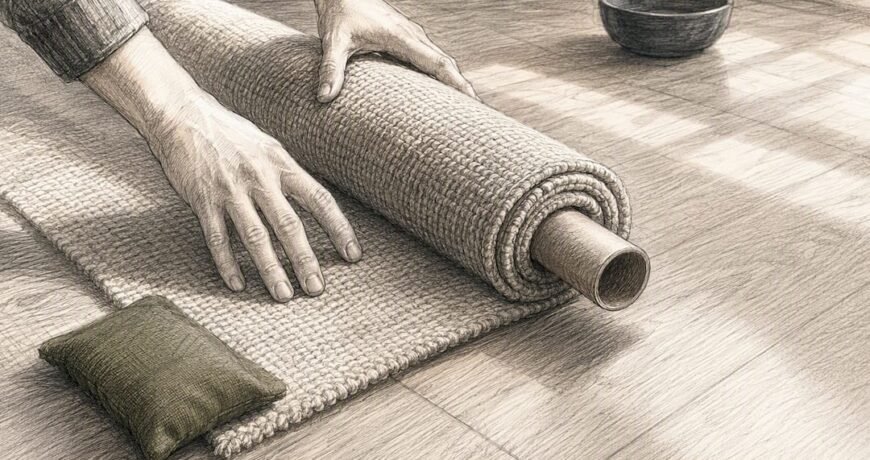
The fastest, safest fix for most rugs is reverse-rolling against the curl for 24 to 48 hours, then weighing down the stubborn spots with flat, heavy objects. Controlled heat, like a steamer or hair dryer, only comes into play after you’ve tested a hidden corner and confirmed the fibers can handle it — following expert advice on how to care for art prints, photographs, and textiles at home. Give simple mechanical fixes a few hours to a few days before reaching for anything hotter or wetter.
TL;DR:
- Reverse-rolling a rug in the opposite direction of its shipping curl and leaving it rolled for 24 to 48 hours can significantly reduce waves without causing damage.
- Weights like stacked books or storage bins placed on stubborn corners or wide waves for several days help flatten fibers safely and prevent permanent dents.
- Testing heat or steam on a hidden corner first is essential, as direct heat can damage delicate fibers like silk or synthetic materials.
- Natural fibers such as wool, cotton, and jute tolerate certain mechanical fixes better than heat, with silk requiring minimal intervention.
- Long-term flattening benefits from a proper rug pad and consistent maintenance, reducing the need for repeated treatments.
Table of Contents
- How to Prepare a Rug Before You Flatten It
- Reverse-Rolling: The First Real Fix to Try
- Using Weights to Flatten Corners and Waves
- Safe Heat and Steam Techniques for Wrinkled Rugs
- Tape, Grippers, and Rug Pads: Picking the Right Long-Term Hold
- Best and Worst Flattening Methods by Rug Material
- What to Do When a Rug Still Won’t Lay Flat
- When to Call a Professional Rug Cleaner
- Fixing Small Dents and Corners With Ice
- Why Patience Beats Force Every Time
- A Rug That Lies Flat From Day One
- Sources
- FAQ
How to Prepare a Rug Before You Flatten It
Unroll a new rug the moment it arrives and lay it flat on a hard floor rather than carpet. Hard flooring pulls heat and pressure evenly across the backing, which speeds up how fast the fibers relax back into shape. Carpet just cushions the curl and slows everything down.
Before you touch a steamer, iron, or even a spray bottle, flip to the care label. Manufacturers print fiber content and cleaning limits there for a reason, and skipping that step is how a $400 wool rug ends up with a scorched patch.
Once you’ve unrolled it:
- Test any heat or moisture method on a hidden corner first, and wait a few minutes to check for color change, texture shift, or shrinkage.
- Give the rug one to several days of just lying flat before trying anything more aggressive.
- Watch for gradual improvement at the edges. Persistent ripples after three days mean it’s time to move to reverse-rolling or weights.
Most shipping-induced waves relax with time and normal foot traffic, so resist the urge to intervene on day one.
Reverse-Rolling: The First Real Fix to Try
Rugs remember how they were rolled for shipping, and that memory is exactly what causes curled corners and stubborn center waves. Reverse-rolling breaks that memory by bending the fibers the opposite direction until they relax into a new, flat resting position. It works on nearly every rug type and costs nothing.
- Lay the rug flat, curled side up, and identify the direction of the original roll.
- Starting from the edge, roll the rug tightly in the opposite direction, working slowly so you don’t crease the pile.
- Secure the roll with bungee cords, packing straps, or wide tape. Ask someone to hold the far end steady if the rug is large.
- Leave it rolled for 24 to 48 hours, then unroll and lay it flat on the intended floor to check progress.
This reverse-roll method is the approach BobVila recommends as a non-destructive first step, and it is often recommended to customers before anything else. If waves remain after about two days, repeat the process, but check the rug periodically rather than waiting the full window blind.
Pro Tip: Roll the rug around a cardboard tube or a spare pool noodle instead of just itself. It distributes pressure more evenly and prevents a sharp crease from forming at the center of the roll.
Using Weights to Flatten Corners and Waves
Wide, flat weights beat anything with a sharp edge or a narrow footprint. Stacked books, flat storage boxes, or furniture legs spread pressure across the fibers instead of concentrating it in one spot, which is what causes permanent denting. A single heavy dumbbell or a paint can, by contrast, will leave a mark you can’t roll or steam away.
Good options for flattening a rug with weights:
- Stacks of hardcover books spread across a curled corner
- Flat plastic storage bins filled with anything heavy
- Furniture legs repositioned directly onto a stubborn wave
Leave weights in place for a few days on corners, longer for wide waves that run through the middle of the rug, according to Family Handyman’s flattening guide. Combine this with reverse-rolling for the toughest cases: roll first, then weight the corners once the rug is back on the floor. Slide a folded towel under any weight resting on delicate wool or silk fringe to spread the load further.
Safe Heat and Steam Techniques for Wrinkled Rugs
Heat relaxes stiff fibers faster than time alone, but it’s also the method most likely to cause damage if you skip the test step. Always try a hidden corner first, and always put a barrier, a plain cotton towel works fine, between any hot tool and the rug’s surface.
Once you’ve confirmed the fiber handles heat well:
- Hold a fabric steamer 6 to 12 inches above the wrinkle and move it steadily rather than lingering in one spot.
- Run a hair dryer on medium heat 8 to 12 inches from the surface, sweeping back and forth.
- With a low-heat iron, use 10 to 15 second bursts through a towel barrier, then immediately place a flat weight on the area until it cools.
- Skip steam and water entirely on jute, and use the lowest possible heat setting on synthetics, which can melt or glaze under too much warmth.
The safety habit that matters most here isn’t the tool, it’s the sequence: heat briefly, then weigh the spot down until it’s completely cool. Skipping that last step is how a flattened corner curls right back up within a day. If you’ve got a sunny yard, The Spruce notes that leaving a small or medium rug in direct sun for several hours can help relax wrinkles on its own, though you should test wool or silk before trying it.
Tape, Grippers, and Rug Pads: Picking the Right Long-Term Hold
Double-sided rug tape and corner grippers solve the problem instantly. Press a strip under each curled corner and it stays down that same afternoon, which makes tape the right call when you need the rug presentable before guests arrive. It’s a patch, though, not a cure, and it can leave residue on some finished floors if left too long.
A rug pad solves the same problem structurally instead of temporarily:
- Choose a pad slightly smaller than the rug on all sides so it doesn’t peek out from underneath.
- Match the pad type to your floor. Felt and rubber blends work on hardwood; grip-only pads suit tile or vinyl without leaving marks.
- Expect the pad to keep corners down for the long run rather than needing repeat fixes every few weeks.
Rug pads stabilize the whole rug, not just the edges, and that stability is what actually reduces re-curling over months of foot traffic. For a full breakdown of pad and floor compatibility, a detailed guide on stopping rug slipping on any floor type covers the specifics room by room.
Best and Worst Flattening Methods by Rug Material
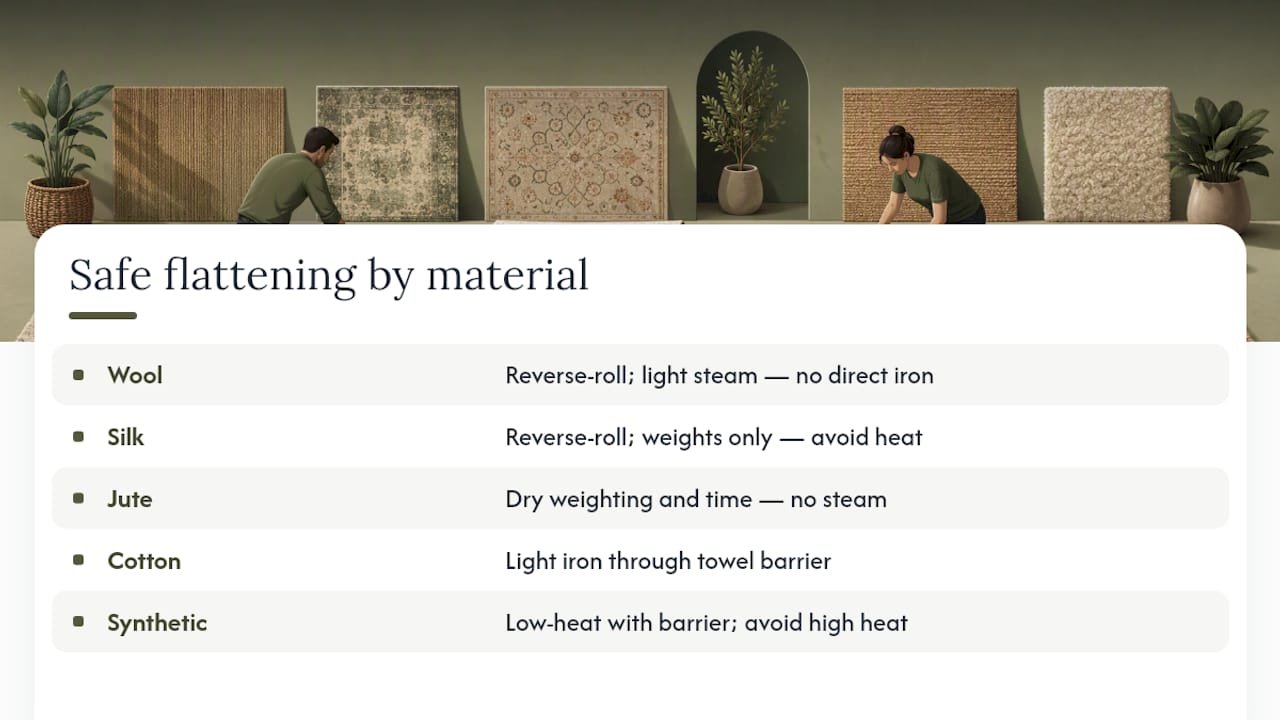
Not every fiber tolerates the same treatment, and guessing wrong is expensive. Wool handles reverse-rolling and light steam well but scorches under direct iron contact. Silk is the most fragile of the common fibers; it’s better suited to reverse-rolling and weights alone, since heat can dull its natural sheen permanently. Jute and other plant fibers absorb moisture and can mildew or weaken if you steam them, so stick to dry weighting and time. Cotton tolerates a light iron burst through a towel barrier reasonably well. Synthetics like polypropylene handle heat the least gracefully of all; low settings only, and always with a barrier, since synthetic fibers can glaze or melt faster than you’d expect.
Washable rugs deserve their own note. After laundering, lay them flat to air dry rather than draping them over a rail, which reintroduces the same curling problem you’re trying to fix. If the care label permits it, a low-heat iron pass through a towel can knock out any leftover creases once the rug is fully dry.
Pro Tip: Folded creases and rolled memory aren’t the same problem. A sharp fold needs a longer reverse treatment than a gentle roll curl, sometimes double the time, because the fibers have been bent at a tighter angle.
For rugs made from natural fibers you’re still shopping for, Rugsonlinemarket’s natural rugs collection lists fiber content up front so you know what you’re working with before wrinkles ever become a problem. High-value silk pieces get their own care rundown in the silk rug care guide.
What to Do When a Rug Still Won’t Lay Flat
Stubborn wrinkles and large buckles usually need more than one method stacked together, applied in a specific order rather than all at once.
- Start with reverse-rolling for about a day or two to address the root cause of the curl.
- Test a hidden spot with heat, then apply a short burst to the problem area if the test passes.
- Weigh the treated section down immediately and leave it for several days.
- Check progress regularly rather than waiting the full window blind. Real improvement should be visible by day two.
- After any moisture-based step, whether steam or ice, dry the area thoroughly with a fan or open window before covering it with furniture. Trapped moisture under a rug is how mold starts.
Don’t run two moisture methods back to back, and don’t add heat on top of an area that’s already damp from steaming. That combination is what actually causes dye bleed and backing separation, not the individual techniques on their own.
When to Call a Professional Rug Cleaner
Some damage signals mean it’s time to stop the DIY approach. Dye bleeding, a backing that feels crumbly or separates from the pile, or severe buckling that survives several rounds of rolling and weighting all point to a job beyond home methods. Professionals offer blocking and stretching, industrial steam pressing, and re-backing services, with cost typically scaling by rug size and fiber value. Before calling anyone, photograph the problem area and have the care label ready. This applies especially to Persian and antique rugs, where expensive handmade pieces risk permanent color or backing damage from DIY heat if the fibers aren’t a good match for it.
Fixing Small Dents and Corners With Ice
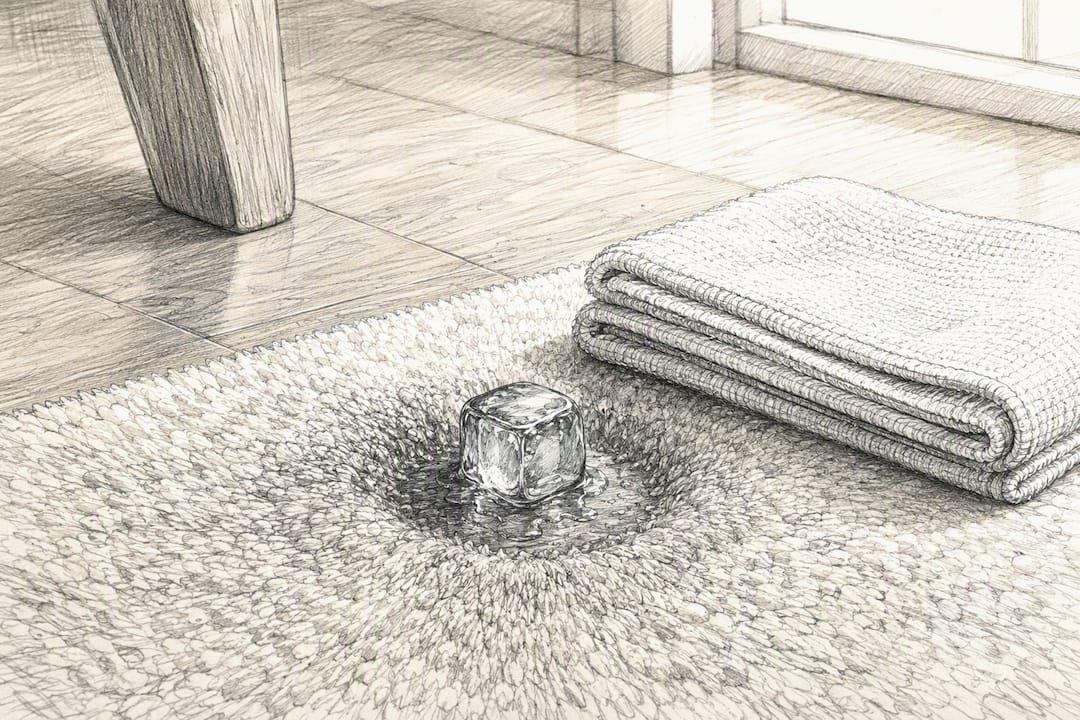
The ice-cube method works well on one specific problem: small, localized dents from furniture legs or tight folded corners, not full-rug waves. Ice melts slowly enough to let compressed fibers absorb moisture gradually and spring back on their own, without the risk of scorching that comes with a steamer or iron.
Place one or two ice cubes directly on the dent and let them melt completely; this typically takes some time depending on room temperature. Once the ice is gone, don’t just leave the spot wet. Blot the area firmly with a clean towel to pull out as much moisture as possible, then use your fingers or a spoon to gently fluff the flattened fibers back upright. A hair dryer on low, held several inches away, speeds up the final drying stage if you’re in a hurry.
The step people skip is drying it fully afterward, and it’s the one that matters most. Damp padding under a rug is exactly the environment mold needs to take hold, especially on natural-fiber backings that hold moisture longer than synthetic ones. Give the treated spot several hours of open air, ideally with a fan pointed at it, before setting furniture back down or walking on it regularly. If the dent is part of a larger wave rather than an isolated furniture mark, skip the ice and go back to reverse-rolling and weights instead. Ice is a spot treatment, not a whole-rug solution.
Why Patience Beats Force Every Time
The mistake people make most isn’t skipping a step, it’s rushing straight to heat because rolling and weighting feel too slow. Start with time and mechanical fixes; heat only after a tested spot passes. High heat on synthetic fibers and heavy point loads on any rug are the two fastest ways to turn a temporary wrinkle into permanent damage. Nine times out of ten, the boring fix (rolling, weighting, waiting) is also the correct one.
— Kian
A Rug That Lies Flat From Day One
Repeated flattening fixes are a maintenance chore. A well-built rug with stable backing shouldn’t need them every few months. Rugsonlinemarket’s washable rug collection is built specifically for households that want a rug that lies flat after laundering instead of curling back up at the edges, and their broader catalog favors backing constructions designed to resist the shipping-roll memory that causes most of the wrinkles covered above.

If you’re replacing a rug that’s fought you for years, pair the new one with a properly sized rug pad from the start. It’s the single cheapest way to prevent the exact curling problem this article walks through. Shipping and return policies may include free shipping above a certain order amount and returns accepted within a specified time frame if the size or style isn’t right once it’s on your floor. Browse the 3×5 area rugs or runner rugs collections, both common trouble spots for corner curl, and pick a style with backing built to lie flat from the first day it’s unrolled.
Sources
- The Best and Cheapest Way to Flatten a Rug (Plus 6 Alternative Methods) — BobVila
- 7 Ways To Flatten a Rug — Family Handyman
FAQ
How do you get ripples out of a rug?
Reverse-roll the rug against its original curl for 24 to 48 hours, then weigh down any remaining ripples with flat, heavy objects for another two to three days.
How do you get a bulge out of a rug?
Localized bulges usually respond to weighted flattening, wide flat weights left in place for 48 to 72 hours work better than a single heavy point load, which can dent the fibers further.
Can I steam a rug to flatten it?
Yes, on most wool, cotton, and synthetic rugs, holding a steamer 6 to 12 inches away and weighing the area until it cools, but skip steam entirely on jute since moisture can weaken or mildew plant fibers.
Can you iron a rug to flatten it?
You can, using a low-heat setting with a towel barrier and 10 to 15 second bursts, but always test a hidden corner first since synthetics can glaze or melt under direct heat.
