

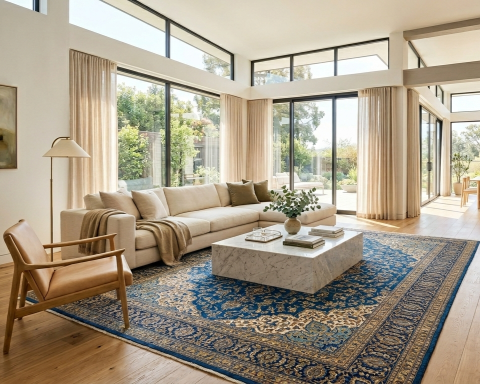

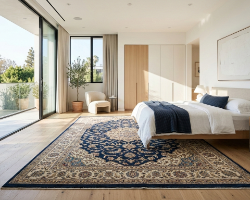
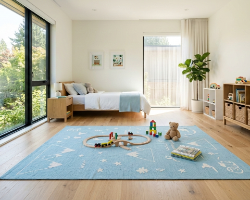
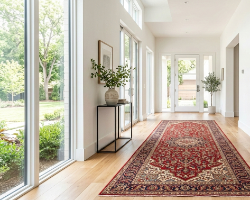
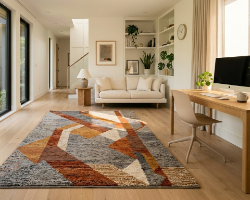
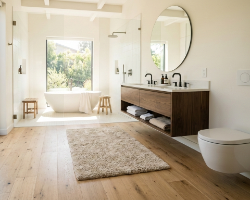








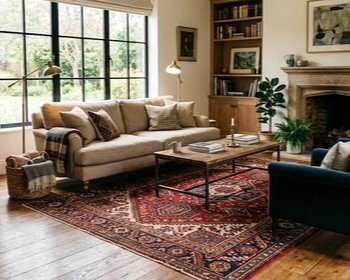
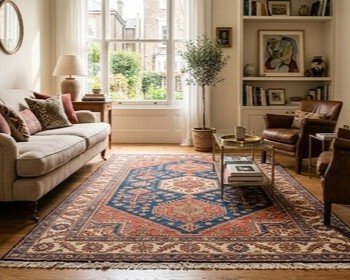
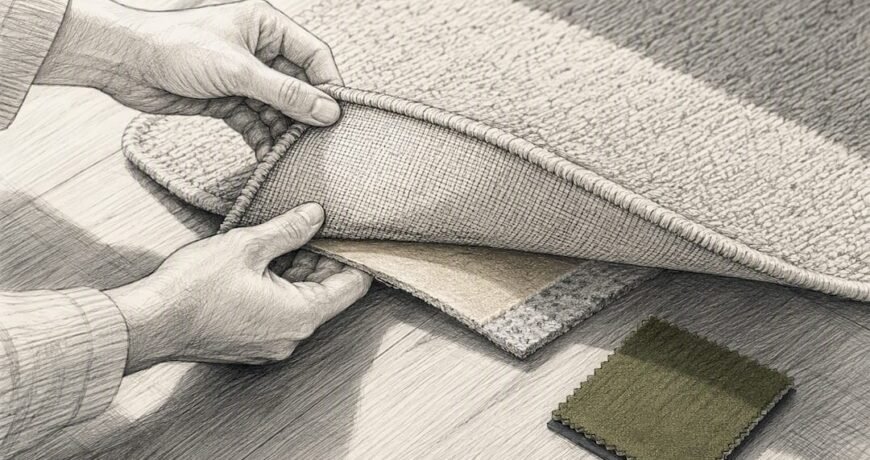
The one rule that matters more than any label: confirm the certification or seller disclosure covers the whole rug, not just the visible fiber. A pile can be organic while its backing is soaked in adhesive nobody tested.
TL;DR:
- Most “non-toxic” rugs can still have adhesives, backing, or treatments containing harmful chemicals if not thoroughly disclosed or tested.
- Certifications like GOTS and OEKO-TEX do not guarantee that the entire rug, including backing and adhesives, was tested for hazardous substances.
- Natural fiber rugs such as wool and organic cotton are safer choices for nurseries but still require verification that they are untreated and free from post-manufacture chemical treatments.
- Regular cleaning, including vacuuming, has limited impact on removing persistent chemicals like PFAS stored in treated rugs, so prevention during purchase is essential.
- Always ask sellers about backing materials, adhesives, dyes, and treatments, and prefer brands that disclose third-party testing for the entire product before bringing a rug into a child’s space.
Table of Contents
- Non Toxic Rugs: The Materials That Actually Reduce Chemical Exposure
- What Makes a Rug Toxic in the First Place?
- Do Certifications Like GOTS and OEKO-TEX Actually Guarantee Safety?
- How Do You Choose a Non-Toxic Rug for a Nursery?
- Cleaning Won’t Undo a Toxic Treatment
- Why Trust This Guide
- Can You Test a Rug for VOCs or Toxins at Home?
- Do Rug Chemicals Actually Affect Long-Term Health?
- Handmade vs Machine-Made: Which Is Actually Safer?
- Hidden Additives That Don’t Show Up on the Label
- What Parents Get Wrong About “Non-Toxic” Rugs
- Shop Safe: Rugs That Fit the Non-Toxic Checklist
- Sources
- FAQ
Non Toxic Rugs: The Materials That Actually Reduce Chemical Exposure
Wool tops most lists for a reason. It’s naturally flame-resistant, which means it doesn’t need the chemical flame retardants sprayed onto many synthetic rugs, and it resists moisture and mildew without an added fungicide. But not all wool is equal. Ask whether it’s been mothproofed or treated with a synthetic flame retardant during processing, since even natural fiber rugs can pick up insecticides or stain repellents before they ever reach a showroom floor.
Organic cotton certified under GOTS is the other reliable pick, especially for a nursery, because cotton rugs are usually machine washable and don’t rely on rubber or latex backings that can off-gas. Hemp and jute bring durability and a coarser texture, better suited to high-traffic hallways or living rooms than a crawling baby’s play area. Sisal is tough and biodegradable but rougher underfoot, so it works better layered under furniture than as a bare-skin surface.
Plant fibers and wool share one advantage synthetics can’t match: they rarely require the petroleum-based VOCs, flame retardants, or PFAS that show up in nylon or polypropylene construction.
- Wool: naturally flame resistant, durable, check for mothproofing or flame-retardant treatments
- Organic cotton (GOTS certified): soft, washable, ideal for nurseries and play areas
- Jute: biodegradable, good texture for low-traffic rooms, less tolerant of moisture
- Sisal: highly durable, rougher texture, best for entryways or under furniture
- Hemp: strong and mildew-resistant, coarser feel similar to jute
Recycled-content rugs get marketed as the eco-friendly choice, and sometimes they are. But recycled fiber can carry trace contaminants from its previous life depending on how it was processed and whether the finished product was independently tested. A recycled label isn’t automatically a safety guarantee.
What Makes a Rug Toxic in the First Place?
Most rug toxicity problems trace back to four culprits: adhesives, stain treatments, dyes, and backings.
VOCs are the most familiar one. They’re released by the resins and finishes used to bond synthetic fibers to backing material, and that “new rug smell” is often VOCs off-gassing into your air. The odor fades, but low-level emissions can continue for weeks or months depending on the product.
PFAS and PFCAs are the harder problem. These are the chemicals behind “stain resistant” and “scotchguarded” marketing claims, and they’re built to persist. Once a rug is treated, cleaning does not fully remove them.
The cleaning myth, debunked: Steam and hot-water extraction reduce PFCAs in treated carpet, but removal averages only about 20% per cleaning round. Getting a treated rug close to chemical-free would take repeated professional cleanings, and even then, full removal isn’t guaranteed.
A few more hazards worth knowing:
- Formaldehyde can show up in backing resins and adhesives, particularly on rugs with a stiff, glued backing.
- Synthetic backings and foam pads sometimes contain phthalates or other plasticizers that soften the material but also off-gas over time.
- Toxic dyes, including some containing heavy metals, can undermine an otherwise natural wool or cotton rug if the coloring process wasn’t screened; learn more about the concerns around synthetic dyes in oral products and their toxicity.
- After-market treatments, like stain guards applied post-manufacture, often aren’t disclosed on the product page at all.
Do Certifications Like GOTS and OEKO-TEX Actually Guarantee Safety?
They help, but no single label covers everything, and that gap is where a lot of “non-toxic” marketing falls apart.
GOTS applies when a textile contains at least 70% certified organic fiber, and it restricts a long list of hazardous processing chemicals, dyes, and finishing agents. It’s a strong signal for organic cotton and wool rugs, but it’s a fiber-and-processing standard, not a whole-product chemical test.
OEKO-TEX Standard 100 works differently. It screens finished products for a wide panel of substances, but the catch is that manufacturers choose which components get submitted for testing. A rug’s face yarn might carry the OEKO-TEX label while its backing was never tested at all.
- GOTS: verifies organic fiber content and restricts hazardous chemical inputs during processing
- OEKO-TEX Standard 100: screens tested product components for harmful substances, but coverage depends on what was submitted
- CRI Green Label / Green Label Plus: measures indoor emissions, relevant for VOC concerns specifically
- GoodWeave: certifies ethical, no-child-labor production, a supply-chain trust signal rather than a chemical-safety test
The pattern across all four: a certificate is only as good as what it actually tested. Always ask whether the backing, adhesive, and any after-market coating were included, not just the visible pile.
How Do You Choose a Non-Toxic Rug for a Nursery?
A crawling baby puts their face on the rug, chews the edge, and spends hours a day breathing air a few inches off the floor. That changes the calculus compared to picking a rug for your dining room.
- Confirm the material is 100% natural fiber. Blends can quietly reintroduce synthetic content.
- Ask for testing or certification that covers the entire rug, backing included, not just the face fibers.
- Walk away from anything marketed as stain-resistant or “protected.” That almost always signals a PFAS treatment.
- Prioritize washable or easily spot-cleaned surfaces, since nurseries see more spills and messes than any other room.
- Unbox it and smell it. A strong chemical odor at delivery is a real warning sign, even if the label looks clean.
When you contact a seller, ask directly: What is the backing made of? Are any adhesives used, and what kind? Is there a third-party test report available for the finished product, not just the raw fiber? How were the dyes applied?
For very young or crawling children, washable organic cotton often beats undyed wool simply because you can launder it after every blowout diaper or juice spill. Jute and sisal are better saved for a nursery reading nook or under a glider chair, somewhere it won’t be gummed on daily. Our guide on allergy-friendly rug picks covers material choices for sensitive skin and respiratory concerns in more depth.
Pro Tip: Keep a new rug rolled out in a garage or spare room for 48 to 72 hours before bringing it into a nursery. Off-gassing is strongest right out of the packaging, and a short airing-out period outside the baby’s room cuts down what they’d otherwise breathe in on day one.
Cleaning Won’t Undo a Toxic Treatment
Regular maintenance matters, but it has real limits, and understanding those limits changes how you should shop in the first place.
Vacuuming frequently reduces dust, allergens, and surface residue, and it’s the single most effective habit for any rug regardless of material. Spot cleaning with low-chemical, fragrance-free solutions avoids adding new VOCs on top of whatever the rug already carries. If a rug came with a synthetic foam pad, swapping it for a natural jute or felt pad cuts down on off-gassing from underneath, where you’re least likely to notice a smell.
But if a rug was treated with a PFAS-based stain guard, cleaning is damage control, not a fix.
The uncomfortable math: Removing PFCAs from a treated carpet averages roughly 20% reduction per steam or hot-water cleaning round. That means multiple professional treatments are needed just to make a dent, and full elimination isn’t something home cleaning can promise.
That’s the strongest argument for buying untreated in the first place rather than trying to clean your way out of a bad purchase later. For fiber-specific care, our jute rug cleaning guide walks through low-moisture methods that won’t damage plant fibers, and our stain removal guide covers safer spot-treatment options generally.
Why Trust This Guide
Rugs Online Market carries a wide catalog spanning traditional, handmade, and natural-material rugs, and we built this guide because parents kept asking the same question before checkout: is this actually safe for a baby’s room? We offer shipping policies and a return policy to provide flexibility, so a rug that doesn’t meet your expectations once it’s in your home isn’t a permanent commitment.
Before a natural-fiber rug goes on our site, we look for material disclosure, backing disclosure, and whatever test documentation the manufacturer can provide. We don’t claim every rug we carry is independently lab tested, and we say so plainly rather than implying a blanket guarantee. Our goal is giving you the same questions to ask that we ask ourselves, whether you buy from us or somewhere else.
Can You Test a Rug for VOCs or Toxins at Home?
Consumer-grade testing has real limits, but there are a few practical checks worth doing before and after a rug arrives.
The simplest test is your nose. A strong chemical or “plastic” smell that doesn’t fade after a few days outside its packaging is a legitimate signal, since it usually means active off-gassing. Low-cost VOC air-quality monitors, the kind sold for general indoor air testing, can register a spike in total VOC readings when placed near a newly unrolled rug, though they won’t tell you which specific chemical is present.
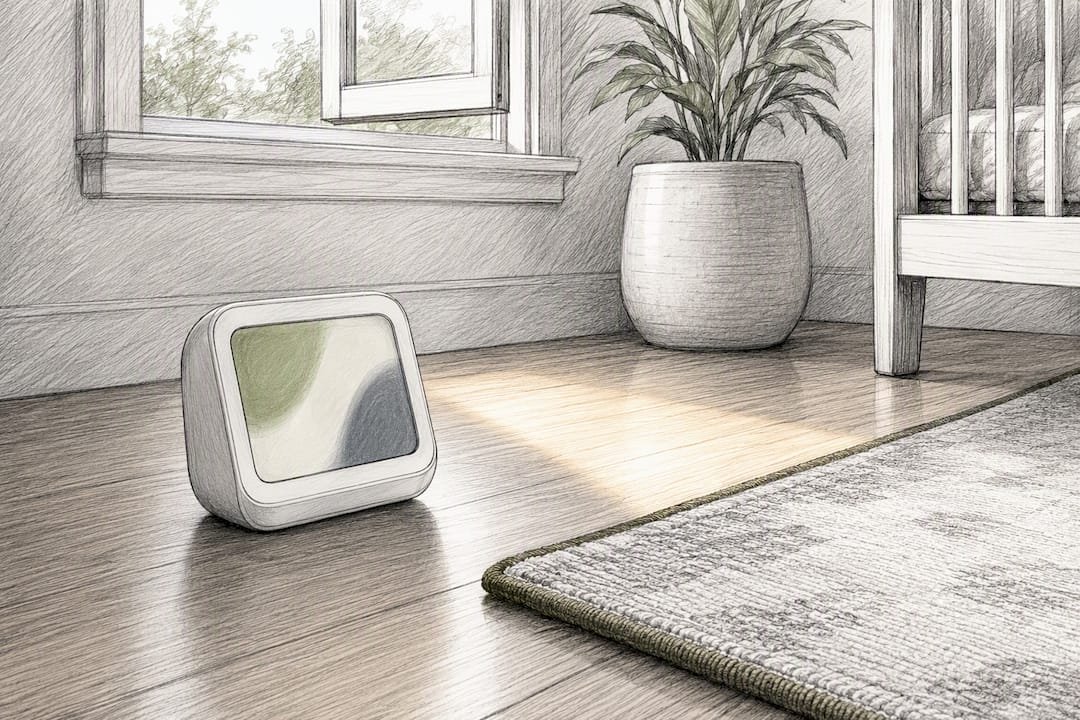
For anything beyond a rough screen, you’d need a certified indoor air quality lab to take an air sample near the rug over 24 to 48 hours and test for specific compounds like formaldehyde or PFAS. That service typically runs into hundreds of dollars, so it makes more sense for someone with chemical sensitivities or documented health concerns than for routine shopping.
The more efficient approach for most parents is prevention: buy from sellers who disclose backing and adhesive materials upfront, request any third-party test reports before purchase, and treat a strong chemical smell at delivery as a return trigger rather than something to air out and ignore. Testing after the fact confirms a problem. Asking the right questions before you buy prevents one.
Do Rug Chemicals Actually Affect Long-Term Health?
The concern isn’t hypothetical, but it’s also not a single dramatic event. It’s cumulative, low-level exposure over months and years spent in a room with a treated rug.
VOCs are a recognized indoor air pollutant, and homes with poor ventilation and multiple new synthetic furnishings can see elevated indoor concentrations compared to outdoor air. For infants and toddlers, the exposure math is worse on two counts: they breathe more air relative to their body weight than adults do, and they spend far more time at floor level, where heavier VOCs and dust particles tend to settle.
PFAS compounds raise a different concern because of persistence rather than acute toxicity. They don’t break down easily in the environment or, once absorbed, clear quickly from the body, which is why EWG’s healthy home guidance flags stain-treated carpets and rugs as a household source worth avoiding rather than managing.
None of this means one rug will make a family sick. It means the smarter long-term strategy is minimizing unnecessary chemical load where you reasonably can, especially in the room where a baby sleeps eight to twelve hours a night. A nursery is a small, enclosed space with limited air exchange, which is exactly the environment where a low-emission material choice makes the most practical difference.
Handmade vs Machine-Made: Which Is Actually Safer?
Neither construction method is automatically non-toxic. What matters more is the materials and finishing process behind each specific rug.
Handmade rugs, particularly hand-knotted wool or hand-woven jute pieces, are less likely to rely on the synthetic latex backing that machine-tufted rugs almost always use to hold fibers in place. That’s a real advantage, since latex backing is one of the more common sources of adhesive-related VOCs. Many hand-knotted rugs skip backing entirely, with the knot structure itself holding the rug together.
Machine-made rugs, especially tufted ones, typically use a secondary backing glued on with latex or synthetic adhesive to keep fibers from pulling loose. That backing is exactly the component most certifications skip over, and it’s frequently where hidden formaldehyde or VOC content lives. Not every machine-made rug is problematic. Flatweave machine looms, for instance, can produce cotton or wool rugs without any adhesive backing at all.
The safer generalization: ask about construction method specifically, rather than assuming handmade equals safe or machine-made equals risky. A hand-knotted rug with no backing and untreated wool beats a “handmade” rug that was still finished with a synthetic stain guard. Construction transparency matters more than the handmade label alone.
Hidden Additives That Don’t Show Up on the Label
Stain-resistant treatments are the biggest offender, and they’re rarely called out by name. Marketing terms like “stain guard,” “protected finish,” or “easy clean” almost always signal a PFAS or PFC-based coating applied after the rug was woven, and that coating usually isn’t included in whatever certification the base fiber carries.
Anti-mildew and antimicrobial treatments are the second hidden category, common on rugs marketed for bathrooms, kitchens, or humid climates. These treatments use fungicides or antimicrobial agents that aren’t always disclosed, and they can off-gas at low levels for the life of the rug.
Mothproofing agents, applied to wool specifically, are a third category worth asking about directly, since wool’s natural resistance to pests sometimes gets reinforced with an added pesticide during processing.
The practical defense against all three is the same: ask the seller directly whether any post-manufacture treatment was applied, and treat vague marketing language as a reason to ask a follow-up question rather than an answer in itself. If a product page doesn’t mention backing material, adhesive type, or finishing treatments at all, that silence is itself useful information. A seller who tested and disclosed those details usually says so, because it’s a selling point, not a liability.
What Parents Get Wrong About “Non-Toxic” Rugs
Most safety checklists stop at fiber content, and that’s the biggest blind spot in how people shop. A rug labeled “100% wool” or “organic cotton” tells you almost nothing about the backing glued underneath it, and backing is where a lot of the actual chemical risk lives.
Certifications get treated as a finish line when they should be treated as a starting question. GOTS and OEKO-TEX are genuinely useful, but neither one guarantees the backing or adhesive was tested unless the seller specifically says so. I’d rather see a parent buy an uncertified rug from a seller who plainly discloses “natural jute backing, no adhesive” than a certified rug where nobody can answer what holds it together.
The other overlooked point: washable doesn’t mean safe. A machine-washable rug can still carry a synthetic backing or a PFAS-based dye set, since washability is a durability feature, not a chemical-safety one. Prioritize disclosure over marketing language every time. A seller willing to answer specific questions about backing, adhesive, and treatments is telling you more than any single certification logo ever will.
— Kian
Shop Safe: Rugs That Fit the Non-Toxic Checklist
Rugsonlinemarket’s natural rugs collection is built around the exact fibers this guide recommends: wool, jute, sisal, and organic cotton, sourced without the synthetic backings that trip up so many “eco” rugs on other sites. Instead of hunting through generic marketplace listings hoping a seller mentions backing material, you’re starting from a category where natural construction is the baseline, not the exception.

Our handmade rugs section is worth a specific look if you’re leaning toward hand-knotted construction, since many pieces there skip synthetic backing entirely. For anything closer to a traditional weave, browse the traditional rugs category and use the material filter to isolate wool and cotton options. On any product page, check the description for backing material and construction method before adding to cart, and if that information isn’t listed, our customer service team can pull manufacturer specs for you before you buy. If you’re outfitting a nursery this month, start with the natural rugs collection and filter by size to match the room.
Sources
- Identifying greener carpet | US EPA
- Removal of Perfluorocarboxylic Acids (PFCAs) from Carpets Treated with Stain-protection Products by Using Carpet Cleaning Machines
- The GOTS standard
- 10 Easy Pieces: Non-Toxic Rugs – Remodelista
FAQ
What Type of Rug Is the Least Toxic?
Undyed, untreated wool and 100% GOTS-certified organic cotton are generally considered the least toxic rug materials, since both avoid the synthetic backings and flame retardants common in manufactured rugs. Jute, sisal, and hemp are close runners-up, better suited to lower-traffic or non-crawling areas.
Are There Non-Toxic Floor Rugs Safe for Babies?
Yes. Washable organic cotton rugs and undyed wool rugs with natural jute or latex backing are the top choices for nurseries, since they minimize both synthetic adhesive exposure and off-gassing. Always confirm the backing and any finishing treatments were disclosed or tested, not just the visible fiber.
Is There a Truly Non-Toxic Carpet or Rug Option?
No single certification guarantees a rug is entirely chemical free, since most labels test specific components rather than the finished product as a whole. The closest options are natural-fiber rugs with disclosed, untreated backings, ideally verified through GOTS or component-specific OEKO-TEX testing.
What Rug Material Is Best for Health and Air Quality?
Wool and organic cotton perform best for indoor air quality because they don’t rely on the synthetic adhesives that release VOCs into a room. Avoid rugs marketed with stain-guard or “protected” finishes, since those treatments typically use PFAS chemicals that don’t fully wash out.
Does Rugsonlinemarket Sell Non-Toxic Rugs?
Rugsonlinemarket’s natural rugs category focuses on wool, jute, sisal, and organic cotton construction, the same materials this guide recommends for chemical-sensitive households and nurseries. Current pricing and material details are listed on each individual product page.
