



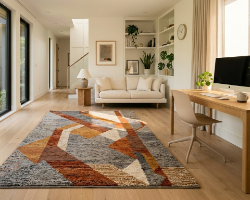
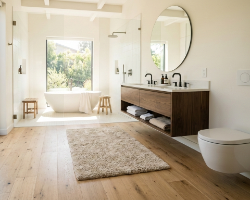

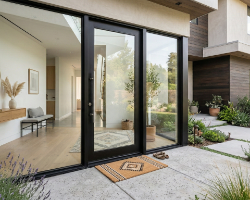


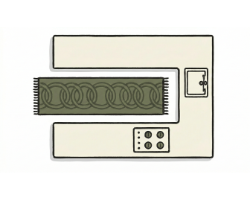
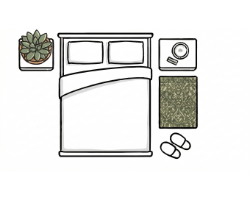
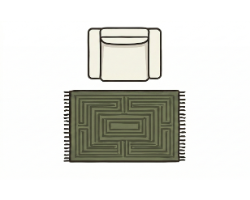
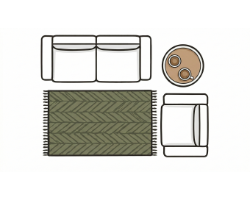
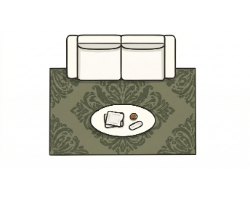
















Pick jute for soft, warm texture in bedrooms and formal living rooms; pick sisal when a hallway, stairway, or entryway needs to survive years of foot traffic. Both fibers soak up moisture, so keep either away from bathrooms, mudrooms, or homes with frequent spills. Price swings with weave and backing more than with the fiber itself, so don’t assume sisal automatically costs more.
TL;DR:
- Sisal generally outperforms jute in high-traffic areas due to its coarser, more durable leaf fibers that resist crushing and abrasion.
- Jute provides a softer, more comfortable feel, making it ideal for bedrooms and formal living rooms with light foot traffic.
- Proper construction, such as reinforced edges and backing, is more important than fiber type when assessing a rug’s lifespan, especially for heavy-use spaces.
- Both fibers are highly absorbent and prone to damage from moisture, with water causing shrinkage, discoloration, or mold if spills are not immediately blotted.
- Price differences are influenced more by weave complexity and backing quality than by fiber type, so focus on construction details for value.
Table of Contents
- Jute vs Sisal Rug: A Quick Side-by-Side Comparison
- What Are Jute and Sisal, and How Are They Made Into Rugs?
- Which Fiber Holds Up Better in High-Traffic Rooms?
- Does Jute or Sisal Feel Softer Underfoot?
- How Do You Clean and Maintain Jute or Sisal Rugs?
- Is Sisal More Expensive Than Jute?
- Which Rooms Should Use Jute, Sisal, or Something Else?
- Is Jute or Sisal the More Sustainable Choice?
- What Buyers Get Wrong About Choosing Between These Fibers
- Find the Right Natural Fiber Rug for Your Space
- Sources
- FAQ
Jute vs Sisal Rug: A Quick Side-by-Side Comparison
The two fibers come from different plants and behave differently underfoot, in sunlight, and under a vacuum cleaner. Here’s the fast version before you get into the details:
- Origin: Jute comes from the stem of a plant grown in monsoon climates (mostly Bangladesh and India); sisal is extracted from the leaves of an agave relative.
- Texture: Jute feels soft and almost fabric-like; sisal is stiff, coarse, and has a noticeable sheen.
- Durability: Sisal is stiffer and more durable, while jute is softer and sheds more.
- Shedding: Jute tends to shed and sprout more; sisal generally holds its shape and structure longer.
- Sunlight resistance: Jute actually resists sun fading better than sisal, even though sisal wins almost everywhere else on durability.
- Best rooms: Jute for bedrooms and low-traffic living rooms; sisal for entryways, hallways, and stairs.
Neither fiber belongs in a bathroom, mudroom, or any space with regular spills, standing water, or pet accidents. That’s where a washable or synthetic rug earns its keep instead.
What Are Jute and Sisal, and How Are They Made Into Rugs?
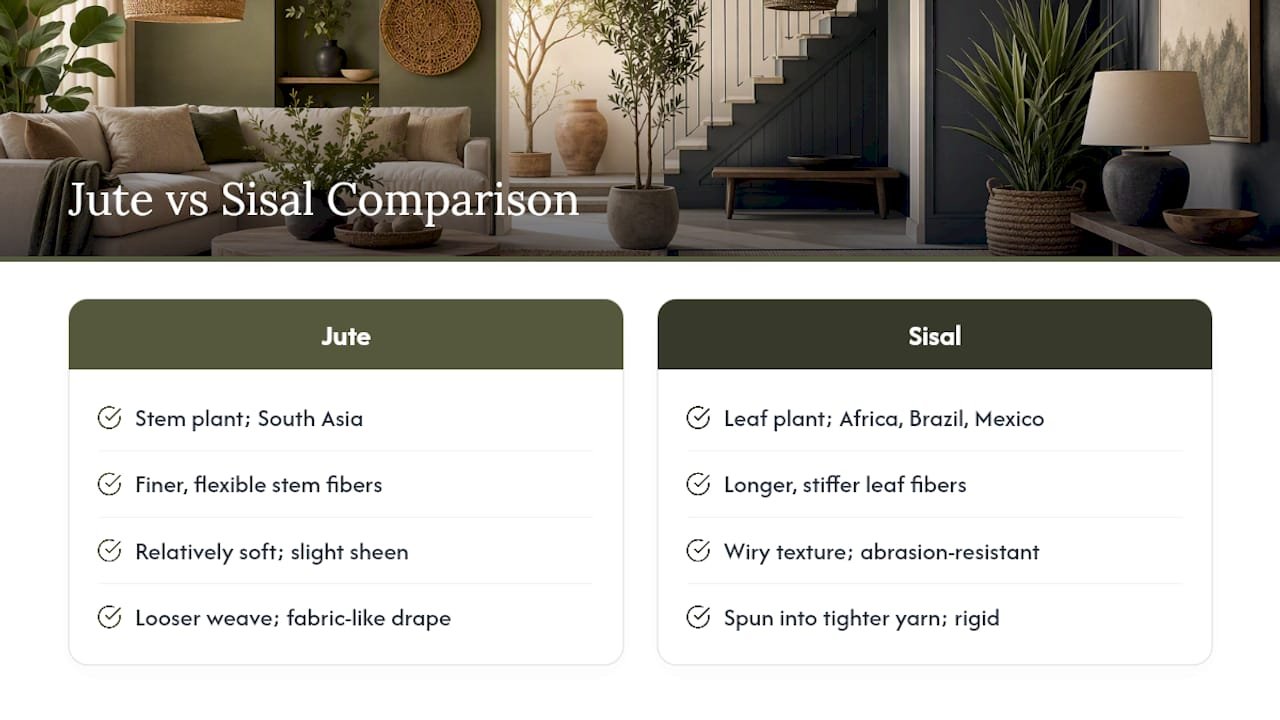
Jute comes from the stem, or bast, of a fast-growing plant harvested in flood-prone regions of South Asia. That’s the reason it feels relatively soft. Stem fibers are naturally finer and more flexible than leaf fibers, which is why jute rugs often have a slight sheen and a fabric-like drape rather than a stiff, structural feel.
Sisal is a leaf fiber, pulled from a spiky, agave-family plant that grows in drier climates across parts of Africa, Brazil, and Mexico. Leaf fibers are longer and stiffer than stem fibers, which explains sisal’s wiry texture and its reputation for holding up to abrasion. Manufacturers spin sisal into a tighter yarn before weaving, adding to its rigidity.
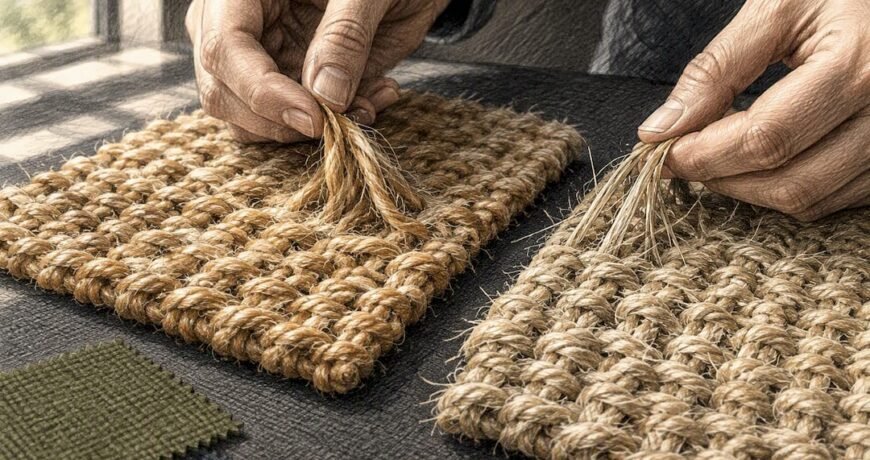
Here’s what most buyers miss: the fiber is only half the story. Weave construction, pile height, and backing type change how a rug performs as much as the raw material does. A tightly woven jute flat weave with a sturdy latex backing can outlast a loosely woven, thin sisal rug in the same hallway. When you’re comparing a jute versus sisal rug side by side in a showroom, run your hand across the weave itself, not just the label.
Which Fiber Holds Up Better in High-Traffic Rooms?
Sisal wins the durability contest in almost every practical test. Its coarse, leaf-derived fibers resist crushing and abrasion far better than jute’s softer stem fibers, which is why designers reach for it in entryways, hallways, and staircases where feet scuff the surface dozens of times a day.
Construction matters just as much as fiber choice, though. A sisal rug with a thin, unreinforced edge will fray at the binding long before the fiber itself wears out. Look for double-stitched or serged edges, a woven cotton or latex backing, and a rug pad underneath, since friction against a bare hardwood floor accelerates wear on both fibers.
Realistic lifetime expectations: a well-made sisal rug in a moderate-traffic hallway can last several years before it starts thinning at pivot points near doorways. Jute, used appropriately in a bedroom or a formal living room that sees light foot traffic, often lasts just as long, sometimes longer, because it isn’t being asked to do the heavy work sisal handles elsewhere. The telltale sign either fiber has reached the end of its useful life is matting that doesn’t spring back after vacuuming, along with visible thinning you can see light through when you hold the rug up.

Does Jute or Sisal Feel Softer Underfoot?
Jute is the clear winner for comfort. Its stem fibers are naturally more pliable, so a jute rug feels warm and almost cushioned compared to sisal, which can feel scratchy against bare skin and downright uncomfortable for pets or crawling toddlers.
That difference alone should guide where each fiber goes. Bedrooms, reading nooks, and any room where people sit or walk barefoot favor jute. If you love the structured look of sisal but not the texture, layering a soft wool or cotton runner over part of the sisal rug, or adding a plush rug pad, softens the experience without sacrificing the durability you wanted sisal for in the first place.
Design-wise, sisal tends to read a little more polished. It has noticeably more luster and a subtle sheen compared to jute and other cellulosic fibers, which gives it a tailored look that suits modern or transitional interiors. Jute leans warmer and more relaxed, fitting coastal, farmhouse, or bohemian decor.
How Do You Clean and Maintain Jute or Sisal Rugs?
Both fibers are absorbent, which is the single most important thing to remember before you buy either one. Natural fiber rugs shouldn’t sit in damp environments, and steam cleaning or saturating the weave can cause shrinkage, discoloration, or mold.
Routine care is simple if you follow a few steps:
- Vacuum weekly with a suction-only setting or a beater bar on the lowest height, since aggressive brush rollers can fray natural fibers over time.
- Blot spills immediately with a dry cloth. Don’t rub, and don’t reach for a wet carpet cleaner.
- Spot-clean with a low-moisture mix, roughly a couple of drops of dish soap in a quart of warm water in a spray bottle, misted lightly and blotted, never poured or saturated.
- Clip sprouted fibers with sharp scissors instead of pulling them, since pulling a loose strand can damage the surrounding weave.
- Call a professional dry-extraction service for deep soiling rather than renting a wet-extraction carpet machine.
Pro Tip: The most expensive mistake buyers make is treating “natural fiber” as a synonym for “easy to clean.” Blot spills within minutes, not hours. Once moisture wicks into the base of the weave, discoloration is often permanent no matter how carefully you clean the surface afterward.
If you’re dealing with sprouting fibers on a jute rug specifically, a dedicated shedding guide walks through the clipping technique in more detail, and a step-by-step cleaning resource covers the low-moisture spot-cleaning method for tougher stains.
Is Sisal More Expensive Than Jute?
Not necessarily. Price differences between a jute versus sisal rug usually come down to weave complexity, size, backing quality, edge finishing, and where the rug was made, not the fiber printed on the tag. A hand-loomed sisal rug with a reinforced latex backing can cost more than a machine-made jute rug of the same size, and vice versa.
Spending more upfront on either fiber makes sense when you’re buying for a high-traffic zone and the construction includes a durable backing, bound edges, and a manufacturer warranty. That’s where the extra cost buys years of extra life. If budget is tight, spend on construction quality and a rug pad first. Those two factors extend a rug’s lifespan more reliably than upgrading from jute to sisal alone.
Which Rooms Should Use Jute, Sisal, or Something Else?
Room-by-room thinking beats fiber-first thinking almost every time. Here’s how it breaks down:
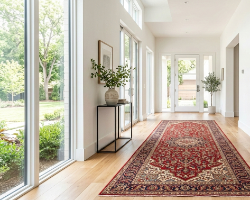
- Entryways, hallways, and stairs: Favor sisal, paired with a non-slip pad and reinforced edge binding to handle repeated scuffing.
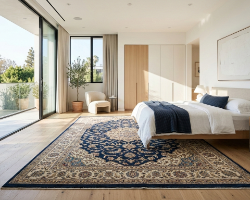
- Bedrooms and formal living rooms: Jute fits well here, since foot traffic is lighter and comfort matters more than raw abrasion resistance.
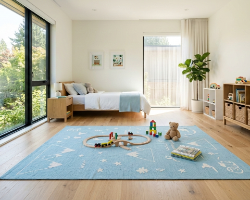
- Low-traffic family rooms: Either fiber works, though jute’s softer feel usually wins if the room doubles as a place to sit on the floor.
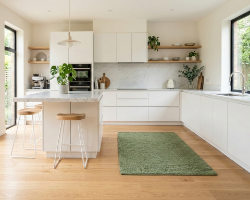
- Kitchens, bathrooms, and outdoor-adjacent spaces: Skip natural fiber entirely. A washable rug alternative handles spills and moisture without the shrinkage risk that comes with jute or sisal.
- Homes with pets or frequent accidents: Look at durable, pet-friendly rug options built from stain-resistant materials instead of forcing a natural fiber into a job it wasn’t designed for.
Seagrass sometimes gets lumped into this conversation as a third natural option, but it’s worth a caution of its own: seagrass is especially prone to mold and mildew compared to jute and sisal and doesn’t respond well to standard cleaning once it gets damp.
Is Jute or Sisal the More Sustainable Choice?
Both fibers are renewable, biodegradable, and grown without the heavy chemical inputs synthetic fibers require. Neither one is the clear environmental winner on paper, since actual footprint depends on how the crop is farmed, processed, and shipped.
Durability changes the sustainability math more than most buyers realize. A more durable rug that lasts longer can be the lower-impact choice overall, even compared to a softer material that needs replacing sooner. If sustainability is your priority, that often points toward sisal for high-traffic spots, simply because you’ll replace it less often. Look for suppliers who disclose sourcing and favor tightly constructed rugs. Reducing how often you need to buy a new one is one of the most effective moves you can make.
What Buyers Get Wrong About Choosing Between These Fibers
Most people shop by fiber name and skip the part that actually determines whether a rug survives their living room: construction. I’ve seen buyers pick sisal because it “sounds tougher,” then complain within a year that the edges are fraying, because nobody checked whether the binding was reinforced. Weave and backing predict longevity far more reliably than the fiber label does.
The other habit worth breaking is treating natural fiber as maintenance-free. It isn’t. Rugsonlinemarket’s natural rugs category includes construction notes for exactly this reason, and every purchase comes with a 30-day return window if a rug doesn’t perform the way you expected once it’s on your floor.
— Kian
Find the Right Natural Fiber Rug for Your Space
Once you know whether your room calls for jute’s softness or sisal’s grip, the next step is finding a rug built to last in that spot. Rugsonlinemarket’s natural rugs collection covers both fibers across a range of weaves and backings, so you’re not stuck guessing between construction quality and price.

If you want the tailored, handwoven look for an entryway or formal room, the handmade rugs category is worth a look for tighter, more reinforced construction. Many retailers offer free shipping over a certain purchase amount and provide return options for rugs that don’t hold up as described, typically allowing returns within a set time frame. Measure your space, check the weave and backing details on the product page, and reach out to customer service if you’re unsure which construction fits a high-traffic hallway versus a quiet bedroom. Start by browsing the natural rugs category to compare weave and backing options side by side.
Sources
- Keeping It Natural | A Guide to Jute, Sisal, and Seagrass Rugs (Molly in Maine)
- CARE INFO FOR NATURAL: Coir, Sisal, Jute and Seagrass (Curran catalog PDF)
- Natural Fiber Rugs: Sisal, Seagrass, Jute & Coir (FiberSeal)
FAQ
What Are the Downsides of Using Jute Rugs?
Jute sheds and sprouts more than other natural fibers, and it’s highly sensitive to moisture, which can cause discoloration or shrinkage if spills sit too long. It also isn’t the best fit for heavy foot traffic, since its softer stem fibers wear down faster than sisal in entryways or hallways.
What Are the Disadvantages of Sisal Rugs?
Sisal’s stiff, coarse texture can feel rough against bare skin, which makes it a poor choice for bedrooms or homes with crawling toddlers. Like jute, it’s absorbent, so moisture exposure and steam cleaning can damage the weave.
Is Sisal More Expensive Than Jute?
Not consistently. Price depends far more on weave, size, backing, and construction quality than on the fiber itself, so you’ll find affordable and premium options in both jute and sisal. Focus on edge binding and backing quality when comparing prices rather than assuming one fiber costs more across the board.
Does Water Ruin a Jute Rug?
Standing water or heavy moisture can cause shrinkage, discoloration, and even mold in a jute rug, since the fiber is highly absorbent. Blotting a spill immediately with a dry cloth and using low-moisture spot cleaning prevents most damage, but jute should stay out of bathrooms, kitchens, and other damp-prone rooms entirely.
