



























































There is no single best restaurant rug, because a restaurant is at least four different floors. The kitchen needs rubber drainage mats. The bar needs mats that handle spills and standing fatigue. The entrance needs something that traps water and grit. The dining room is the one place where a true decorative rug belongs. This guide compares those options zone by zone, so you buy the right product for each spot and keep guests and staff on their feet.
Key takeaways
- Match the product to the zone: rubber mats for wet kitchens and bars, a rugged entrance mat at the door, and a decorative rug only where the floor stays dry.
- Slip resistance, drainage, beveled edges and easy cleaning matter more than looks in any back-of-house area.
- Employers are expected to keep floors clean and dry under OSHA’s walking-working surfaces rule, and a mat helps with that but does not replace cleaning up spills.
- Check the mat’s edges and surface regularly: curled corners and wrinkles turn a safety product into a trip hazard.
- For dining rooms, entries and offices, low-pile rugs with a proper grip are the practical choice, and we cover those below.
Table of Contents
- What counts as a restaurant rug?
- Zone by zone: which option fits where
- What to check before you buy
- What OSHA expects from restaurants
- Restaurant flooring and how it affects the mat you pick
- Our perspective
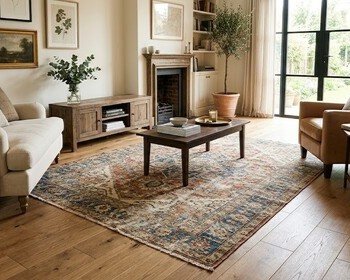
- Rugs for your dining room and entry
- A simple buying checklist
- FAQ
- Sources
What counts as a restaurant rug?
Search results for this topic are dominated by rubber floor mats, and that makes sense. The National Safety Council describes a floor mat as a flat, coarse piece of material used as a temporary floor covering. Mats can protect floors, cover slippery surfaces, remove moisture and dirt from footwear, and give ergonomic relief at standing workstations. Every one of those jobs shows up in a restaurant.
So “restaurant rug” really covers two product families:
- Functional mats: rubber, vinyl or similar materials, built for grease, water, cleaning chemicals and long shifts on your feet. These go in kitchens, behind bars, at dish stations and at the door.
- Decorative rugs: woven or tufted rugs in wool, cotton or other fibers, used to define seating areas, soften noise and set a style. These go in dining rooms, lounges, waiting areas and private rooms.
Mixing them up is the most common mistake. A beautiful wool rug in a splash zone gets ruined and creates a hazard. A black rubber mat in front of a host stand looks like a loading dock.
Zone by zone: which option fits where
| Zone | Main problem | Best fit | Look for |
|---|---|---|---|
| Wet kitchen, dish station | Water, grease, standing for hours | Perforated or open rubber drainage mat | Drainage holes, textured surface, beveled edges |
| Cooking line | Grease and fatigue | Cushioned anti-fatigue rubber mat | Soft core, durable surface, easy degreasing |
| Bar | Spills, ice, standing fatigue | Rubber bar mat or drainage mat | Drainage, grip, size that fits behind the rail |
| Entrance | Rain, snow, grit | Scraper or absorbent entrance mat, plus a durable entry rug | Heavy traffic rating, low profile, non-slip backing |
| Dining room | Noise, style, foot traffic | Low-pile decorative rug with a grip | Flat weave or low pile, washable or easy to spot clean, secure under chairs |
| Hallway to restrooms | Narrow traffic lane | Runner | Low profile, anchored ends |
Wet kitchens and dish stations
This is where rubber drainage mats earn their keep. The National Safety Council notes that rubber mats and runners are useful where water resistance is needed, and it describes the surface patterns that give them traction: ribs, raised knobs, perforations, open links and tight links. Perforated and open designs let liquid pass through so you are not standing on a film of water. Tight, solid designs hold liquid on top, which suits areas where you want to catch spills rather than drain them.

The top-ranking pages for this keyword are all in this category: large-hole and small-hole drainage mats, flow-through mats and beveled-edge mats from foodservice suppliers. Brands such as Notrax, Cactus Mat and Winco appear among them. If you run a commercial kitchen, that is the aisle you shop first, and we would not pretend a decorative rug competes there.
The cooking line
Cooks stand in one place for long stretches. The NSC describes cushioned rubber mats that combine a durable surface with a soft sponge-rubber core and beveled edges. That combination suits ergonomic relief at standing workstations. On a grill or fryer line, choose a surface that tolerates degreasing, and keep the mat clear of open flame and hot oil splash.
Behind the bar
Bar mats face spilled drinks, melting ice and constant movement. Drainage mats work well here for the same reason they work in a kitchen. Size them to the walkway behind the rail, and make sure the edges sit flat against cabinets and drains so nothing catches a shoe.
The entrance
The front door brings in rain, slush and grit, which then travel across your dining room floor. A two-step approach works best: a rugged scraper or absorbent mat outside or in the vestibule, then a durable low-profile rug inside that catches what is left. Our guide to commercial entry rugs covers durability and design for boutique spaces, and the same logic applies to a host stand area. You can browse our doormats and outdoor rugs for covered patios and entry porches.

The dining room
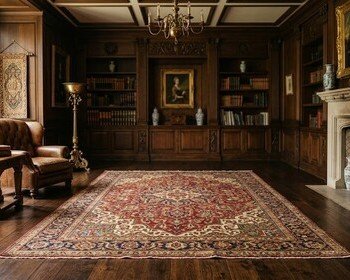
Here a real rug makes sense. It absorbs sound, defines zones and adds warmth that tile and concrete cannot. The trade-off is maintenance: food and drink will land on it. Choose low pile or flat weaves, darker or patterned designs that hide spots, and fibers that clean up well. Wool is naturally resilient, and our washable rugs guide lays out the options if you want easier cleaning. Keep rugs out of server lanes where trays and carts pass, or anchor them very securely.
What to check before you buy
Slip resistance
A mat that slides on the floor is worse than no mat. Look at both faces: the top surface for traction and the underside for grip. Surface testing standards recognize that wet and dry conditions behave differently. ANSI/ASSE A1264.2-2012 addresses adhesion on dry surfaces and sticktion on wet surfaces, which can produce higher slipmeter readings. In practical terms: a surface that tests well dry is not proof of grip when it is wet, so judge a mat in the conditions where you will use it.
For decorative rugs on hard floors, the right pad matters as much as the rug. See our guides on how to stop a rug slipping on any floor type and rug pad thickness.
Edges and flatness
This is the detail that gets overlooked. Insurer CNA’s floor mat guidance says mats thicker than ¼ inch should have beveled edges to reduce tripping. The same guide says damaged or curled edges, along with bulges or wrinkles, should be corrected. Build a quick check into your opening routine: walk every mat, look for lifted corners, and replace any that will not lie flat.
Drainage and cleaning
Ask how you will clean it. Drainage mats should be lifted, hosed or scrubbed, and the floor beneath cleaned too, since grease and debris collect underneath. Decorative rugs need vacuuming daily in busy rooms and a plan for spills. CNA says each facility should tailor and test its own mat program, which is sensible advice: put a sample in place for a week before you outfit the whole building.
Comfort and durability
Soft cores reduce fatigue but can compress and break down in heavy use. Harder mats last but feel less forgiving. Match the choice to how long staff stand in one place. For rugs, wool and tightly woven synthetics hold up to traffic better than loose, shaggy constructions.
Size and fit
Measure the actual space, including doorways and equipment feet. A mat that is too small gets stepped around, and one that is too large buckles. Standard commercial sizes exist, but custom cutting or ordering several smaller mats often fits odd layouts better than forcing one large piece.
Cost
Prices swing widely with size, thickness, material and how much cushioning is built in. A small anti-fatigue mat and a large drainage mat covering a full cook line are very different purchases, so get quotes by exact dimensions rather than comparing per-mat prices. For decorative rugs, factor in cleaning and replacement cycles, not just the sticker price.
What OSHA expects from restaurants
OSHA does not name a specific mat you must buy. What it does say is that employers should keep floors clean and dry, and keep aisles and passageways clear and in good repair. Its restaurant safety guidance ties this to the walking-working surfaces rule, 1910.22(a)(2), which covers keeping floors clean and dry.
For your setup, that means:
- Mats are a tool to manage wet areas, not a way to ignore them. Wipe spills promptly.
- Mats must themselves be in good repair. A torn or curled mat is a defect in the walking surface.
- Keep walkways clear. Do not stack rugs, mats or equipment in aisles.
If you have questions about your specific obligations, your state OSHA plan, your insurer or a qualified safety consultant can review your layout.
Restaurant flooring and how it affects the mat you pick
The floor under the mat changes the choice. Hard, smooth surfaces such as tile or sealed concrete get slick when wet, so mats and pads there need strong grip. Textured or porous floors may let a mat sit more securely but can trap grease and need more thorough cleaning underneath. In dining rooms with hardwood or laminate, a rug pad protects the finish and stops creep. Before ordering, identify your floor type in each zone and ask the seller how the mat’s backing behaves on it.
Our perspective
We sell rugs, not commercial kitchen drainage mats, and we say so plainly. If your problem is grease and water on a cook line, a purpose-built rubber mat from a foodservice supplier is the right tool.
Where we can help is everywhere guests actually walk. Dining rooms, entries, lounges, hallways and offices all need rugs that survive foot traffic and still look good. We see the same trade-offs again and again: low pile beats shag in busy rooms, a proper grip matters more than a thick pad, and natural fibers like wool tend to age better than their price suggests. We carry traditional, handmade, natural, runner and outdoor styles, so a single order can cover the host stand, the main room and the corridor to the restrooms.
Our advice for restaurant owners: do the safety-critical zones first with the right functional mats, then spend your design budget on the front-of-house floor, where the rug shapes how the place feels.
— ROM team
Rugs for your dining room and entry
We offer dining room rugs, runner rugs for corridors and office rugs for back offices and managers’ rooms. Orders over $300 ship free, returns are accepted within 30 days, and our team can help you pick sizes and materials for a high-traffic space.

Browse the full range on Rugs Online Market and talk to us if you are outfitting several rooms at once.
A simple buying checklist
- Walk your space and list each zone: wet, greasy, entrance, dining, corridor.
- Note the floor type and exact measurements in each.
- Pick functional rubber mats for wet and standing zones, and decorative rugs for dry ones.
- Confirm beveled edges on thick mats, and a non-slip backing or pad on rugs.
- Plan how each will be cleaned, and who does it.
- Test one piece in place for a week, then order the rest.
- Inspect all mats at opening, and replace any that curl, wrinkle or tear.
If pets are welcome on your patio, our pet-friendly rug picks show which materials stand up to claws and spills. For kitchen-adjacent areas that stay dry, our kitchen rug ideas may help.
FAQ
What are the rubber mats on a bar called?
They are usually called bar mats, or rubber drainage mats when they have holes or open patterns. They catch spills and let liquid drain away, and many have raised textures for grip. Match the size to the walkway behind the bar.
Can I use a decorative rug in a restaurant kitchen?
We would not. Kitchens bring grease, water and harsh cleaners that damage woven rugs and can make them slippery. Use rubber mats designed for wet and greasy areas, and keep decorative rugs in dry dining and entry zones.
Do OSHA rules require floor mats in restaurants?
OSHA does not require a particular mat, but it says employers should keep floors clean and dry and walkways in good repair. Mats can help in wet areas, as long as they lie flat and are maintained. Ask your insurer or state OSHA program about your specific situation.
How do I stop a dining room rug from slipping?
Use a rug pad sized to the rug and matched to your floor type, and keep the rug flat with no curled corners. Our guide to stopping rug slipping explains what works on each surface.
How much do restaurant floor mats cost?
It depends on size, thickness and material, so get quotes by exact dimension and compare like with like. Cushioned and large drainage mats cost more than small basic ones. For decorative rugs, check the current price on our product pages.
Sources
- Floor mats and runners, National Safety Council
- ANSI/ASSE A1264 addresses safety for workplace surfaces, ANSI
- Floor Mat Programs, CNA
- Young Worker Safety in Restaurants eTool, OSHA
