





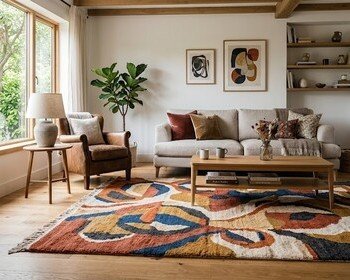

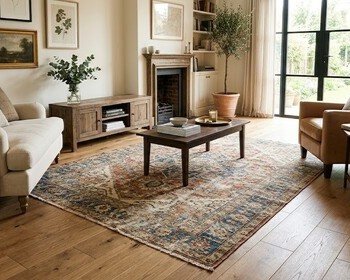
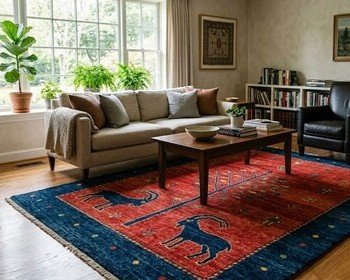
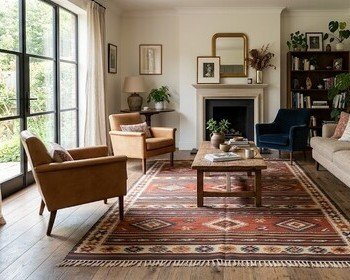
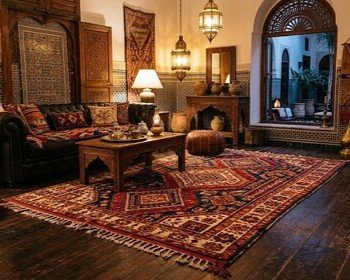
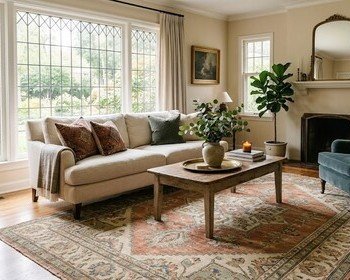
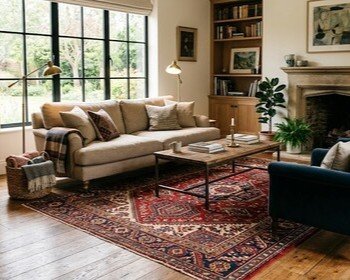
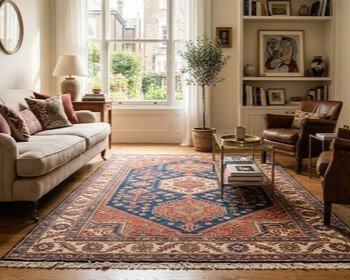
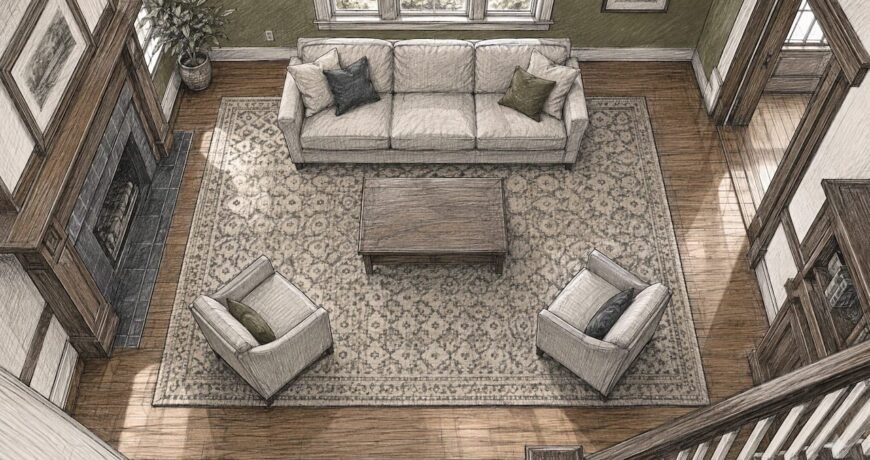
The best 12×15 rug is a hand-knotted or handmade wool rug in a flat or low pile, because at 180 square feet a rug this big has to survive years of foot traffic, furniture weight and cleaning. Wool in a traditional, Oushak, Kilim or Persian design wears well, hides dirt and anchors a large room. We sell these at Rugs Online Market, and this guide shows how they compare with natural fibers, washable rugs and synthetic options so you can pick the right one for your space.
Key Takeaways
- A 12×15 rug measures 144 by 180 inches, or 180 square feet. It suits large living rooms, open plans, big dining rooms and primary bedrooms, not standard rooms.
- Wool, handmade and hand-knotted construction gives the best mix of durability, comfort and looks at this size.
- Flatweaves and low pile handle traffic, pets and children best. Medium and high pile suit bedrooms and lounge corners.
- Tape the rug’s outline on your floor before you order, and keep 18 to 24 inches of bare floor around it in most rooms.
- Check the return window, shipping threshold and rug pad before you buy. At this size, those details decide whether the purchase goes smoothly.
Table of Contents
- What a 12×15 rug actually covers
- How the main 12×15 rug types compare
- Pile height: pick it by how the room is used
- Best 12×15 rug by room
- Colors and patterns that work at this size
- What to check before you order
- Our view on choosing a 12×15
- Find your rug
- FAQ
- Sources
What a 12×15 rug actually covers
Twelve feet by fifteen feet is 144 by 180 inches, which is 180 square feet. For comparison, an 8×10 covers 80 square feet and a 5×8 covers 40. Our own guide to 5×7 versus 8×10 rugs shows how quickly the footprint grows as you step up a size, and a 12×15 is more than double an 8×10.
That footprint tells you who this size is for:
- Great rooms and open-plan spaces where one rug defines the whole seating zone.
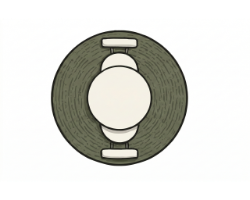
- Large dining rooms where a big table and chairs need to stay on the rug when pulled out.
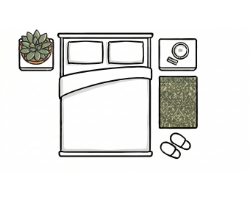
- Primary bedrooms that hold a king bed, nightstands and a seating nook.
- Hospitality, lobby and office spaces where one rug has to unify a wide floor.
If your room is closer to 12×15 feet itself, this rug is too large. A common rule is to leave a border of bare floor around the rug, usually 18 to 24 inches, so the room still looks framed. That puts a comfortable room at roughly 15×18 feet or bigger. Our rug size rules, room by room walks through the five-step tape-out and the dining rule in detail. If your room is a little smaller, a 10×14 is often the better call, and we explain how to choose in our best 10×14 rugs guide.
How the main 12×15 rug types compare
Shoppers searching this size meet five broad families. Here is how they stack up for a rug this big. Our recommendation comes first, because it is the one we would put in most large rooms.
| Type | Best for | Durability | Comfort | Care | Value |
|---|---|---|---|---|---|
| Handmade and hand-knotted wool (Persian, Oushak, Turkish, Kilim, Gabbeh) | Living rooms, dining rooms, primary bedrooms, offices | Very high | Medium to high, depending on pile | Vacuum regularly, professional cleaning when needed | Best long-term value |
| Natural fiber (jute, cotton, sisal-style weaves) | Casual rooms, layered looks, sunrooms | Moderate | Textured, firmer underfoot | Spot clean, keep dry | Strong for the price, with a relaxed look |
| Washable rugs | Homes with young kids and pets, kitchens, mudroom-adjacent spaces | Good | Thin and flat | Machine or hand wash, depending on the product | Practical, and easy to maintain |
| Flatweave (Kilim, dhurrie) | High-traffic rooms, dining areas | High | Smooth, thin | Easy to vacuum and clean | Excellent for busy floors |
| Synthetic (polypropylene, nylon) | Tight budgets, rental homes | Varies by fiber | Varies | Easy care | Lowest upfront cost |
The fiber matters because of how the rug will be used. Wirecutter’s 2026 testing notes that polypropylene rugs won’t last as long as nylon but cost less, and that the same review finds flatweaves are great for high-traffic areas because they are smooth and easy to clean. Wool, which we focus on, sits above both as a long-wearing natural fiber.
Handmade and hand-knotted wool: the pick for most rooms
In a hand-knotted rug, each knot is tied individually, which creates a dense, resilient surface. Handmade is the wider term, and includes hand-tufted and hand-loomed rugs, which are made faster and usually cost less. Machine-made rugs are woven on a power loom and are the least costly of the group.
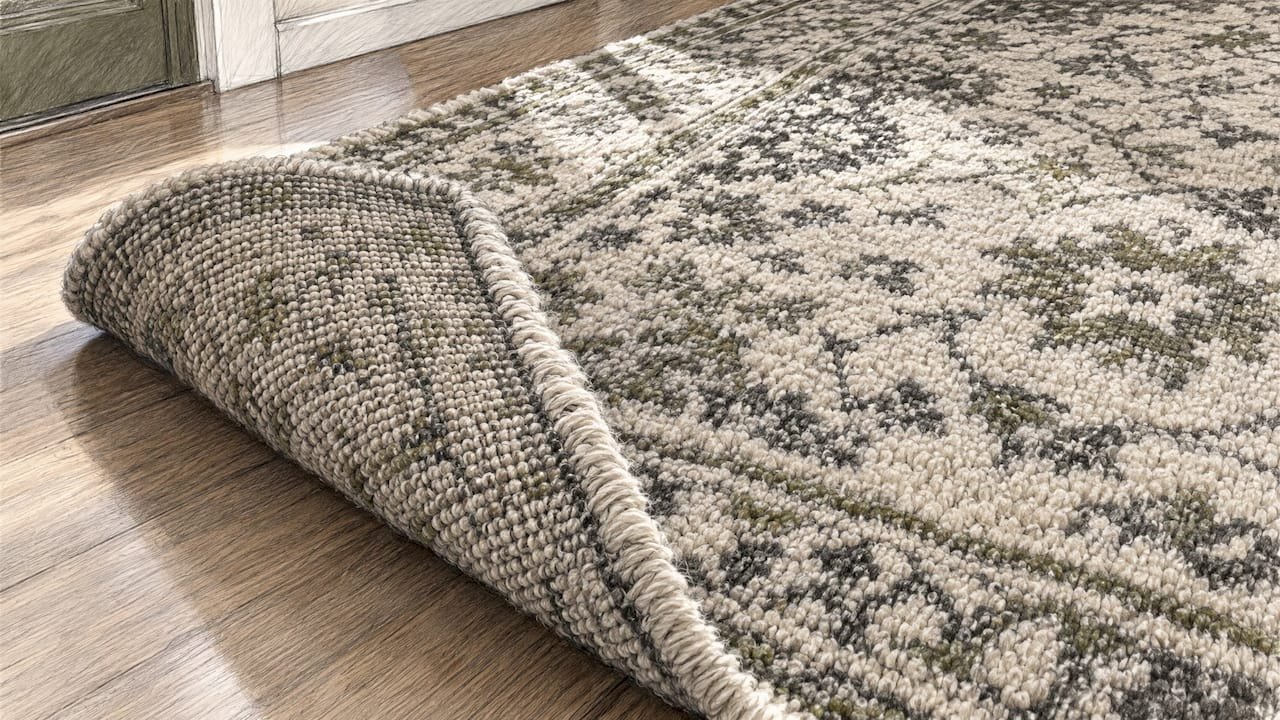
At 12×15, the weight of a wool rug is a feature. A heavy rug lies flat, stays in place under sofas and doesn’t ripple at the edges. It also has enough density to resist the crushing that large furniture causes over time. You can browse our handmade rugs and traditional rugs and filter by size, color and material.
Traditional patterns such as Persian and Oushak are forgiving at this scale. A busy medallion or an all-over design hides crumbs, footprints and the odd spill far better than a solid color does. They also give a huge floor visual interest without needing much else in the room. Our piece on how to position Persian rugs in current interior design shows how a traditional rug sits with modern furniture.
Natural fiber rugs: texture with a lighter look
If your room is bright, casual or coastal, a natural rug gives a lot of texture for the money. These weaves look good layered under a smaller rug, which is a useful trick if you want a 12×15 base and a softer patterned piece on top. They are firmer underfoot than wool, so they suit living rooms and sunrooms more than bedrooms where you step out of bed barefoot.
Washable rugs: the easy-care option for messy households
With young children or pets, the ability to wash a rug is a real convenience. Washable rugs are thin and flat, so they work well in dining areas where chairs slide and crumbs fall. Our guide to washable rug alternatives explains which constructions clean up best. At 12×15, check how the manufacturer says to wash it, since a rug this large may call for a larger machine or a different method than a small one.
Flatweave rugs: the answer for heavy traffic
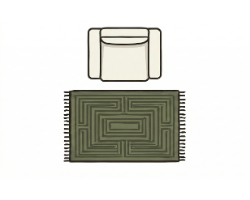
Flatweaves such as Kilims have no pile at all. Dirt sits on the surface and comes out with a vacuum, and chairs slide over them easily. If your 12×15 sits under a dining table or runs through a main walkway, a wool Kilim or a flat Gabbeh-style weave is a very practical choice, and a good fit for office and hospitality floors too.
Synthetic rugs: lowest cost, but less staying power
Synthetics are the budget route. Their appeal is price and easy care. As noted above, polypropylene wears out sooner than nylon, and both trail wool for long-term appearance. If you plan to keep the rug for a decade, put your money into wool.
Pile height: pick it by how the room is used
Pile is how tall the yarn stands. According to Wirecutter, low pile means yarns up to 0.25 inch, medium pile is over 0.25 inch, and high pile is over 0.5 inch. On a very large rug, the choice matters more than on a small one, because you see and walk on so much of it.
- Low pile or flatweave: dining rooms, entryways, home offices, family rooms with pets and kids. Furniture sits level, and vacuuming is quick.
- Medium pile: living rooms and most bedrooms. A comfortable balance of softness and cleanability.
- High pile: primary bedrooms and quiet seating corners. Soft, but it traps more dirt and can make heavy furniture sink.
For a full walkthrough, see our low versus high pile guide and the room-by-room pile height guide.
Best 12×15 rug by room
Living room
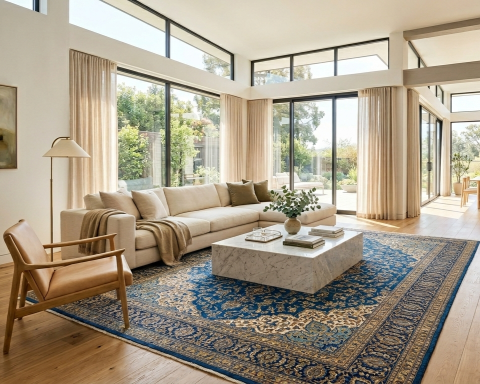
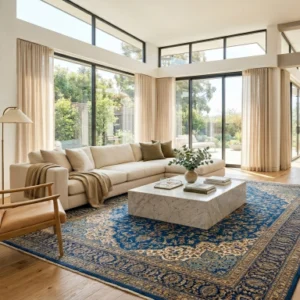
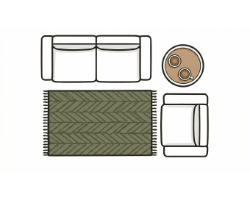
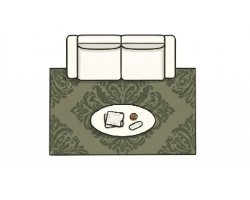
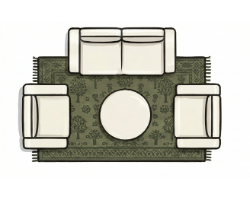
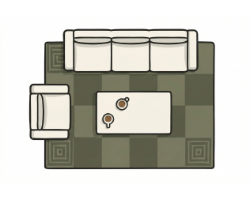
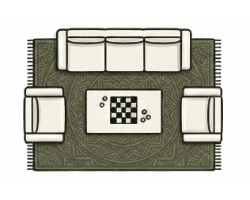
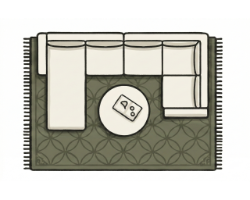
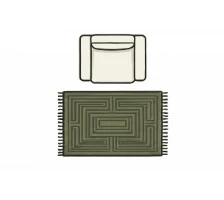
In a large living room, the rug should be big enough that at least the front legs of every seating piece sit on it. A 12×15 can hold a sofa, two chairs and a coffee table, all fully on the rug, which creates one cohesive island. A medium-pile wool rug in a traditional or Oushak pattern is our first suggestion. See our living room rug guide to size, placement and style and the living room collection for options. If you are working with a Persian rug, how to place a Persian rug in the living room covers the layout.
Dining room
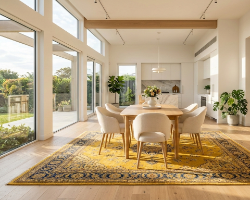
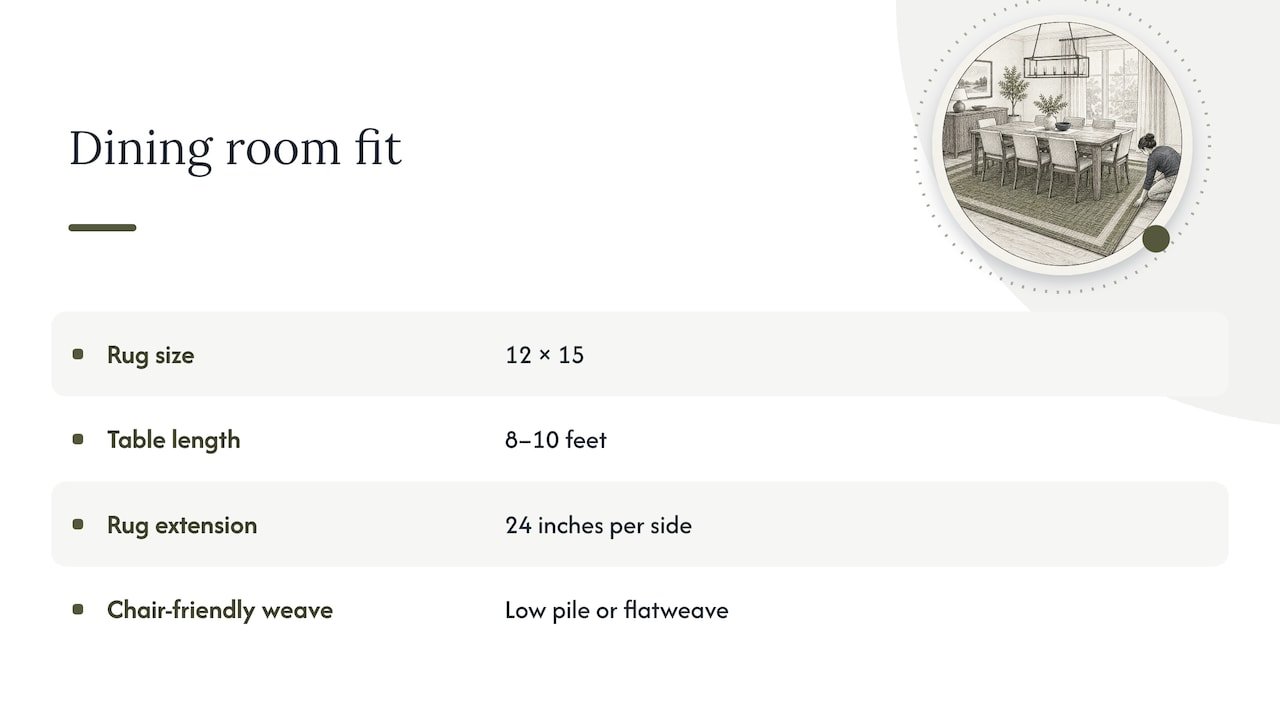
The usual dining rule is to extend the rug about 24 inches past the table on every side so chairs stay on it when pulled back. A 12×15 fits a table up to roughly 8 to 10 feet long with that margin, so it suits a big dining room. Choose low pile or flatweave so chair legs glide. Browse the dining room rugs.
Primary bedroom
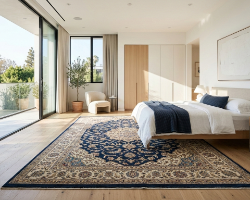
For a king bed, a 12×15 lets the rug extend well past both sides and the foot, so your feet land on soft wool in every direction. Medium or high pile feels best here. Our bedroom rug placement guide shows how far to slide the rug under the bed.
Commercial and hospitality spaces
For offices, lobbies and event rooms, a flatweave or low-pile wool rug is easier to maintain and resists crushing from rolling chairs and heavy use. Designers and stagers also use this size to make a large, empty space feel furnished and warm in photographs.
Colors and patterns that work at this size
A rug this large acts as the room’s backdrop, so color choice shapes everything else.
- Rug lighter than the furniture makes a room feel airy but shows dirt more.
- Rug darker than the furniture grounds the room and hides wear. This is the safer option in family spaces.
- Busy traditional patterns (medallions, all-over florals, tribal motifs) suit rooms with plain upholstery.
- Muted or distressed rugs suit rooms with strong wallpaper, art or colorful furniture, because they sit quietly behind it.
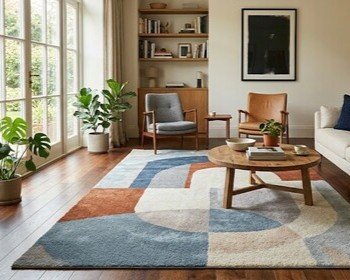
- Solid and abstract modern designs suit minimalist rooms but show every stain and shadow.
Pull one or two colors from the rug into pillows or drapes. Then the rug feels intended and does not dominate.
What to check before you order
Measure the real room, then tape it out
Mark the rug’s 12×15 outline with painter’s tape on the floor. Walk around it. Check that doors still swing, that the rug clears vents and that a border of bare floor remains. Do this before you click buy, since a rug this size is awkward and costly to return.
Check that the stated size is exact
Handmade rugs vary slightly from the nominal size, and a listing may say 11’9" x 14’10" or similar. Check the exact dimensions on the product page and compare them to your taped outline, not the rounded number.
Plan a rug pad
A pad keeps a heavy rug from creeping, protects the floor and adds cushion. For a large rug, buy a pad slightly smaller than the rug on every side so the edges lie flat.
Review shipping, returns and guarantees
A 12×15 rug ships as a heavy, bulky roll. At Rugs Online Market, orders over $300 ship free, returns are accepted within 30 days, and we back our service with a 100% feedback guarantee. Read the return terms on any rug you consider, since a large rug is the item you least want to be stuck with.
Know how to tell quality
For handmade wool, look at the back. Hand-knotted rugs show a clear, irregular knot pattern on the reverse, while tufted rugs show a glued or cloth backing. Quality wool feels dense and springy rather than limp. When in doubt on authenticity, ask about material and construction before you order.
Our view on choosing a 12×15
We think a 12×15 is the one size where buying the best material pays off the most. You live on a lot of this rug: it carries furniture, foot traffic and years of vacuuming.
Our approach is to start with the room, not the rug. Tape the outline, decide how the room is used, then choose the construction. For most large living and dining rooms, that points to wool in a traditional, Oushak, Kilim or Persian design, because pattern and fiber both hide wear.
We also put educational guidance next to the catalog, from sizing and pile height to care and placement, so you can decide with confidence and not guess at a rug this size.
ROM team
Find your rug
If you are ready to shop, start with our handmade rugs for wool construction, or explore the full range from our home page, where you will find traditional, natural, runner, round and outdoor rugs. Orders over $300 ship free, and you have 30 days to return.

FAQ
What size room do I need for a 12×15 rug?
A 12×15 rug works best in a room around 15×18 feet or larger, which leaves 18 to 24 inches of bare floor on every side. In an open-plan space, the rug can define one zone without filling the whole room. Tape the outline first to confirm.
Is a 12×15 rug too big for a living room?
In a standard living room, yes. A 12×15 rug is 180 square feet, so it suits great rooms and large open layouts. For a smaller room, compare an 8×10 or 10×14, and see our 10×14 guide.
What material is best for a high-traffic 12×15 rug?
Wool in a flatweave or low pile is the strongest choice. Flatweaves are smooth and easy to clean, which is why Wirecutter recommends them for high-traffic areas. A busy traditional pattern also hides wear well.
Do I need a rug pad under a 12×15 rug?
Yes, in most cases. A pad stops the rug from shifting, protects your floor and adds cushion. Choose one slightly smaller than the rug so the edges lie flat.
