










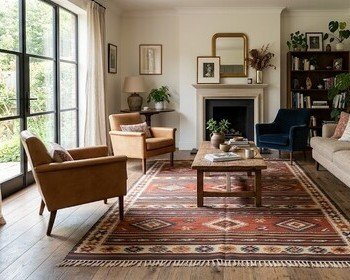
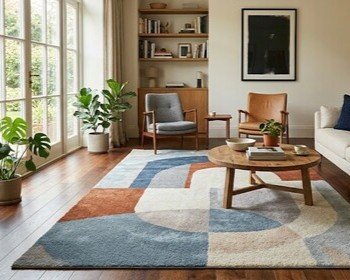

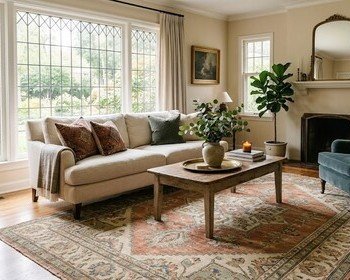
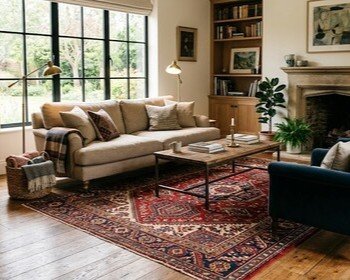
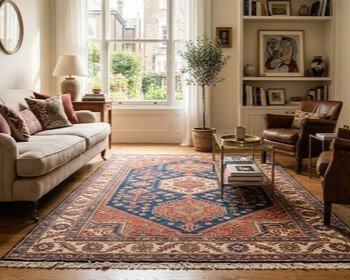
The best farmhouse rug is a natural-fiber or faded vintage-style rug in a muted palette, sized so your furniture sits on it. It is one you can live with every day. For most homes that means a woven jute or wool rug, or a softly faded traditional pattern, in cream, oatmeal, tan, sage or dusty blue. At Rugs Online Market you can shop natural rugs, traditional rugs and handmade rugs in one place and compare them by size, material and price. Below, you will see how the look works, how the well-known options compare, and how to pick the right one for your room.
Key Takeaways
- Farmhouse rugs are restrained: warm neutrals, soft stripes or checks, faded florals and antique-inspired medallions, never loud or high-contrast.
- Jute, wool and flatweaves are the natural textures that suit the style. Wool is the all-round choice for living rooms and busy households.
- Size matters more than pattern. A rug that is too small is the most common mistake designers name.
- Tested jute rugs run from about $164 to $798 in The Spruce’s 2026 roundup, so set your budget by room and size first.
- Our natural, traditional and handmade collections give you more variety than a typical big-box shelf, with free shipping on orders over $300 and returns within 30 days.
Table of Contents
- What Makes a Rug Look Farmhouse
- The Best Farmhouse Rugs Compared
- Our Pick: Why Rugs Online Market Fits Farmhouse Rooms
- Choose the Fiber for the Way You Live
- Get the Size Right Before You Choose the Pattern
- Care: Keeping a Farmhouse Rug Looking Right
- What a Farmhouse Rug Costs
- Order a Farmhouse Rug From Rugs Online Market
- Our Perspective on Farmhouse Rugs
- FAQ
- Sources
What Makes a Rug Look Farmhouse
Farmhouse style is relaxed, worn-in and warm. A rug earns the label through three things: color, pattern and texture.
Color. One style guide describes the palette as warm neutrals such as cream, oatmeal, tan, sage and dusty blue. Another farmhouse guide lists whites, creams, beiges, tans and grays, with soft blue, sage, olive, mustard or muted rust as accents. These tones sit well next to wood furniture, white walls and painted cabinets.
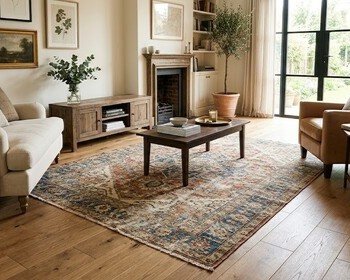
Pattern. Think ticking stripes, buffalo checks, faded florals and simple geometric borders. Scale matters. A large faded floral reads as farmhouse only when the colors are muted, while a small, tight border suits an entryway runner. Jewel tones and sharp contrast pull a room away from the relaxed look, according to the same RugAZ style guide.
Texture. Natural fibers do most of the work: jute, sisal, seagrass and wool. A plush high pile suits a living room, and a flatweave kilim suits a dining area or hallway.
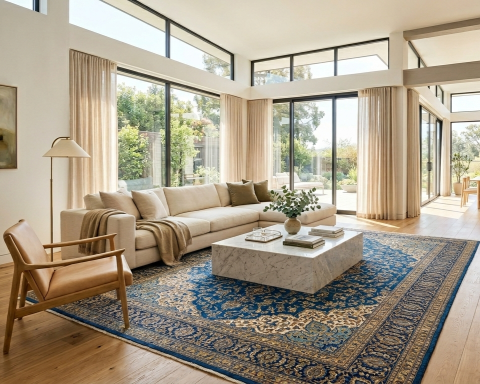
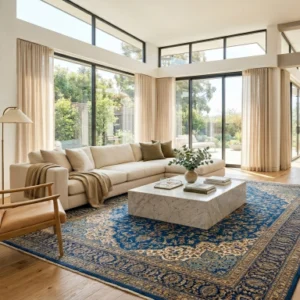
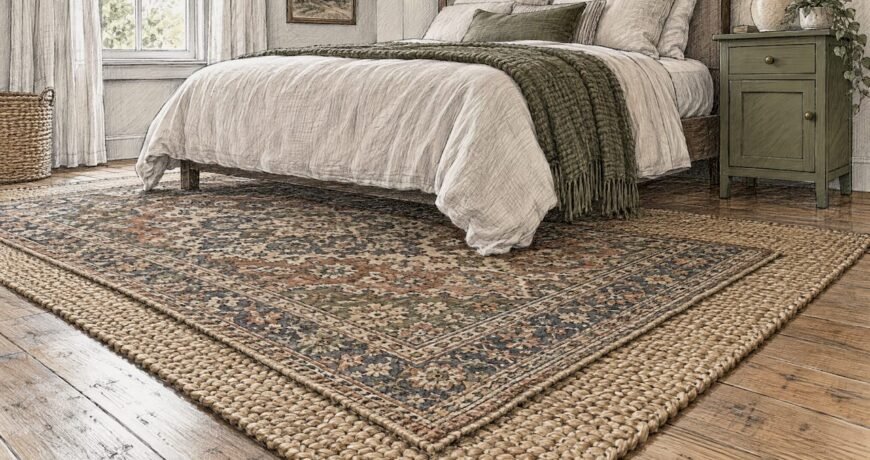
One of the most popular farmhouse looks is a layered one. Mighty Paint’s farmhouse guide suggests a chunky jute base under a vintage-inspired Persian in muted terracotta, indigo or olive, with the base sized several inches larger on each side. That is a combination you can build from our natural rugs and our Persian and traditional collection.
The Best Farmhouse Rugs Compared
Farmhouse rugs come from several kinds of sellers. Here is how the main options stack up on the things buyers compare: style, fiber, price and care. Prices for the named rugs are those reported in the cited 2026 reviews and can change, so confirm them on the seller’s page.
| Option | Look and fiber | Price reported | Care |
|---|---|---|---|
| Rugs Online Market natural, traditional and handmade rugs | Jute and other natural fibers, faded Persian and traditional patterns, handmade wool and silk options, runners and round shapes | See each product page | Free shipping over $300, 30-day returns |
| Revival Hart Jute Rug | Braided natural jute, flatweave | $169, The Spruce’s best overall | Vacuum gently, spot clean |
| Nuloom Rigo Jute Area Rug | Jute, suits foyers | $164 | Vacuum, spot clean |
| IKEA Lohals | Jute, simple weave | $180, best budget | Vacuum, spot clean |
| Pottery Barn Chunky Wool Jute Rug | Wool and jute blend | $199, best wool option | Vacuum, spot clean |
| Quince Ace Jute Rug | Jute, larger-room scale | $400, best for living rooms | Vacuum, spot clean |
| Serena & Lily Diamond Jute Rug | Jute with a diamond design | $798, best design | Vacuum, spot clean |
| Rugs USA Washable Solid Shag | 0.65-inch polyester pile, non-slip backing, 8 colorways | $29 to $110 | One-piece machine washable |
How to read the table
The Spruce’s testers name the Revival Hart as best overall among jute rugs. They found the thin braided pile comfortable for bare feet and easy to vacuum, and that a tighter weave is easier to clean and drops fewer fibers. That tells you what to look for in any jute rug: a dense, even weave.
The tested jute rugs share one trait: they are woven, neutral and unfussy, which is exactly the farmhouse brief. Where they differ is in variety. Most come in a handful of colors and a single pattern family. If you want the faded Persian or antique-inspired layer that makes a farmhouse room feel collected rather than catalog-bought, you need a seller with a wider shelf. That is where our collection comes in.
Our Pick: Why Rugs Online Market Fits Farmhouse Rooms
We are the pick for most farmhouse homes because the style is built on contrast between plain and patterned, and we carry both sides. Our natural rugs give you the woven base. Our traditional and handmade collections give you the faded, antique-inspired top layer. You can also find runners, round rugs, doormats and kitchen rugs for the rest of the house, so the whole look stays consistent.
Here is how our range maps to the farmhouse rooms people ask about most:
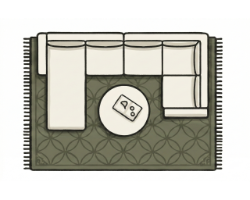
- Living room: a large natural-fiber base from our living room rugs, with a traditional accent on top.
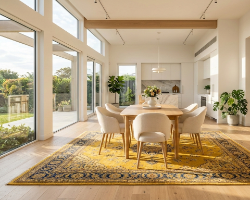
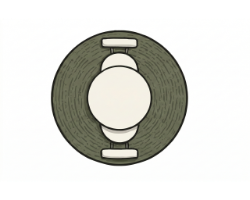
- Dining room: a flat, easy-to-sweep rug from our dining room collection, sized for chairs that slide out.
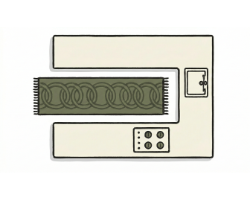
- Kitchen: a runner or mat from our kitchen rugs.
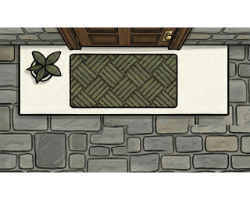
- Entry and mudroom: doormats and runners, with a guide to mudroom rugs for mud, snow and paws.
- Washable needs: our guide to washable rug options covers rugs you can clean at home.
We also offer educational guidance before you buy, and customer service for questions about size, material and placement. Our 100% feedback guarantee and 30-day hassle-free returns are there so you can order with confidence.
Choose the Fiber for the Way You Live
Farmhouse is the look. Your household decides the fiber.
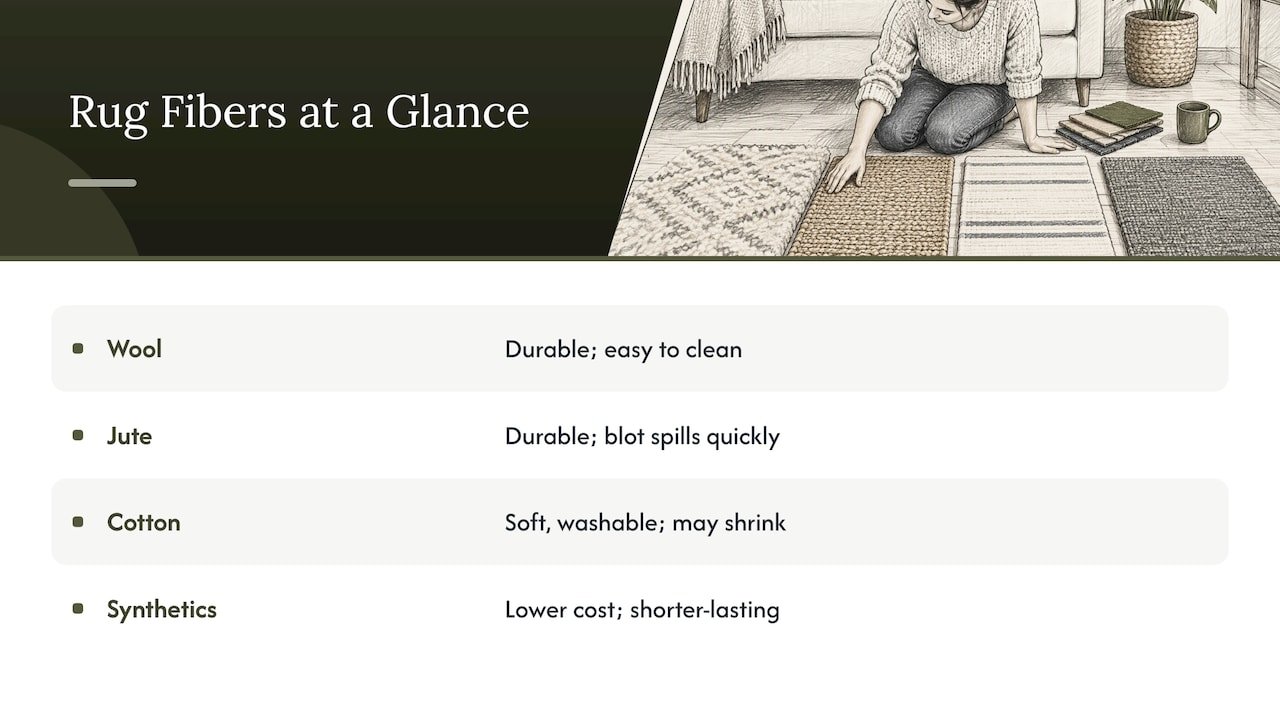
Wool is the safest all-round answer. One designer guide reports that every designer surveyed endorsed all-wool rugs for durability and ease of cleaning. Wirecutter notes that New Zealand and Himalayan sheep wool has stronger fibers that shed less. A wool rug in a faded traditional pattern is forgiving of footprints and spills, and it is the natural pick for hand-knotted and handmade pieces.
Jute is the classic farmhouse base. Wirecutter describes it as durable, lightweight and easy to clean, popular under dining tables and in hallways. Because it is absorbent, blot spills right away.
Cotton is soft and washable, though it can shrink a little, which makes it a good fit for lower-traffic rooms such as bedrooms.
Synthetics such as polypropylene cost less. A farmhouse-style print in polypropylene gets you the look at a lower price, though Wirecutter notes these rugs will not last as long as other materials.
Pile height and construction
Wirecutter says flatweaves suit high-traffic areas because they are smooth and easy to clean, while piled rugs are more padded and better for living rooms and bedrooms. For farmhouse, that gives you a simple rule:
- Entry, hallway, kitchen, dining: flatweave, kilim or a low-pile jute.
- Living room and bedroom: a medium or higher pile in wool for softness underfoot.
Kids and pets
Architectural Digest advises households with pets or kids to choose machine-washable, low-pile or stain-resistant rugs that handle or hide messes and vacuum easily. A faded, patterned traditional rug hides a lot, which is one reason the farmhouse look works so well in busy homes. For pet accidents, blot right away with a damp cloth and use an enzyme cleaner for odor, as this care guide advises.
Get the Size Right Before You Choose the Pattern
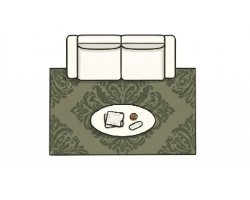
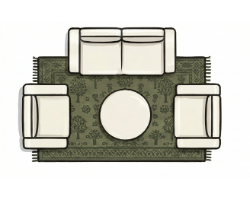
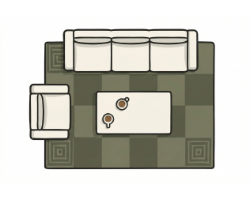
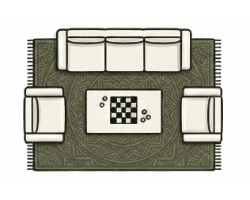
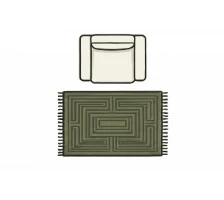
Size is where most rug purchases go wrong. House Beautiful’s designer rug rules call a rug that is too small the most common mistake, and they give clear targets by room:
| Room | What the rug should do |
|---|---|
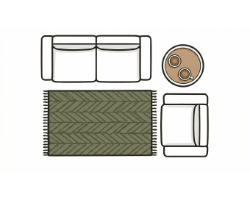
| Living room | At least the front legs of all major furniture sit on the rug |
| Dining room | Extends far enough that chairs stay on the rug when pulled out |
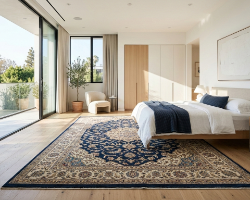
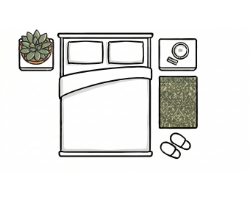
| Bedroom | Frames the bed generously, leaving about 18 to 24 inches of exposed floor around the edge |
Wirecutter cites designer Jessica Probus’s rule that a primary room rug should be large enough for all the furniture to at least partially sit on it.
For exact dimensions, use our room-by-room guides:
- Rug size rules, room by room covers the five-step tape-out method and the dining rule.
- 5×7 vs. 8×10 shows how much floor each size covers, so you can tape it out first.
- Dining rug placement and round dining rug size help with tables.
- Bedroom rug placement covers beds and nightstands.
- Our rug size chart and living room rug guide pull it all together.
If you layer a patterned rug over a jute base, size the base larger than the accent so a band of natural fiber frames it. If the rug slides on hard floors, our guide on how to stop a rug slipping covers it by floor type.
Care: Keeping a Farmhouse Rug Looking Right
Natural rugs reward a simple routine. Care schedules from one living-room rug guide advise that you vacuum wool weekly, rotate it every six months and have it professionally cleaned every two to three years. Jute should be vacuumed gently and spot cleaned only. Washable synthetic rugs are vacuumed weekly and machine washed as needed.
For jute specifically, Architectural Digest’s notes on the Revival Hart say to use a non-rotary, low-powered vacuum, avoid dry or steam cleaning and blot spills. A rug pad underneath also helps, as the RugAZ guide advises. If you want a rug you can put in the washing machine, our washable rug guide shows what to look for.
What a Farmhouse Rug Costs
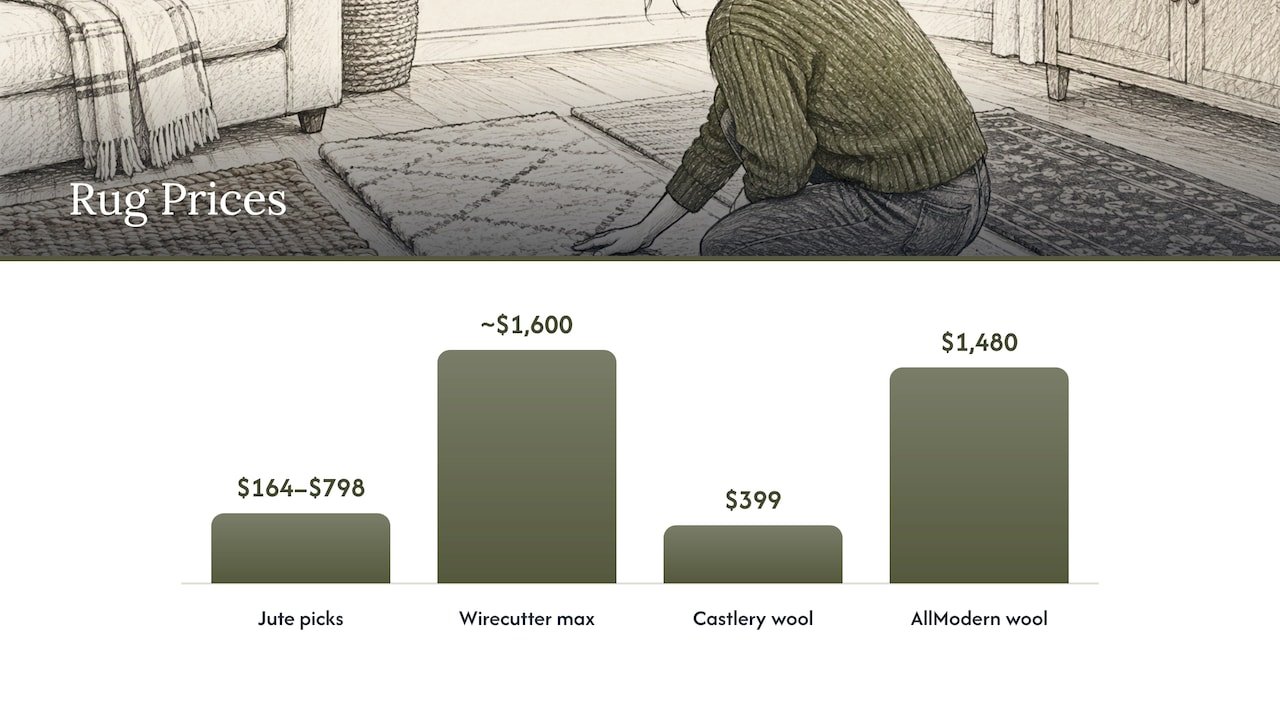
The tested jute picks above range from $164 to $798 in The Spruce’s 2026 roundup. Wirecutter reports that most of its area rug picks are under $600 for an 8×10, with its most expensive about $1,600. Wool pricing climbs with size: Architectural Digest lists a Castlery wool rug at $399 and an AllModern wool rug at $1,480.
Some practical ways to keep a budget in check:
- Decide the size first. Size drives price more than pattern does.
- Put the money into the living room or the largest room, and use runners and smaller natural rugs elsewhere.
- Watch for promotions. Looking up rug store coupon codes before you order is a simple way to compare what each retailer is offering.
- Count shipping. Our orders over $300 ship free, which helps on larger rugs.
Order a Farmhouse Rug From Rugs Online Market
If you want the woven base, the faded traditional accent and the runner for the hall from one store, start with our natural rugs, then add a piece from our traditional collection or handmade rugs. Orders over $300 ship free, returns are hassle-free within 30 days, and our team can answer questions about size and material before you order.

Designers, stagers and small businesses can use the same range to outfit client homes, listings and commercial spaces with durable pieces in a consistent palette.
Our Perspective on Farmhouse Rugs
We think farmhouse is the easiest style to get right and the easiest to flatten. It works when a room has a plain, natural foundation and one piece with some history in it. That is why we put natural fibers and traditional patterns side by side.
Our advice is to choose the size first, then the fiber, then the pattern. Tape the rug out on your floor, think about who walks on it every day, and pick wool or a tight natural weave for the busiest rooms. Faded, muted Persian and traditional designs are forgiving and they look better the longer they are lived on.
We built our collection to be wide, from runners and round rugs to handmade wool and silk, because no two farmhouse rooms are alike. And we publish our sizing and placement guides so you can order with confidence.
ROM team
FAQ
What color rug works best in a farmhouse room?
Warm neutrals are the safest choice: cream, oatmeal, tan, sage and dusty blue. Muted terracotta, indigo or olive work well as accents in a faded traditional pattern. Keep contrast low so the rug reads relaxed rather than bold.
Is jute or wool better for a farmhouse living room?
Both suit the style. Wool is softer and, according to designers surveyed by Veranda, easier to keep clean, which makes it a strong choice for a living room used every day. Jute gives the classic woven look and works well as a base layer, under a dining table or in a hallway.
What size farmhouse rug should I buy?
Choose a rug large enough that at least the front legs of your main furniture sit on it. In a dining room, make sure chairs stay on the rug when pulled out. In a bedroom, leave about 18 to 24 inches of bare floor around the rug. Our rug size rules walk you through taping it out.
Can I get a farmhouse look in a rug that is easy to clean?
Yes. Washable rugs in muted stripes or faded patterns give the look with less upkeep, and flatweaves and low-pile rugs vacuum easily. Our guide to washable rugs shows what to look for.
Sources
- The 10 Best Jute Rugs The Spruce Loves After Testing
- The 11 Best Shag Rugs of 2026, The Spruce
- The 12 Best Area Rugs of 2026, Wirecutter
- 13 Best Area Rugs for Stylish Living Rooms and Lofts, Architectural Digest
- Designers Swear by These 5 Rug Rules, House Beautiful
- How to Select the Perfect Rug, According to Designers, Veranda
- Farmhouse Rug Style: Fibers and Designs That Last, RugAZ
- Rugs for Farmhouse Interior Design: A Guide for Beginners
- Farmhouse Rug Ideas to Instantly Cozy Up Every Room, Mighty Paint
- 12 Best Area Rugs for Living Rooms, Bound by Flame
