






















Antique rug cleaning is the process of removing dirt, stains, and embedded grit using gentle, pH-balanced solutions and specialized techniques that protect fragile fibers, natural dyes, and hand-knotted construction. These rugs are not just floor coverings. They are historical textiles, often made from wool or silk, with dyes that react unpredictably to heat, harsh chemicals, and excess moisture. Over 60% of antique rug damage comes from improper cleaning methods, including beater bars, steam cleaners, and ammonia-based products. That single statistic explains why knowing the right approach before you touch your rug matters more than any cleaning product you could buy.
What tools do you need for safe antique rug cleaning?
The right tools prevent more damage than any cleaning technique. Before you attempt any home cleaning, gather supplies that match the delicate nature of antique textiles.
| Use this | Avoid this |
|---|---|
| Mild, pH-balanced, wool-safe cleaner | Ammonia, bleach, or vinegar-based products |
| Soft-bristle brush or clean sponge | Stiff scrub brushes or abrasive pads |
| Vacuum with suction only setting | Vacuum with rotating beater bar |
| Clean white cloths for blotting | Colored cloths that may transfer dye |
| Cold water for rinsing | Hot or warm water |
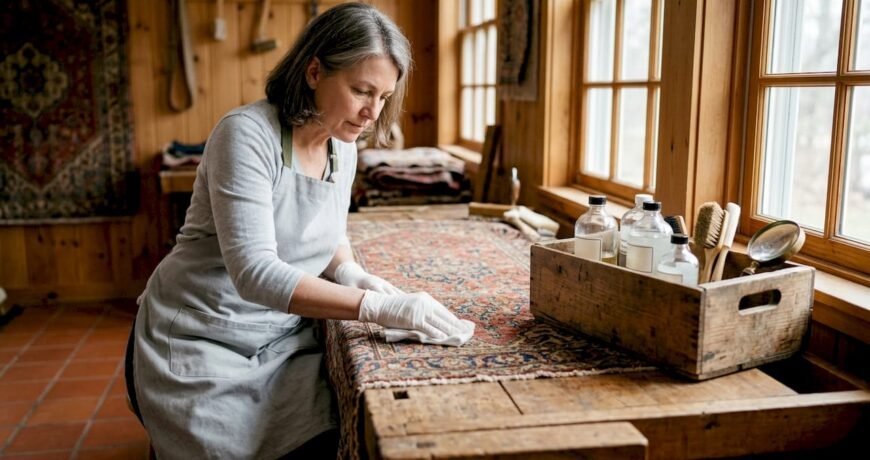
The pH detail matters more than most homeowners realize. Antique rug specialists use pH 5.5 solutions that match wool’s natural acidity. Solutions outside that range cause felting, where wool fibers lock together permanently, or dye migration, where colors bleed into adjacent areas.
White cloths are non-negotiable for blotting. A colored cloth can transfer its own dye onto a wet, vulnerable rug pile. That mistake is irreversible.
Pro Tip: Test any cleaning solution on a small, hidden corner of the rug and wait 10 minutes before proceeding. If the color lifts onto your cloth, stop and call a professional.
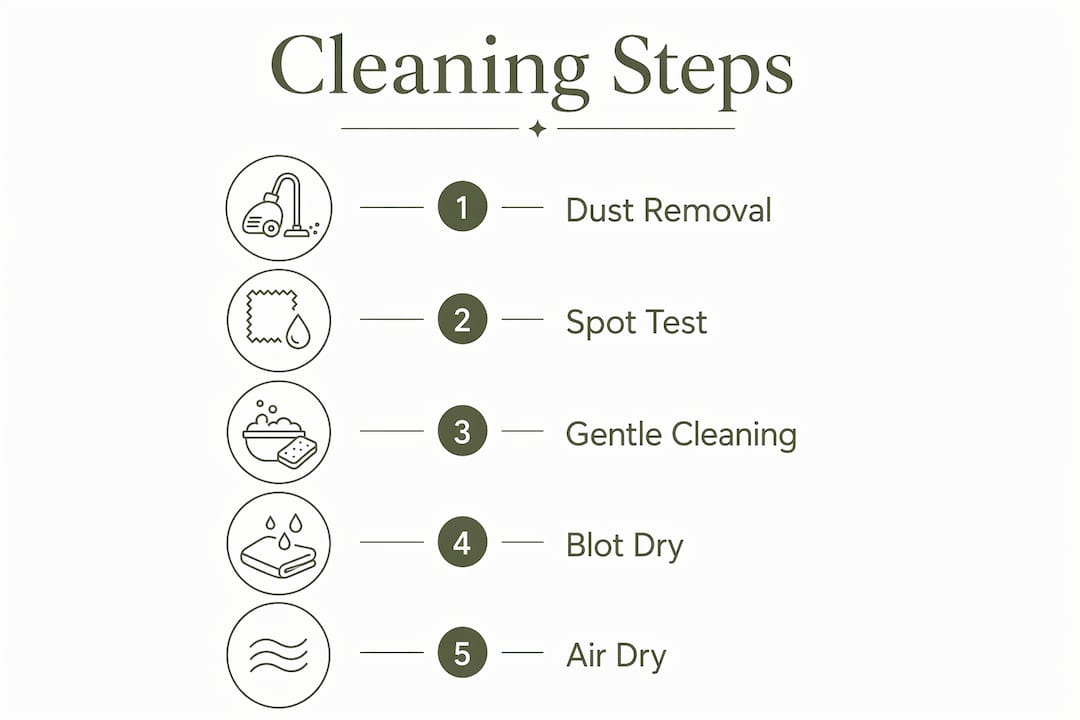
How to clean an antique rug safely: step by step
A structured process protects your rug at every stage. Skipping steps, especially the pre-cleaning inspection, causes most of the damage homeowners inflict on their own rugs.
-
Inspect the rug thoroughly. Lay it flat in good light. Look for tears, fraying, moth damage, and areas where the pile is thin. Check for dye instability by pressing a damp white cloth against several color zones for 30 seconds. If color transfers, wet cleaning is not safe to do at home.
-
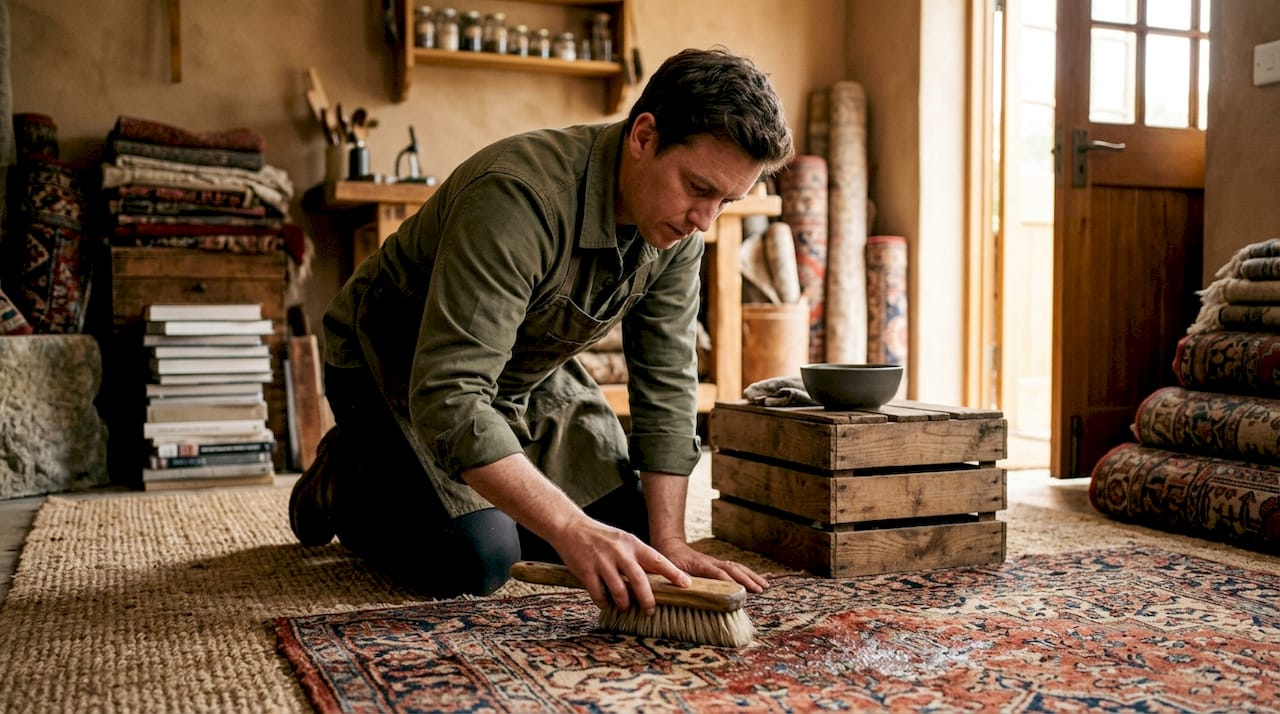
Dry dust before any moisture touches the rug. Take the rug outside and gently shake it. Then vacuum both sides using suction only, with the beater bar completely disabled. Vibration dusting can extract 1–3 pounds of dry soil from a 9×12 rug. Skipping this step means wet cleaning grinds embedded grit into the pile, accelerating fiber damage from the inside.
-
Spot clean fresh spills immediately. Blot from the outer edge of the spill toward the center using a clean white cloth. Never scrub. Scrubbing spreads the stain and breaks down pile fibers. For guidance on specific spill types, the Rugsonlinemarket article on candle wax removal covers one of the trickier scenarios in detail.
-
Apply cleaning solution with a damp sponge or soft cloth. Dab gently. Do not pour solution directly onto the rug. Work in small sections and avoid saturating the foundation. Over-wetting causes the backing to weaken and creates conditions for mildew growth.
-
Rinse with cold water only. Use a clean, damp cloth to remove soap residue. Hot water shrinks wool and destabilizes natural dyes. Cold water is the only safe choice.
-
Dry the rug flat with good airflow. Place it on a clean, dry surface away from direct sunlight and heat sources. Drying flat with good air circulation prevents distortion, mildew, and foundation weakening. Never hang a wet antique rug. The weight of the water stretches and warps the structure.
Pro Tip: Place a fan nearby to speed drying time. A rug that stays damp for more than 24 hours is at serious risk of mildew damage.
Routine maintenance practices that extend rug lifespan
Consistent, gentle maintenance does more for an antique rug’s longevity than any deep cleaning session. The goal is to reduce the frequency of wet cleaning, which always carries some risk.
-
Vacuum weekly using suction only. Disable the beater bar every time. Suction-only vacuuming removes surface dirt without stressing the pile or fringe. Never vacuum the fringe directly. Run the vacuum parallel to the fringe, not across it.
-
Rotate the rug every six months. Foot traffic and sunlight hit the same areas repeatedly. Rotating redistributes wear and prevents one section from fading or thinning faster than the rest. This single habit extends a rug’s visual life by years.
-
Use a quality rug pad underneath. Rug pads reduce friction and impact from foot traffic, protecting the rug’s foundation from grinding against hard floors. Choose a pad made from natural felt or rubber, not PVC, which can off-gas and damage dyes over time.
-
Keep the rug out of direct sunlight. Direct sunlight causes uneven fading and reduces the value of antique textiles. Use UV-filtering window film or position the rug away from south-facing windows.
-
Address pet accidents immediately. Blot up liquid, then apply a small amount of cold water and blot again. Do not use enzyme cleaners on antique wool rugs without testing first. Many enzyme formulas are too aggressive for natural dyes and aged fibers.
When should you hire a professional for antique rug care?
Professional cleaning is not a luxury for antique rugs. For high-value pieces, it is the only genuinely safe option for deep cleaning.
Conservation experts strongly advise against DIY wet or steam cleaning. Professional hand-washing by specialists is the only safe method for removing embedded grit without damaging aged fibers. This matters because wet cleaning with grit still present grinds particles into the pile from the inside, causing deterioration that is invisible until significant damage has already occurred.
Professional cleaning for antique rugs typically includes condition mapping with photographs, dye testing on small patches, and chemical adjustments based on the specific dye types used in the rug’s origin period. That level of care is not replicable at home.
Getting a professional appraisal before any major cleaning is one of the most overlooked steps in antique rug care. Appraisal fees start at $150 and document the rug’s condition and provenance before cleaning alters it. That documentation protects your investment and matters for insurance coverage.
Signs your rug needs professional intervention:
-
Persistent odors that do not clear after surface cleaning
-
Visible moth damage, fraying, or structural weakness
-
Stubborn stains that have set for more than 48 hours
-
Dye instability confirmed by the damp cloth test
-
Any rug with significant monetary or sentimental value
For a deeper look at what professional care involves for Persian pieces specifically, Rugsonlinemarket covers the art of Persian rug cleaning in detail.
How to handle common cleaning challenges without causing damage
The most costly mistakes in cleaning old rugs happen in the first few minutes of a spill or stain event. Speed and method both matter.
The first 60 seconds after a spill are critical. Blot from the outside edge toward the center immediately. Waiting even a few minutes allows liquid to wick deeper into the pile and foundation, making removal far harder.
-
Never use ammonia, bleach, or undiluted vinegar. These chemicals strip natural dyes and weaken wool fibers. Even products marketed as “natural” can be too acidic or alkaline for sensitive antique textiles.
-
Avoid hot water at every stage. Steam cleaning shrinks wool and causes colors to bleed. Cold water is the correct choice for rinsing and spot treatment.
-
Always test in a hidden area first. Apply your cleaning solution to a small patch near the edge or under furniture. Wait 10 minutes and check for color transfer or fiber change before treating the visible area.
-
Never vacuum the fringe with a rotating brush. The fringe on antique rugs is structural, not decorative. A beater bar shreds fringe fibers within seconds and the damage cannot be repaired without professional restoration.
-
Do not over-wet the rug. Excess moisture weakens the foundation, promotes mildew, and can cause the rug to shrink or warp as it dries. Use the minimum amount of water needed to treat the area.
Key Takeaways
Antique rug preservation requires gentle, pH-balanced cleaning methods, consistent routine maintenance, and professional care for any deep cleaning or high-value pieces.
| Point | Details |
|---|---|
| Improper cleaning causes most damage | Over 60% of antique rug damage comes from beater bars, steam, and harsh chemicals. |
| pH matters for wool safety | Use pH 5.5 solutions that match wool’s natural acidity to prevent felting and dye migration. |
| Act within 60 seconds on spills | Blot from outside to center immediately to stop liquid from wicking deeper into the pile. |
| Rotate and pad for long-term care | Rotating every six months and using a quality rug pad significantly extends rug lifespan. |
| Professional cleaning is the safest deep clean | Hand-washing by specialists removes embedded grit without grinding damage; appraisals start at $150. |
What I’ve learned from watching homeowners clean their own antique rugs
The most common mistake I see is confidence. A homeowner reads a few tips, grabs a bottle of all-purpose cleaner, and treats a 90-year-old Persian wool rug the same way they would treat a modern synthetic. The result is almost always irreversible color bleeding or a pile that mats flat and never recovers.
The second mistake is skipping the dry dusting step. Most people want to go straight to wet cleaning because it feels more thorough. But wet cleaning with embedded grit still in the pile is genuinely destructive. The grit acts like sandpaper against the fibers from the inside. I have seen rugs that looked fine on the surface but were structurally compromised because of this exact sequence.
My honest recommendation is this: treat routine maintenance as your primary tool and wet cleaning as a last resort. Weekly suction vacuuming, six-month rotation, and a good rug pad will keep most antique rugs in excellent condition for years between professional cleanings. When deep cleaning is necessary, get an appraisal first, then hand it to a specialist. The $150 appraisal fee and the cost of professional cleaning are small compared to the value of a rug that lasts another generation.
Home wet cleaning is appropriate only for minor, fresh spills on rugs you have already confirmed are dye-stable. For everything else, the risk is not worth it.
— Kian
Antique and vintage rugs worth protecting, from Rugsonlinemarket
If you are investing time in learning how to care for antique rugs, the rug itself deserves the same attention. Rugsonlinemarket carries a curated selection of hand-knotted wool and silk rugs, including traditional Persian pieces built to last generations with proper care.

Browse the current rug sales in Vancouver to find antique and vintage pieces that match your space, or explore the full rug services offering for professional cleaning and care options. Every purchase includes free shipping on orders over $300, hassle-free 30-day returns, and a 100% feedback guarantee. When you buy a rug worth preserving, knowing where to get it properly cared for matters just as much as the purchase itself.
FAQ
What is the safest method for cleaning antique rugs at home?
Spot cleaning with a pH-balanced, wool-safe solution applied with a soft cloth is the safest home method. Always test in a hidden area first and use cold water only.
How often should antique rugs be professionally cleaned?
Professional cleaning is recommended every 1–3 years depending on foot traffic and use. High-traffic areas may need attention more frequently.
Can you use a regular vacuum on an antique rug?
Yes, but only with the beater bar completely disabled. Use suction only, and never vacuum directly over the fringe, which can shred under a rotating brush.
Why is steam cleaning harmful to antique rugs?
Heat and moisture from steam cleaning shrink wool fibers, weaken the rug’s foundation, and cause natural dyes to bleed. Cold water and gentle hand methods are the correct alternative.
Do antique rugs need a rug pad?
A quality rug pad reduces friction, absorbs foot traffic impact, and protects the rug’s foundation from hard floor surfaces. It is one of the most cost-effective preservation tools available.
