














































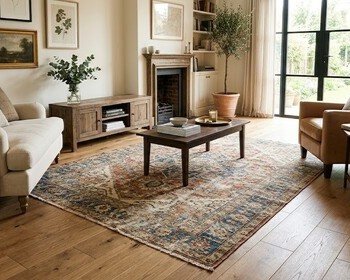
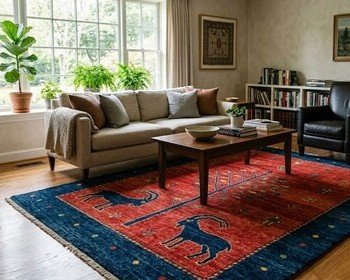





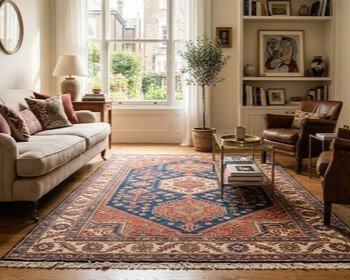

The best basement rug is a low-pile, synthetic or washable rug that you can lift, dry and clean easily, laid on the driest part of the floor over a breathable pad. Skip plush, thick-pile rugs and anything you can’t take up. Below you’ll find the materials that hold up, three named rugs with current prices, how we think about washable options, and the sizing and care rules that keep a rug from turning into a mildew problem.
Key Takeaways
- Choose low-pile, dense rugs in polypropylene, nylon or polyester. They hold less moisture and dry faster than plush pile.
- Pick a rug you can lift and wash. The EPA specifically suggests area rugs that can be taken up and washed often over carpet fixed to concrete.
- Use a breathable pad (unlaminated felt or open-grid natural rubber), not dense foam, and keep rugs off drains, sumps, water heaters and washers.
- Expect to pay roughly $119 to $399 for an 8’x10’ rug among the popular moisture-friendly collections below.
- Keep humidity between 30% and 50% and dry any wet spot within 24 to 48 hours.
Table of Contents
- Why basements are hard on rugs
- What to look for in a basement rug
- Basement rug comparison: popular picks and current prices
- Which rug for which basement room
- Sizing and placement that protect the floor
- Keeping a basement rug dry and fresh
- Find your basement rug at Rugs Online Market
- Quick buying checklist
- FAQ
- Sources
Why basements are hard on rugs
A basement floor is usually concrete, and concrete is cool, porous and in contact with the ground. According to a figure attributed to the American Society of Home Inspectors, about 60% of U.S. homes have basement moisture problems. Even a basement that looks dry can pass vapor through the slab.
The EPA is direct about the risk: carpet on concrete can absorb moisture and become a place where biological pollutants grow. Its advice is to use area rugs that can be taken up and washed often. That one sentence shapes everything else in this guide. The rug you want is not the plushest or the most expensive. It is the one that is easiest to lift, dry and clean.
Flooring professionals test slabs before installing anything permanent. NIH facilities guidance says to measure slab moisture, with calcium chloride or in-slab humidity probe tests as common methods, because excess moisture causes flooring to fail. The American Concrete Institute likewise lists debonding, adhesive degradation and mold growth among moisture-related flooring problems. A loose area rug avoids the adhesive issues altogether, which is a big reason it suits basements.
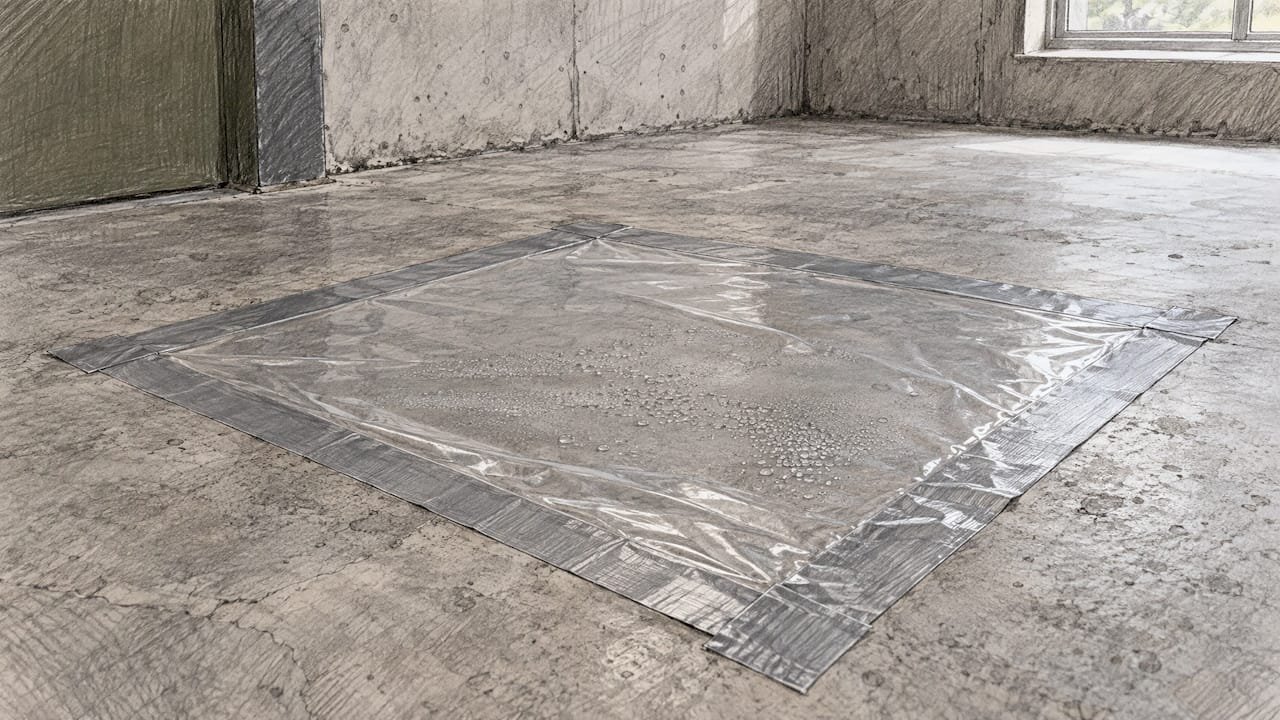
A simple homeowner check before you buy: tape a square of plastic sheeting to the slab, seal the edges, and look underneath after a day or two. Condensation or a darkened patch tells you the floor needs attention before any rug goes down. If you see standing water, cracks that weep or a persistent musty smell, call a basement waterproofing contractor or home inspector before shopping.
What to look for in a basement rug
Material
Synthetic fibers are the usual starting point for below-grade rooms. Commonly cited guidance runs like this:
- Polypropylene (olefin): resists moisture, stains and fungal growth. Wirecutter notes that polypropylene rugs won’t last as long as rugs in other materials but cost less, which is a fair trade in a room where a rug may need replacing after a flood.
- Nylon: durable and resilient with good moisture performance, a sensible pick for game rooms and gyms.
- Polyester: soft, budget-friendly and quick to dry. It suits a finished, fairly dry lounge or media room with lighter traffic.
Avoid viscose or rayon-type fibers in any basement where dampness is possible, since water can leave permanent marks.
Pile height and construction
Choose low-pile, dense construction. Low pile holds less moisture, dries faster and resists matting. Plush, high-pile rugs trap moisture and odors. A pile of about 1/4 to 1/2 inch is a comfortable family-room range that still resists crushing. Flatweave and tightly looped constructions also dry quickly, though loops can snag on pet claws.
Backing and pad
Backing matters as much as the face fiber. Vinyl or PVC backing blocks moisture rising from the ground, but it can also hold moisture against the slab, so lift the rug regularly. Foam cushion adds warmth and quiet. Over concrete, environmental guidance favors a breathable pad: unlaminated felt or an open-grid natural-rubber pad lets vapor escape, while memory foam, dense polyurethane, solid PVC foam or solid latex can trap it.
Damp basements are also slippery. Look for ribbed textures or non-slip backing so a wet slab or tile border doesn’t turn a rug into a sled.
Basement rug comparison: popular picks and current prices
The prices below are the published ranges for an 8’x10’ size as listed by a 2026 basement rug roundup. Retail prices move with sales and sizes, so confirm the current figure on each seller’s page.
| Option | Material | 8’x10’ price | Best for |
|---|---|---|---|
| Mohawk Home Prismatic Collection | 100% EverStrand polypropylene, machine-woven, stain-resistant treatment | $179 to $399 | Family rooms and play areas |
| nuLOOM Moroccan Blythe | 100% polypropylene with jute backing | $119 to $249 | Budget-friendly style, lounge areas |
| Safavieh Madison Collection | Polypropylene blend with antimicrobial treatment | $160 to $320 | Finished basements, media rooms |
| Washable rugs from Rugs Online Market | Washable construction, see each listing | See product pages | Anywhere you want to lift and launder the rug |
| Carpet tiles or squares | Varies by tile | Varies by tile | Playrooms, gyms, areas likely to get wet |
For context on the wider market, Wirecutter reports that most of its area rug picks are under $600 for an 8-by-10-foot rug, with its most expensive near $1,600. Basement-friendly synthetics sit well below that.
How we see washable rugs fitting in
Because the EPA’s own suggestion is a rug you can take up and wash often, we think washable rugs deserve a place at the top of a basement shortlist. Our washable rug guide walks through the options we carry. The idea is simple: when a rug can be laundered and dried completely, a damp spell is a chore rather than a replacement.
When carpet tiles beat a single rug
If one corner of your basement gets wet now and then, modular tiles are worth a look. Individual squares can be pulled up and replaced after water damage, and many basement-oriented tiles come with backing that removes the need for a separate pad. Tiles installed wall to wall can outperform a traditional area rug in a room with real flood risk. For a finished, dry family room, a washable or synthetic area rug gives you more style and an easy reset when you want a new look.

Which rug for which basement room
Family room or media room
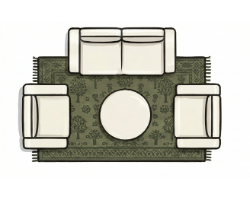
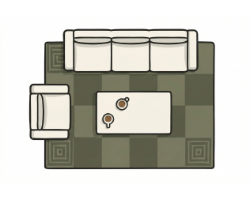
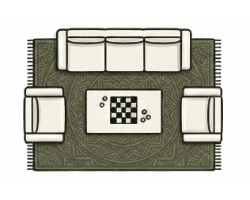
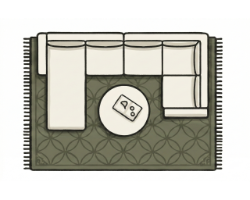
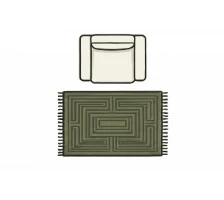
This is where a soft polyester or polypropylene rug in an 8’x10’ pays off. Anchor the seating so at least the front legs of the sofa and chairs sit on the rug. Low pile keeps the rug flat under furniture and easy to vacuum. Our guide to rug size, placement and style applies directly to a basement lounge.
Game room and pool table
A rug under a pool table needs to be low and dense so the table stays level. Nylon and low-pile polypropylene both fit. Our page on keeping a pool table level with a rug covers the margins to leave around the table. Commonly suggested sizing puts an 8’x10’ under a game or pool table, though your table and cue room decide the final number.
Home office or craft corner
A 5’x7’ under a desk and chair is plenty, and low pile lets the chair roll. If you want a little more character in a work corner, browse our office rugs.
Gym or kids’ play area
Nylon is durable, and low-pile carpet gives a stable surface. Carpet tiles suit playrooms and multipurpose spaces, since a spill or a flooded corner only costs you a few squares.
Hallways and stair landings
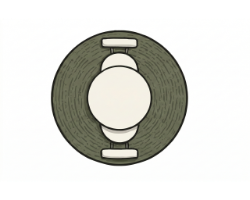
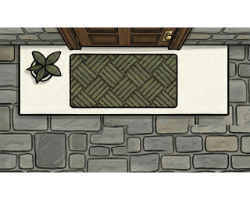
A runner, commonly 2’6"x8’, protects a long walkway and is the easiest rug to lift and air out. Our runner rugs are a natural fit for a basement hall, and so are doormats at the bottom of the stairs or by an exterior door.
Sizing and placement that protect the floor
Common basement sizes are 5’x8’ for a small seating area, 8’x10’ for a medium family room and 9’x12’ or larger for a big entertainment space. Our rug size chart and tape-out guide help you check the footprint before you order, and our 5×7 vs 8×10 comparison is useful if you are between sizes.
In a basement, don’t cover the whole floor. Leaving exposed concrete around the rug improves airflow at the edges. A typical suggestion is 18 to 24 inches to the walls, or 6 to 10 inches if the ceiling is low and you want the floor to read as one continuous surface.
Placement rules matter more than size:
- Keep rugs off known seepage spots, floor drains, sump pits, water heaters and washers.
- Choose the driest part of the floor for the main rug.
- Pair every rug with a suitable breathable pad.
- Leave some floor showing around the edges.
Keeping a basement rug dry and fresh
Humidity is the thing to watch. The EPA recommends keeping indoor relative humidity below 60%, ideally between 30% and 50%, and drying wet or damp materials within 24 to 48 hours. A small hygrometer costs little and tells you whether your dehumidifier is doing its job.
A routine that works:
- Vacuum weekly. The Carpet and Rug Institute recommends vacuuming area rugs at least once a week, daily in high-traffic areas, and cleaning spills quickly with certified solutions.
- Lift the rug every month or so. Check the pad and the slab beneath. If either feels damp, let both dry fully before putting the rug back.
- Run a dehumidifier through humid months, and keep air moving with a fan when the rug has been wet.
- Act on smell. A musty odor, dark spots on the backing or a persistently damp feel mean moisture is trapped. If a rug has actual mold, cleaning may not be enough and replacing it is the safer route. If mold covers a large area or anyone in the household has asthma or allergies, talk to a mold remediation professional or your doctor.
Perspective: why a basement rug should be easy to lift
We sell rugs for every room in the house, and the basement is the room where our advice gets simplest. Treat the floor as a place that needs to breathe. A rug that can be rolled up, taken outside and dried is a better partner for a concrete slab than anything fixed in place.
That is why we point basement shoppers toward washable rugs, runners for halls and entry points, and low-pile styles that sit flat under furniture. Our collection covers many sizes, shapes and materials, so you can match the rug to the room’s real job, whether that is a cozy seating area, a play zone or a quiet office corner, without settling for a generic gray square.
Our team is also happy to help you choose a size and style for your layout, and our 30-day return policy takes some of the risk out of ordering online.
ROM team
Find your basement rug at Rugs Online Market
If you are ready to shop, start with our washable rugs guide and browse our full rug collection by size, style, color and material. We offer runners, round rugs, doormats and bath mats, along with living room, kitchen and office rugs, in the shapes and sizes a basement layout calls for.

Orders over $300 ship free, and you have 30 days to return a rug that doesn’t work in your space. Our customer service team can help you pick a size before you order.
Quick buying checklist
- Test the slab for moisture signs, and fix leaks first.
- Pick low-pile, dense construction in a synthetic or washable rug.
- Add a breathable pad such as felt or open-grid natural rubber.
- Measure and tape out the footprint, leaving exposed floor around the edges.
- Keep the rug away from drains, sumps, water heaters and washers.
- Monitor humidity and aim for 30% to 50%.
- Lift, dry and vacuum on a schedule.
FAQ
What is the best type of rug for a basement?
A low-pile rug in polypropylene, nylon or polyester, or a washable rug you can lift and launder, is the safest choice. These dry faster and resist mildew better than plush or thick-pile rugs. Pair it with a breathable pad.
Can you put an area rug on a concrete basement floor?
Yes, and the EPA actually prefers area rugs that can be taken up and washed over carpet fixed to concrete. Check the slab for moisture first, use a breathable pad, and lift the rug regularly to let the floor dry.
How do I stop mold under a basement rug?
Keep humidity between 30% and 50%, dry any wet material within 24 to 48 hours, and avoid dense foam pads that trap vapor. Lift the rug periodically to inspect it. If you smell mustiness or see dark spots on the backing, dry the area and consider replacing the rug.
What size rug should I buy for a basement?
An 8’x10’ suits a medium family room, a 5’x8’ fits a small seating area and a 9’x12’ covers a large entertainment space. Leave exposed floor around the edges for airflow, and keep rugs off drains and sumps.
Are carpet tiles better than a basement area rug?
Tiles make sense where part of the floor may get wet, because you replace only the damaged squares. For a finished, dry basement lounge, an area rug offers more style and can be lifted and washed or swapped easily.
Sources
- EPA: What are the main ways to control moisture in your home?
- EPA: A Brief Guide to Mold, Moisture and Your Home
- NIH: Vapor Pressure and Flooring Installation, January 2021
- American Concrete Institute: 302.2-22 Concrete Slabs that Receive Moisture-Sensitive Flooring
- Carpet and Rug Institute: Cleaning and Maintenance
- Wirecutter: The 12 Best Area Rugs of 2026
- Howard Environmental: Beat Concrete Vapor Emission Under Rugs
- The 101 Of Best Rugs For Basement Spaces
