






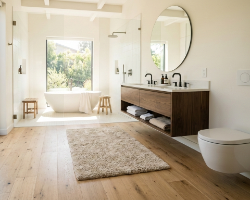



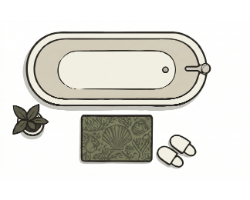
















The best bathroom rug for most households is a machine-washable option with a full rubber or latex backing, absorbent cotton or chenille pile, and a construction that survives repeated wash cycles without losing its grip. Rugsonlinemarket’s washable bath rugs check every one of those boxes and are the top overall pick here.
Quick shortlist:
- Best overall: Rugsonlinemarket washable bath rug — rubber-backed, machine-washable, absorbent cotton pile
- Best plush: High-pile chenille or memory foam rug — maximum underfoot comfort, best for low-traffic primary baths
- Best nonslip: Full rubber-backed cotton rug on smooth tile — holds position when wet, confirmed by push-test evaluations
- Best budget: Thin-weave microfiber mat — fast-drying, inexpensive, easy to swap out seasonally
- Best design: Washable cover over a non-slip base — luxury look with practical maintenance built in
If you want to confirm a pick before buying, the checklist in the “How to choose” section below covers important criteria.
Table of Contents
- What are the best bathroom rugs for your specific needs?
- How do you choose the right bathroom rug?
- Which material is actually best for a bathroom rug?
- How do you wash and maintain a bathroom rug?
- How did we select and evaluate these picks?
- How long do bathroom rugs actually last?
- Are bathroom rugs environmentally sustainable?
- What about allergies and hypoallergenic options?
- Key Takeaways
- The one thing most bathroom rug guides get wrong
- Rugsonlinemarket has the washable and natural-material options you need
- Sources and further reading
What are the best bathroom rugs for your specific needs?
The picks below are organized by use-case. Each one reflects a different set of trade-offs between comfort, drying speed, safety, and upkeep.
Best overall: washable bath rug with rubber backing
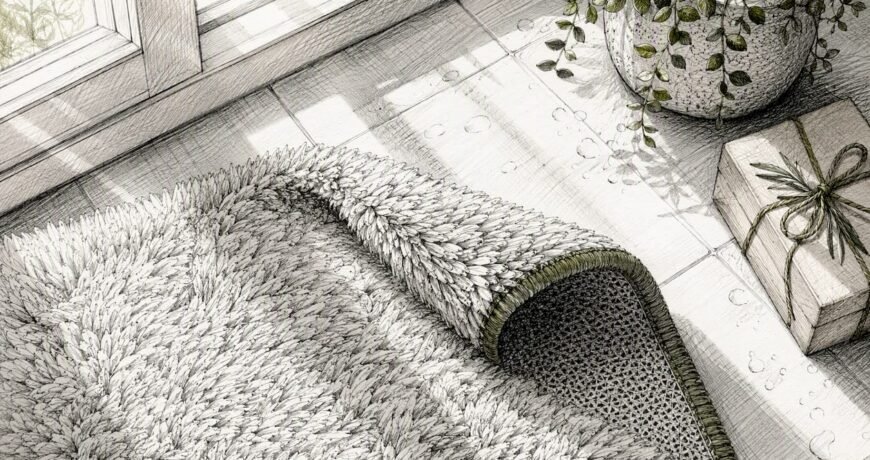
A machine-washable rug with a full rubber backing and a medium-pile cotton or chenille surface is the right call for most bathrooms. It absorbs water quickly, stays put on tile, and goes straight into the washing machine when it smells or looks worn. Price varies depending on size and quality. Washable bath rugs in this category typically hold their backing integrity through dozens of wash cycles when laundered on a gentle cycle in cold water.
Care: machine-wash cold, gentle cycle; tumble dry low or hang to dry; never use fabric softener (it degrades rubber backing over time).
Best plush: high-pile chenille or memory foam
Chenille pile strikes the better balance here. Memory foam feels incredible underfoot but dries noticeably slower, which creates mildew risk in bathrooms without strong ventilation. Chenille gives you most of the softness with a faster dry time, according to Wirecutter’s material testing. Best suited to a primary bath used by one or two adults with good airflow.
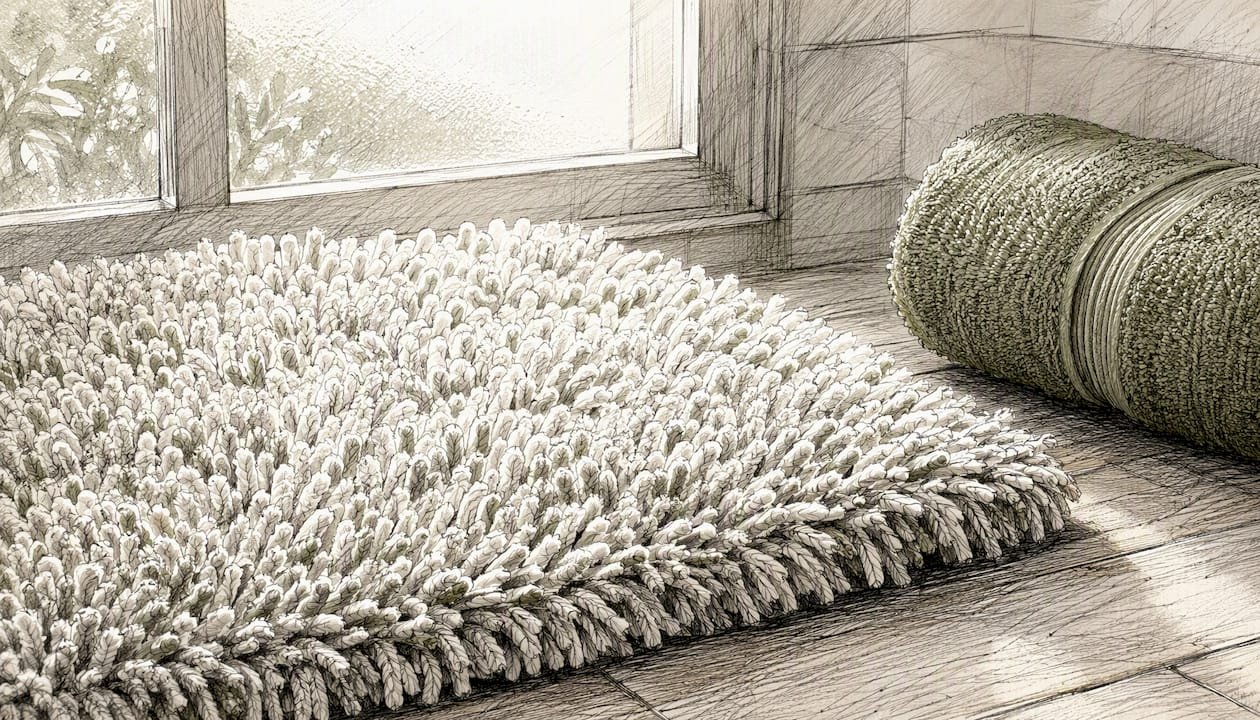
Care: machine-wash warm, gentle cycle; always hang to dry rather than tumble; rotate with a second rug to allow full drying between uses.
Best nonslip: full rubber-backed cotton on smooth tile
Spray-dot PVC backing loses grip on slick porcelain faster than a continuous rubber or latex layer. If your floor is polished tile or LVT, a full-coverage rubber backing is worth the extra few dollars. LVT and smooth tile floors in particular demand a rug with a solid backing layer, not just scattered grip dots.
Care: machine-wash cold; air-dry flat to preserve backing shape.
Best budget: thin-weave microfiber mat
Microfiber mats under $25 dry fast, wash easily, and are cheap enough to replace every season. They lack the plush feel of chenille and the grip of a full rubber backing, but for a guest bath or powder room, they do the job without drama.
Care: machine-wash cold; tumble dry low; replace when pile flattens or backing peels.
Best design: washable cover over a non-slip base
Modern washable constructions separate a decorative fabric cover from a fixed non-slip base. You wash the cover, leave the base in place, and the rug always looks fresh. This is the pick for anyone who wants a high-end look without committing to dry-cleaning or hand-washing.
Pro Tip: Match your rug choice to your bathroom’s ventilation. A plush memory foam rug in a windowless bathroom with no exhaust fan is a mildew problem waiting to happen. If ventilation is limited, go chenille, microfiber, or stone.
How do you choose the right bathroom rug?
Seven criteria, in priority order:
- Non-slip backing — full rubber or latex on smooth tile; PVC dots acceptable on textured floors only
- Absorbency and dry time — cotton and chenille absorb well; microfiber dries fastest among fabric options
- Machine-washability — check the care label before buying; some memory foam rugs are spot-clean only
- Pile height — low pile dries faster; high pile is more comfortable but holds moisture longer
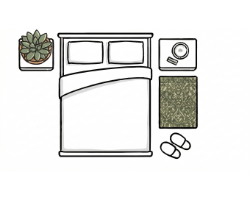
- Size — measure the space first; a rug that curls at the edges because it’s too large is a trip hazard
- Ventilation in your bathroom — poor airflow pushes you toward quick-dry materials (stone, microfiber, bamboo)
- Price and replacement frequency — a $20 microfiber mat replaced twice a year costs less than a $60 plush rug that develops mildew in six months
Red flags to avoid:
- No backing at all in a wet zone — rugs without any grip layer slide on wet tile
- Memory foam in a poorly ventilated bathroom — it holds moisture and grows mold faster than other materials
- Unclear or missing wash instructions — if the label doesn’t tell you how to clean it, assume it won’t survive a machine wash
Three questions to ask before you buy:
- Who uses this bathroom? (Children and elderly users need the most grip; a guest bath can prioritize looks.)
- Where exactly will the rug sit? (In front of the shower, at the vanity, or both?)
- How often are you realistically going to wash it? (If the answer is “rarely,” choose a quick-dry material that needs less frequent laundering.)
Which material is actually best for a bathroom rug?
Material is where most buyers make the wrong call. Here’s what each option actually delivers.
Cotton is the classic choice for good reason. It absorbs well, softens with washing, and pairs with almost any backing type. The downside is drying time: thick cotton pile holds moisture for hours in a humid bathroom. For cotton rugs to work long-term, you need either good ventilation or a habit of hanging them to dry after each use.

Chenille is the practical sweet spot. It’s softer than standard cotton, dries faster than memory foam, and holds its texture through repeated washing. For most households, chenille is the material that delivers comfort without the maintenance burden.
Microfiber prioritizes speed. It absorbs quickly and releases moisture fast, which makes it the best choice for shared bathrooms with back-to-back showers. It doesn’t feel as luxurious underfoot, but it’s the lowest-maintenance fabric option.
Memory foam is the most comfortable material in the category and the slowest to dry. Reserve it for a primary bath with a window or a strong exhaust fan. Without airflow, the foam core stays damp for 12 or more hours, which is long enough for mildew to establish.
Stone and diatomaceous earth are the outliers. Stone mats dry within seconds of use, require no washing, and never develop mildew. They’re rigid, cold underfoot, and can crack if dropped, but for a shared bathroom with heavy traffic, they’re genuinely the lowest-maintenance option available.
Bamboo sits between stone and fabric: fast-drying, naturally antimicrobial, and easy to wipe down. It’s harder underfoot than fabric but warmer than stone. Browse natural rug options if bamboo or natural-fiber construction is a priority.
Wool is durable and naturally moisture-wicking, but it requires more careful washing (often cold water only, no tumble drying) and costs more than cotton or synthetic alternatives. It’s a better fit for a low-moisture vanity area than a high-splash shower zone.
| Material | Absorbency / dry time | Machine-washable | Backing compatibility | Typical price range |
|---|---|---|---|---|
| Cotton | High / slow | Yes | All types | $20 |
| Chenille | High / medium | Yes | All types | $25 |
| Microfiber | Medium / fast | Yes | All types | $20 |
| Memory foam | Medium / very slow | Sometimes | Rubber base | $30 |
| Stone / diatomite | Low / instant | No (wipe clean) | None needed | $30 |
| Bamboo | Low / fast | No (wipe clean) | None needed | $25 |
| Wool | High / slow | Cold only | All types | $60 |

How do you wash and maintain a bathroom rug?
Most fabric bathroom rugs are machine-washable, but the details matter.
- Check the care label first. Memory foam cores often require hand-washing or spot-cleaning; machine-washing can break down the foam.
- Wash in cold or warm water on a gentle cycle. Hot water degrades rubber and latex backings faster than any other single factor.
- Skip the fabric softener. It coats fibers and reduces absorbency over time, and it accelerates backing deterioration.
- Dry thoroughly before returning the rug to the floor. Tumble dry low for fabric rugs without rubber backing; hang or lay flat to dry for rubber-backed rugs to prevent the backing from cracking.
- Wash every one to two weeks in a high-traffic bathroom; every two to four weeks in a low-traffic one.
Mildew prevention comes down to two habits: hang the rug over the tub or a towel bar after each shower so air circulates underneath, and rotate between two rugs so each one gets a full dry cycle between uses. In a bathroom without an exhaust fan, this rotation is not optional.
Signs it’s time to replace:
- Persistent musty odor that survives a wash cycle
- Backing that has cracked, peeled, or no longer lies flat
- Pile that stays compressed and no longer springs back
- Visible mold spots that don’t wash out
Pro Tip: Add a cup of white vinegar to the rinse cycle when washing bathroom rugs. It neutralizes odor-causing bacteria without damaging fibers or backing, and it’s gentler than bleach on colored rugs.
How did we select and evaluate these picks?
Every pick here was evaluated against six criteria, applied consistently across materials and price points.
- Backing grip: — does the rug stay in place on wet tile under lateral foot pressure?
Southern Living’s testing protocol — which includes multiple wash cycles and grip checks — informed the category structure used here (best overall, best plush, best nonslip, best budget).
Two simple at-home tests you can run on any rug before committing:
One honest limitation: these evaluations are based on material science, published testing data, and hands-on product knowledge rather than a controlled lab setting. In-home performance varies by floor type, water hardness, and washing habits. The at-home tests above let you verify claims for your specific conditions.
How long do bathroom rugs actually last?
A well-made, properly maintained bathroom rug lasts two to five years. The range is wide because lifespan depends more on care habits and ventilation than on the rug itself.
Cotton and chenille rugs washed weekly in cold water on a gentle cycle and hung to dry typically hold their pile density and backing integrity for three or more years. Memory foam rugs, washed less frequently and tumble-dried, often show backing degradation within 18 months. Microfiber mats at the budget end of the market are designed for replacement every 12–18 months.
Stone and bamboo mats sit outside this range entirely. With no fabric to degrade and no backing to crack, a quality stone mat can last many years with nothing more than occasional rinsing.
The single biggest factor shortening rug lifespan is heat: hot water in the wash, high heat in the dryer, and direct sunlight all break down rubber backings and compress pile faster than normal use does.
Are bathroom rugs environmentally sustainable?
Material choice has a real environmental footprint, and it’s worth knowing before you buy.
Cotton is natural and biodegradable, but conventional cotton farming is water-intensive. Organic cotton uses significantly less water and no synthetic pesticides, making it the better choice if sustainability is a priority. Check product listings for GOTS (Global Organic Textile Standard) certification.
Bamboo grows fast, requires no pesticides, and is naturally biodegradable. It’s one of the more sustainable hard-surface options in the category.
Microfiber is synthetic (typically polyester or nylon) and sheds microplastics with each wash cycle. A microplastic-catching laundry bag reduces shedding if you wash microfiber rugs frequently. Rugsonlinemarket’s eco-friendly flooring options include natural-material alternatives for buyers who want to reduce synthetic fiber use.
Memory foam is petroleum-derived and not biodegradable. It’s the least sustainable option in the category, though some manufacturers use CertiPUR-US certified foam that limits harmful chemical additives.
Wool is natural, durable, and biodegradable, and a well-maintained wool rug that lasts a decade has a lower per-year environmental cost than a cheap synthetic mat replaced annually.
The most sustainable choice overall is a durable natural-fiber rug (cotton, wool, or bamboo) that you maintain well and replace infrequently, rather than a cheap synthetic option cycled through every year.
What about allergies and hypoallergenic options?
Bathroom rugs can trap dust mites, mold spores, and pet dander, which makes material and maintenance choices relevant for allergy sufferers.
Wool is naturally resistant to dust mites and mold due to its moisture-wicking structure, but it can trigger reactions in people with a wool sensitivity. For most allergy sufferers, it’s a net positive.
Cotton is hypoallergenic and unlikely to trigger reactions on its own, but it holds moisture long enough to support mold and dust mite growth if not washed frequently. Washing every one to two weeks keeps allergen load low.
Microfiber is synthetic and hypoallergenic in terms of fiber content, but its fine weave traps particles effectively, so it needs frequent washing to stay clean.
Memory foam is the highest-risk option for allergy sufferers. The foam core can harbor mold in humid conditions, and off-gassing from lower-quality foam can irritate respiratory systems. Look for CertiPUR-US certification if you choose memory foam.
Stone and bamboo are the cleanest options for allergy-prone households. Neither traps dust mites, neither supports mold growth under normal conditions, and both clean with a quick wipe.
For households with severe allergies, the practical answer is a machine-washable cotton or chenille rug washed weekly, combined with a stone or bamboo mat at the highest-moisture zone.
Key Takeaways
The best bathroom rug combines a full rubber or latex backing, a machine-washable absorbent pile (cotton or chenille), and a construction that holds up through regular washing without losing grip or shape.
| Point | Details |
|---|---|
| Non-slip backing is the top priority | Full rubber or latex backing outperforms PVC dots on smooth tile and wet floors. |
| Chenille is the comfort-to-maintenance sweet spot | It dries faster than memory foam and feels softer than microfiber, making it the best all-around fabric. |
| Stone or bamboo for humid bathrooms | Both dry instantly and resist mold, making them the right call when ventilation is limited. |
| Wash every 1–2 weeks in cold water | Hot water and fabric softener degrade rubber backings faster than regular use does. |
| Rugsonlinemarket for washable and natural options | Rugsonlinemarket carries machine-washable bath rugs and natural-material options with free shipping over $300 and 30-day returns. |
The one thing most bathroom rug guides get wrong
Most buying guides treat the bathroom rug as a single-function product and rank options on comfort alone. That framing misses the point. The bathroom is the highest-risk room in the house for slip-and-fall injuries, and a rug that feels incredible but slides on wet tile is worse than no rug at all.
The correct frame is function first, comfort second. Start with backing and washability. Then choose the softest material that meets those two requirements. That order produces a rug you’ll actually keep clean and that won’t become a hazard six months after purchase.
The other thing guides understate is ventilation. Material choice is almost irrelevant if the bathroom has no airflow. A chenille rug in a well-ventilated bathroom outperforms a stone mat in terms of comfort and is just as safe. A memory foam rug in a windowless bathroom is a maintenance problem from day one. Know your bathroom before you choose your material.
For households with elderly residents or anyone with limited mobility, the non-slip backing is not a preference. It’s the deciding factor, and it should be confirmed with a push test on your actual floor before the rug stays.
Rugsonlinemarket has the washable and natural-material options you need
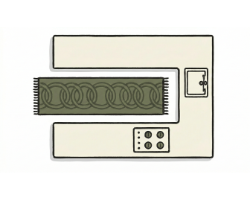
Choosing a bathroom rug gets easier when the selection is curated rather than overwhelming. Rugsonlinemarket carries three categories that map directly to the picks in this guide: washable bath rugs with rubber-backed, machine-washable construction for everyday households; natural-material rugs in bamboo and natural fiber for humid bathrooms where quick-dry performance matters; and runner rugs for galley-style bathrooms that need coverage along a narrow floor plan.

Free shipping applies to orders over $300, and returns are accepted within 30 days, so you can order with confidence and return if the size or feel isn’t right in your space. Browse the full collection at Rugsonlinemarket and use the size chart to confirm dimensions before you order.
Sources and further reading
Editorial sources used to inform picks and material guidance:
- The 9 Best Bath Mats of 2026
- The 7 Best Bathroom Rugs and Bath Mats of 2026 | Reviews by Wirecutter
- The 8 Best Bath Mats, According To Our Testing
- The best bath mats for 2026, tested and reviewed
- Bath Rug vs Bath Mat: Which One Do You Actually Need?
- Bathroom Rugs Vs Mats And 7 Styles To Try
- Bath Mat vs Bath Rug: What’s the Difference? | Onsen Towel
Rugsonlinemarket product and category pages:
Always check the care label and product specifications on any rug before purchasing. Washing instructions, backing type, and pile height vary by product, and confirming those details before you buy saves a return trip.
