




































Silk rug care is defined as a set of specialized, low-moisture cleaning and maintenance practices designed to protect the delicate protein fibers and natural dyes that give silk rugs their value. Unlike wool or synthetic rugs, silk demands a fundamentally different approach. The wrong cleaner, too much water, or a single aggressive scrub can cause dye bleeding, fiber weakening, or permanent browning. This guide covers every stage of care, from daily vacuuming to stain response to drying, so your rug stays beautiful for decades.
What tools and products are safe for silk rug care?
The right tools and cleaning products are the foundation of safe silk rug maintenance. Silk’s protein fibers are chemically similar to human hair. They react badly to harsh chemicals, high pH levels, and mechanical agitation.
Only use pH-neutral to mildly acidic cleaners in the pH 5.5–7.0 range on silk rugs. That range matches silk’s natural chemistry and prevents fiber breakdown. Alkaline cleaners, oxygen boosters, and generic synthetic carpet sprays all fall outside this range and will damage the pile.
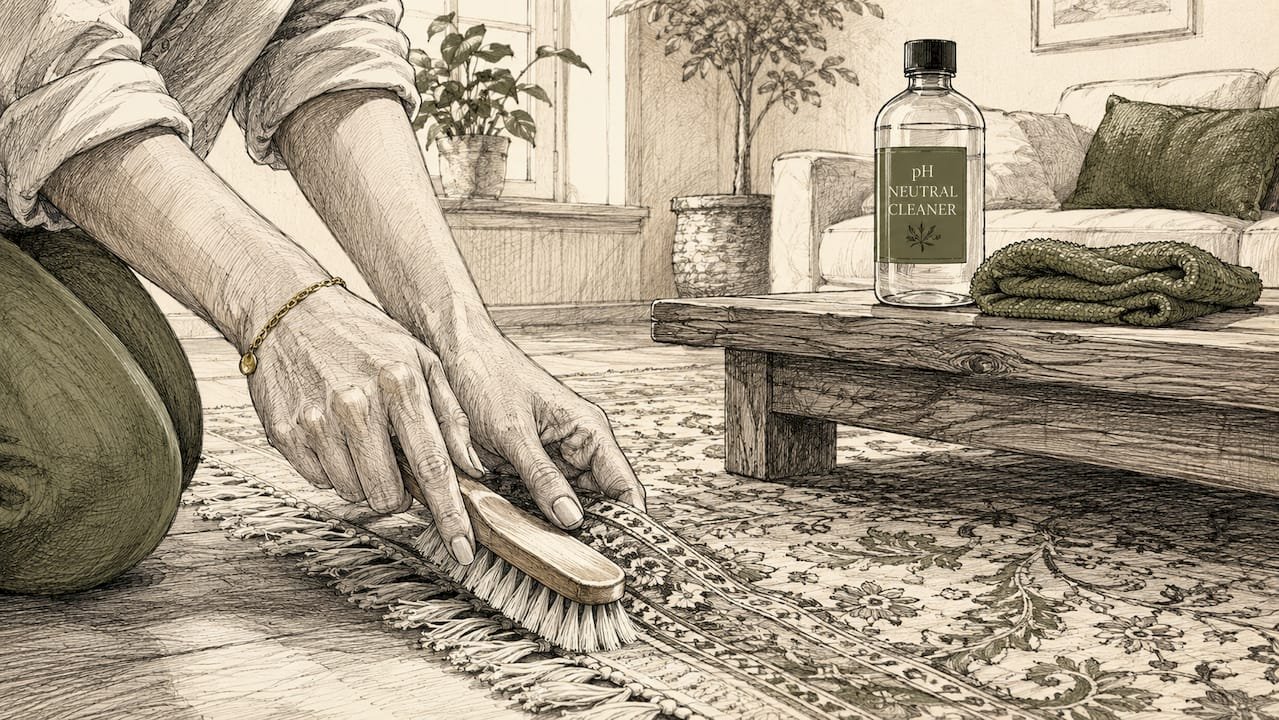
For physical tools, stick to soft-bristle brushes, microfiber cloths, and suction-only vacuums. Rotary brushes and beater bars create friction that tears silk fibers, especially when the rug is even slightly damp.
Safe vs. unsafe cleaning products at a glance:
| Category | Safe | Unsafe |
|---|---|---|
| Cleaners | pH 5.5–7.0 protein-fiber formulas | Alkaline detergents, bleach, oxygen boosters |
| Tools | Soft brush, microfiber cloth, suction vacuum | Beater bar vacuum, rotary scrubber, stiff brush |
| Rinse agents | Diluted white vinegar (pH ~2.5, used sparingly) | Baking soda solutions, ammonia-based sprays |
| Spot treatments | Enzyme-free, pH-neutral spot cleaners | Generic carpet sprays, solvent-based stain removers |
Pro Tip: Always spot-test any cleaner on a hidden corner of the rug before applying it to a visible area. Apply a small amount, blot with a white cloth, and wait five minutes to check for color transfer or fiber change.
How do you vacuum silk rugs without causing damage?
Regular vacuuming is the single most effective routine task for silk rug maintenance. Dust and grit that settle into the pile act like sandpaper on the fibers every time someone walks across the rug. Removing that particulate soil consistently prevents long-term wear.
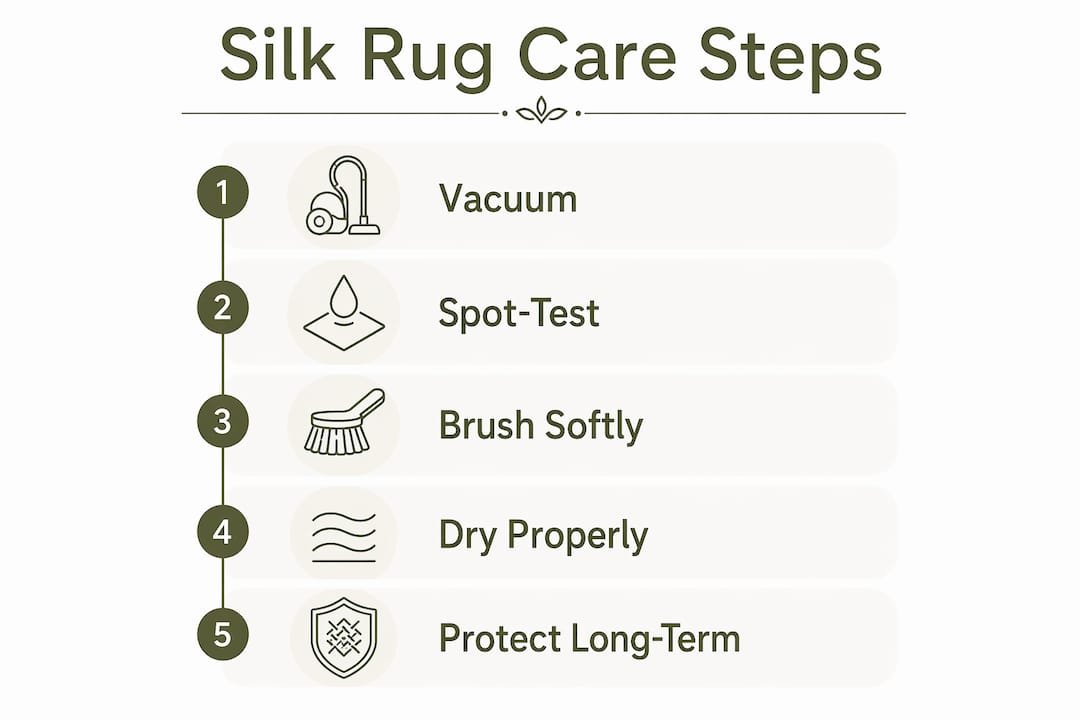
Vacuum silk rugs using suction-only mode, with the beater bar and brush roll completely disabled. That single setting change eliminates the most common cause of fiber damage during routine cleaning.
Follow these steps for safe vacuuming:
-
Disable the beater bar. Check your vacuum’s settings and switch to suction-only before you start.
-
Vacuum in the direction of the pile. Run the vacuum head with the nap, not against it, to avoid lifting and stressing fibers.
-
Use light, slow passes. Do not press down or make rapid back-and-forth strokes. Let the suction do the work.
-
Vacuum the back occasionally. Flipping the rug and vacuuming the underside dislodges embedded dust that suction from the top cannot reach.
-
Vacuum once a week in high-traffic areas. In low-traffic rooms, every two weeks is sufficient.
-
Rotate the rug every three to six months. Rotation distributes foot traffic and sunlight exposure evenly, preventing uneven wear and fading.
Silk and viscose rugs look similar but require different care. Improper cleaning of viscose can cause yellowing and distortion that does not affect true silk. Confirm your rug’s fiber content before applying any cleaning method.
Pro Tip: Lay the rug flat on a clean hard floor before vacuuming. A rug pad underneath prevents the rug from shifting and reduces stress on the foundation weave during suction.
What is the safest way to remove stains from a silk rug?
Speed and restraint define effective stain removal on silk. The longer a spill sits, the deeper it penetrates the pile and the harder it becomes to lift without aggressive cleaning. Act within the first few minutes whenever possible.
The “less water” rule is a mandatory protocol for silk. Never submerge or soak a silk rug. Excess moisture causes dye bleeding and weakens the fiber structure at the foundation level.
Follow this sequence for any spill:
-
Blot immediately. Use a clean, white cotton towel or microfiber cloth. Press down firmly and lift straight up. Never rub or scrub in any direction.
-
Work from the outside in. Start blotting at the edge of the spill and move toward the center to prevent spreading.
-
Apply minimal cleaner. Mix a few drops of pH-neutral detergent with cool water. Dampen a clean cloth with the solution and blot the stained area. Do not pour liquid directly onto the rug.
-
Perform a colorfastness test first. Test each color area with diluted cleaner on an inconspicuous spot before treating the stain. Dye migration caused by alkaline products or excess moisture is irreversible.
-
Rinse with minimal water. Dampen a fresh cloth with plain cool water and blot the area to remove detergent residue.
-
Blot dry immediately. Press a dry towel onto the damp area and apply gentle pressure to absorb as much moisture as possible.
Professional cleaners use acidic rinses and flush-and-extract methods rather than saturate-and-blot techniques. That approach better protects dyes and prevents browning. For large stains, set-in stains, or any stain involving red wine, coffee, or pet urine, call a professional rather than attempting a full DIY treatment.
Pro Tip: Keep a dedicated white microfiber cloth and a small bottle of pH-neutral cleaner near your silk rug. Having the right tools within reach in the first two minutes makes the difference between a clean rug and a permanent stain.
How should you dry a silk rug to prevent browning and mold?
Drying is the step where most DIY silk rug cleaning goes wrong. Silk loses up to 20% of its tensile strength when wet, making it fragile and vulnerable to permanent damage during the drying window. Slow drying also allows sugars and tannins from the fiber foundation to wick to the surface, creating the brown staining that owners often mistake for a cleaning failure.
Dry silk rugs flat or hanging in a controlled environment with good airflow and low humidity. Air movers and dehumidifiers speed the process safely. The goal is fast, even moisture removal without applying heat.
Drying do’s and don’ts:
| Action | Do | Don’t |
|---|---|---|
| Drying position | Flat on a clean surface or hung evenly | Folded, bunched, or draped over a single rod |
| Airflow | Use air movers or fans for circulation | Leave in a closed, still room |
| Heat | Room temperature (65–75°F) | Clothes dryer, heat gun, or direct sunlight |
| Humidity | Use a dehumidifier to keep humidity low | Dry in a bathroom or humid basement |
| Timing | Dry completely before returning to the floor | Place back while still damp underneath |
Pro Tip: Place a clean, dry towel under the rug while it dries flat. The towel absorbs moisture wicking from the back and can be swapped out every 30 minutes to speed the process.
How do you protect a silk rug from long-term wear and fading?
Preventive maintenance costs far less than restoration. A few consistent habits protect silk rugs from the gradual damage that accumulates over months and years.
Rug pads provide anti-slip, anti-moisture, and surface protection that directly extends rug life. A quality pad keeps the rug from shifting under foot traffic, reduces friction against the floor, and creates a slight moisture barrier from below.
Additional protective measures every owner should follow:
-
Avoid direct sunlight. UV exposure fades natural dyes faster than any other environmental factor. Use curtains or UV-filtering window film in rooms where the rug receives direct sun.
-
Keep the rug out of high-traffic corridors. Silk rugs belong in low-traffic areas like formal living rooms, bedrooms, or display spaces. Entryways and hallways wear them down quickly.
-
Rotate every three to six months. Rotation prevents one section from bearing all the foot traffic and sun exposure. It is the simplest way to extend even color and pile height across the entire rug.
-
Manage indoor humidity. Keep indoor humidity between 40% and 55%. High humidity promotes mold growth in the foundation fibers. Low humidity makes silk brittle. A standard home hygrometer costs under $20 and takes the guesswork out of monitoring.
-
Store correctly if needed. Roll the rug around an acid-free tube, wrap it in breathable cotton muslin, and store it horizontally in a climate-controlled space. Never fold a silk rug for storage.
For owners who want expert guidance on rug maintenance services, professional inspection every one to two years catches problems before they become costly repairs.
Key Takeaways
Proper silk rug care requires low-moisture cleaning, pH-neutral products, suction-only vacuuming, fast drying, and consistent preventive habits to preserve fiber strength and dye stability.
| Point | Details |
|---|---|
| Use pH-neutral cleaners | Only products in the pH 5.5–7.0 range are safe for silk’s protein fibers. |
| Vacuum with suction only | Disable beater bars completely to prevent fiber damage during routine cleaning. |
| Blot spills immediately | Use a white cloth, work from the outside in, and never rub or scrub. |
| Dry fast and flat | Use air movers and low humidity; slow drying causes browning and mold. |
| Prevent with rug pads and rotation | Pads reduce friction and moisture; rotation distributes wear and sun exposure evenly. |
What I’ve learned from watching silk rugs get ruined
The most common mistake I see is owners treating silk like a standard area rug. They grab whatever carpet spray is under the sink, scrub at a stain, and then wonder why the color has shifted or the pile feels stiff. Silk’s protein structure reacts to alkaline chemicals the same way hair does when you apply the wrong product. The damage shows up fast and does not reverse.
The second mistake is overconfidence with water. I have seen owners rinse a small stain with a cup of water and end up with a large brown ring once the rug dries. That ring is not dirt. It is tannins and natural sugars wicking up from the foundation as moisture evaporates. The only way to prevent it is to use minimal water from the start and dry the rug aggressively once any moisture is applied.
What actually works is the professional approach applied at home: test before you treat, use the least moisture possible, and get the rug dry within a few hours. Owners who follow that protocol consistently report that their rugs look as good after ten years as they did on day one. That is not luck. It is the result of understanding what silk actually is and treating it accordingly.
The Persian rug cleaning principles that apply to hand-knotted silk are worth studying even if your rug is modern. The fiber behavior is the same regardless of age or origin.
Rugsonlinemarket’s resources for silk rug owners
Caring for a silk rug is easier when you start with a quality piece and have access to reliable guidance along the way.

Rugsonlinemarket carries a curated selection of luxury silk and natural-fiber rugs, backed by expert customer service and a 100% feedback guarantee. Whether you are looking to add a new piece to your home or need help identifying the right care approach for what you already own, the team is available to help. Owners in the Pacific Northwest can browse premium rugs in Vancouver and find options that match both their decor and their maintenance preferences. Free shipping applies on orders over $300, and hassle-free returns within 30 days make it straightforward to find the right fit.
FAQ
What pH level is safe for cleaning a silk rug?
Only use cleaners in the pH 5.5–7.0 range on silk rugs. Alkaline products above pH 7 break down silk’s protein fibers and cause irreversible damage.
How often should I vacuum a silk rug?
Vacuum once a week in high-traffic areas and every two weeks in low-traffic rooms, always using suction-only mode with the beater bar disabled.
Can I clean a silk rug with water at home?
Yes, but use minimal moisture only. Never soak or submerge a silk rug. Blot spills with a damp cloth and dry the area completely within a few hours to prevent browning and mold.
How do I know if my rug is silk or viscose?
Burn a single fiber from an inconspicuous edge. Silk burns slowly, smells like burning hair, and leaves a crushable ash. Viscose burns faster, smells like burning paper, and leaves a harder residue. Care requirements differ significantly between the two.
When should I hire a professional for silk rug cleaning?
Hire a professional for large stains, full rug washing, pet urine, or any stain that does not respond to careful spot treatment. Professionals use flush-and-extract methods with acid rinses that protect dyes and fibers far better than home saturation techniques.
