




















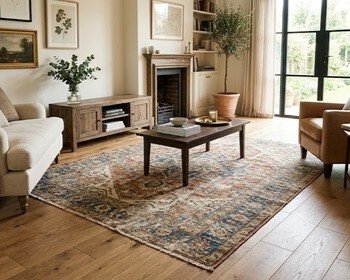







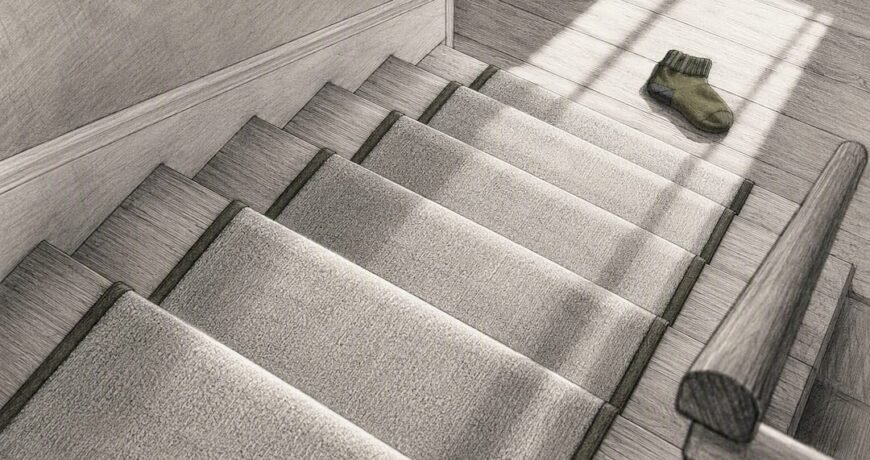
Stair runners make stairs safer when you choose low, dense pile and secure the runner at each tread and riser. Loose edges, high pile, or a runner held down with tape instead of tack strips can do the opposite and create a trip hazard. Before buying anything, confirm three things: pile height around 10 to 15 mm, a thin dense pad instead of a spongy cushion, and a fastening plan that doesn’t rely on adhesive alone.
TL;DR:
- Proper installation of low, dense pile runners with tack strips and staples minimizes trip hazards and provides consistent traction across the entire staircase.
- A thickness of 10 to 15 millimeters for pile height, using wool or nylon, ensures stability and reduces slipping risks compared to high-loop or shag styles.
- Secure fastening methods like tack strips and staples are more effective and durable than tape-only solutions, especially in high-traffic households.
- Regular inspection and maintenance, including re-stapling loose edges and replacing worn runners, are essential for ongoing stair safety.
- For homes with children, pets, or older adults, additional safety features like high-contrast edging, proper lighting, and sturdy handrails further reduce fall risks.
Table of Contents
- Runner vs. Stair Treads: Which One Actually Protects Your Household
- Choosing Materials, Pile Height, and Edge Finish for Maximum Safety
- Underlay and Non-Slip Pad Selection: Why Thin, Dense Pads Matter
- Fastening Methods and Installation Details That Determine Long-Term Safety
- Step-by-Step Installation and Inspection Checklist
- Maintenance: Cleaning, Repair Triggers, and When to Replace
- Safety Additions for Children, Pets, and Older Adults
- What 15 Years Of Watching Stair Falls Get Blamed On The Wrong Thing Taught Me
- Where to Shop for a Stair Runner That Meets These Standards
- Sources
- FAQ
Runner vs. Stair Treads: Which One Actually Protects Your Household
A runner covers the whole staircase in one continuous strip, so every step gets the same traction and cushioning. Individual stair treads only protect the spot they sit on, which means the exposed wood or tile on either side stays just as slick as it was before. That gap matters more than people think, especially on stairs with any hardwood, laminate, or painted surface visible on the edges.
Continuous coverage from a runner reduces the odds that a foot lands somewhere untreated. It also means one loose piece isn’t a single point of failure the way an unsecured tread can be, though a poorly fastened runner introduces its own risks if it bunches or lifts.
Treads still make sense in a few situations:
- Renters who can’t install anything permanent and need something removable.
- Very narrow staircases where a full-width runner would look cramped or leave almost no exposed wood, defeating the design purpose.
- Homes that only need spot protection on a section that gets unusually wet or worn, like near an exterior door.
For households with kids, older adults, or dogs on the stairs, a runner is the better call almost every time. The continuous surface means there’s no transition point where a foot suddenly meets bare wood, which is exactly where missteps tend to happen. If you’re renting or dealing with an oddly shaped staircase, treads combined with strong non slip backing can be an acceptable compromise, just know you’re trading coverage for flexibility.
Choosing Materials, Pile Height, and Edge Finish for Maximum Safety
Pile height is the single biggest material decision you’ll make. Aim for 10 to 15 millimeters of low, dense pile. Anything taller, especially shag or high-loop styles, creates an unstable surface that shifts under a shoe and makes it easier to catch a toe.
Wool and nylon are the two materials that consistently perform well on stairs. Wool compresses less over time and holds its shape under repeated foot traffic, while nylon resists crushing and cleans up easily. Skip shiny viscose or loosely woven natural fibers like unbound sisal. They look good in photos but flatten fast and can become genuinely slippery once the fibers polish down from wear.
Width matters more than most people realize. A common mistake is centering the runner without measuring the exposed border on each side. If one side ends up with 3 inches of exposed wood and the other has 5, the imbalance is visually obvious and it also means the runner isn’t sitting where your foot naturally lands. Measure twice, mark the centerline, and keep the border even from the top step to the bottom.
Edge finishing is not optional. A runner without proper binding or serging will fray at the sides within a year or two, and frayed threads catch on socks, shoes, and paws. Any runner going on stairs needs a finished edge that can handle repeated vacuuming and foot contact.
If pets are part of the household, look for short, tightly woven pile and washable construction. Runners with high-loop pile snag pet claws and wear unevenly where a dog’s nails dig in on the way down.
Pro Tip: Bring a sample swatch home and press your palm into it hard, the way a heel strikes on the way down. If it takes more than a second to spring back, the pile is too soft for stairs.
Underlay and Non-Slip Pad Selection: Why Thin, Dense Pads Matter
The pad underneath a runner does more for safety than most buyers assume, and it’s also where a lot of installations go wrong. A thick, cushy pad might feel nice on a living room floor, but on a staircase it creates a spongy, uneven surface that shifts slightly with every step. That instability is a real misstep risk, because your foot expects a firm, predictable surface on each tread.
Stair-specific pads solve this by being thin and dense rather than thick and soft. Here’s how to handle sizing and fastening:
- Measure each tread and riser separately since stairs rarely have identical dimensions from top to bottom.
- Cut the pad about an inch smaller than the runner’s finished width on each side, similar to the sizing approach used for a rug pad on carpet.
- Wrap or notch the pad at the nose of each tread rather than leaving a hard seam, which prevents a ridge that catches a heel.
- Skip double-sided tape as your primary hold; it loosens with humidity and heavy traffic and needs frequent rechecking.
- Choose a rubber or felt-rubber blend pad that grips both the stair surface and the runner backing without compressing under weight.
Tape isn’t useless. It can work fine as a supplement on stairs with light traffic, but it shouldn’t be the only thing holding a pad in place on stairs a family uses multiple times a day.
Fastening Methods and Installation Details That Determine Long-Term Safety
Fastening is the factor installers point to more than any other when they talk about what actually keeps a runner safe. A tautly anchored runner is safe; a loose one is dangerous, and that difference usually comes down to what’s holding it in place, not what it’s made of.
The standard, most durable method looks like this:
- Install tack strips (also called gripper rods) at the crease where each tread meets the riser, angled so the runner locks into the pins.
- Staple the runner along the edges every few inches on wide stairs, keeping the pattern even on both sides so tension stays balanced.
- Wrap the runner tightly around the bullnose, the front edge of each step, since that’s where the most foot pressure lands and where slack shows up first.
- Add stair rods if you want a decorative, removable option, understanding they’re easier to take out but generally less secure than a full tack-strip installation.
- Walk the stairs slowly after installation, pressing down at the edges and the bullnose of each step to feel for any give.
Tape-based installations tend to fail in high-traffic areas because adhesive weakens with foot pressure, temperature swings, and moisture over time. A staple or tack-strip installation using small nail holes is a better trade than repeated tape failures, and those holes are easy to fill later if you ever remove the runner.
Look for these signs of a bad install: an inconsistent border width from step to step, any wrinkle or slack you can see or feel, and edges that lift when you tug gently. Recheck the whole staircase about two weeks after installation, since new carpet often settles slightly as it’s walked on.
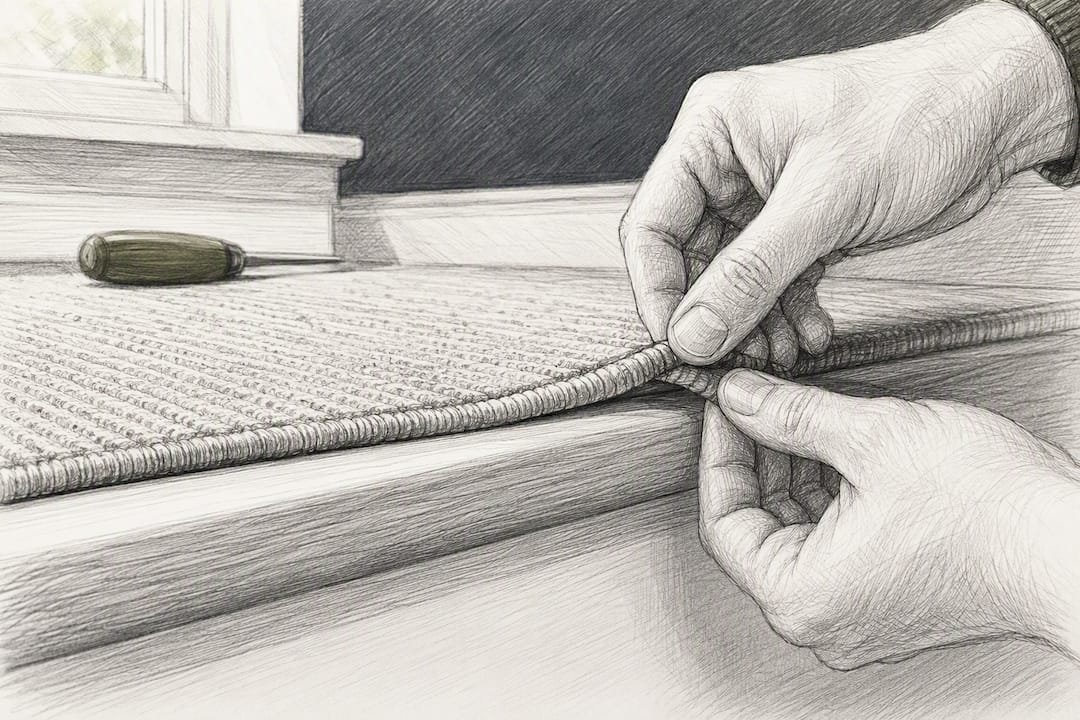
Pro Tip: Test the bullnose on every single step, not just a few. That’s the spot that takes the most pressure, and it’s usually the first place a runner starts to loosen.
DIY installation is realistic if you’re comfortable with a staple gun and have measured carefully, but a full staircase with an irregular bullnose shape or a curved run is worth handing to a professional. A checklist built for DIY installation projects can help you figure out ahead of time whether your tools and comfort level match the job.
Step-by-Step Installation and Inspection Checklist
Getting the install right the first time saves you from redoing it in six months. Follow this order:
- Measure tread depth, riser height, and nosing on every step, since older staircases often have slight variations.
- Decide on your exposed border width (commonly 2 to 4 inches per side) and mark centerlines before cutting anything.
- Lay the pad first, trimmed to fit each tread and riser without overlapping the tack strip location.
- Install tack strips at the base of each riser and stretch the runner taut before stapling it down.
- Staple along both edges in an even pattern, then wrap and secure tightly at the bullnose of each step.
- Add stair rods only if you want the decorative look; they go over the runner, not in place of stapling.
- Walk the full staircase, checking for shifting, bunching, or any tread where the runner doesn’t sit flat.
- Recheck fastening after two weeks of normal use, then move to a quarterly inspection schedule after that.
The simplest ongoing safety test costs nothing: walk down slowly in socks and pay attention to whether any step feels like it moves under you. If one does, that’s the tread to fix before anything else.
Maintenance: Cleaning, Repair Triggers, and When to Replace
Vacuum wool and nylon runners weekly, and lean toward a lower suction setting on wool so you don’t pull at the fibers. Blot spills immediately rather than scrubbing, since aggressive scrubbing pushes stains deeper into stair pile.
Watch for these warning signs that mean it’s time to act, not just clean:
- Edges lifting away from the tack strip, especially near the bullnose.
- Pile that’s visibly flattened or compressed in a wear pattern down the center of each step.
- Bunching that reappears within days of being smoothed out.
- Fraying threads along the binding that catch on socks or paws.
Minor lifting at one or two spots is usually a quick re-staple job. Widespread lifting, a pad that’s compressed flat, or pile that’s worn through to the backing means it’s time to call a professional or replace the runner outright. High-traffic households should expect to replace a stair runner sooner than a hallway rug of the same material, simply because stairs take more direct impact per square foot.
Safety Additions for Children, Pets, and Older Adults
A well-installed runner solves most of the traction problem, but a few extra steps close the remaining gaps for specific households.
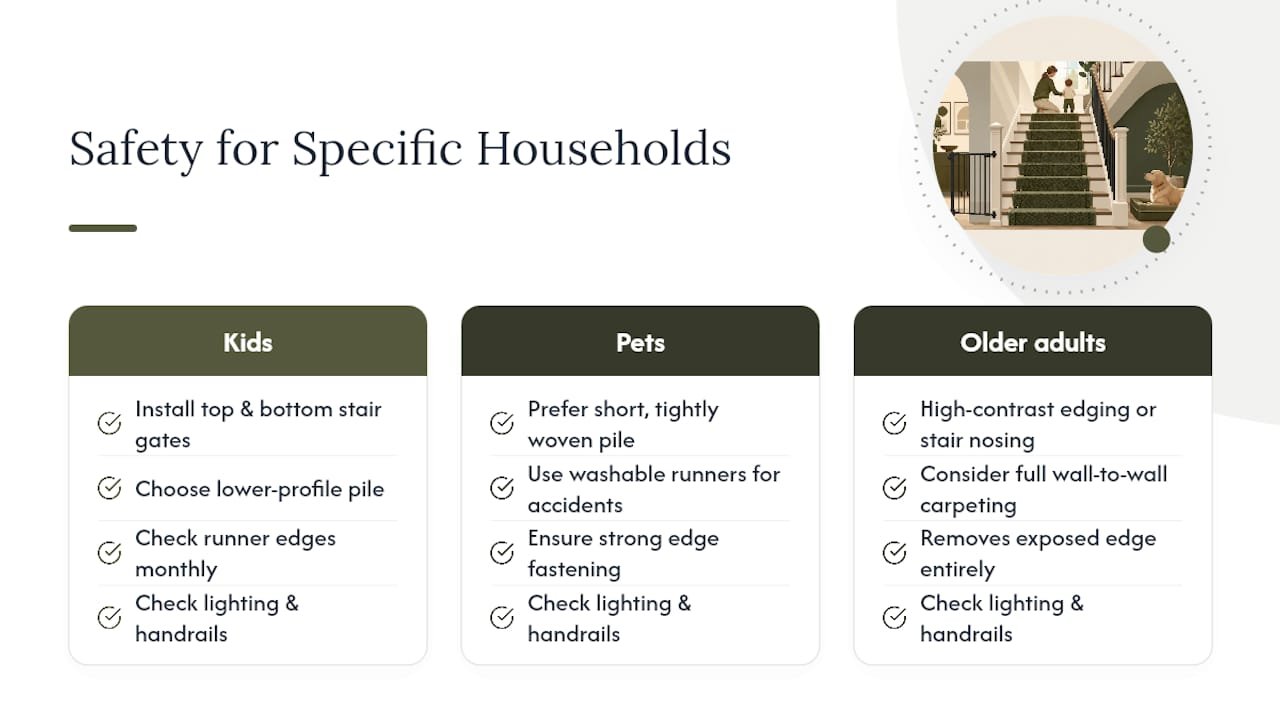
For kids: install a stair gate at both the top and bottom until children are steady walkers, choose a lower-profile pile that won’t catch small feet, and check the edges monthly since children put more irregular pressure on a runner than adults do.
For pets: short, tightly woven pile resists claw snagging far better than looped styles, and washable runners make cleanup realistic when accidents happen. Dogs descending stairs at speed put more sideways stress on a runner’s edges, so fastening quality matters even more.
For older adults: high-contrast edging or stair nosing helps aging eyes judge where one step ends and the next begins, which cuts down on missteps significantly. In homes with serious mobility concerns, full wall-to-wall stair carpeting sometimes makes more sense than a runner, since it removes any exposed edge entirely.
Lighting and handrails matter just as much as the runner itself. A stairwell with dim lighting or a wobbly handrail undermines even a perfectly installed runner, so check both while you’re already up there measuring for the runner.
What 15 Years Of Watching Stair Falls Get Blamed On The Wrong Thing Taught Me
Most people blame the rug when a stair fall happens, and most of the time that’s the wrong target. The material almost never causes the fall. The fastening does. A cheap runner installed with tack strips and proper tension outperforms an expensive one held down with tape and hope, every time.
The other thing people underestimate: pile height gets treated as a style choice when it’s really a safety spec. A shag runner photographed beautifully will move under a bare foot in a way a low, dense pile never will. If you remember one number from this whole article, make it the 10 to 15 mm range.
Runner styles are built around that same low-pile, dense-weave logic, often with flexible return policies and shipping options, help make getting the wrong length or texture less costly. Between the stair runner ideas page for sizing examples and the runner category itself, there’s enough there to plan an installation without guessing.
— Kian
Where to Shop for a Stair Runner That Meets These Standards
Rugsonlinemarket built its runner selection around the same criteria covered above: low, dense pile in wool and nylon, sizes that fit standard and narrow staircases, and durable construction that holds up under daily foot traffic. That’s a real advantage over shopping big-box aisles blind, where pile height and fiber content are rarely listed clearly enough to judge before you buy.

Start by measuring your staircase width and tread depth, then browse the runner rugs category for options in the pile range that matches your household, whether that’s a low-loop wool for a family with kids or a washable weave for a home with pets. Pair the runner with a stair-specific pad, and if you’re unsure how a color or pattern will look against your treads, use the comparison tool to line options up side by side before ordering. Every purchase over $300 ships free, and returns within 30 days are hassle-free if the fit or texture isn’t quite right once it’s on the stairs.
Sources
- The Complete Guide to Stair Runners: Materials, Fitting, Safety, and Design | Barbers Flooring
- Stair Rug Runner: A Complete Guide for Homeowners – D and G Flooring
- Carpet for Stairs: Safety, Style and Installation Guide
FAQ
Are Stair Runners Safe?
Yes, when installed with low, dense pile and secured properly with tack strips and staples. A loose, high-pile, or poorly fastened runner can raise trip risk instead of lowering it.
What Is the Number One Cause of Stair Accidents?
Missteps caused by uneven traction or unclear step edges are the leading cause, which is why continuous traction from a runner and high-contrast edging both help reduce falls.
What Is the 27-Rule for Stairs?
This refers to a stair-building guideline where riser height plus tread depth should total around 430 millimeters for comfortable, safe stepping for comfortable, safe stepping. Definitions vary by building code, so check local regulations for your specific staircase.
What Are the Disadvantages of Stair Runners?
The main downsides are the upfront cost of professional installation, the need for periodic re-tightening at the bullnose, and the risk of an unsafe surface if the runner is installed loosely or with the wrong pile height.
