

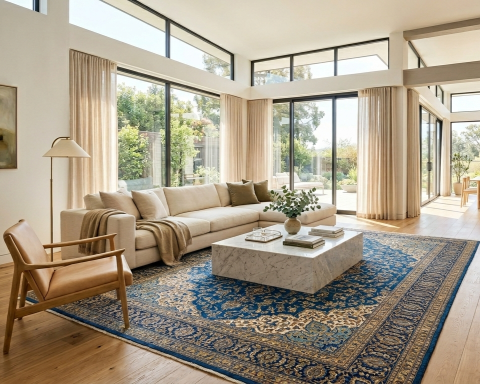
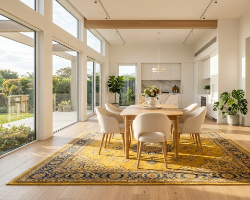
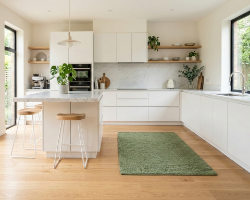
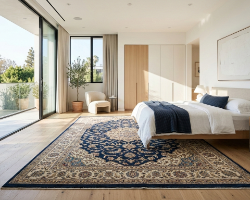
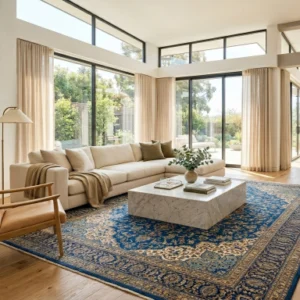

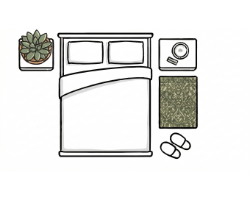
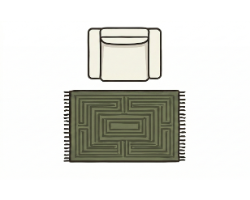
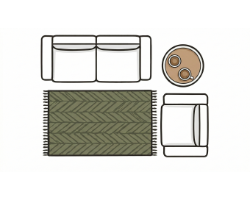
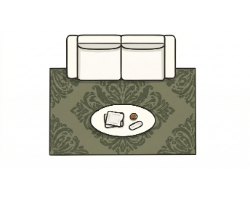







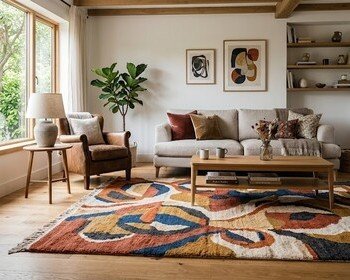

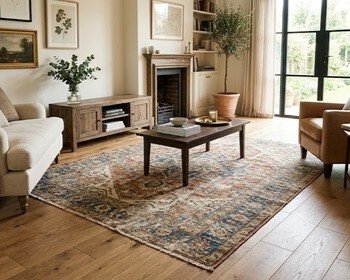
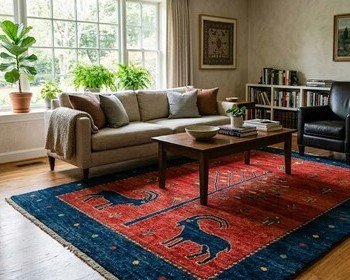
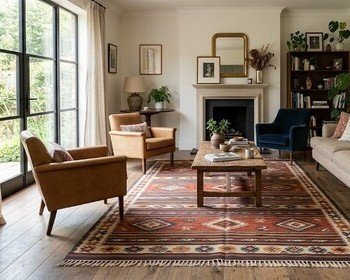
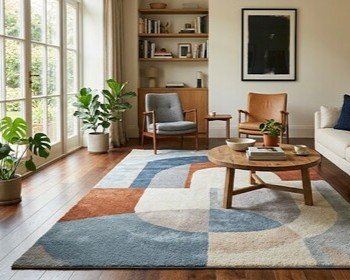

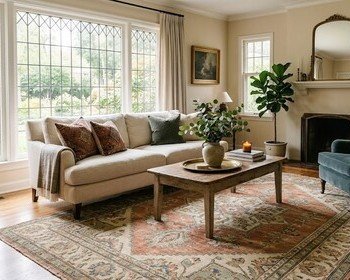
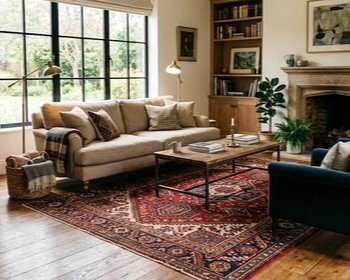
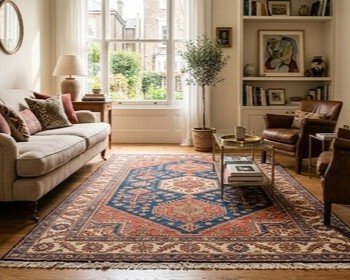
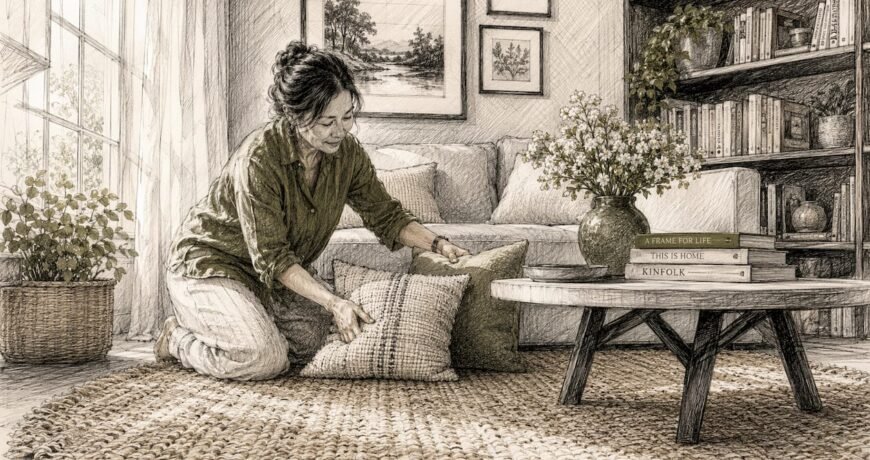
For most living rooms, a low- to medium-pile wool or performance flatweave in at least an 8×10 that keeps the front legs of all main seating on the rug is the best choice you can make. Wool handles foot traffic, resists stains naturally thanks to lanolin, and lasts well over a decade with basic care. A performance synthetic flatweave runs a close second for households with kids or pets, since many are machine-washable and cost less upfront.
- Families with kids or pets: Machine-washable, low-pile synthetic or performance flatweave. Easy to clean, resists flattening.
- High-traffic rooms: Flatweave or low-pile construction at 1/4 inch or less. Vacuums fast, handles chair movement without snagging.
- Style-first buyers: Wool or a hand-knotted wool/silk blend. Holds pattern, improves with age, and anchors a room the way synthetic can’t.
- Budget-conscious shoppers: A durable jute base layered with a smaller statement rug. You get performance and personality without replacing the whole footprint when trends shift.
Rugsonlinemarket carries all of these categories, from washable performance rugs to hand-knotted wool and silk pieces, with free shipping on orders over $300 and 30-day returns.
Table of Contents
- What are the best rug types for your living room needs?
- How do you choose the right living-room rug?
- Which rug material is actually best for a living room?
- What size rug do you need, and does a rug pad matter?
- How do you clean and maintain a living-room rug?
- What should you expect to spend, and how long will a rug last?
- Rugsonlinemarket picks for every living-room use-case
- Key Takeaways
- Why material should come before trends
- Rugsonlinemarket makes it easy to find the right rug
- Useful sources and further reading
What are the best rug types for your living room needs?
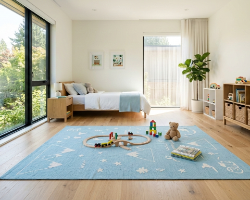
Best for families with kids: A machine-washable, low-pile synthetic or polypropylene rug in a pattern that hides crumbs and minor spills. Patterns like distressed vintage or geometric designs are practical here because they camouflage wear. Choose a rug large enough so the whole play zone stays on the rug.
Best for pet owners: A flatweave or low-pile performance rug in a mid-tone color. Pet hair vacuums off flatweaves in seconds, and a mid-tone hides dander between cleanings. Avoid high-pile shag — pet claws snag loops and the pile traps odors.
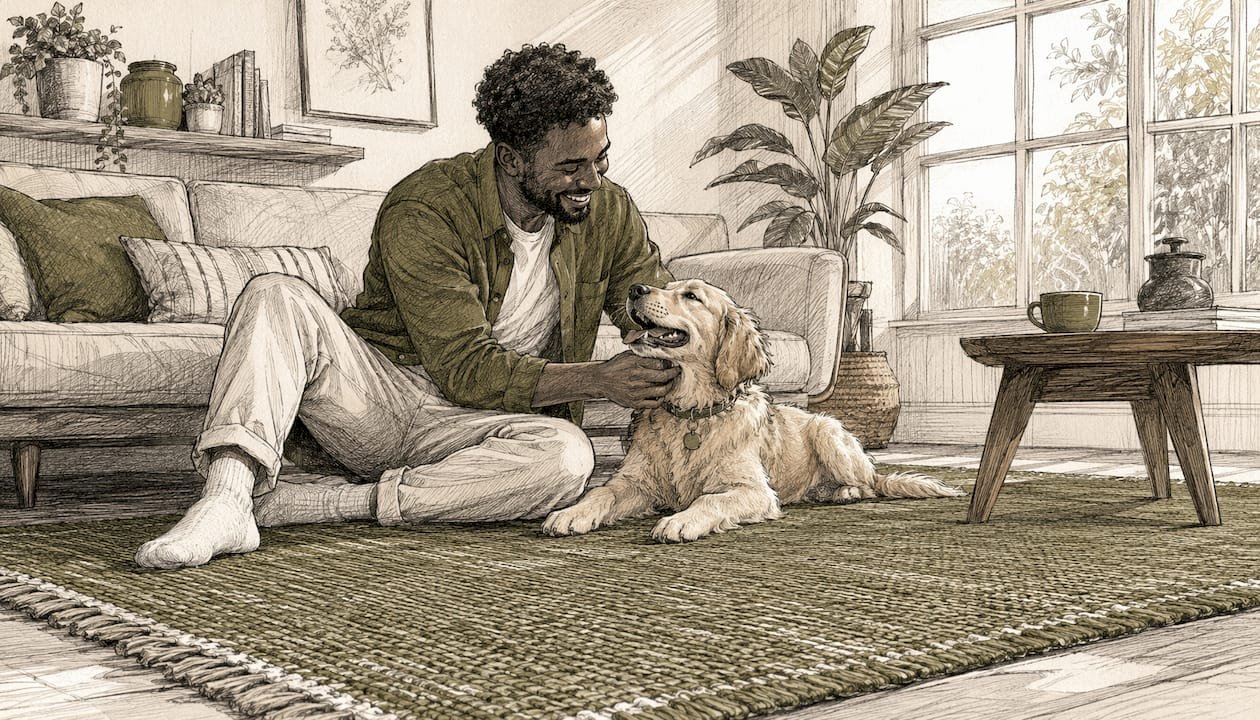
Best for budget buyers: Polypropylene or a blended synthetic in a larger size. The rule that size beats material for room proportion means a well-sized $200 synthetic does more visual work than a tiny $500 wool. Spend on size first.
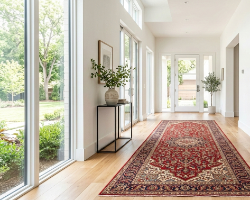
Best for luxury or a statement: A hand-knotted wool or wool-silk blend in a Persian, Oushak, or antique-style pattern. These hold value, develop a patina, and are genuinely irreplaceable as a focal point. Rugsonlinemarket’s antique and Persian collections are the right place to start.
Best for small rooms: For small rooms, choose a rug in a light neutral or low-contrast pattern. Pale tones and minimal pattern make a small room read larger. Still follow the front-legs rule — even a smaller rug needs to anchor the seating.
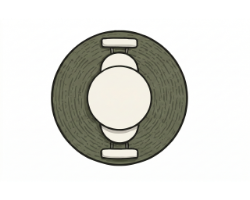
Best washable option: A performance synthetic with a non-slip, washable backing. Washable performance rugs have improved dramatically and now handle machine washing without buckling or shedding. Check the care label for water temperature limits before the first wash.
Current 2026 interior design trends favor natural jute bases layered with a patterned statement rug on top, and round rugs under curved sofas. Both are worth considering if you want a room that feels current without a full redesign.
How do you choose the right living-room rug?
Start with the room’s traffic and your household profile before you look at a single photo. A rug that photographs beautifully but pills after six months of dog traffic is a bad rug for your house, regardless of what it costs.
The decision checklist
- Measure your seating zone, not just the room. Pull out a tape measure and mark where the front legs of your sofa and chairs sit. That perimeter is your minimum rug footprint.
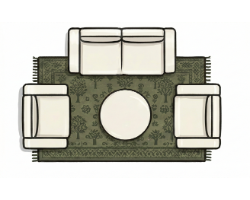
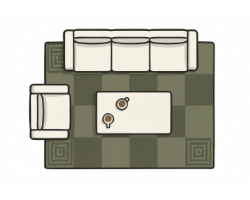
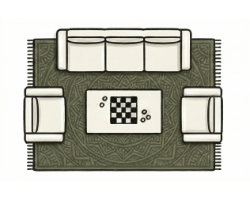
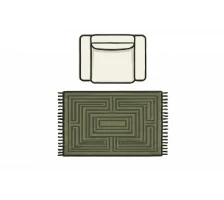
- Apply the front-legs rule. At minimum, the front legs of every major seating piece should rest on the rug. All legs on the rug creates an even more unified look, but front legs is the non-negotiable baseline.
- Choose pile height by traffic. High-traffic rooms need 1/4 inch pile or less. Reserve shag or high-pile for a low-traffic reading nook or bedroom.
- Match material to household needs. Wool for durability and natural stain resistance; synthetics for washability; jute for texture and a natural look in lower-traffic zones.
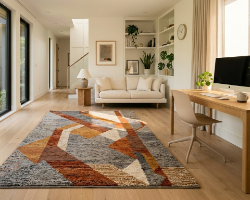
- Pick color and pattern relative to furniture scale. Large-scale patterns work in open rooms with big sofas. Small-scale or solid rugs suit compact rooms where pattern would compete with existing upholstery.
Red flags to avoid
- A rug that’s too small is the single most common mistake. It makes furniture look like it’s floating.
- Viscose or art silk in a high-traffic zone. It crushes, watermarks, and is nearly impossible to clean without professional help.
- Skipping a rug pad. Without one, the rug shifts, the backing degrades faster, and hardwood floors can scratch.
Questions to ask before you buy
- What is the fiber content and pile height?
- Is it machine-washable or spot-clean only?
- What is the return window if it doesn’t work in the space?
- Does the retailer offer free shipping above a threshold?
Pro Tip: Order a rug pad at the same time as the rug. Pads add cushion, prevent slipping, and extend the rug’s life by reducing friction against the floor. It’s a $30–$60 investment that protects a much larger one.
Which rug material is actually best for a living room?
The table below maps each major material to the dimensions that matter most for living-room use. Short pro/con notes follow for the materials that need more context.
| Material | Best for | Durability / Lifespan | Washability | Pile / Comfort | Typical price (8×10) | Notes |
|---|---|---|---|---|---|---|
| Wool | All-around family rooms, mid-to-high traffic | Excellent / 15 years | Spot-clean; pro deep-clean annually | Low to medium / very comfortable | — | Natural lanolin resists stains |
| Polypropylene | Pets, kids, high traffic, outdoor-adjacent | Good / 5–10 years | Spot-clean or hose off | Low to medium / firm | $100 | Can look flat over time |
| Nylon | High-traffic, commercial-grade durability | Very good / 10–15 years | Spot-clean; some machine-wash | Low to medium / resilient | $200–$500 | Holds dye well; resists crushing |
| Jute / Sisal | Style-forward, lower-traffic zones | Good / 8–12 years | Spot-clean only; avoid excess moisture | Flat to low / textural | $150–$400 | Biodegradable; can feel rough underfoot |
| Cotton | Casual rooms, washable flatweaves | Moderate / 3 years | Machine-washable | Flat to low / soft | $80–$200 | Fades faster; best in low-traffic areas |
| Viscose / Art silk | Accent pieces, low-traffic formal rooms | Poor in traffic / 3–5 years | Professional clean only | Medium to high / silky | $200–$400 | Crushes and watermarks easily |
| Wool-silk blend | Luxury statement, formal living rooms | Good / 10–15 years | Professional clean | Medium / luxurious | $800–$1,500 | Silk adds sheen; increases fragility |
| Blended synthetic | Budget-friendly all-rounder | Moderate / 5–8 years | Often machine-washable | Varies / decent | $100–$300 | Quality varies widely by brand |
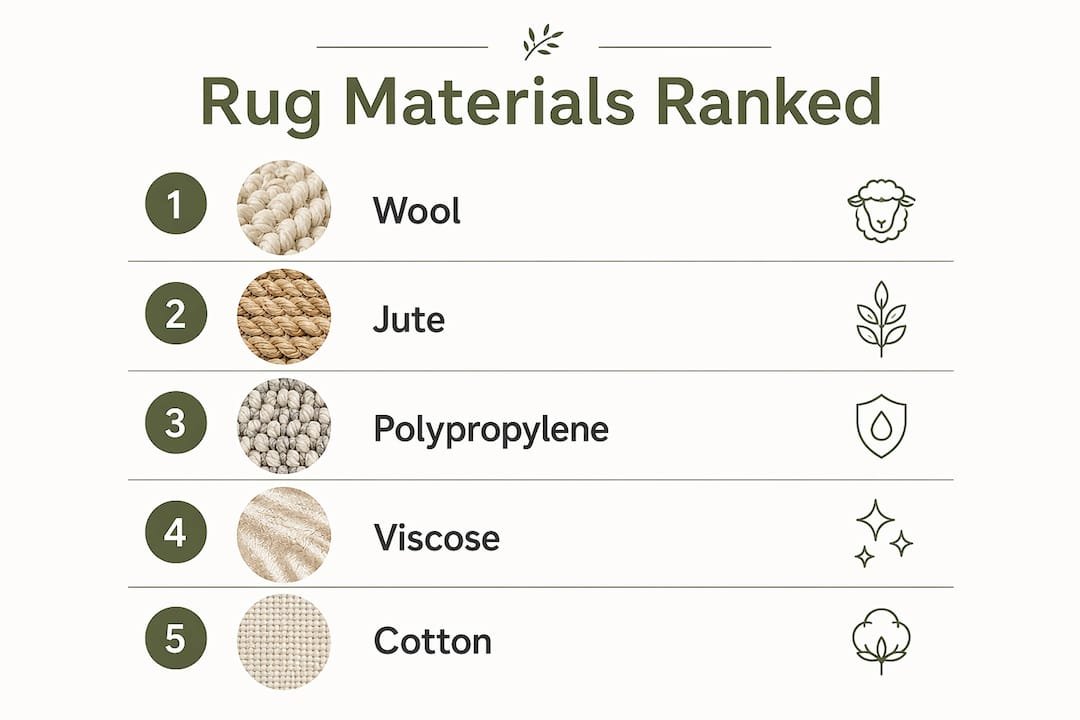
Wool is the material most testing roundups and editorial reviewers land on as the top all-around choice for living rooms. The lanolin in wool fiber creates a natural barrier against liquid spills, and the fiber springs back from compression better than most synthetics. A quality wool rug bought at 40 will still be in the room at 55.
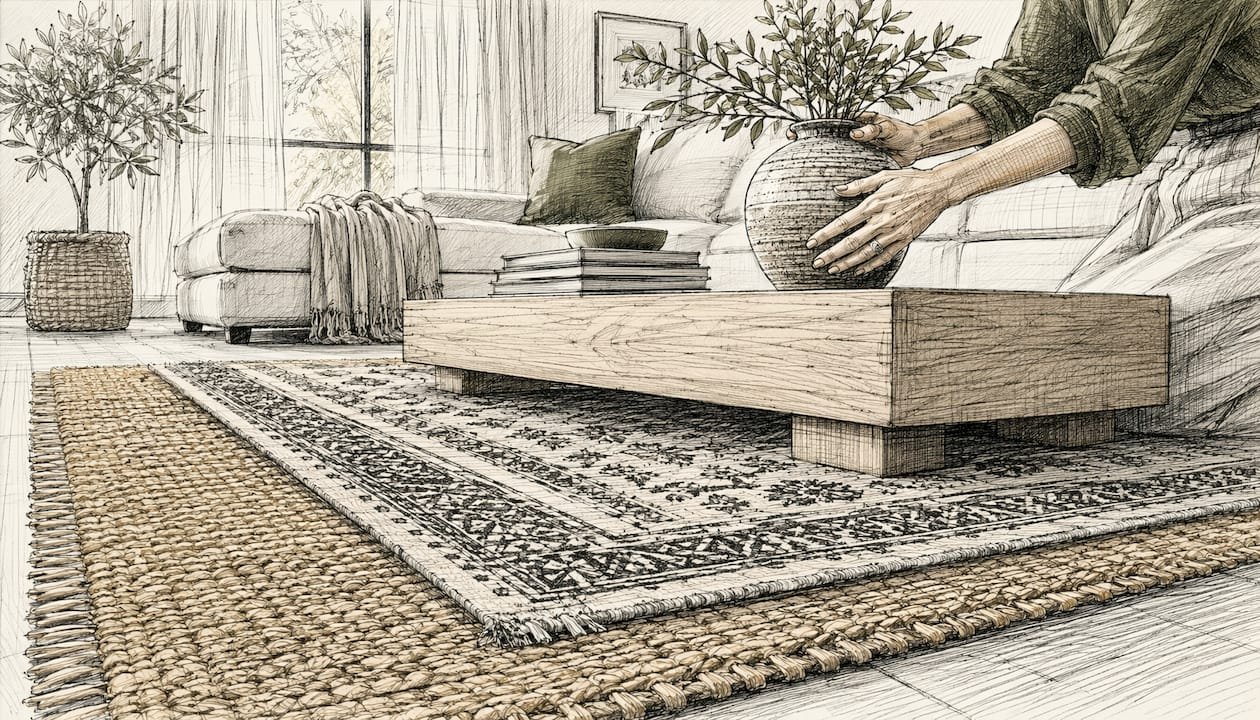
Jute is having a genuine moment in 2026. Layering a large jute base with a smaller patterned rug on top is a cost-effective strategy that lets the jute handle traffic while the statement layer provides personality and can be swapped when trends shift. The caveat: jute does not tolerate moisture well, so keep it away from entryways in wet climates.
Polypropylene and nylon are the practical workhorses. For homes with dogs, toddlers, or anyone who eats on the couch, a low-pile synthetic is simply easier to live with. Many now come with washable backings that hold up to machine washing without warping.
Viscose looks stunning in a showroom and struggles in real life. It crushes under furniture legs, watermarks from a single spilled glass, and requires professional cleaning every time. Use it in a formal room that sees light foot traffic, or avoid it entirely.
A brief note on health and environment: natural fibers like wool, jute, and cotton off-gas essentially nothing. Some synthetic rugs, particularly lower-cost polypropylene, can release VOCs when new. Airing a new synthetic rug outside for 24–48 hours before placing it significantly reduces any off-gassing. For buyers who prioritize sustainability, Rugsonlinemarket’s eco-friendly rug options cover natural-fiber choices that are both low-VOC and biodegradable.
What size rug do you need, and does a rug pad matter?
Size is the single biggest design lever in a living room. A well-sized $300 rug does more for a room than a beautifully made $900 rug that’s two feet too small on every side.
The core sizing rules
Design authorities consistently recommend a minimum rug size suitable for the room, with larger sizes preferred for bigger or open-plan layouts. The front-legs-on-rug rule is the baseline; all legs on the rug creates a more polished, hotel-like finish. When in doubt, go larger.
Quick size guide by room type:
- Small living room (under 12×15 ft): Choose a rug size that fits your seating zone and keeps at least 18 inches of bare floor showing around the rug’s perimeter.
- Medium room with sofa against the wall: 8×10 works well. The rug should extend at least 6 inches beyond each end of the sofa.
- Large or open-plan room: 9×12 or larger. The rug defines the seating zone and prevents the furniture from looking adrift in the space.
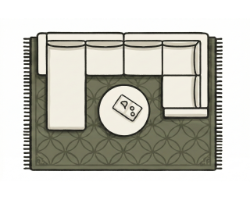
- Sectional sofa: Never go small. The rug should extend beyond the sofa’s edges on all sides, with all front legs anchored.
A simple formula: measure from the back of your sofa to the farthest seating piece, add 12–18 inches on each open side, and that’s your minimum rug size. Rugsonlinemarket’s rug size chart walks through this calculation with visual examples.
Pro Tip: Tape out the rug dimensions on your floor with painter’s tape before ordering. It takes five minutes and saves the hassle of a return.
Rug pad guidance by floor type
| Floor type | Recommended pad type | Thickness |
|---|---|---|
| Hardwood / engineered wood | Felt + rubber non-slip | 1/4 inch |
| Tile or stone | Rubber or PVC grip pad | 1/8–1/4 inch |
| Low-pile carpet | Thin rubber mesh | 1/8 inch |
| High-pile carpet | Avoid thick pads (trip hazard) | Thin rubber only |
A rug pad does three things: prevents slipping, cushions the underfoot feel, and stops the rug backing from abrading the floor finish. For hardwood floors, a felt-and-rubber combination is the standard recommendation. Avoid cheap PVC pads on hardwood — they can leave a residue that’s difficult to remove.
How do you clean and maintain a living-room rug?
Cleaning a rug is mostly about acting fast and using the right approach for the fiber. The wrong cleaner on the wrong material causes more damage than the original stain.
Spot-cleaning steps for most fibers
- Blot the spill immediately with a clean white cloth. Never rub — rubbing spreads the stain and pushes it deeper into the pile.
- Mix a small amount of mild dish soap with cool water.
- Test the solution on a hidden corner of the rug and wait two minutes.
- Apply gently with a cloth, working from the outside of the stain inward.
- Rinse with a damp cloth and blot dry. Allow to air-dry completely before walking on it.
Removing a red wine or pet urine stain
- Red wine: Blot immediately, then pour a small amount of cold sparkling water on the stain to lift the pigment. Follow with the mild soap solution above. For wool, skip the sparkling water and go straight to a wool-safe cleaner like Woolite diluted in cool water.
- Pet urine: Blot as much liquid as possible, then apply an enzymatic cleaner (available at most pet stores). Enzymatic cleaners break down the uric acid that causes odor. Let it sit for 10–15 minutes before blotting dry. Do not steam-clean pet urine stains on wool — heat sets the odor permanently.
Material-specific maintenance
- Wool: Vacuum weekly with a suction-only setting (no beater bar). Spot-clean spills immediately. Professional deep clean every 12–18 months.
- Jute: Vacuum regularly, but keep moisture minimal. Excess water causes jute to mold and the fibers to rot. Spot-clean with a barely damp cloth and dry immediately.
- Synthetics (polypropylene, nylon): Most tolerate a mild detergent and water scrub. Check whether the specific rug is machine-washable before attempting a full wash.
- Viscose / art silk: Professional cleaning only. Water leaves permanent marks on viscose.
Pro Tip: Rotate your rug 180 degrees every six months. This evens out wear from foot traffic and sun exposure, which extends the rug’s life noticeably, especially for wool and natural fibers.
Seasonal deep-clean schedule
- Weekly: Vacuum (both sides twice a year for flatweaves).
- Every 6 months: Rotate the rug; check for moth damage on wool.
- Annually: Professional deep clean for wool, silk, and hand-knotted pieces. Machine-wash or hose-clean synthetics if the care label allows.
What should you expect to spend, and how long will a rug last?
Rug pricing follows material and construction more than brand. Here’s a realistic breakdown for an 8×10, the most common living-room size.
Typical price ranges by material (8×10):
- Entry-level synthetic (polypropylene/blended): affordable price range
- Mid-range wool (machine-made or hand-tufted): moderate price range
- Premium hand-knotted wool: higher price range
- Wool-silk blend or antique/collectible: premium price range
Cost-per-year comparison
Replacing a synthetic rug every few years typically costs more per year than investing in a quality wool rug that lasts significantly longer and ages better. The math consistently favors investing in wool or a quality natural fiber if you plan to stay in the space.
Size affects price considerably; increasing rug size can significantly raise the cost even within the same material. That’s why the advice to prioritize size over material is worth taking seriously: a well-sized synthetic outperforms a small luxury rug for the room’s overall look.
Where to spend more:
- Size: always. A larger rug in a modest material beats a small rug in a premium one.
- Material: wool or a quality natural fiber if the budget allows. The lifespan difference is real.
Where you can economize:
- Pattern and colorway: a machine-made pattern in a classic design looks nearly identical to a hand-loomed version at a fraction of the cost.
- Construction method: hand-tufted wool delivers most of wool’s performance benefits at a lower price than hand-knotted.
For premium and antique pieces that hold value, Rugsonlinemarket’s antique collection includes hand-knotted options that appreciate rather than depreciate over time.
Rugsonlinemarket picks for every living-room use-case
Rugsonlinemarket’s collection maps directly to the use-cases covered above. Here’s how to navigate it.
For pets and kids: The washable rug alternatives collection covers performance synthetics with non-slip, washable backings. Low pile, stain-resistant, and built for real households. Look for polypropylene or blended options in distressed or geometric patterns that hide wear between cleanings.
For budget buyers: The natural rugs category includes jute and cotton flatweaves that deliver texture and style at accessible price points. Pair a jute base with a smaller statement piece from the Persian or Moroccan collections for the layered look that’s trending in 2026.
For luxury and statement rooms: The Persian, Oushak, and antique collections feature hand-knotted wool and wool-silk pieces. These are the rugs that become heirlooms. Rugsonlinemarket’s natural rugs category also covers premium wool options for buyers who want performance and beauty in one piece.
For small rooms: Runners and accent sizes are available across all style categories. The rug placement guide on the site helps you confirm the right size before ordering.
For styling with a specific sofa shape: Round rugs under curved or sectional sofas are a 2026 design move worth considering. Pairing the right rug shape with your sofa’s silhouette makes a real difference in how the room reads. For guidance on styling a sofa as a focal point, the approach applies directly to rug shape selection.
Pro Tip: Rugsonlinemarket offers free shipping on orders over $300 and a 30-day return window. For large rugs, that return policy matters. Order, lay it out in the room, and live with it for a few days before committing.
Rugsonlinemarket’s 100% feedback guarantee reflects a straightforward standard: if the rug doesn’t work, the return process is handled without friction. That’s worth factoring in when comparing online rug retailers.
Key Takeaways
Wool at 8×10 or larger, with the front legs of all seating on the rug, is the single most reliable choice for most living rooms across durability, comfort, and long-term value.
| Point | Details |
|---|---|
| Size first, always | An 8×10 is the minimum for most living rooms; when in doubt, go larger. |
| Match material to household | Wool for durability; machine-washable synthetics for pets and kids; jute for style in lower-traffic zones. |
| Use a rug pad | A felt-and-rubber pad prevents slipping, protects floors, and extends rug life on hardwood. |
| Cost-per-year beats sticker price | A $700 wool rug at 15 years costs less annually than a $250 synthetic replaced every 5 years. |
| Rugsonlinemarket for curated picks | Collections span washable performance rugs to hand-knotted wool, with free shipping over $300 and 30-day returns. |
Why material should come before trends
The most common regret in rug buying isn’t the color or the pattern. It’s choosing a fiber that couldn’t handle the household it landed in. A viscose rug in a home with two dogs and a toddler is a beautiful object that becomes a source of frustration within months. A well-chosen wool or performance synthetic in the same home is still looking good five years later.
Trends are genuinely useful as a starting point for color and shape. Jute layering, organic forms, and warm neutrals are all worth considering in 2026 because they’re grounded in materials that actually perform. But the trend should confirm a material choice, not drive it. Start with traffic, household profile, and maintenance reality. Then find the rug within those parameters that excites you aesthetically.
Rugsonlinemarket’s approach to curation reflects this: collections are organized by material and use-case, not just by what’s photographing well this season. That’s the right order of operations for a purchase that’s meant to last.
Rugsonlinemarket makes it easy to find the right rug
Skip the hours of scrolling through undifferentiated listings. Rugsonlinemarket’s curated collections are organized by material, style, and room so you can move from “I need a washable rug for a family living room” to a shortlist in minutes. Free shipping on orders over $300, 30-day hassle-free returns, and a 100% feedback guarantee mean you can order with confidence and return without friction if the rug doesn’t work in the space.
Browse the washable rug collection for pet- and kid-friendly options, or explore natural rugs for premium wool and jute picks. Visit Rugsonlinemarket to find the right rug for your living room today.
Useful sources and further reading
- Area Rug Living Room Guide: Sizes, Styles & Expert Tips — The Rooms Art: Covers the 8×10 minimum rule, front-legs placement, and pile height trade-offs with clear visual examples.
- After Testing 100+ Area Rugs, These Are the Best — The Spruce: Long-form testing roundup with material performance data and washability assessments across price points.
- Best Area Rugs for Living Rooms — Rug Tested: Focused testing on synthetic and washable options; useful for pet/kid household recommendations.
- Living Room Rug Ideas: 10 Ways to Anchor, Warm and Complete Your Space — Bouclé Home: Covers 2026 trends including jute layering, round rugs, and organic shapes with practical styling guidance.
- Best Rugs for Living Room 2026 — HomeDecoria: Designer-sourced advice on furniture-first sizing and why undersized rugs fragment a room’s layout.
- A Guide to Size, Placement and Style Your Place With Rugs — Rugsonlinemarket: The client’s own sizing and placement guide, with collection links organized by room and use-case.
