

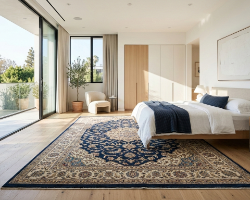
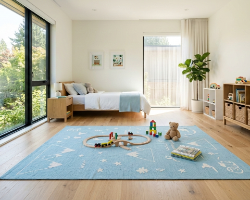


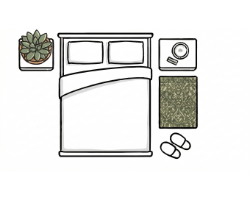
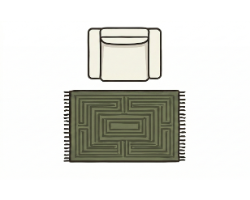
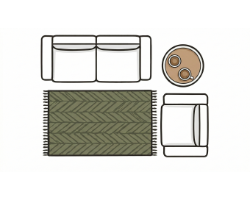
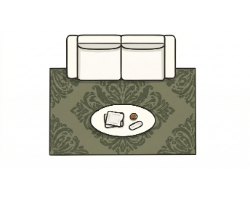
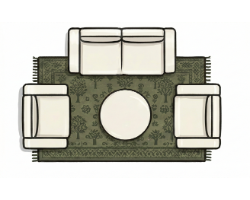












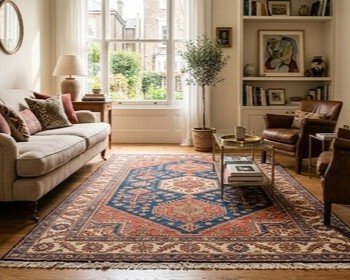
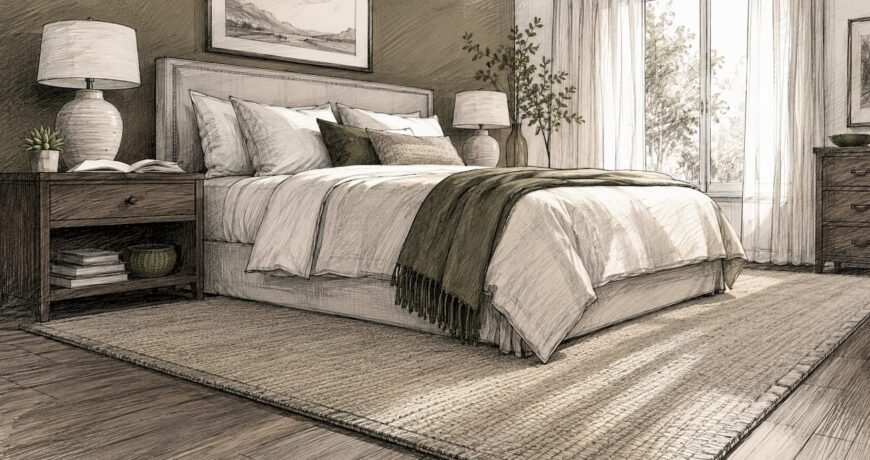
Place your rug so it extends a soft border beyond the sides and foot of the bed sufficient to create a framed and intentional look. That single measurement, cited consistently across designer guides, is the one rule that makes a bedroom feel finished rather than accidental. If your room is too tight for that, use runners on each side instead of forcing an undersized rug under the whole bed.
Quick dos and don’ts before you measure:
- Do measure your mattress and visible floor space before you shop.
- Do use runners when a full rug won’t give you that 18–24" border.
- Don’t buy a rug so small the bed looks like it’s floating on a postage stamp.
- Don’t let the rug edge cut awkwardly through the middle of a nightstand leg.
TL;DR: Extend a comfortable border of rug beyond the bed on three sides, or use runner rugs on each side if space is tight.
Table of Contents
- What rug size works for each bed size?
- Which placement option fits your room?
- How do you measure for the right rug size?
- What materials and pile height work best in a bedroom?
- What are the most common bedroom rug mistakes?
- How do you adapt placement for small rooms, large suites, and platform beds?
- Why do designers use the 18–24" rule, and when can you break it?
- Key Takeaways
- The placement rule most people skip
- Rugsonlinemarket has the sizes and styles to get this right
What rug size works for each bed size?
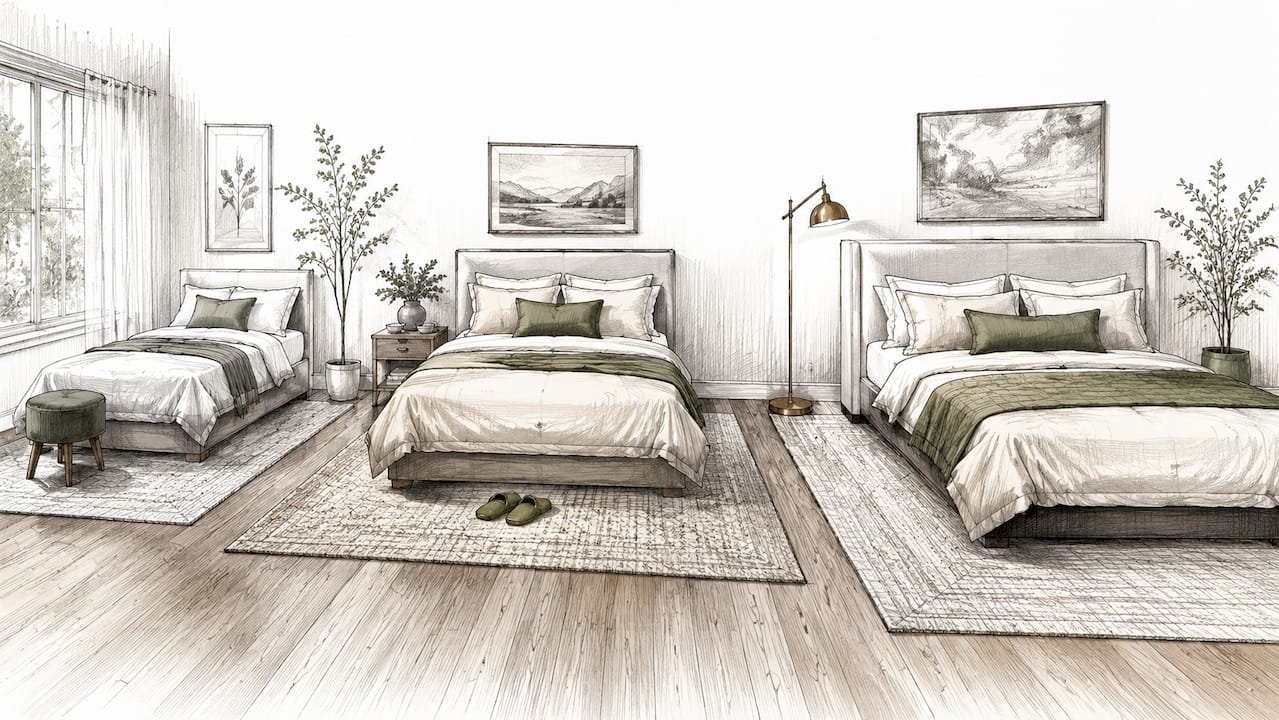
The table below gives you a fast reference. “Exposed border” means how much rug you’ll see beyond the bed frame on the sides and foot, assuming standard room dimensions.
| Bed Size | Recommended Rug Size | Exposed Border (Sides/Foot) | Notes |
|---|---|---|---|
| Twin (38" × 75") | Rugs sized moderately larger than the bed | 18–24 inches on open sides and foot | Works well with a single runner on the open side |
| Full (54" × 75") | Rugs sized moderately larger than the bed | 18–24 inches on sides and foot | Larger options give a more grounded look |
| Queen (60" × 80") | Rugs sized moderately larger than the bed | 18–24 inches on sides and foot | Options vary with room size |
| King (76" × 80") | Rugs sized moderately larger than the bed | 18–24 inches on sides and foot | Certain sizes are common starting points |
| Cal King (72" × 84") | Rugs sized moderately larger than the bed | 18–24 inches on sides and foot | Larger sizes are preferred in spacious rooms |
| Any size (tight room) | Two long runners on each side | A purposeful runner width on both sides | Intentional look; skip the central rug entirely |
For a queen bed, an 8×10 rug covers the bed area with a clean border in most standard bedrooms. Step up to a 9×12 when the room is 14×16 feet or larger and you want nightstands sitting on the rug. For a king, the 9×12 is a dependable starting point — the 10×14 is worth it only in genuinely spacious master suites where you want the rug to anchor a seating area too.
Runner and side-rug note: Two runners (one per side) cost less than a single large rug and look deliberate in narrow rooms or when the bed sits close to a wall. A foot-only rug (around 3×5 or 4×6) works when the room is very small or the bed is positioned in a corner.
Which placement option fits your room?
There are five main ways to position a rug in a bedroom. Each one solves a different problem.
Full anchor under the bed
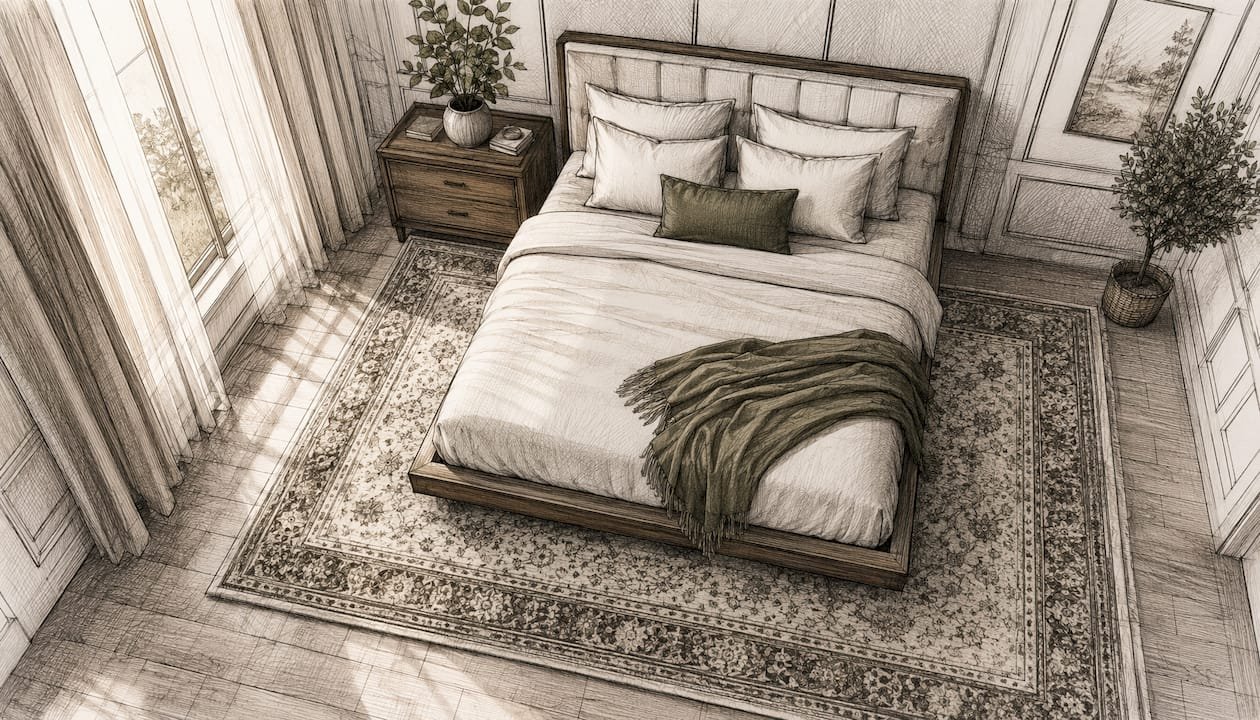
The rug slides under the entire bed, including the headboard area. This works in large master suites where you want a hotel-style look. The downside: you’re paying for rug that nobody sees or feels. It also makes the rug harder to clean and rotate.
Lower two-thirds placement
This is the most practical option for most homes. The rug starts roughly in front of the nightstands, covering the lower two-thirds of the bed length. Designers favor this because it puts soft coverage exactly where your feet land when you get up, and it avoids the cost of covering the headboard zone. It’s the right call for standard bedrooms in the 12×14 to 14×16 ft range.
Runners on each side
Place runners where your feet actually land — one on each side of the bed — and you get targeted comfort, a clean visual line, and the freedom to use two different textures or colors if you want contrast. This option is especially smart in narrow rooms where a central rug would leave almost no floor visible around the edges.
Two runners also make rotation and cleaning far easier than a single large rug. If you can’t find a rug that delivers the ideal exposed border, this is the fix designers reach for first.
Foot-only rug
A smaller rug placed at the foot of the bed works in very tight rooms or when the bed sits against a wall on one side. It adds warmth and texture without overwhelming the floor plan. The visual effect is lighter than a full rug, which suits minimalist or Scandinavian-style rooms well.
Round rugs
Round rugs work best when the bed is angled in a corner or when you’re defining a small seating nook at the foot of the bed. They rarely work as the primary bedroom rug under a rectangular bed — the geometry fights the furniture. Use them as accent pieces, not anchors.
Before you commit to any option: lay painter’s tape on the floor in the exact dimensions of the rug you’re considering. Walk to the doorway and look at it. That five-minute step prevents a very expensive mistake.
How do you measure for the right rug size?
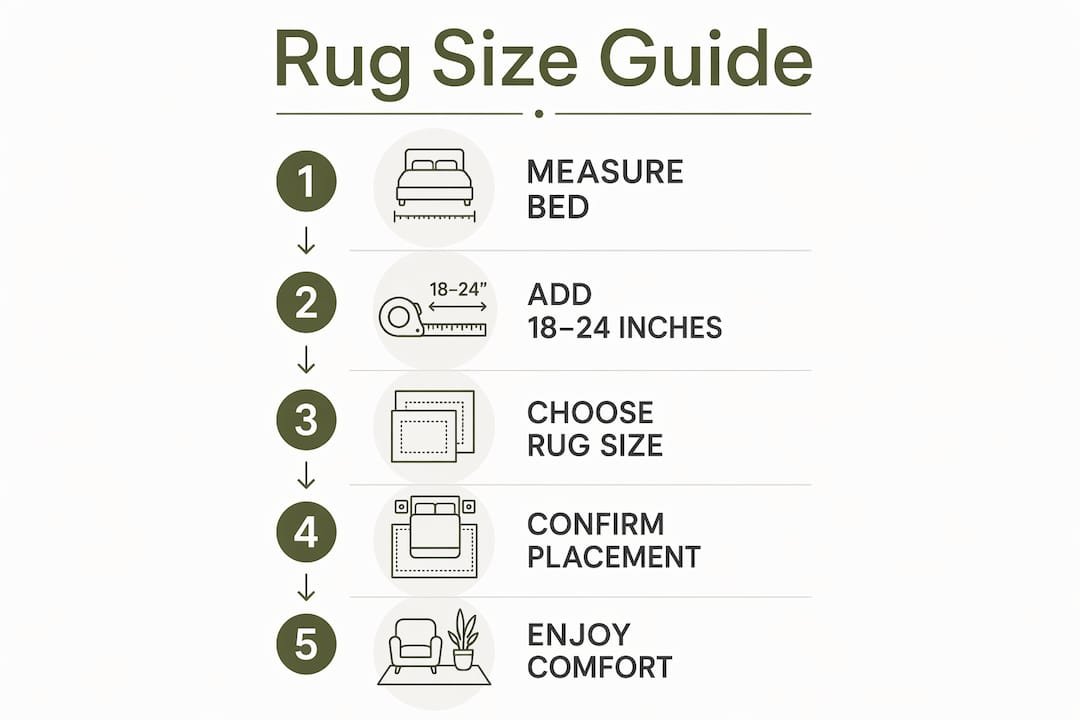
Getting the measurement right before you order is the single step that most reduces returns and buyer regret. Here’s the process.
- Measure your mattress and frame. Note the full width and length including any frame overhang. A king mattress is 76" wide, but the frame often adds 1–2" per side.
- Measure visible floor space. From each side of the bed frame to the wall (or nearest furniture), and from the foot of the bed to the wall or dresser. Write these down.
- Check door swing and drawer clearance. A door that swings into the bedroom needs clearance. Mark where it opens fully. A high-pile rug that catches the door is a daily frustration. Interior door swing patterns vary — if you’re also updating doors, door clearance considerations are worth reviewing before you finalize rug thickness.
- Decide on nightstand placement. Will nightstands sit on the rug or off it? Either works, but avoid a rug edge that cuts through the middle of a nightstand leg — it looks unresolved and can tip the nightstand.
- Mark the rug outline with painter’s tape. Use the dimensions from your size chart to tape the exact rug footprint on the floor. Include the 18–24" border beyond the bed on sides and foot.
- Test from the doorway. Stand at the bedroom entrance and look at the tape outline. Does it feel grounded? Does the bed look anchored? Adjust before you order.
- Check the foot-of-bed clearance. If you have a bench at the foot of the bed, the rug should extend at least 12 inches past the bench. If the bench would sit half-on and half-off, size up or move the bench fully off the rug.
Specific guidance by bed size:
- Twin: A 5×8 leaves about 12–15" on the open side. A 6×9 gives more breathing room and works better if the twin is in a shared kids’ room.
- Queen: Tape out both an 8×10 and a 9×12 before deciding. The difference is visible from the doorway.
- King/Cal King: Start with a 9×12 tape outline. If nightstands sit off the rug and the room feels large, tape a 10×14 and compare.
Pro Tip: In a rental or awkward room where a large central rug would look forced, use two 2.5×8 runners instead. They’re easier to move, cheaper to replace, and often look more intentional than a single rug that’s slightly too small.
What materials and pile height work best in a bedroom?
The bedroom is a low-traffic room compared to a hallway or living room, but it has its own demands: bare feet at 6 AM, dust accumulation under the bed, and the occasional spill.
Wool is the top choice for bedrooms where comfort and longevity matter. It’s naturally soft underfoot, resists crushing under furniture, and handles light moisture without immediate damage. The trade-off is cost and weight — wool rugs are harder to move and typically need professional cleaning for deep stains.
Cotton rugs are lighter, often machine-washable, and less expensive. They work well in kids’ rooms or guest bedrooms where you want easy maintenance. They flatten faster than wool under heavy furniture legs.
Synthetic fibers (polypropylene, nylon, polyester) cover the widest range of the market. Many washable synthetic rugs are now genuinely soft underfoot and hold up well in bedrooms. They’re the practical pick for anyone who wants to throw the rug in the washing machine.
Pile height and door clearance
Low-pile rugs (under ½ inch) work in any bedroom and never interfere with door swing. High-pile or shag rugs (over ¾ inch) feel luxurious underfoot but require a door clearance check — a door that drags across a thick rug wears out both the rug and the door bottom. If your bedroom door swings inward over the rug zone, stick to low or medium pile.
Rug pads matter more than most people think
A quality rug pad does three things: keeps the rug from sliding (a real safety issue on hardwood), adds cushioning that makes even a flat-weave rug feel softer, and protects the floor finish underneath. For bedrooms, a ½-inch felt-and-rubber pad is the standard recommendation. Avoid pads thicker than ¾ inch under a door swing path.
Rugs near dressers or high-traffic foot paths at the foot of the bed wear faster than rugs tucked under the bed frame. For those spots, a tighter weave and denser fiber holds up better over time.
What are the most common bedroom rug mistakes?
Most bedroom rug problems come down to three errors. Here’s what they look like and how to fix each one.
- Rug too small. A rug that’s visibly undersized makes the bed look heavy and disconnected from the room. Designers consistently recommend sizing up when in doubt. If you’re torn between two sizes, go larger.
- Rug edge cutting through furniture legs. A nightstand or bench sitting half-on, half-off the rug looks unresolved and can make furniture wobble. Either place the furniture fully on the rug or fully off it — no partial contact.
- Ignoring door swing and drawer clearance. A rug that catches a door or blocks a dresser drawer is a daily irritation. Measure both before you order.
- Centering the rug in the room instead of under the bed. The rug should be centered on the bed, not the room. Leave roughly equal floor exposure on both sides of the rug.
- Hiding most of the rug under the bed. If the rug starts too far under the headboard, you lose the visual impact and the soft landing zone. The lower two-thirds placement solves this.
Quick fix example: A queen bed with a 5×8 rug centered under it looks awkward because the sides show only 6–8 inches of rug. The fix is straightforward — swap to an 8×10, shift the rug so it starts about one-third down from the headboard, and the room reads as intentional immediately.
How do you adapt placement for small rooms, large suites, and platform beds?
Small bedrooms
Avoid wall-to-wall area rugs in tight spaces — they make the room feel boxed in rather than cozy. Two runners, one per side, give you the soft landing without eating the floor. Leave visible floor around the rug perimeter; lighter-colored rugs open up a small room more than dark ones. If you want one central rug, a 5×8 or 6×9 with the lower two-thirds placement keeps the room from feeling overwhelmed.
Large master suites
Size up confidently. A 9×12 is the floor for most king-bed master suites; a 10×14 makes sense when the room includes a seating area or reading chair. In those cases, the front legs of the chair or small sofa should sit on the rug, connecting the seating zone to the bed zone visually. Layering a smaller, softer rug on top of a large natural-fiber base rug adds texture and defines the bed area within a very large room. For inspiration on luxury rug options suited to master suites, Rugsonlinemarket carries wool and silk pieces in 9×12 and larger.
Platform and low-profile beds
Platform beds sit closer to the floor, which changes the visual math. The exposed rug at the sides looks proportionally larger, so you can often get away with a slightly smaller rug than you’d use with a traditional frame. More importantly, shift the rug forward so the foot and sides remain clearly exposed — the low profile means the rug disappearing under the frame reads as a mistake rather than intentional coverage.
Round rugs and asymmetrical layouts
A round rug under a rectangular bed almost never works as the primary anchor. Where round rugs shine: a small seating nook at the foot of the bed, a reading corner, or a room where the bed is angled. If you’re working with an asymmetrical layout, a round rug can soften the geometry. Size it so at least the front legs of any nearby chair sit on it.
Pro Tip: For a layered look in a large bedroom, start with a flat-weave jute or sisal base rug in the full anchor size, then layer a smaller, softer wool or Moroccan rug on top centered under the lower two-thirds of the bed. The texture contrast reads as intentional and adds warmth without visual clutter.
Why do designers use the 18–24" rule, and when can you break it?
The 18–24" border rule isn’t arbitrary. A rug functions as a visual anchor that connects the bed to the rest of the room and prevents the bed from appearing to float in empty space. When you step out of bed onto bare floor, the room feels unfinished regardless of how well everything else is styled. The exposed border is also what reads as “intentional” from the doorway — the distance a visitor sees when they first look into the room.
Designer consensus frames the decision around four questions: Where are the primary walking paths? Should nightstands sit on the rug or off it? How much border is visible at the foot and sides? Does the rug clear doors and storage?
The most common placement mistake isn’t choosing the wrong style — it’s choosing the wrong size. A rug that’s too small undermines every other design decision in the room. When the border drops below 12 inches on the sides, the bed looks heavy and the rug looks like an afterthought. Sizing up is almost always the right call.
| Placement Rule | Standard Guidance | When to Break It |
|---|---|---|
| Border at sides/foot | 18–24 inches | Narrow room: use runners instead |
| Lower two-thirds start | Rug begins ~⅓ down from headboard | Full anchor in large suites for hotel look |
| Nightstands on/off rug | Fully on or fully off | Small room: fully off saves rug width |
| Foot bench on rug | Extend 12" past bench | No bench: standard foot border applies |
| Round rug | Accent/nook use only | Angled bed or asymmetrical layout |
The rules exist because they work in most rooms. Breaking them works too — but only when you have a specific reason (room shape, built-in furniture, deliberate layering) rather than just a smaller budget. A foot-only rug in a minimalist room is a stylistic choice. A rug that’s too small because you didn’t measure is a mistake.
Key Takeaways
Bedroom rug placement comes down to one measurement: extend 18–24 inches beyond the bed on three sides, then choose the placement option that fits your room size and furniture layout.
| Point | Details |
|---|---|
| The core rule | Extend 18–24 inches of rug beyond the bed on sides and foot for a grounded, intentional look. |
| Size by bed | Queen beds need an 8×10 or 9×12; king beds start at 9×12 and scale to 10×14 in large rooms. |
| Tight rooms | Use two runners (one per side) instead of forcing an undersized central rug. |
| Mock up first | Tape the rug outline on the floor and check from the doorway before you order. |
| Rugsonlinemarket | Browse runners, washable rugs, and luxury wool options with free shipping on orders over $300. |
The placement rule most people skip
Most bedroom rug guides spend their energy on size charts. That’s useful, but the step that actually prevents a bad purchase is the painter’s tape mockup. Taping the exact rug dimensions on the floor before you order takes five minutes and eliminates the guesswork that leads to returns.
The other thing worth saying plainly: placement matters as much as size. A correctly sized rug in the wrong position — centered in the room instead of under the bed, or starting too far under the headboard — still looks off. The lower two-thirds rule exists because it puts the rug exactly where it does the most work: under your feet when you get up, and visible from the doorway as a frame for the bed.
Sizing up is almost always the right instinct. A rug that’s slightly larger than you think you need reads calmer and more deliberate than one that’s slightly too small. The bed looks anchored. The room looks finished. That’s the whole goal.
Rugsonlinemarket has the sizes and styles to get this right
Once you know your size and placement option, the shopping part should be straightforward. Rugsonlinemarket carries rugs in every size covered in this guide — from bedside runners to 10×14 wool anchors for master suites — with free shipping on orders over $300 and hassle-free returns within 30 days if the size isn’t right.

For tight bedrooms, the runner rug collection is the fastest solution: choose two in the same style and place one on each side of the bed. For larger rooms, the luxury rug selection includes wool and silk options in 9×12 and 10×14 that anchor a king or Cal king bed with the kind of weight and texture that synthetic rugs rarely match. If maintenance is the priority, the washable rug alternatives page covers the best options for bedrooms where easy cleaning matters.
Use the site’s size chart, or contact the Rugsonlinemarket team directly if you want a second opinion on sizing before you order.
Useful sources
- How to Place a Rug in a Bedroom — Martha Stewart: Primary source for the 18–24" border rule and sizing guidance.
- What Is the Right Size Rug for a Queen Bed? — The Spruce: Detailed size table mapping rug dimensions to exposed margins for queen beds.
- Bedroom Rug Placement Ideas for Queen and King Beds — HomeGoode: Concrete size recommendations for queen and king beds; furniture-on/off guidance.
- Bedroom Rug Placement Guide — BloomingTips: Lower two-thirds placement rationale; painter’s tape mockup method.
- Bedroom Rug Placement Rules — Homes & Gardens: Designer consensus framework; undersized rug visual problems.
- Rug Placement Under Bed — Castlery: Visual anchoring rationale; placement-over-size insight.
- Rug Size for Queen Bed — The Design Confidential: Comprehensive size and placement strategies including bench and seating area guidance.
- Genre Analysis / Runner Guidance — GVSU: Runner-as-alternative guidance for tight rooms.
