

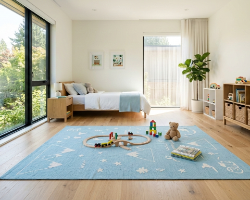
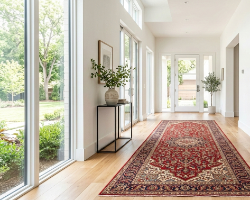
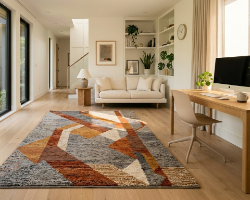
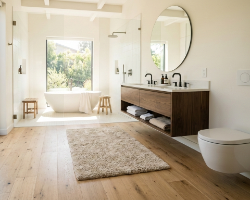

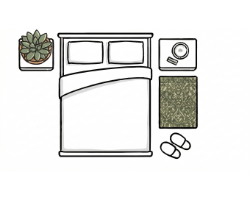
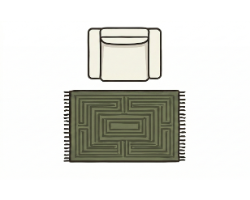
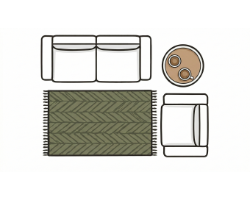
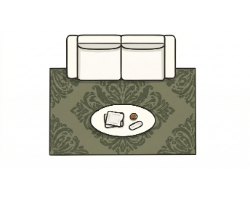
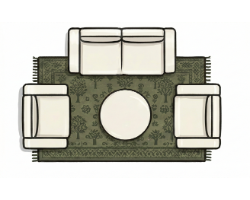
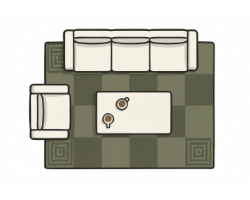
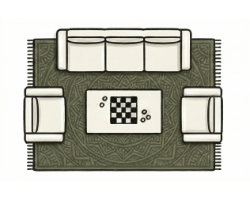
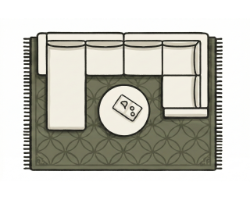





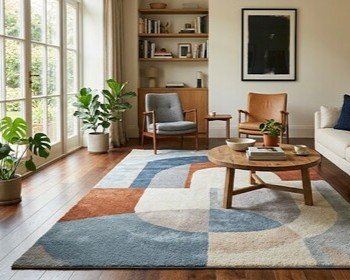

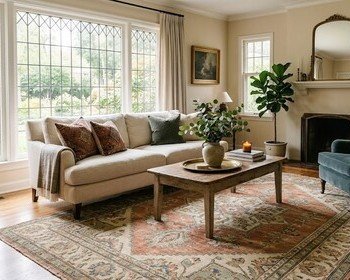
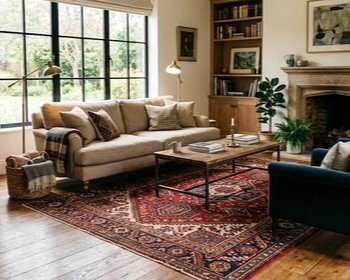
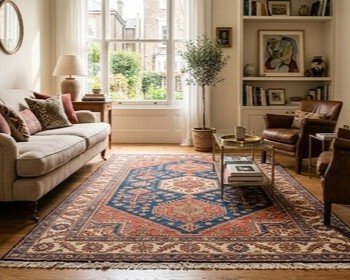
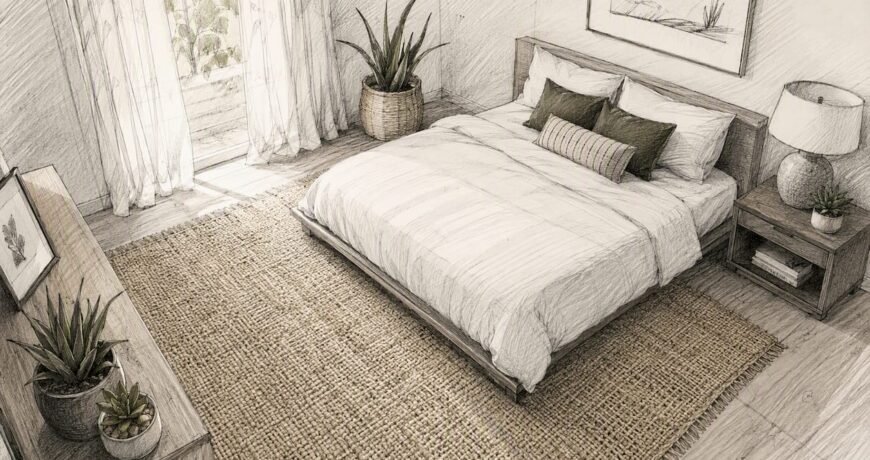
Choose a warm, textured neutral rug in your room’s dominant undertone and size it to anchor the main furniture grouping. That single decision covers most of what makes a neutral rug feel intentional rather than forgettable. Before you shop, three things matter most:
- Color undertone: warm (beige, greige, tan) or cool (soft gray, ivory with a blue-gray base) — match it to your floors and walls, not just the rug photo
- Material for the use-case: wool for comfort rooms, polypropylene or washable for kids and pets, natural fiber for texture-led base layers
- Size: measure the furniture footprint first; a rug that’s too small is the most common and most visible mistake
Measure your main seating area or room before you open a single product page. Everything else in this guide builds from there.
Key Takeaways
Warm, textured neutral rugs sized to anchor your furniture grouping are the single most reliable way to create a calm, cohesive room in 2026.
| Point | Details |
|---|---|
| Match undertone first | Warm neutrals suit warm wood and warm walls; cool neutrals suit painted floors and north-facing rooms. |
| Material by room function | Wool for comfort rooms, polypropylene or washable for kids and pets, natural fiber as a base layer. |
| Size to anchor furniture | Living room: all front legs on rug. Bedroom: 18–24 inches beyond bed sides. Dining: 24 inches past table edge. |
| Texture over color contrast | Tone-on-tone patterns and high-low pile add depth without visual noise in a neutral palette. |
| Rugsonlinemarket | Carries natural, washable, and premium neutral rugs with free shipping over $300 and 30-day returns. |
Table of Contents
- Where neutral rugs work best in your home
- Choosing the right neutral color: warm vs. cool and how to match undertones
- Neutral rug materials and where each one actually excels
- Subtle patterns and textures that keep neutral rugs interesting
- How to size and place a neutral rug correctly
- How to layer rugs for texture, warmth, and visual interest
- How to keep neutral rugs looking fresh
- Neutral rug trends shaping 2026
- Where to buy neutral rugs and what to expect at each price point
- Rugsonlinemarket has the neutral rug for your room
- Sources
Where neutral rugs work best in your home
A neutral rug does different jobs in different rooms, and the right tone and pile for a living room is rarely the right choice for a mudroom.
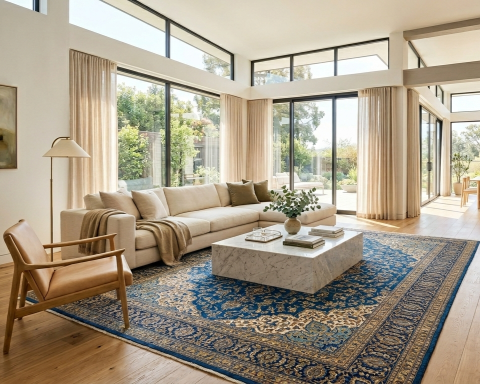
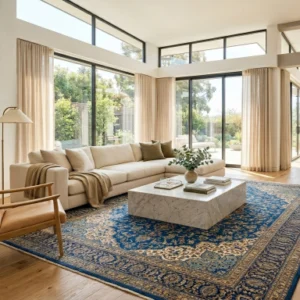
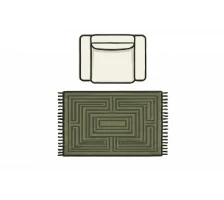
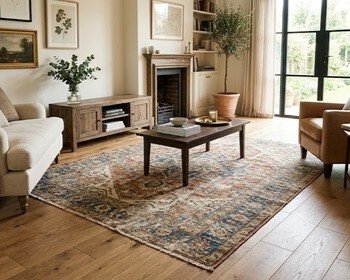
- Living room: A warm beige or greige rug anchors the main seating grouping and reads as a calm foundation under almost any furniture color. Go with a medium pile for comfort underfoot, and match the undertone to room finishes — warm wood floors call for warm-toned neutrals, not cool gray.
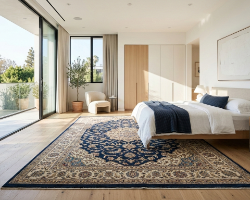
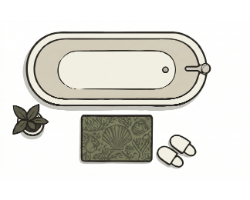
- Bedroom: Plush pile beside the bed feels good on bare feet first thing in the morning. A low-pile or flatweave works under the bed where most of it stays hidden, but beside the bed you want something soft. Size it so there’s coverage on both sides and at the foot.
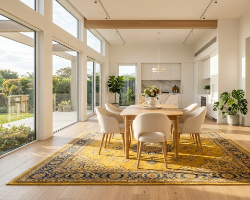
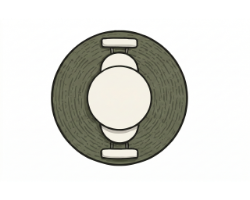
- Dining room: Flatweave or natural fiber rugs are the practical pick here. Chair legs drag constantly, and a high-pile rug under a dining table becomes a maintenance problem fast.
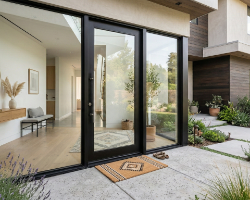
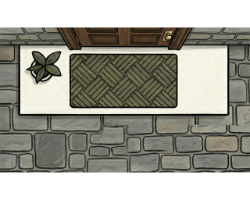
- Entry and hallway: Durable, washable runner rugs in a low-pile or flatweave construction handle foot traffic without showing wear lines. A runner should be roughly two-thirds the width of the hallway.
- Open-plan spaces: A large neutral base rug defines each zone — seating, dining, reading — without visually chopping up the floor. Layering a smaller accent rug on top of the neutral base adds warmth and marks the center of a seating area without competing with the open-plan sightlines.
Choosing the right neutral color: warm vs. cool and how to match undertones
The difference between a neutral rug that looks intentional and one that looks like a placeholder almost always comes down to undertone.
Warm neutrals — beige, warm greige, tan, camel — pull yellow, orange, or red. They pair naturally with honey oak, walnut, terracotta tile, and warm white walls. Cool neutrals — soft gray, ivory with a blue-gray base, pale linen — pull blue or green and work better with painted floors, white oak, concrete, or rooms with north-facing light.
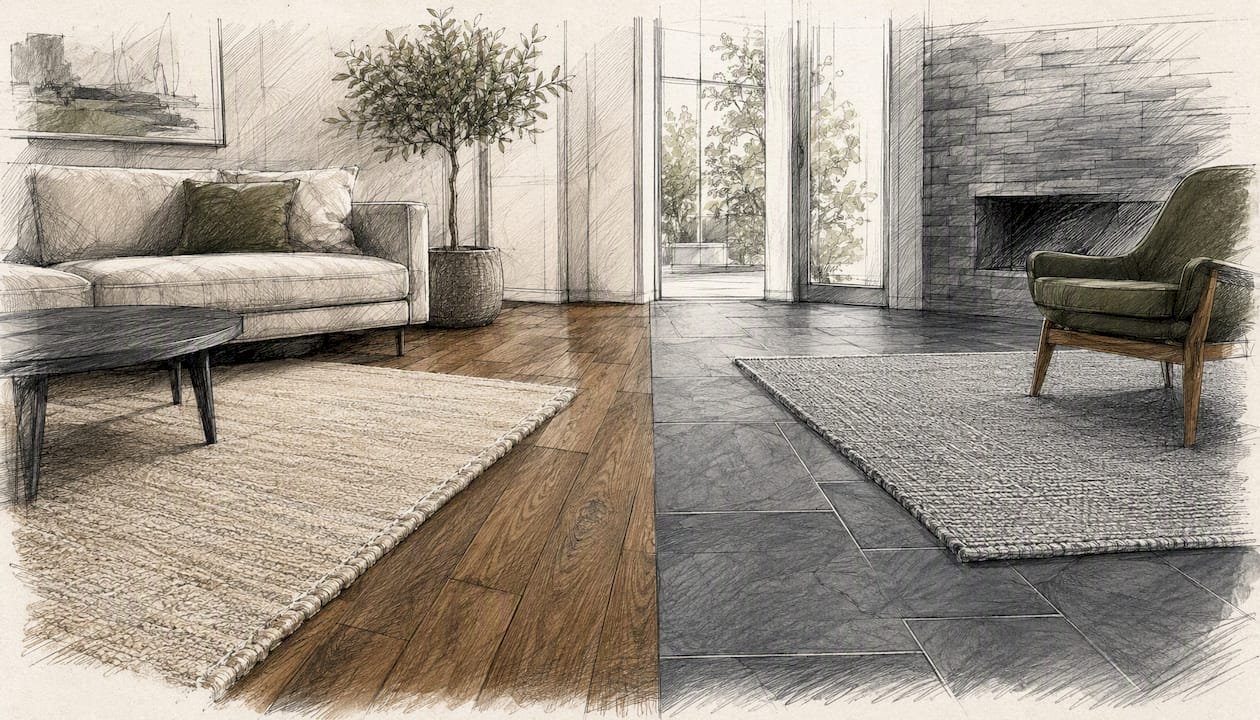
The most common mistake is picking a neutral that looks perfect on a screen and then clashing with the floor undertone in person. A warm beige rug on a cool gray floor can look muddy or slightly pink. A cool gray rug on warm wood floors reads as flat and disconnected.
Pro Tip: Bring a paint chip or a fabric swatch from your dominant upholstery to the store, or order a sample swatch before committing to a full rug. Natural light shifts undertones dramatically — check the swatch at different times of day in the actual room.
Quick checks before you buy:
- Hold the rug swatch next to your floor, not just your wall
- Look at the rug in the room’s actual light, not a showroom’s bright overhead lighting
- If your room has mixed undertones (warm floor, cool walls), a true greige — balanced between warm and cool — is usually the safest bridge
Neutral rug materials and where each one actually excels
Material determines how a rug feels, how long it lasts, and how much work it takes to keep it looking neutral and fresh.
- Wool: Dense, naturally stain-resistant, and durable enough for living rooms and bedrooms that see daily use. Wool pile bounces back from furniture indentations better than most synthetics. It costs more upfront, but a quality wool rug outlasts several budget alternatives.
- Jute and sisal: Organic, warm texture that photographs beautifully and works as a base layer in layered styling. Both are sensitive to moisture and can abrade bare feet with heavy use, so they’re best in dry areas or under a softer accent rug. Seagrass is similarly textured and slightly more moisture-tolerant.
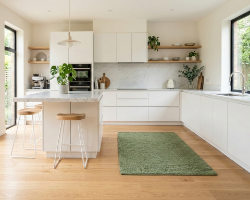
- Cotton and flatweave: Casual, washable, and easy to move. Herringbone-woven cotton hides small marks well, and product reviews note that flatweave cotton benefits from a rug pad to prevent slipping and add cushion underfoot. Good for kitchens, kids’ rooms, and layered styling.
- Polypropylene and washable synthetics: The practical choice for busy households. Stain-resistant, often machine-washable, and available at every price point. The tradeoff is texture — most synthetics don’t have the tactile depth of wool or natural fiber, though high-quality options have closed that gap considerably.
| Material | Best rooms | Durability | Cleanability | Pet/kid friendly |
|---|---|---|---|---|
| Wool | Living room, bedroom | High | Moderate | Good |
| Jute/sisal | Low-traffic, base layer | Moderate | Low | Fair |
| Cotton flatweave | Kitchen, kids’ room | Moderate | High | Very good |
| Polypropylene | Any high-traffic room | High | Very high | Excellent |
A rug pad is worth adding regardless of material. It prevents slipping, extends the rug’s life, and adds cushion that changes how the floor feels underfoot.
Subtle patterns and textures that keep neutral rugs interesting
A solid neutral rug can read as flat in a room with little color contrast. Texture and low-contrast pattern solve that without adding visual noise.
- Tone-on-tone patterns: Subtle geometrics, low-contrast florals, and diamond weaves in the same color family add depth that reads as texture from across the room. Calm, balanced interiors consistently favor this approach over bold pattern.
- High-low pile: A rug with cut-and-loop or carved pile creates shadow and dimension without introducing a second color. It catches light differently as you move around the room.
- Flatweave with a woven motif: A herringbone or simple stripe woven into a flatweave adds structure without weight. These work especially well in dining rooms and entries where a thick pile would be impractical.
- Knotted loops and boucle textures: Tactile and warm, these work well in reading corners and bedrooms where you want the rug to feel as good as it looks.
When your furniture already carries a bold pattern — a floral sofa, a graphic throw — a solid textured neutral rug is the better call. When furniture is solid and simple, a tone-on-tone patterned rug gives the floor enough personality to hold the room together. Natural fiber and check/line patterns are consistently popular choices for exactly this reason.
How to size and place a neutral rug correctly
Getting the size right matters more than almost any other decision. A rug that’s too small makes furniture look like it’s floating.
| Room | Minimum rule | Ideal |
|---|---|---|
| Living room | All front legs on rug | Full seating group on rug |
| Dining room | 24 inches past table edge on all sides | 30 inches past edge |
| Bedroom (queen) | 18 inches beyond bed sides | 24 inches beyond sides and foot |
| Hallway runner | Two-thirds hallway width | Leaves 3–4 inches of floor on each side |
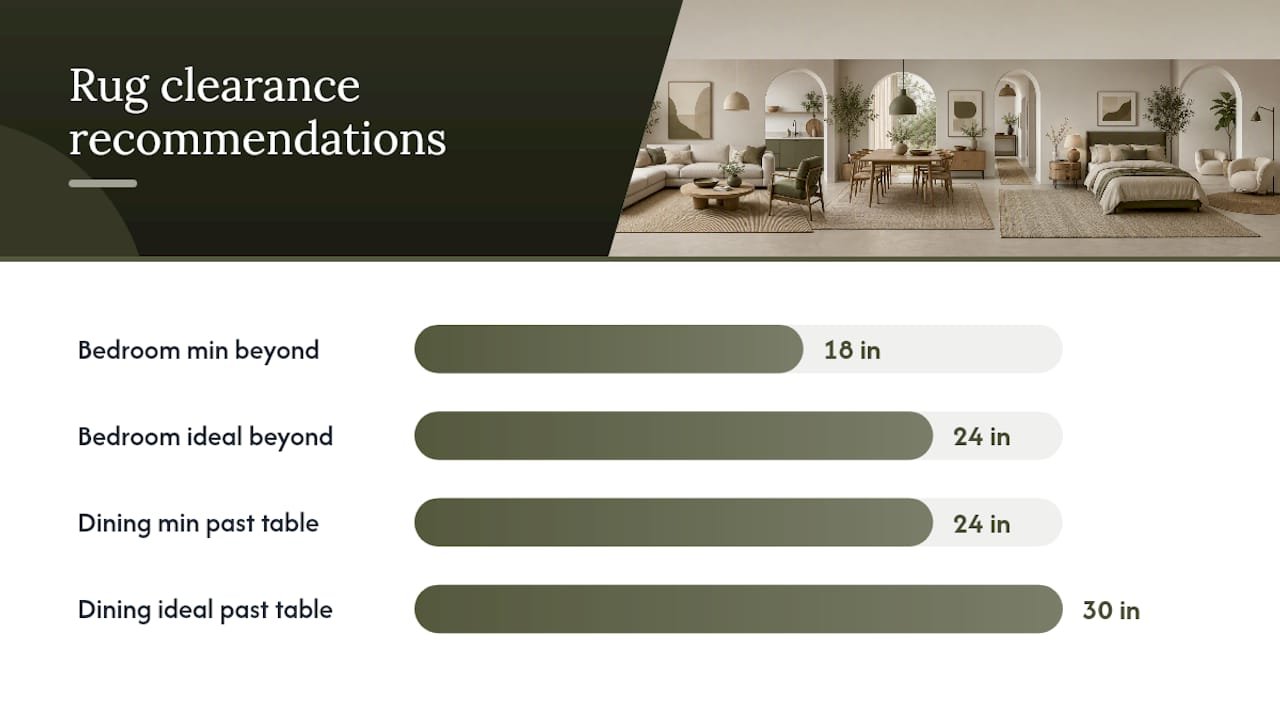
The Rugsonlinemarket size guide covers these rules with diagrams and room-specific examples worth bookmarking before you order.
Measurement checklist before you shop:
- Measure the furniture footprint — length and width of the seating group or bed, not just the room
- Add the clearance you want on each side (18–24 inches for bedrooms, 24 inches for dining)
- Check doorway clearance — a thick pile rug can prevent doors from opening
- Mark the rug’s footprint on the floor with painter’s tape to visualize scale before committing
- Confirm the rug size against the room’s traffic paths so you’re not creating a trip hazard at the edges
How to layer rugs for texture, warmth, and visual interest
Layering is one of the most effective neutral rug ideas for adding depth without adding color. The technique works in almost every room and at almost every budget.
- Choose a large natural-fiber base. A jute, sisal, or seagrass rug in a size that covers most of the floor area gives you the organic texture and warm neutral foundation. Keep it simple — no bold pattern.
- Select a smaller accent rug. Place it centered on the base, within the seating area or at the foot of the bed. A plush wool rug, a vintage-washed piece, or a low-contrast patterned rug works well here. The accent should be roughly half the size of the base.
- Check the scale. The accent rug’s edges should sit at least 12 inches inside the base rug’s edges on all sides. If they’re too close in size, the layering reads as a mistake rather than a choice.
- Anchor the composition. Use a non-slip rug pad under the base rug and rug tape between the base and accent to prevent shifting. This is especially important on hardwood floors.
Layering a jute or sisal base with a softer accent rug adds both texture and practical softness underfoot — the natural fiber gives you the look, the accent gives you the comfort. For practical layering rules by room, the Rugsonlinemarket layering guide is a useful reference.
Pro Tip: Mix pile heights deliberately. A low-pile jute base under a high-pile wool accent creates a tactile contrast that reads as intentional and designer-level, even on a modest budget.
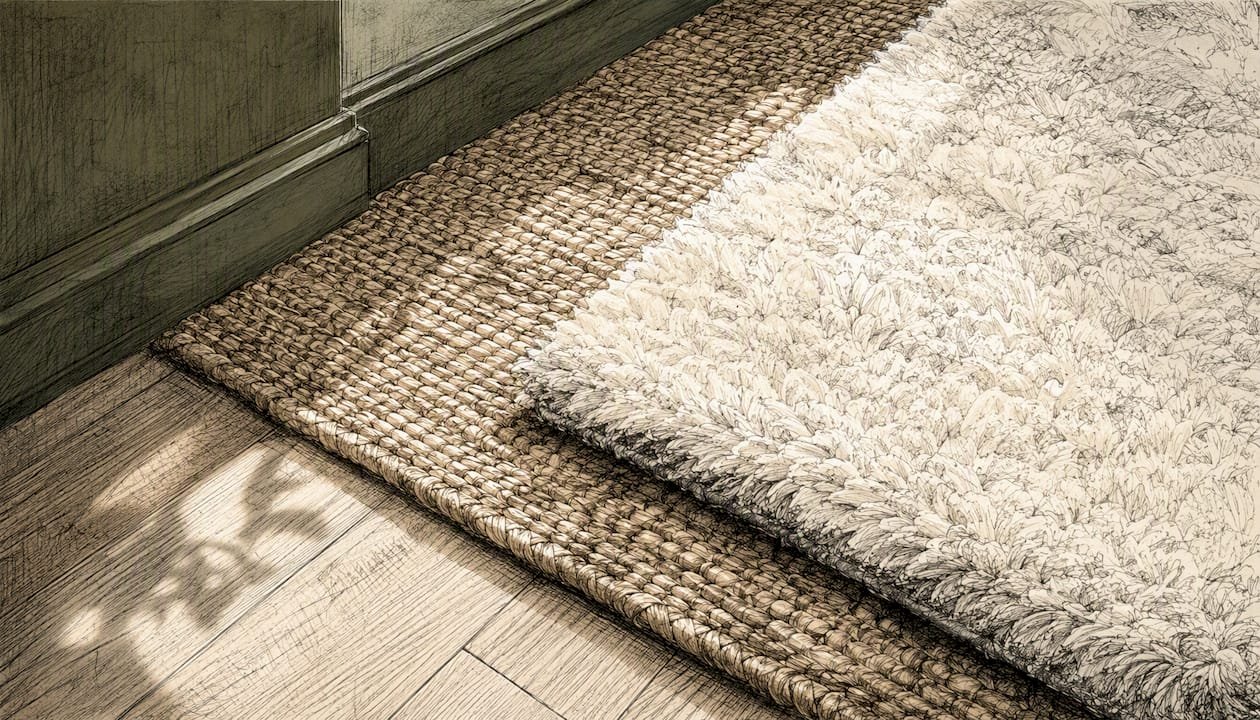
Avoid layering in very small rooms — two rugs in a tight space compete visually and make the room feel cluttered. In entries, a single durable rug is almost always the cleaner choice.
How to keep neutral rugs looking fresh
Neutral rugs show less than you’d expect, but they do need a consistent routine to stay looking clean.
- Vacuum weekly on a low-suction setting for wool and natural fiber rugs. High suction can pull pile fibers loose over time. Flatweaves and synthetics tolerate stronger suction.
- Rotate the rug every 6 months to even out foot traffic and sun exposure. Uneven fading on a neutral rug is more visible than on a patterned one.
- Spot-clean immediately. Blot liquid spills with a clean cloth — never rub. For wool, use cold water and a mild detergent; hot water can shrink the pile. For polypropylene, most household cleaners are safe.
- Machine-wash washable rugs on a gentle cycle in cold water. Air-dry flat rather than in a dryer to prevent warping or shrinkage.
- Call a professional for deep stains on wool or silk, or for any rug over 8×10 that’s too large to handle safely at home.
Pro Tip: For natural fiber rugs like jute, avoid steam cleaning entirely. Moisture causes the fibers to swell, which can lead to mold or permanent warping. Dry methods only.
On safety: add an anti-slip rug pad under every rug, regardless of material. A pad with at least 1/4-inch thickness adds meaningful cushion and keeps the rug from shifting underfoot.
Neutral rug trends shaping 2026
The direction in 2026 is clear: warm over cool, texture over pattern, and function alongside form.
- Warm neutrals are dominant. Greige, warm beige, and tan are outpacing stark cool grays in both search interest and retail sales. Rooms built around warm neutrals feel livable and calm rather than clinical.
- Textured, tone-on-tone designs continue to lead. High-low pile, boucle, and carved geometrics in a single neutral colorway are the go-to for designers who want depth without visual noise.
- Washable neutrals are a fast-growing category. Busy households want the look of a natural-fiber or wool rug with the practicality of machine-washable construction.
- Vintage-washed and distressed neutrals are popular for layered looks. A slightly faded, worn-in beige or ivory rug reads as collected and personal rather than catalog-fresh.
- Small-scale checks and simple lines in tone-on-tone neutrals are appearing in both traditional and contemporary rooms as a low-commitment way to add pattern.
For a broader look at where 2026 interior design trends are heading, including placement and style direction, that’s worth a read before you finalize your choice.
Where to buy neutral rugs and what to expect at each price point
Budget shapes what’s realistic, but the right strategy at each tier is different.
- Under $200: Polypropylene and cotton flatweaves dominate this range. You get good stain resistance and decent pattern options, but pile density and longevity are limited. The practical upside: quality neutral rugs under $500 let you swap styles more often as your room evolves without a painful financial commitment.
- $200–$800: The mid-range opens up wool blends, better natural fiber options, and more refined construction. This is where most homeowners find the best balance of quality and value for living rooms and bedrooms.
- $800 and up: Hand-knotted wool, silk accents, and premium natural fibers. These rugs are investments — they last decades and often improve with age. For best luxury rugs at this tier, look for hand-knotted construction and natural dyes.
Shopping checklist before you order:
- Measure the room and furniture footprint (tape on the floor helps)
- Order a swatch or sample if the retailer offers one — undertone is hard to judge from a screen
- Check the return policy before purchasing, especially for large rugs
- Confirm whether the rug needs a pad (flatweaves almost always do)
- Ask about pile height if you have pets — loops can catch on claws
The case for mixing budget and investment pieces
The best-looking rooms rarely have every rug at the same price point. A high-quality wool rug in the living room and a washable polypropylene runner in the hallway is a smarter allocation than spending evenly across every space. Prioritize investment where you spend the most time and where the rug takes the most visual weight. Kian
Rugsonlinemarket has the neutral rug for your room
Finding a neutral rug that works for your specific room, lifestyle, and budget shouldn’t require hours of scrolling through options that don’t quite fit.

Rugsonlinemarket carries natural fiber rugs, washable options, runners, and premium wool and silk pieces across every price point covered in this guide. Free shipping on orders over $300, a 30-day return policy, and a practical size and placement guide make it straightforward to order with confidence. Browse the neutral collections, use the size guide before you add to cart, and take advantage of the return window if the undertone doesn’t read the way you expected in your room.
Sources
- The 10 Best Area Rugs of 2026 | Reviews by Wirecutter
- How to Select the Perfect Neutral Rug for Any Room – At Home With The Barkers
- 18 Neutral Rug Ideas for a Calm Home
- The Best Neutral Rugs Under $500 — The Altered Abode
