



















Before you click “add to cart,” confirm four things: the exact measured size against your taped-out floor plan, the material breakdown by percentage, a back-of-rug photo or video proving the construction, and a return policy that spells out who pays freight on oversize items. Get those four right and you eliminate almost every reason online rug orders get returned. Rugs Online Market builds its listings around this exact checklist, which is worth knowing before you shop anywhere else.
TL;DR:
- Always verify the exact measurements by outlining the rug on your floor with painter’s tape before purchasing, since sizing errors are the most common cause of returns.
- Request detailed material percentages and a back-of-rug photo to confirm construction type, especially to avoid scams involving mislabeling machine-made rugs as handmade.
- Check the shipping and return policies carefully; large rugs often ship freight and may incur high costs for returns if not explicitly covered or clarified beforehand.
- Use multiple photos, videos, and customer-uploaded images to accurately assess the rug’s color, texture, and quality, avoiding reliance on staged seller images.
- Prioritize trusted sellers with clear, detailed listings, verified reviews, and prompt communication to reduce the risk of misunderstandings or receiving a product that doesn’t meet expectations.
Table of Contents
- Fast Checklist: What to Verify Before You Buy Online
- How Do You Pick the Right Rug Size for Each Room?
- Which Rug Material Performs Best for Your Home?
- How Do You Verify a Rug’s Construction Type Online?
- How Do You Check Color and Texture Before Buying?
- What Should You Check in Shipping and Return Policies?
- How Do You Care for a Rug After It Arrives?
- How Do You Spot a Trustworthy Rug Seller?
- How Rugs Online Market Reduces Risk for Online Buyers
- What I’ve Learned Buying Rugs Online
- Ready to Shop With Confidence?
- Sources
- FAQ
Fast Checklist: What to Verify Before You Buy Online
Buying a rug online without a showroom to walk through means you have to do the verification work yourself, before checkout, not after the box arrives. Here’s the shortlist that catches almost every problem before it becomes a return shipment.
- Exact measured dimensions. Get the real size in inches, not just “8×10,” and run painter’s tape on your floor to outline it before you order.
- Material composition by percentage. A listing that says “wool blend” without numbers is hiding something. Ask for the split (e.g., 80% wool, 20% cotton).
- Pile height and construction type. Low pile sheds less and vacuums easier; high pile feels plush but traps more debris.
- Back-of-rug photo or video. This single image tells you more about how the rug was made than the entire product description.
- Return policy specifics. Confirm who covers freight on returns for large rugs, whether restocking fees apply, and whether oversize pieces are excluded from the standard return window.
- Rug pad plan. Decide before delivery day whether you need a felt-and-rubber pad, since bare hardwood and rugs without a pad slide and wrinkle fast.
Pro Tip: Screenshot the listing’s measurements and material percentages before you buy. Sellers occasionally update or “correct” product pages after a wave of returns, and you want a record of what you actually ordered.
How Do You Pick the Right Rug Size for Each Room?
Wrong size is the single most common reason rugs get returned, and it’s entirely avoidable with a $5 roll of painter’s tape.
- Outline it on the floor first. Tape the exact dimensions of the rug you’re considering directly onto your floor. Walk the space for a day. If you’re stepping over the tape line or a chair catches the edge, size up.
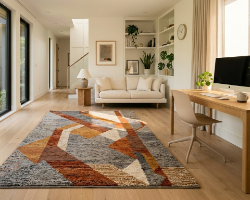
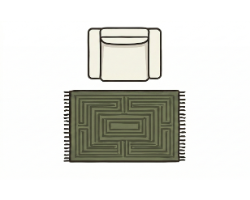
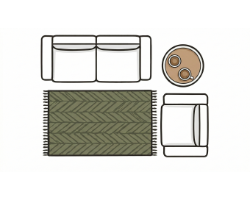
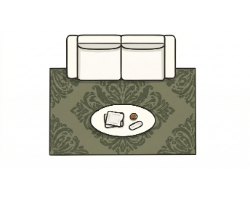
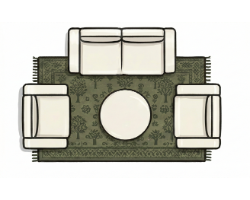
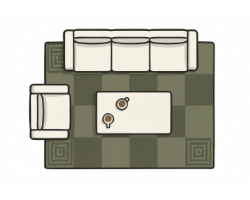
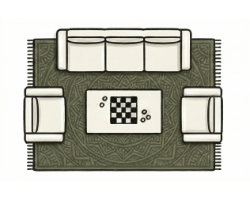
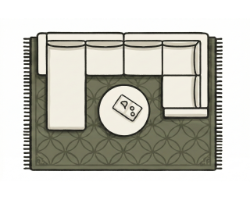
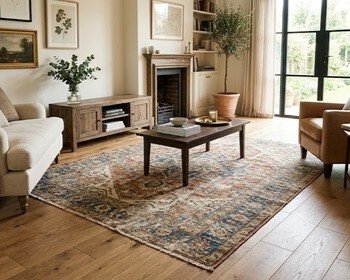
- Living rooms: the front legs of your sofa and chairs should sit on the rug, not float off it. A rug that only fits under a coffee table looks like a doormat in a big room. When you’re between two sizes, go with the larger one; oversized reads intentional, undersized reads like a mistake, and larger rugs anchor a room better than undersized ones.
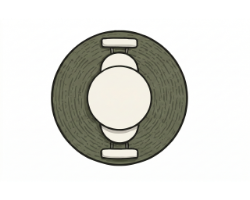
- Dining rooms: add roughly 24 inches beyond the table edge on all sides so chairs stay on the rug even when pulled out mid-meal. A 6-foot table typically needs at least a 9×12 to avoid chair legs catching the rug’s edge.
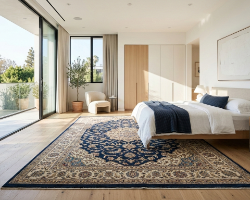
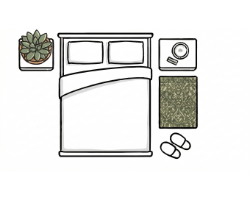
- Bedrooms: for a queen or king bed, either run one large rug two thirds under the bed with the rest exposed at the foot, or flank the bed with two runners on each side. Both work; pick based on how much floor you want visible.
Sizing decisions also affect what you pay to ship back if something’s wrong. A 5×8 mistake ships back in a parcel box; a 9×12 wool rug often ships freight, and that changes your return math entirely. Check rug size charts or a room-specific placement guide before you finalize a size, and if bedrooms are your focus, a dedicated bedroom placement guide walks through both layout options in detail.
Which Rug Material Performs Best for Your Home?
Material choice is where most buyers either save money smartly or waste it fast. The fiber you pick determines how the rug feels underfoot, how it hides dirt, and how many years you’ll actually get out of it.
- Wool: the workhorse of natural fibers. It resists soiling because dirt sits on top of the fiber rather than absorbing in, and a well-made wool rug can last decades with basic care, though it costs more upfront and needs occasional professional cleaning.
- Silk: gorgeous sheen, delicate hand, and a price tag to match. Best kept to low-traffic formal spaces, not entryways or playrooms.
- Cotton: breathable and easy to wash, common in flatweaves and kilims, but it flattens and wears faster under heavy foot traffic than wool.
- Polypropylene and polyester: budget-friendly synthetics that clean up easily and resist stains, though they generally wear out faster than natural fiber equivalents and can feel synthetic underfoot.
- Viscose: looks and feels luxurious but scratches and stains easily. Skip it for high-traffic rooms entirely.
Wool holds up over years while synthetics trade longevity for easier cleanup and a lower price point, and that trade-off should drive your decision more than color or pattern.
Pile height matters as much as fiber. High pile feels plush and forgiving on bare feet but holds more dust and takes longer to vacuum. Low pile and flatweaves are far easier to maintain and work better under furniture that gets shifted often.
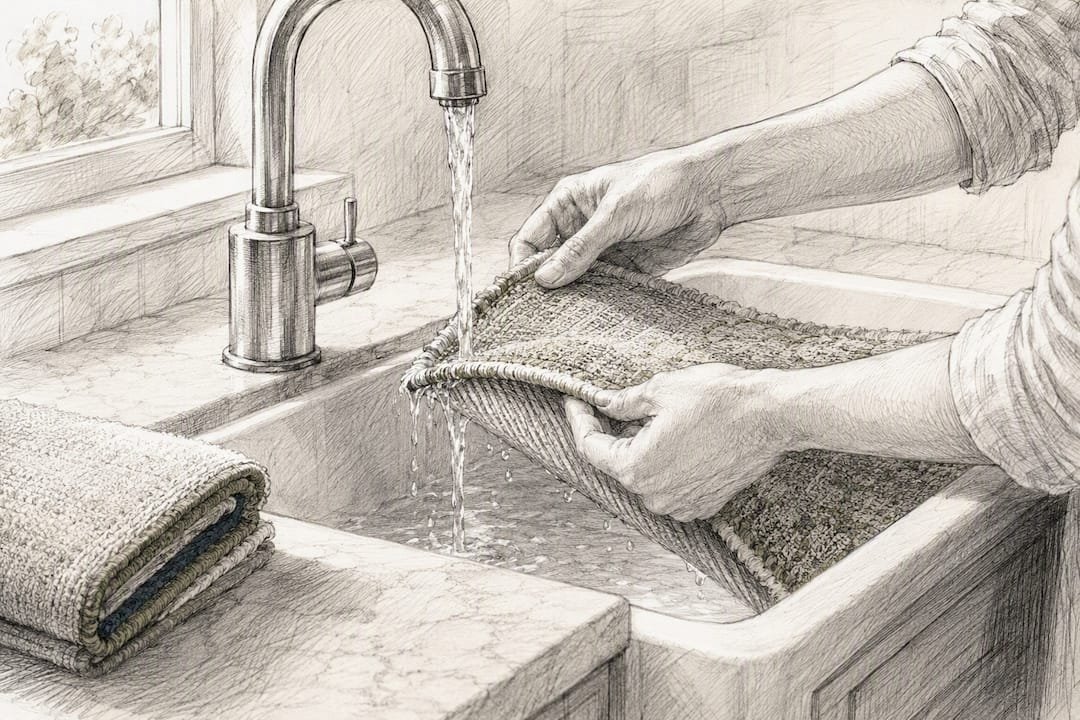
If you have kids, pets, or a rental where spills are inevitable, washable rugs provide an easy-clean option for high-mess households, even though they tend to run thinner and less plush than a traditional wool piece. For outdoor spaces or pet-heavy homes, pairing the right rug material with pet-friendly flooring choices makes the whole room more forgiving. Rugs Online Market’s natural rug collection is a solid starting point if longevity is your priority.
How Do You Verify a Rug’s Construction Type Online?
Construction type drives both price and durability, and it’s the detail sellers most often gloss over. Four types dominate the market: hand-knotted, hand-tufted, flatweave, and machine-made. Each has a distinct signature you can spot from photos if the seller gives you the right angle.
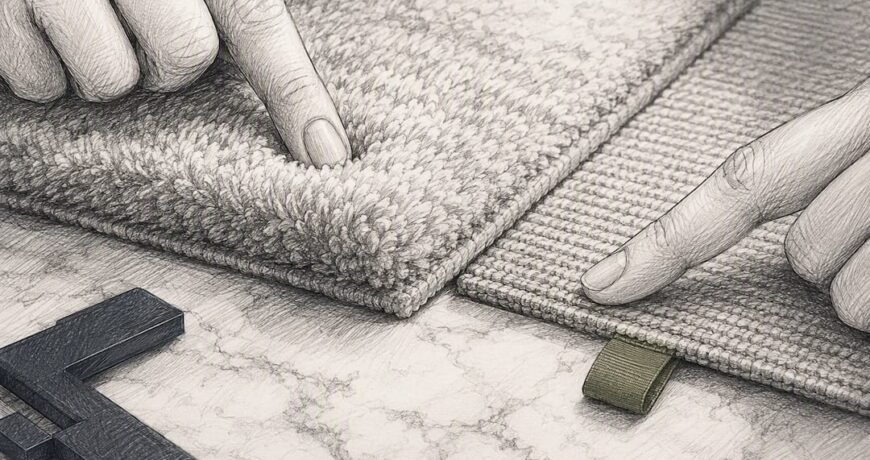
- Hand-knotted: the back shows individual knots, and the pattern on the back nearly mirrors the front. This is the most durable and most expensive construction, and it’s the one buyers get scammed on most often when sellers mislabel machine-made pieces as “handmade.”
- Hand-tufted: the back shows a plain cloth or latex backing rather than visible knots. Still handmade in the sense that a person operated the tufting gun, but it’s less durable than knotted construction and shouldn’t command knotted-rug prices.
- Flatweave (kilim, dhurrie): no pile at all, reversible, lightweight, and typically the most affordable handmade option.
- Machine-made: consistent, affordable, and often indistinguishable from handmade at a glance from the front. The back always gives it away with a uniform woven or synthetic backing.
A visible back photo showing individual knots confirms hand-knotted construction, while a plain cloth or latex backing usually signals tufted or machine-made work. Ask for that photo before you buy anything described as “handmade” or “hand-knotted.” A high-resolution back-of-rug image is the strongest remote verification tool available since a legitimate hand-knotted rug reflects its front pattern almost as clearly on the reverse.
Two more authenticity checks: warp fringe (fringe woven directly from the rug’s foundation) indicates genuine handmade construction, while sewn-on fringe attached afterward is a common sign of a machine-made piece dressed up to look handmade. And don’t be alarmed by small irregularities in pattern or color, called abrash. In hand-knotted rugs, that’s a feature, not a flaw. Perfect, uniform color across a “handmade” rug is actually more suspicious than a little variation.
How Do You Check Color and Texture Before Buying?
Screens lie about color constantly, and staged photography makes every rug look better than it will in your living room. A few extra requests before checkout close most of that gap.
- Ask for multiple photos in different lighting, including at least one shot in natural daylight, not just the studio-lit hero image.
- Request a close-up of the pile and edges so you can see texture and finishing quality, not just the overall pattern from ten feet away.
- Ask for a short video pan. Video reveals nap direction and true sheen in a way static photos simply can’t, since pile rugs shift color depending on which way the fibers lean.
- Request a sample swatch on anything expensive or oversized. A $2,000 rug deserves a $10 swatch check before you commit.
- Cross-reference user photos. Photos uploaded by actual buyers in reviews are the strongest indicator of real-world color and scale, far more reliable than the seller’s own staged shots.
Pro Tip: If a listing has zero customer photos after being live for months, treat that as a small warning sign. Popular, well-reviewed rugs almost always accumulate buyer photos over time.
What Should You Check in Shipping and Return Policies?
This is where online rug buying tips matter most, because the fine print here is where money actually gets lost. Weight and dimensions determine how a rug ships. Small rugs go by standard parcel, larger wool or jute rugs often go freight, and premium pieces sometimes arrive white-glove with in-home placement.
- Read the return policy for freight exclusions specifically. Advertised “free shipping” frequently excludes the return leg on heavy items, and return freight on a large rug can run into the hundreds of dollars even when the outbound shipping was free.
- Ask whether restocking fees apply, especially on oversized or custom-cut rugs.
- Get an explicit return plan for oversize pieces before you buy, not after. Message the seller and ask directly: “If this doesn’t work, who pays to send it back?”
- Consider white-glove delivery for large, heavy rugs. Having someone place the rug and haul away the packaging is often worth the added cost versus wrestling a 60-pound roll up your stairs alone.
How Do You Care for a Rug After It Arrives?
A rug is a long-term purchase, and how you treat it in the first month sets the tone for the next decade.
- Vacuum according to pile height. Low-pile and flatweave rugs can handle regular vacuuming; high-pile wool rugs need a gentler setting with the beater bar off to avoid pulling fibers.
- Expect initial wool shedding. New wool rugs shed loose fibers for the first few weeks. That’s normal, not a defect, and it tapers off with regular vacuuming.
- Spot-clean immediately, professionally clean periodically. Blot spills right away; for wool and silk, call a professional cleaner rather than renting a carpet machine, which can push stains deeper into natural fibers.
- Choose the right rug pad. A felt-and-rubber combination pad protects floors, stops slipping, and helps the rug hold its shape, typically in a 1/4-inch profile for most area rugs.
- Let it settle after delivery. Unroll a new rug and let it lie flat for 24 to 48 hours to work out shipping creases before you walk on it heavily or set furniture back down.
How Do You Spot a Trustworthy Rug Seller?
Vetting a seller takes about five minutes and saves you weeks of return-shipping headaches. Here’s the exact workflow.
- Check the listing for the non-negotiables: material percentages, construction type, a back-of-rug photo, measured dimensions in inches, and a plainly written returns and freight policy.
- Scan for red flags. No back-of-rug photo on a “handmade” listing, vague material descriptions like “premium fibers,” a “free shipping” banner with fine print excluding heavy items, or wildly inconsistent photos across the same listing are all reasons to pause.
- Read reviews with a filter. Prioritize verified purchases with uploaded photos over star ratings alone, and watch for repeated complaints about the same issue, whether that’s color mismatch or return hassles. Online-first sellers with documented measurements and clear shipping terms can actually be a safer buy than a showroom purchase, precisely because everything is in writing.
- Message support before ordering. Ask directly: “What’s the exact material percentage breakdown?” “Can you send a back-of-rug photo?” “Who pays return freight if this doesn’t fit my space?” A seller that answers fast and specifically is one you can trust with a large order.
How Rugs Online Market Reduces Risk for Online Buyers
Every checkpoint above maps directly to a policy Rugs Online Market already has in place. Orders over $300 ship free, which covers the freight question upfront on most mid-size and large rugs rather than leaving it buried in fine print.
- Free shipping over $300 removes the guesswork on freight costs for larger rug purchases.
- 30-day hassle-free returns give you real time to test a rug in your actual space, not just in a photo.
- 100% feedback guarantee backs the purchase if something doesn’t match expectations.
- Educational sizing and placement guides help you nail the measurement step before you ever add to cart.
If you’re still narrowing downsize, the rug size chart is the fastest way to confirm dimensions before requesting a sample. For material-first shoppers, the natural rugs category filters straight to wool, silk, and cotton options.
What I’ve Learned Buying Rugs Online
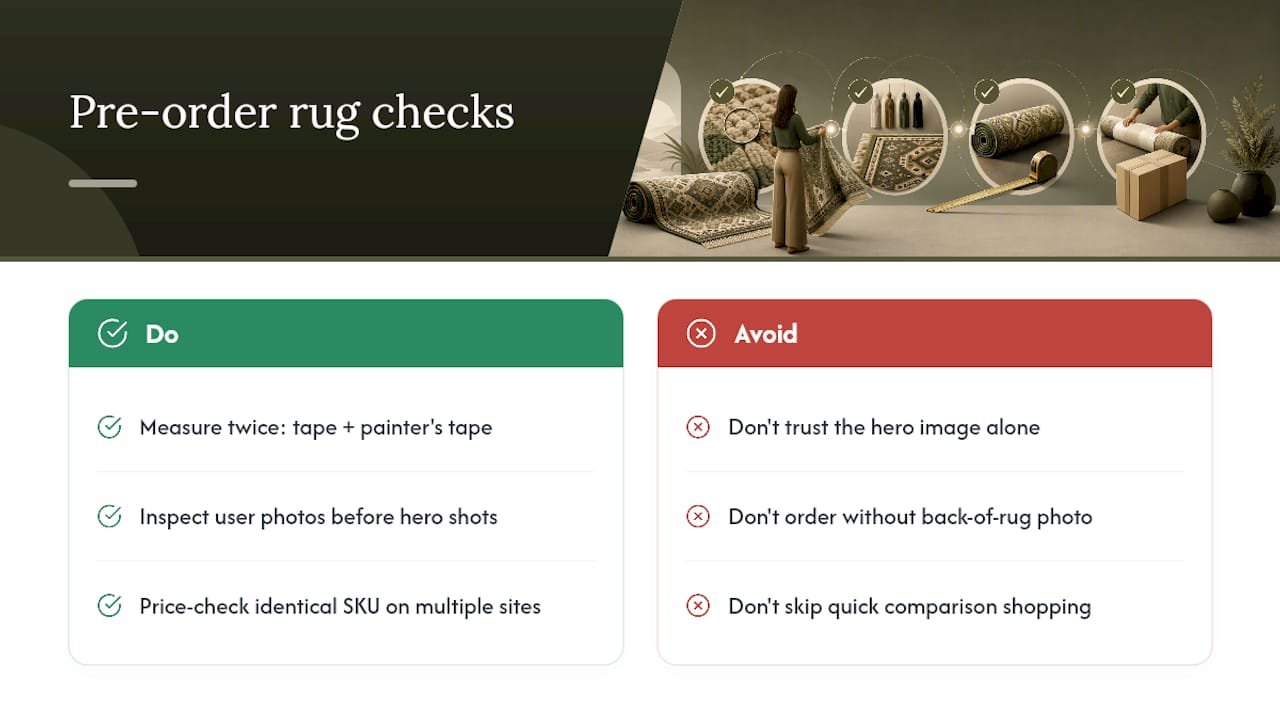
Three habits catch almost every mistake before it happens. First, measure twice: once with a tape measure, once with painter’s tape actually outlining the space, because a number on a screen and a shape on your floor read completely differently. Second, always dig into user photos before the hero image. Sellers pick the best lighting for their own shots; buyers just show you the truth. Third, price-check the identical SKU across a couple of sites before committing. The same rug construction and material blend sometimes shows up under different names at wildly different prices, and five minutes of comparison shopping has saved me from overpaying more than once.
The biggest lesson: a rug that looks perfect in a photo but arrives without a back-of-rug image to back it up is a rug you should have questioned before ordering, not after.
— Kian
Ready to Shop With Confidence?
Every check in this guide, from material percentages to return freight terms, is something Rugs Online Market puts in writing before you buy, not something you have to dig for after the fact. That transparency is the real advantage over sellers who make you guess. Free shipping applies automatically on orders over $300, and every purchase carries a 30-day return window if the size, color, or feel isn’t quite right in your space.
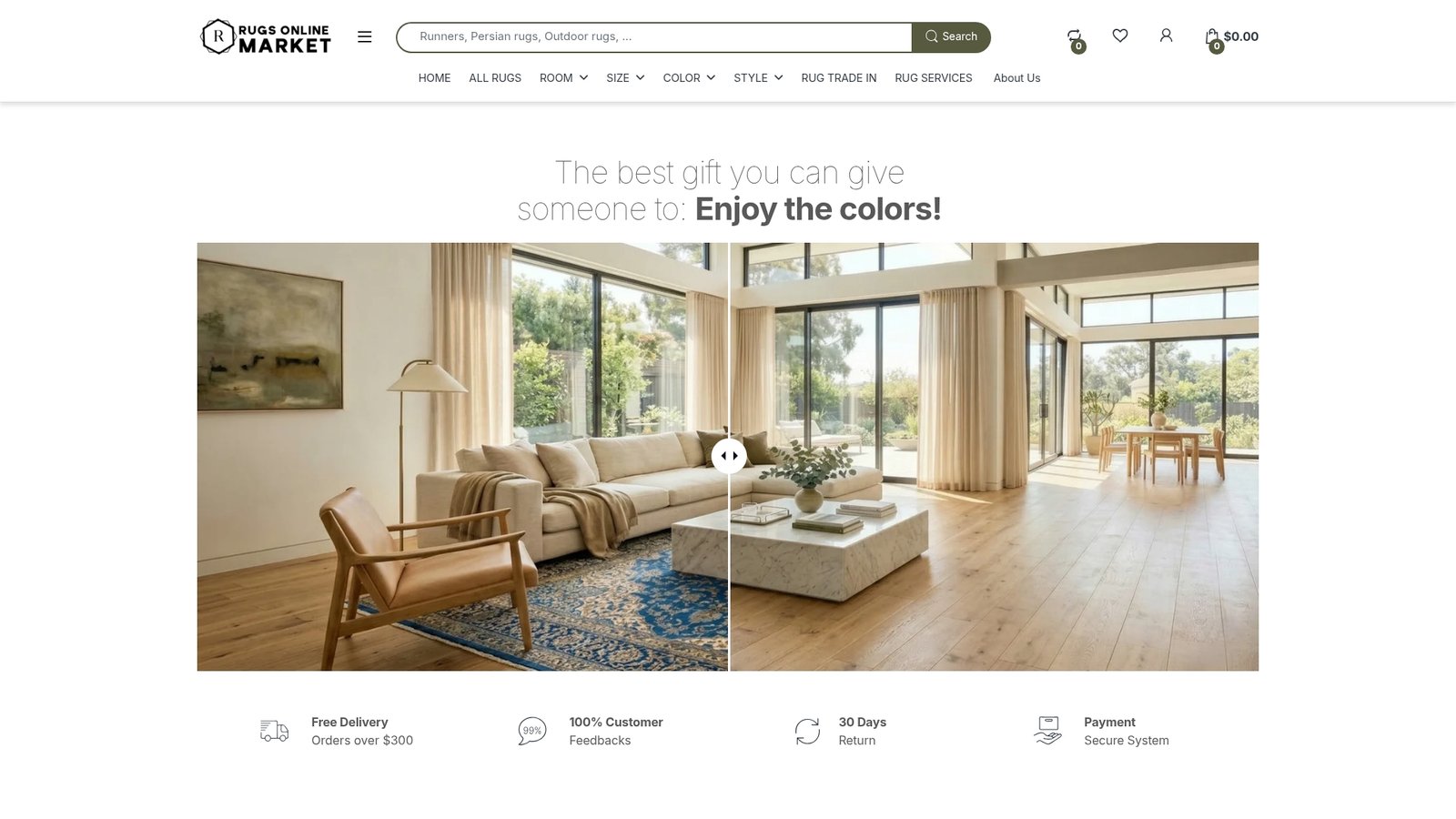
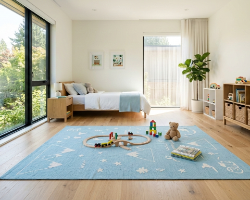
If you’re outfitting a small entryway or hallway, start with the 3×5 area rug collection. Shopping for a playroom or a kid’s bedroom, the kids room rugs category is stocked with washable, easy-clean options built for spills. And if you want to see exactly how a washable rug compares to traditional wool before you decide, the washable rugs guide walks through the trade-offs in plain terms. Pick your size, check the material breakdown on the product page, and order with the return window backing you up.
Sources
- How to Buy an Authentic Handmade Rug Online Without Getting Burned | RugIndustry
- How to Buy a Rug: Expert Guide to Sizes, Styles, Shapes and Stores | Apartment Therapy
- The Expert-Approved Guide to Buying a Rug You’ll Love for Every Single Room | House Beautiful
- My Complete Rug Sourcing Guide – Jenna Sue Design
FAQ
What Is the Best Website to Buy Rugs Online?
The best sites are the ones that publish full measurements, material percentages, back-of-rug photos, and clear freight-inclusive return policies. Rugs Online Market covers all four, along with free shipping over $300 and a 30-day return window.
What Should You Look Out for When Buying a Rug?
Verify exact dimensions against a taped-out floor outline, confirm material percentages rather than vague descriptions, request a back-of-rug photo to check construction, and read the return policy for freight exclusions on oversize items.
What Is the Rule of Thumb for Rug Size?
When you’re between two sizes, choose the larger one, since oversized rugs anchor a room better than undersized ones. For dining rooms, add about 24 inches beyond the table edge on all sides to keep chairs on the rug when pulled out.
What Should You Avoid When Buying an Area Rug?
Avoid listings with no back-of-rug photo on “handmade” pieces, vague material descriptions like “premium blend” with no percentages, and any “free shipping” offer that excludes return freight on heavy items in the fine print.
Do I Need a Rug Pad for Every Rug?
Yes, on hard flooring, a felt-and-rubber pad prevents slipping and helps the rug hold its shape over time, and a 1/4-inch profile works for most standard area rugs.
