









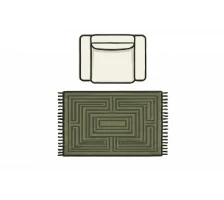





















Choose low-pile, tightly woven rugs that are thin and have a secure backing with no long fringe. That combination clears the most robots without stalling, tangling, or getting dragged across the floor. Before you buy or keep an old favorite, secure loose edges, swap any thick pad for a low-profile one, and run a short mapping test to confirm the robot handles it cleanly.
TL;DR:
- Use rugs with a pile height under 12 millimeters and avoid long fringe or shag to ensure the robot stays traction and sensor readings are accurate.
- Opt for low-pile polypropylene or flatweave materials with a matte, mid-tone color to prevent sensor confusion from reflective or dark surfaces.
- Replace thick rubber or foam pads with thin felt or latex ones and secure loose edges to minimize the risk of catching or stalling during cleaning cycles.
- Perform a short mapping test to confirm the robot climbs and navigates the rug smoothly, adjusting corners, fringe, or the pad if issues arise.
- Prioritize construction and backing accuracy when buying new rugs, as these factors are critical to maintaining robot compatibility and avoiding frequent troubleshooting.
Table of Contents
- What Makes a Rug Robot-Friendly: Pile, Fiber, Backing, and Color
- Choosing the Right Rug by Room and Use
- Fixing Edges, Fringe, and Pads Before They Cause Problems
- Maintenance That Actually Pairs With a Robot Vacuum
- The 5-Step Test to Confirm Your Rug Works With Your Robot
- Why Rugs Online Market Understands This Better Than Most Retailers
- What the Research Actually Supports (And Where Common Advice Falls Short)
- Shop Robot-Friendly Rugs at Rugs Online Market
- Sources
- FAQ
What Makes a Rug Robot-Friendly: Pile, Fiber, Backing, and Color
Pile height decides most of the outcome. Rugs under roughly 12 millimeters let the brushroll keep contact with the floor while still clearing dirt, and robots generally climb onto them without losing traction. Go much higher than that and you’re asking a machine built for hard floors to do something it wasn’t designed for.
Fiber matters just as much as height. Low-pile polypropylene and flatweave constructions behave predictably because the fibers stay put and reflect light consistently, which keeps optical and LiDAR sensors reading the floor correctly. Loose wool loops, shag, and anything with long strands invite trouble. Shag rugs and long fringe are the single most common cause of brushroll tangles and mid-cycle stalls.
Backing and pad choice can undo an otherwise good rug. A thick rubber or foam pad raises the effective pile height enough to confuse the same robot that would have handled the rug fine on its own.
- Choose low-pile flatweave, polypropylene, or short-cut wool.
- Skip shag, long-loop wool, and rugs with metallic or sequined thread.
- Use a thin felt or 2 to 3 millimeter latex pad, not a cushioned one.
- Avoid pure black or near-black rugs where possible.
That last point isn’t cosmetic advice. Very dark or pure black rugs can trigger a robot’s cliff or drop sensor, which reads the dark surface as a ledge and steers around it entirely. Metallic threads and sequins cause a similar problem by throwing off specular reflections that spike sensor readings. Mid-tone neutrals with a matte finish are the safest bet.
Choosing the Right Rug by Room and Use
Not every room needs the same rug, and matching the construction to the space saves you from redoing the work later.
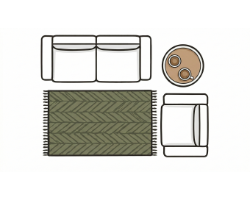
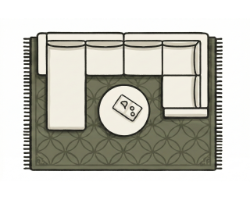
- Living room: A flatweave or low-pile wool in a medium size works well and still feels intentional underfoot.
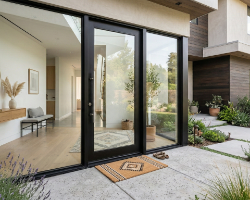
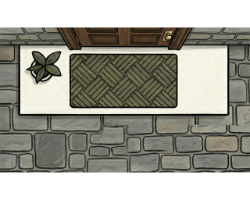
- Entryway or hallway: Stick to thin, durable flatweaves. High-traffic zones near doors take the most grit, and a low profile keeps the robot from struggling on its way through.
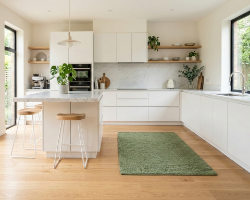
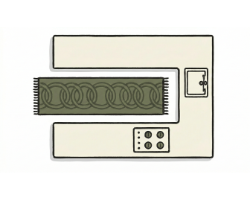
- Kitchen: Washable, low-pile rugs handle spills without trapping moisture against a robot’s path.
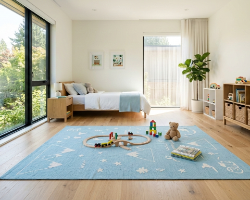
- Kids’ rooms and pet areas: Durable, washable constructions matter more than plush comfort here, since these rooms generate the most hair, crumbs, and spills for the robot to manage.
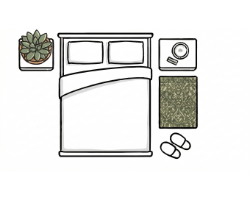
If you want plush underfoot in a bedroom or reading nook, it’s fine to prioritize comfort there and let the robot skip that room with a scheduled no-go zone instead of forcing compatibility everywhere. For pet households specifically, our guide to pet-friendly rugs covers constructions that resist shedding buildup better than average wool piles.
Fixing Edges, Fringe, and Pads Before They Cause Problems
Most robot-vacuum complaints trace back to three fixable things: loose edges, decorative fringe, and the wrong pad. Here’s the order to tackle them in.
- Anchor the corners. Adhesive grippers or a strip of double-sided rug tape at each corner stops the edge from lifting when the side brush passes over it.
- Trim or tuck fringe. Long fringe and tassels are brushroll magnets. Tuck them under the rug’s edge or trim them short if the style allows it.
- Swap the pad. Replace a thick rubber or foam pad with a thin felt or 2 to 3 millimeter latex gripper to lower the rug’s effective height and keep grip on hard flooring.
- Level the transitions. Low-rise threshold strips prevent wheel slip where a rug edge meets tile or hardwood.
- Set a no-go line. If a rug still causes trouble after those fixes, use the app’s virtual boundary feature to keep the robot off it rather than fighting the geometry every cycle.
Pro Tip: Corner grippers cost less than a service call after a jammed brushroll, and they take under five minutes to install per rug. For slipping issues on hard floors specifically, this guide to stopping rug slippage walks through anchor options by floor type.
Maintenance That Actually Pairs With a Robot Vacuum
A robot handles daily upkeep, but it isn’t a replacement for occasional deeper cleaning. For most households, running the robot on a rug several times a week on a standard suction setting keeps surface dirt down without excessive wear on the fibers.
- Shake out or spot-clean rugs monthly, especially in entryways and pet zones the robot passes over daily.
- Check the backing before any wet extraction. Power-loomed polypropylene and low-profile flatweaves dry faster and hold up better than jute or heavily absorbent natural backings under wet-dry cleaning.
- Clean the robot’s brushes and wheels weekly if you have pets. Buildup there causes as much rug damage as the wrong rug construction does.
- For washable two-piece rugs, user reports consistently point to bunching and edge lift under strong suction unless the pieces are well anchored, so check the edges after the first few robot passes.
The 5-Step Test to Confirm Your Rug Works With Your Robot
Before assuming a rug will or won’t work, run this test. It takes less time than reading the rug’s care tag.
- Place the rug in its final spot with the pad already underneath.
- Run a short mapping pass and watch the robot approach the rug’s edge.
- Observe behavior: does it climb on smoothly, avoid it entirely, or hesitate at the border?
- Modify one variable at a time. Add a corner gripper, trim fringe, or swap the pad, then run the pass again.
- Re-test and decide. If problems persist after two rounds of fixes, set a no-go line instead of continuing to adjust the rug.
Watch specifically for cliff avoidance (usually a color issue), repeated passes over the same spot (often a sensor confusion issue), or the robot stopping and beeping (typically a snag). A short mapping run is the fastest way to see whether a rug and pad combination will actually work in your specific layout, since no two homes have identical lighting or floor transitions.
Why Rugs Online Market Understands This Better Than Most Retailers
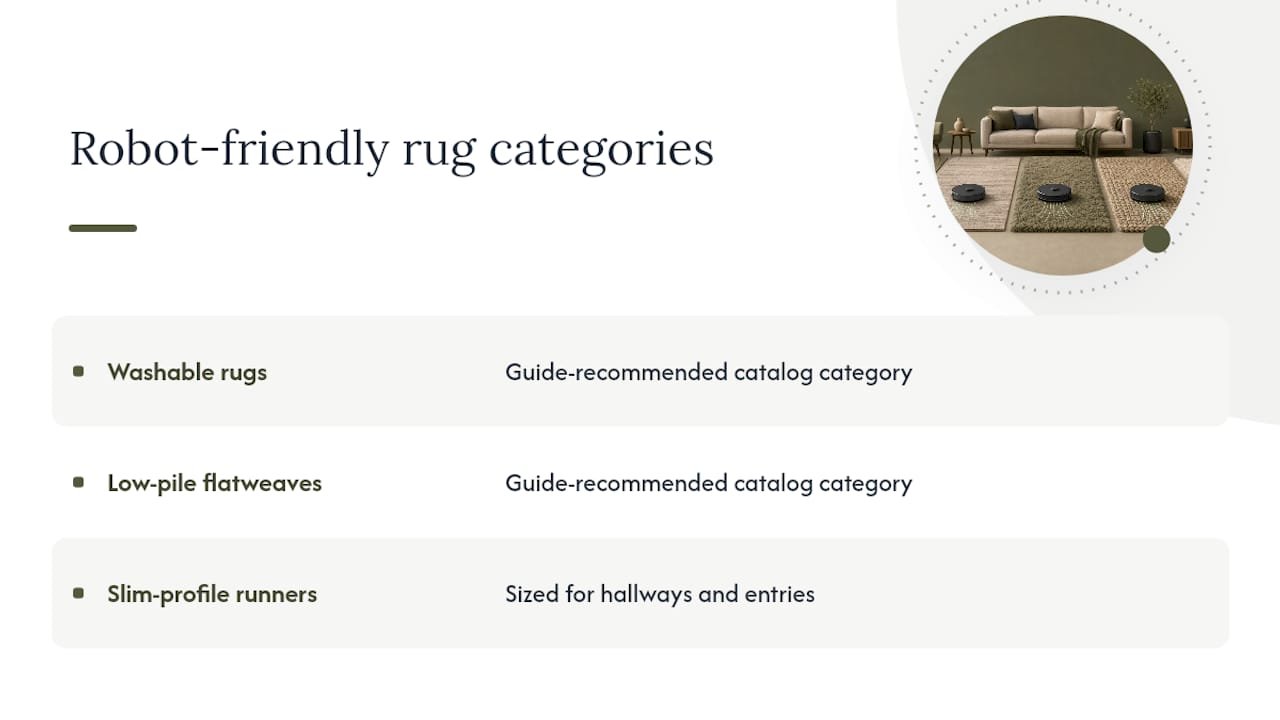
Robot-vacuum compatibility isn’t a niche concern anymore. It’s a standard question homeowners ask before buying any rug for a main living space, which is why Rugs Online Market’s catalog is organized around exactly the categories this guide recommends: washable rugs, low-pile flatweaves, and slim-profile runners sized for hallways and entries. This article is written by Kian, drawing on robot-vacuum manufacturer guidance and rug-construction research to translate technical sensor behavior into buying decisions homeowners can actually use.
What the Research Actually Supports (And Where Common Advice Falls Short)
Most rug-buying guides treat robot compatibility as an afterthought, a footnote after color and size. That’s backwards. Pile height and backing choice determine whether the robot works at all, and no amount of styling advice fixes a rug that traps a brushroll twice a week.
The overrated fix is the premium robot itself. Flagship models climb better and map faster, but even the strongest current vacuums still choke on deep shag and reflective threads. Spending more on the machine without fixing the rug is solving the wrong half of the problem.
What gets underrated is the pad. Homeowners obsess over pile height and fiber, then throw a thick cushioned pad underneath and wonder why the robot still struggles. The pad swap is the cheapest, fastest fix in this entire guide, and it’s the one people skip most often.
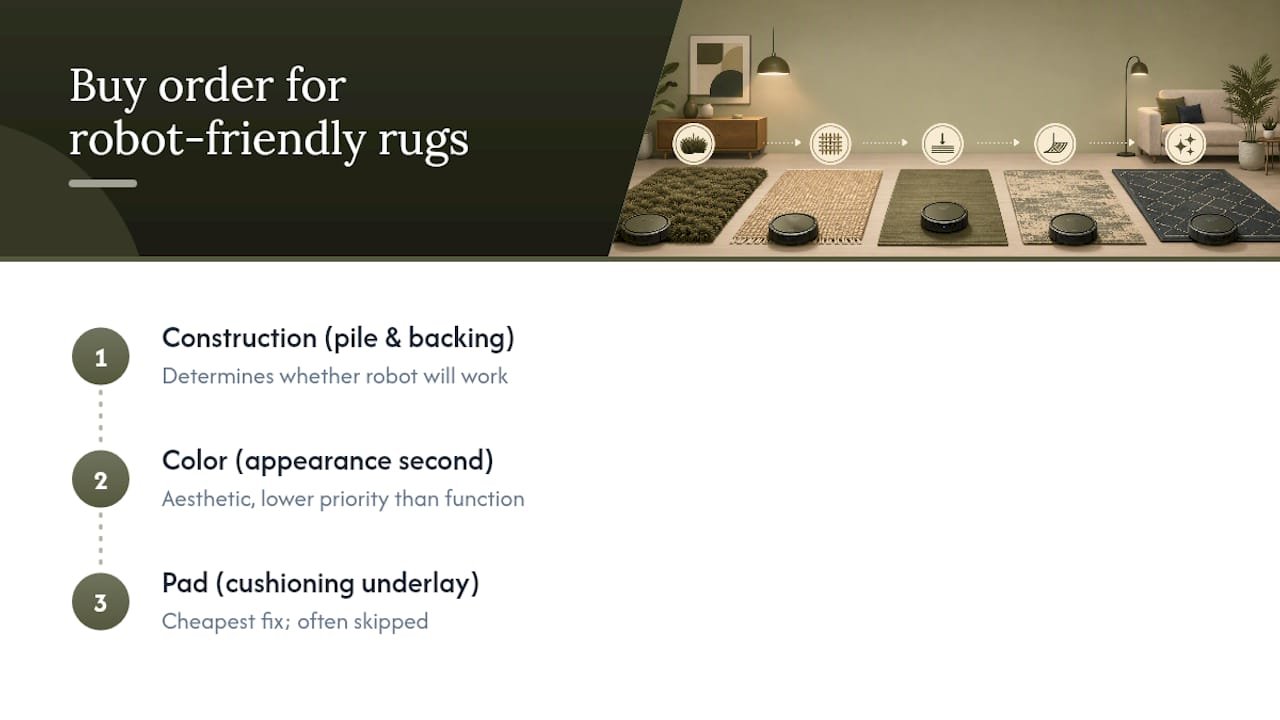
If you’re buying new, prioritize construction first, color second, and pad choice third, in that order. Fix those three and most rugs will cooperate with almost any robot on the market.
— Kian
Shop Robot-Friendly Rugs at Rugs Online Market
Skip the guesswork and shop by construction instead of style alone. Rugs Online Market’s 3×5 area rugs category is stocked with low-pile flatweaves sized right for living rooms and bedrooms, and the runner rugs collection covers hallways and entries where robots need the smoothest transition on and off the floor.

If washability is your priority, the washable rug options pair well with pets and kids’ rooms, since they combine low-pile durability with easy machine care between deeper cleanings. When you order, pick the thin felt or low-profile pad option at checkout rather than a cushioned one, and add corner grippers to your cart at the same time so the rug is anchored the day it arrives. Browse the 3×5 area rugs collection now and filter by low-pile construction to find a rug your robot will actually get along with.
Sources
- Rug materials that won’t confuse your robot vacuum sensors – MatForYou
- Do Robot Vacuums Work on Rugs — Ecovacs US blog
- Robot vacuum rugs: Do they work? Tips & best models — DreameTech blog
FAQ
Which rugs are compatible with Roomba?
Low-pile flatweaves, polypropylene rugs, and short-cut wool under about 12 millimeters generally work best with Roomba and similar robots, since they keep consistent contact with the brushroll and avoid sensor confusion.
Can robot vacuums go over thick rugs?
Most robots struggle above roughly 12 millimeters of pile, where traction drops and the brushroll can’t maintain consistent contact, so thick or plush rugs often cause stalling or complete avoidance.
Can robot vacuums go over rugs with fringe?
Fringe and tassels are a leading cause of brushroll tangles, so trimming or tucking them under the rug’s edge before running a robot is strongly recommended.
Will Roomba go over area rugs?
Yes, as long as the rug has a low, tight pile and a thin backing. Very dark rugs are the exception, since pure black surfaces can trigger the cliff sensor and cause the robot to avoid the rug entirely rather than clean it.
