



















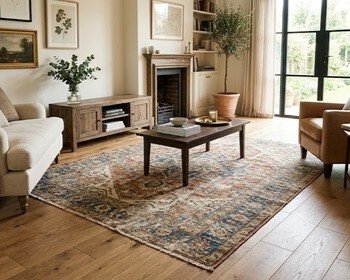
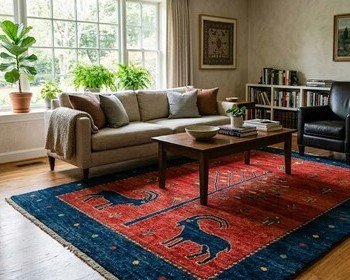


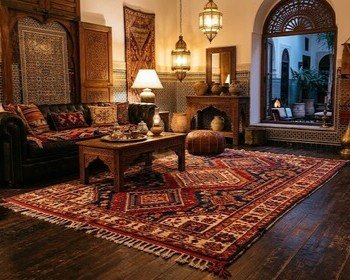



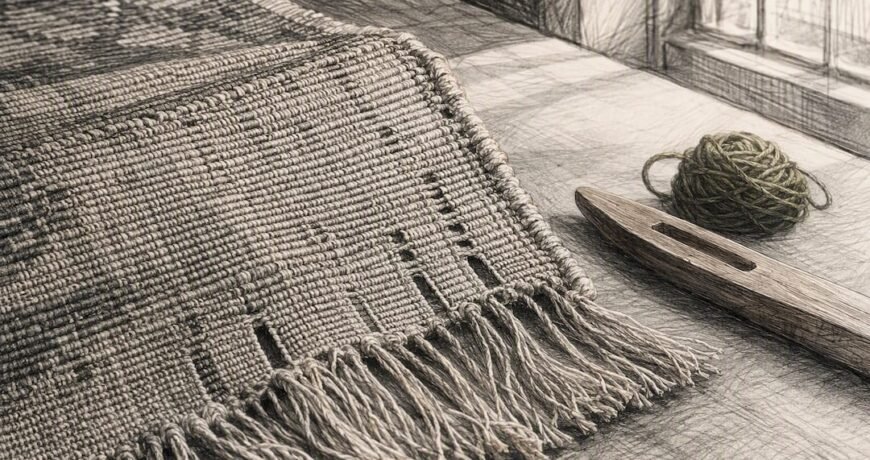
A kilim is a flat-woven rug made without pile, using a weft-faced tapestry technique that produces the same crisp pattern on both sides. Choose one when you want a lightweight, durable, graphically bold textile that lies flatter than a pile rug, layers easily, and cleans up faster because there’s no dense fiber to trap dirt. Before buying, check for natural wool, a slit-weave construction, and a fringe that’s clearly a continuation of the warp threads, not sewn on.
TL;DR:
- Genuine kilims display the same sharp pattern on both sides, with natural abrash and small irregularities indicating handmade construction.
- The slit-tapestry weave produces geometric motifs, while natural dyes fade unevenly, creating distinct color variation over time.
- Authentic kilims are reversible, with fringes as continuous warp threads, and may have visible seams from long-strip weaving.
- New kilims are more uniform and cost less, whereas vintage or antique pieces with provenance often command higher prices due to rarity.
- Kilims perform best in high-traffic areas such as entryways, hallways, and kitchens, where their flat design resists crushing and is easy to clean.
Table of Contents
- Kilim Rug History and Where the Craft Comes From
- How Kilims Are Woven: Slit Weave, Soumak, and Materials
- Regional Kilim Styles and What the Motifs Mean
- Five Checks to Confirm a Kilim Is Handmade
- Where a Kilim Rug Works Best in Your Home
- What to Expect When Buying a Kilim: Price and Questions to Ask
- Caring for a Kilim: Cleaning, Storage, and Pest Prevention
- Why This Guide Leans on Museum Sources and Weaving Fundamentals
- Shop Kilim Rugs and Related Styles at Rugsonlinemarket
- Sources
- FAQ
Kilim Rug History and Where the Craft Comes From
Kilims trace back to nomadic and village weavers across Anatolia (modern Turkey), Iran, the Caucasus, and Central Asia, where portable looms made flat weaving practical for people who moved with their herds. A pile rug takes a fixed loom and months of knotting. A kilim can be woven faster, rolled up, and carried to the next campsite, which is exactly why the technique spread across such a wide swath of territory. The Metropolitan Museum of Art holds historical examples that confirm just how old this craft is, with some flat-weave textile traditions traced back centuries.
These weavings did far more than cover a tent floor. Traditional communities used kilims as:
- Storage bags and grain sacks for a mobile household
- Bedding wraps and animal trappings for travel
- Trousseau pieces a young woman wove for her own dowry, signaling skill and family status
- Prayer mats and ceremonial covers for specific occasions
- Wall hangings that doubled as insulation inside a tent
Trade routes changed the craft’s trajectory. As European and American buyers discovered kilims in the 19th and early 20th centuries, workshops began producing larger formats and more consistent colorways aimed at export markets rather than a single household’s use. That shift is part of why older tribal pieces, woven purely for the family that made them, tend to carry more collector interest today than later commercial production.
How Kilims Are Woven: Slit Weave, Soumak, and Materials
A kilim is built on a warp (the vertical threads stretched on the loom) and a weft (the horizontal threads the weaver passes back and forth). Unlike a pile rug, where the weft is hidden behind knots, a kilim’s weft completely covers the warp, which is why the front and back look almost identical. That reversibility is one of the clearest technical signatures of a real flat weave, as Impart’s textile reference explains.
Most kilim patterns come from slit-tapestry weave, where each color block is woven independently and the weaver simply stops at the color boundary, leaving a tiny vertical slit between sections. According to the Encyclopaedia Iranica, that technique is what gives kilims their sharp, angular motifs. Curves are hard to render this way, so diamonds, zigzags, and stepped triangles dominate the visual language. Weavers who wanted a stronger seam or a slightly softer outline used alternatives:
- Dovetailing: interlocking wefts share a warp thread, closing the slit but softening the pattern edge
- Soumak: a supplementary wrapping technique that adds a raised, embroidered look, often for borders or accent bands
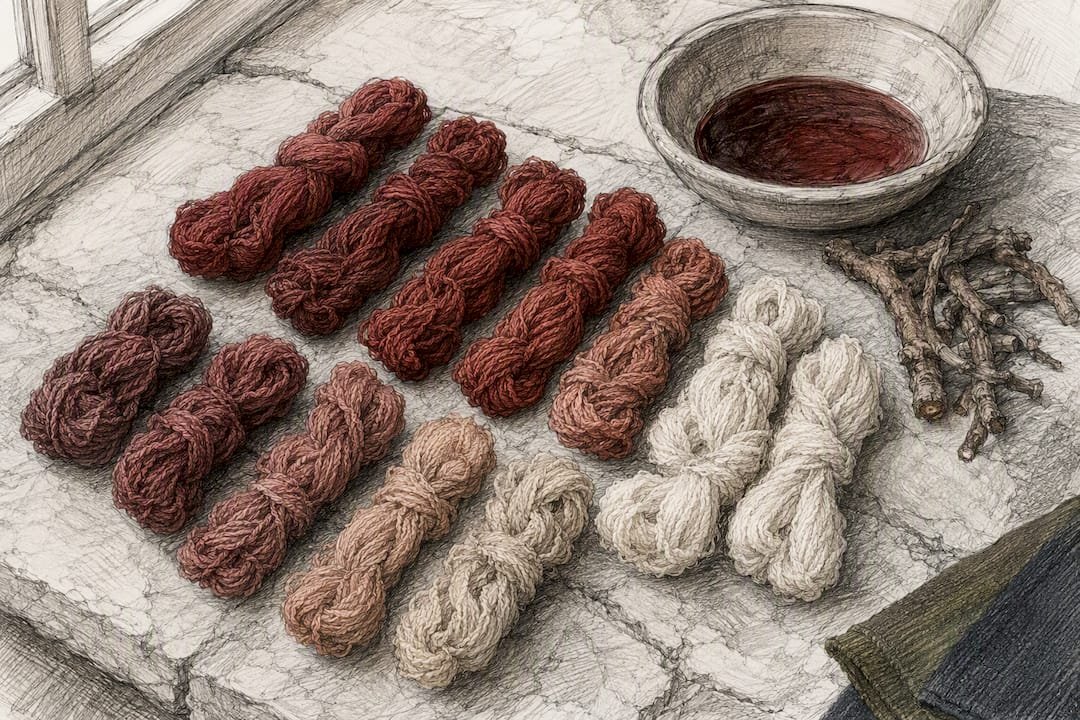
Fiber choice affects both feel and price. Wool is standard for warp and weft because it’s durable and takes dye well; cotton sometimes replaces wool in the warp for extra strength; silk or goat and horse hair show up in finer ceremonial pieces. Dye tells its own story: natural sources like madder root (reds) and indigo (blues) fade unevenly over decades, creating the color striping called abrash, while synthetic dyes from the mid-1900s onward tend to hold a flatter, more uniform tone.
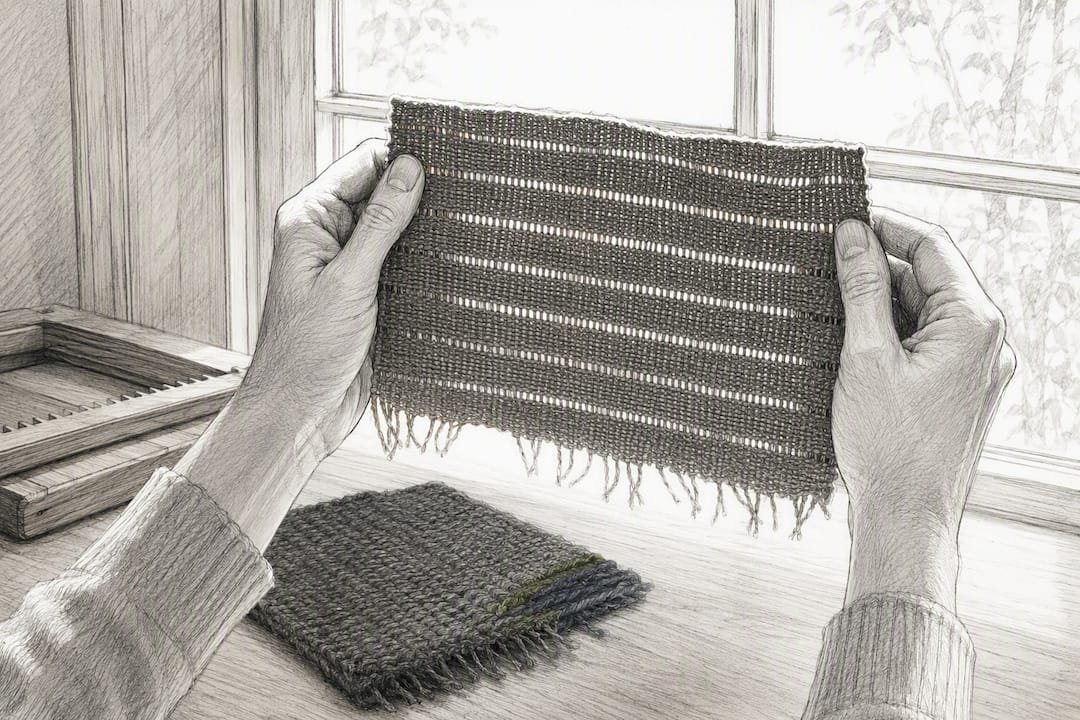
Pro Tip: Hold the rug up to a window. If you can see daylight through fine, consistent gaps running in straight lines, that’s the slit weave doing its job, not a flaw.
Regional Kilim Styles and What the Motifs Mean
Origin shapes both palette and pattern density, and learning a handful of visual cues gets you most of the way to a confident guess.
- Turkish/Anatolian: bold reds and blues, medium-scale repeating medallions, wool-heavy construction
- Persian: finer weave, more restrained color palettes, floral and paisley influences borrowed from knotted-pile design traditions
- Caucasian: geometric, high-contrast patterns with saturated colors, often featuring large-scale diamond medallions
- Moroccan: looser, more abstract geometry, frequently undyed or naturally colored wool with an emphasis on texture over symmetry
- Afghan: darker, earthier tones with tribal geometric fields, often incorporating war-rug or vine motifs in more recent production
Motifs carry meaning that predates most buyers’ awareness of the pattern itself. The Elibelinde figure, a stylized female form with hands on hips, traditionally represents fertility. Tree of life motifs symbolize immortality and continuity across generations. Ram’s horn shapes signal fertility and male strength, while eye motifs appear specifically to ward off misfortune, according to a survey of kilim motif symbolism. Treat these meanings as a starting point rather than a certainty. Meanings blurred as tribal groups mixed, migrated, and borrowed from neighbors, so a motif you see in a Caucasian piece might carry a slightly different weight than the same shape woven in Anatolia.
Local dye sources also explain a lot of the color variation between regions. Wool from sheep grazing on different terrain takes dye differently, and a valley known for a particular madder strain will produce noticeably different reds than a village three ranges over, a detail Impart’s kilim reference notes when discussing regional material influence.
Five Checks to Confirm a Kilim Is Handmade
Online photos hide a lot, so run through these five checks before you commit to a purchase.
- Flip it or ask for a back photo. A genuine kilim shows the same pattern, just as sharp, on the reverse side. A printed or machine-woven imitation usually shows a fuzzy, mismatched backing.
- Look at the fringe. On a handmade piece, the fringe is simply the warp threads left exposed at the ends. A fringe that’s been stitched or glued onto a finished edge is a red flag.
- Search for abrash. Subtle banding or streaking in the color field, especially in older or naturally dyed pieces, is a sign of hand-dyed wool, not a defect.
- Accept small irregularities. A slightly wavy border or a motif that isn’t perfectly mirrored is proof a human wove it row by row. Suspiciously perfect symmetry often means machine production.
- Check for sewn seams. Large antique kilims were frequently woven in long strips on portable looms, then joined by hand. This construction technique, called cicim, produces a visible seam that traditional buyers recognize as authentic, according to Britannica’s entry on the technique, not as damage to avoid.
Pro Tip: If a seller can’t produce a clear photo of the rug’s back, ask directly. A dealer who knows their inventory will have that shot ready.
Where a Kilim Rug Works Best in Your Home
Because a kilim has no pile to crush or flatten, it holds up well in spots that punish rugs the most. Entryways, hallways, and kitchens are natural fits, and its light weight makes it easy to shake out or reposition, a durability point backed by Custom Rugs’ overview of kilim performance.
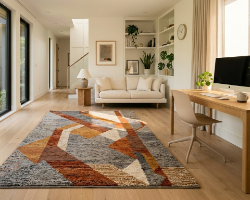
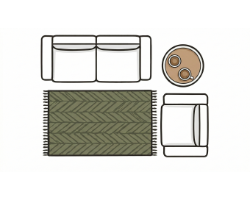
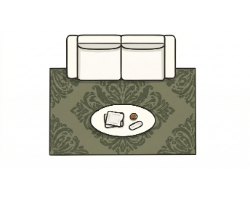
- Layer a smaller kilim over a larger neutral rug in a living room for texture without overwhelming the space
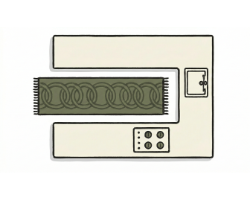
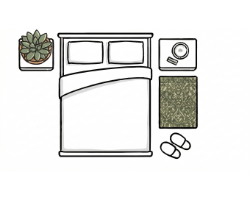
- Use a runner-format kilim in a hallway or beside a bed, where its flat profile won’t catch on doors
- Hang a striking piece on a wall if the pattern deserves more attention than a floor placement would give it
- Add a rug pad regardless of placement. Kilims are lighter than pile rugs, which makes them more prone to sliding on hardwood or tile
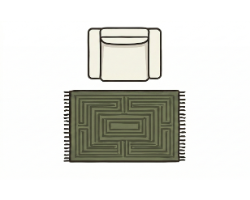
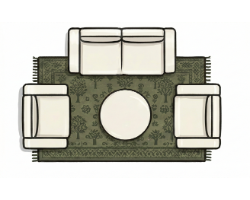
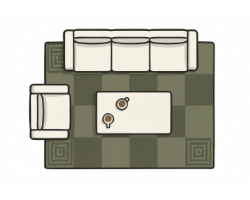
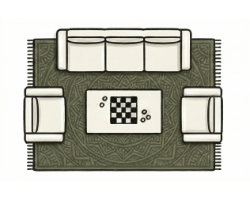
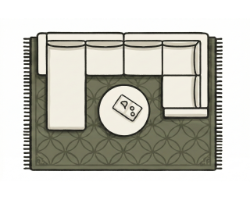
Getting the dimensions right matters more with kilims than with plush area rugs, since an undersized kilim looks skimpy rather than intentional — follow this guide on how to pick the right area rug for practical sizing tips. Tape out your space before ordering using the guidance in Rug Size Rules, Room by Room, which walks through the standard sizing math for different room types.
What to Expect When Buying a Kilim: Price and Questions to Ask
Price depends far more on age, condition, and rarity than on square footage alone. New, machine-assisted or small workshop kilims in common sizes sit at the entry-level end. Handmade vintage pieces in good condition climb into the mid-range. Genuine antique kilims with documented provenance or unusual motif work can command a real premium, since buyer guides on the antique market consistently point to condition and rarity as the bigger price drivers, not size.
Before buying, especially online, ask the seller these questions:
- Where was this kilim woven, and roughly how old is it?
- Is the wool hand-spun, and were natural or synthetic dyes used?
- Has it been repaired, and if so, where?
- What’s the return policy if the piece doesn’t match the photos in person?
New production makes sense when you want a specific size, consistent color, and no guesswork about wear. Vintage or antique pieces make sense when you want character, proven durability, and a piece with a story, but they warrant extra photos of the back and edges, and a professional appraisal for anything marketed as a serious antique investment.
Caring for a Kilim: Cleaning, Storage, and Pest Prevention
Routine upkeep is simpler than it is for a pile rug, precisely because there’s no dense fiber bed to work dirt down into. Shake smaller kilims outdoors regularly, vacuum on a low-suction setting without a beater bar, and rotate the rug every few months so foot traffic wears evenly.
For spills, blot immediately and spot clean with a mild soap and cold water, testing an inconspicuous corner first to confirm the dyes are colorfast. Skip bleach and hot water entirely. Both can strip natural dyes and weaken older wool fibers.
- Send antique or fragile kilims to a rug specialist rather than washing at home
- Store unused kilims rolled, never folded, to avoid permanent creasing
- Use breathable cotton covers, not plastic, which traps moisture
- Add cedar blocks or lavender sachets in storage to deter moths naturally
Pro Tip: If a kilim smells musty after storage, air it outdoors in shade for a few hours before rolling it back up. Direct sun can fade natural dyes faster than you’d expect.
Why This Guide Leans on Museum Sources and Weaving Fundamentals
Getting kilim advice right means grounding it in how the textile is actually constructed, not just how it looks in a photo. That’s why this guide draws on weaving technique explanations like slit-tapestry, dovetailing, and soumak, alongside museum-documented history from institutions like the Met, rather than repeating surface-level style tips. Rugsonlinemarket built its kilim assortment with that same principle: buyers should be able to check materials, size, and construction details before they commit, not after the rug arrives.
That approach shows up in the practical parts of the shopping experience, too. Shipping is free on orders over a set threshold, returns are accepted within a 30-day period, and product pages provide detailed information on origin, material, and construction to help customers make informed kilim purchases.
— Kian
Shop Kilim Rugs and Related Styles at Rugsonlinemarket
Rugsonlinemarket’s advantage over piecing together a kilim purchase from scattered vintage listings is straightforward: everything is organized, returnable, and backed by real product details instead of a single grainy photo. Browse the kilim rugs category directly, or start broader with traditional rugs if you’re still comparing styles against Persian or Moroccan options.

Use the filters to narrow by size, material, and price so you’re not scrolling through pieces that don’t fit your room. If you want the character of hand-spun wool and natural dye variation, check the handmade rugs and natural rugs categories, both suited to buyers who care about the same construction details covered in this guide. New pieces make more sense when you need a specific size fast and want colors guaranteed to match; older or one-of-a-kind kilims are worth seeking out separately when a story matters more than a perfect fit.
Orders over a specified amount qualify for free shipping, and rugs can be returned within 30 days under a straightforward return policy. Start with the kilim category page, filter by the size your room actually needs, and check out knowing you have a full month to decide if it’s right.
Sources
For deeper history and technical verification, consult the Metropolitan Museum of Art’s textile collections, the Encyclopaedia Iranica’s entry on kelim weaving, and Britannica’s overview of cicim construction. For high-value or suspected antique pieces, have a rug conservator verify age and construction before finalizing a sale.
- Kilim | Objects, Textile | Impart
- The Metropolitan Museum of Art
- KELIM (GELIM) – Encyclopaedia Iranica
- Kilim motifs — Wikipedia
FAQ
How can I tell if a kilim rug is real?
Check that the pattern is identical on both sides, confirm the fringe is a continuation of the warp threads rather than sewn on, and look for natural color variation called abrash rather than perfectly flat, uniform dye.
What’s the difference between a kilim and a regular pile rug?
A kilim is flat-woven with no pile, making it reversible, lightweight, and thinner, while a pile rug is knotted with cut fiber loops that create a plush, one-sided surface with more cushioning underfoot.
What are the pros and cons of kilim rugs?
Kilims are lightweight, durable in high-traffic areas, easy to clean, and reversible, but they offer less cushioning than pile rugs and can show wear along slit-weave seams if not handled carefully during moves.
What’s the difference between a dhurrie and a kilim rug?
Both are flat-woven, but dhurries traditionally come from India and Pakistan using cotton and simpler stripe or geometric patterns, while kilims originate from Anatolia, Iran, and Central Asia with wool construction and more intricate slit-weave motifs.
How much should I expect to pay for a kilim rug?
New kilims in common sizes fall at the entry-level end of flat-weave pricing, while vintage or antique pieces with documented provenance and rarity climb higher, since buyer guides consistently identify condition and rarity as bigger price drivers than size alone. Current prices for specific pieces are listed on the kilim rugs category page.
