

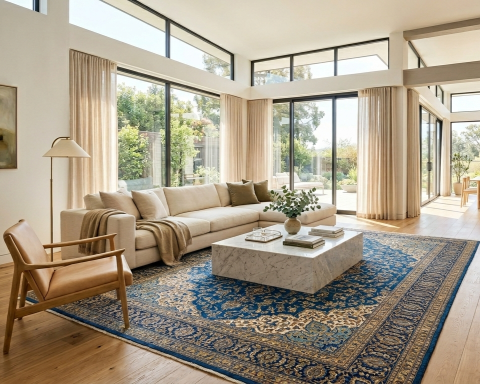
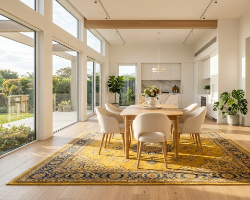
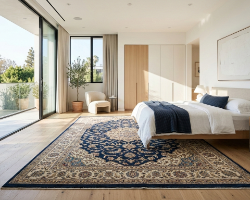



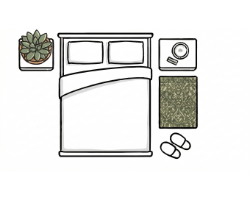
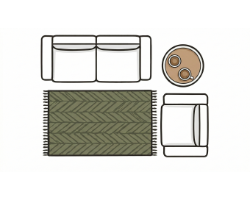
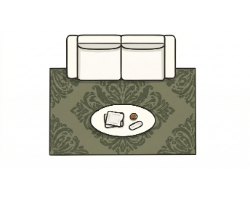
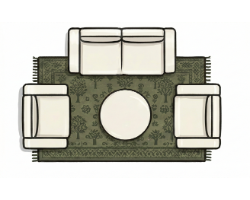
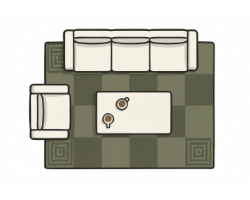

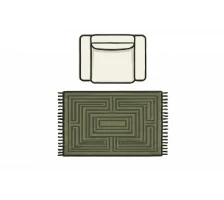







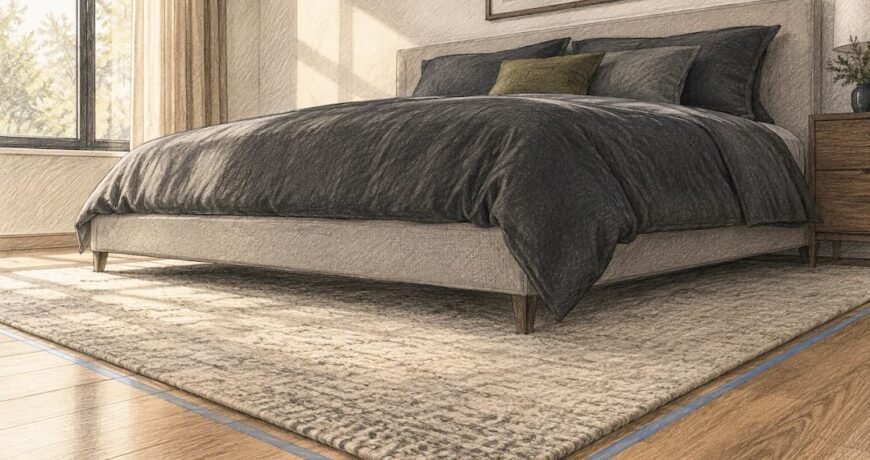
An 8×10 rug is the most reliable starting point for a queen bed, since queen mattresses run 60 inches by 80 inches and a good rug should extend 18 to 24 inches beyond the mattress on the sides and foot. A 6×9 works only for foot-of-bed placement or tight rooms, while a 9×12 fits larger bedrooms or lets you set nightstands directly on the rug. Measure your room before you decide, not your bed.
TL;DR:
- An 8×10 rug is the most reliable choice for a queen bed, offering the recommended 18 to 24 inches of exposure on all sides for balanced visual and functional fit.
- Larger rooms (15×18 feet and above) can accommodate a 9×12 rug for full coverage, while small rooms under 12×14 feet may require runners or a 6×9 rug with strategic placement.
- Place your rug using methods such as centering, lower two-thirds, foot-only, or side runners, with tape or cardboard testing beforehand to avoid layout issues.
- Rug pads are essential under beds to prevent shifting, and pile height influences comfort and maintenance, with low or medium piles ideal for high traffic or pet-friendly rooms.
- Always measure your room and consider furniture and door clearance before choosing a size, and use the tape-out test to ensure proper fit before purchasing.
Table of Contents
- What Rug Size Fits a Queen Bed? A Quick Size Chart
- How Do You Place a Rug Under a Queen Bed?
- Which Rug Size Works Best for Your Bedroom Layout?
- Do Rug Pads and Pile Height Matter for a Bedroom Rug?
- How Rugsonlinemarket Helps You Choose the Right Fit
- How Do You Match Rug Color and Pattern to a Bedroom?
- What Most Rug Guides Get Wrong About Sizing
- Find the Right Queen Bed Rug Size at Rugsonlinemarket
- Sources
- FAQ
What Rug Size Fits a Queen Bed? A Quick Size Chart
The math behind rug sizing sounds fussier than it is. A queen mattress measures 60 inches wide by 80 inches long. Once you add a frame and headboard, the footprint you’re working around gets slightly larger. The goal is exposed rug on three sides, enough that the rug reads as a deliberate layer under the furniture rather than a scrap peeking out from underneath.
The Spruce recommends extending the rug 18 to 24 inches past the mattress edges, and that single number drives almost every size recommendation below. Here’s how the common options break down when you actually run the numbers.
| Rug size | Exposed at sides | Exposed at foot | Best described as |
|---|---|---|---|
| 5×8 | Minimal, foot-only use | 12–15 inches | Minimum, foot-of-bed only |
| 6×9 | 6–12 inches | 18–24 inches | Minimum for full under-bed coverage |
| 8×10 | 18–24 inches | 18–24 inches | Common, safe default |
| 9×12 | 24–30 inches | 30–36 inches | Generous, full-room coverage |
A Rugsizing maps these same three tiers to queen beds: 6×9 as the minimum, 8×10 as the optimal middle ground, and 9×12 as the generous, full-coverage option. Before you commit to any of these, measure the distance from your bed frame to the nearest wall and account for baseboards or door swing. A rug that looks perfect on paper can end up jammed against a closet door in real life.
How Do You Place a Rug Under a Queen Bed?
Placement matters as much as size, and there’s no single right answer. Four methods cover almost every bedroom layout, and a simple tape-out test lets you confirm the fit before you spend a dollar.
- Centered under the bed. Slide the rug so equal amounts show on both sides and at the foot. This works best with 8×10 or 9×12 rugs, and if you’re using a 9×12 in a room with adequate floor space, you can typically place both nightstands directly on the rug for a finished, hotel-style look, an approach The Spruce recommends for rooms larger than roughly 12 by 14 feet.
- Lower two-thirds placement. Position the rug so it starts just in front of the nightstands and extends past the foot of the bed, leaving the head area bare. Slumberland’s design blog calls this a professional technique that balances a luxurious feel against a tighter budget, since it lets a 6×9 do a job that would otherwise need an 8×10.
- Foot-of-bed only. A 5×8 or 6×9 rug placed just past the foot of the bed gives you a soft landing spot without covering the whole floor. It’s the cheapest option and the easiest to pull off in a small room.
- Side runners. Two runners, roughly 2.5×8 or 3×10, laid along each side of the bed solve the “cold floor” problem without the cost or bulk of one large rug.
Whichever option you’re leaning toward, tape it out first. Mark the rug’s exact footprint on the floor with painter’s tape, or lay down flattened cardboard boxes cut to size, then live with it for a day. This catches problems a tape measure alone won’t, like a closet door that now scrapes the rug edge or a nightstand drawer that won’t fully open.
Pro Tip: Walk the taped-out perimeter barefoot before you buy. If your foot lands on bare floor the moment you step out of bed, size up.
For a fuller walkthrough with photos, Rugsonlinemarket’s bedroom rug placement guide breaks down measurements room by room.
Which Rug Size Works Best for Your Bedroom Layout?
Room size should override the “just buy an 8×10” instinct more often than people think. A bedroom’s footprint, not just the bed inside it, determines which size actually looks right.
- Small bedrooms (under about 12×14 feet): lean on runners or a 6×9 with lower two-thirds placement. A foot-only 5×8 also works if floor space is genuinely tight. Keeping more floor visible around the rug’s edges, rather than crowding the room with an oversized rug, actually makes a small space feel bigger.
- Medium bedrooms (roughly 12×14 feet): an 8×10 is the default for good reason. It hits the 18 to 24 inch exposure target on all sides without leaving awkward gaps near the walls, and it’s the size most furniture layouts are built around.
- Large bedrooms (15×18 feet and up): a 9×12 or larger delivers the anchored, full-coverage look designers associate with hotel suites, and it’s large enough that nightstands can sit fully on top of it without looking off-balance.
Room dimensions aren’t the only variable. Design practitioners tend to prioritize circulation, meaning door swing and closet access, over sticking rigidly to the 18 to 24 inch rule. If a correctly sized rug blocks a closet door or crowds a walkway, drop down a size or switch to runners instead. A rug that’s technically “right” but makes the room harder to move through isn’t actually right.
Do Rug Pads and Pile Height Matter for a Bedroom Rug?
A rug pad isn’t optional when part of the rug sits under a bed frame. Without one, the rug shifts and bunches every time you make the bed or move furniture, and a bunched edge near a walkway is a genuine tripping hazard. Choose a pad cut slightly smaller than the rug itself, and match its thickness to the rug’s pile: thin, dense pads for flatweaves and low-pile rugs, thicker cushioned pads for plush or high-pile options.
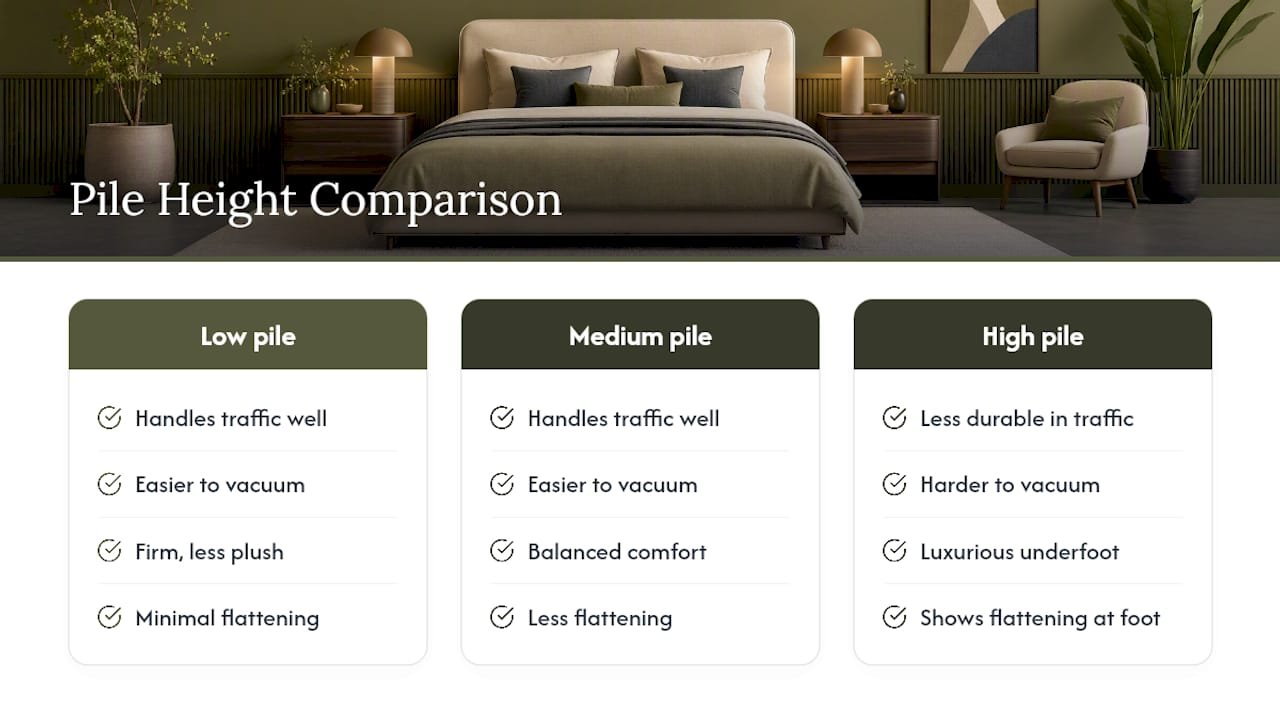
Pile height also affects daily comfort more than most people expect. A low or medium pile handles foot traffic and vacuuming better over time, while a plush high pile feels luxurious underfoot but shows flattening in high-traffic zones like the foot of the bed. If pets or kids share the room, a washable rug removes a lot of the maintenance stress that comes with wool or silk.
Weekly vacuuming keeps grit from working into the fibers, and rotating the rug 180 degrees every few months evens out sun fading and foot-traffic wear. Spot clean spills immediately with a damp cloth rather than letting them sit.
Pro Tip: If your rug is only partially tucked under the bed, make sure the exposed section is at least 18 inches wide. Anything narrower reads as an accent strip and tends to curl at the edges over time.
How Rugsonlinemarket Helps You Choose the Right Fit
Sizing a rug from a photo online is genuinely hard, which is why Rugsonlinemarket recommends pairing your room photos with a tape-out on your actual floor before ordering. Snap a few shots from the doorway and from the foot of the bed, mark your intended rug footprint with tape, and compare both against the exposure numbers in the size chart above. That combination catches sizing mistakes that a single measurement can miss.
If you’re on the fence between an 8×10 and a 9×12, the safest tiebreaker is furniture: if nightstands need to sit on the rug, size up. Rugsonlinemarket’s rug size chart guide covers this decision room by room. And because guessing wrong is a real risk with rugs this large, Rugsonlinemarket backs every order with 30-day hassle-free returns and free shipping on orders over $300, so a size that doesn’t work in person isn’t a permanent mistake.
How Do You Match Rug Color and Pattern to a Bedroom?
Color and pattern decisions get easier once you treat the rug as the room’s base layer rather than its focal point. A bedroom’s job is to feel restful, and a rug that shouts for attention works against that.
Start with your bedding. If your comforter or duvet has a bold pattern, choose a rug in a solid or subtly textured neutral, things like oatmeal, warm gray, or soft taupe read as calm without disappearing into the floor. If your bedding is solid or minimal, a patterned rug, a faded Persian medallion or a Moroccan diamond print, can carry visual interest without a lot of extra decor.
Undertone matters more than most shoppers realize. A rug with cool blue or gray undertones next to warm wood furniture can make both pieces look slightly off, even if each looks fine on its own. Bring a paint chip or fabric swatch from your bedding when you’re comparing options, and check the rug in your room’s actual light, not just under store lighting or a laptop screen.
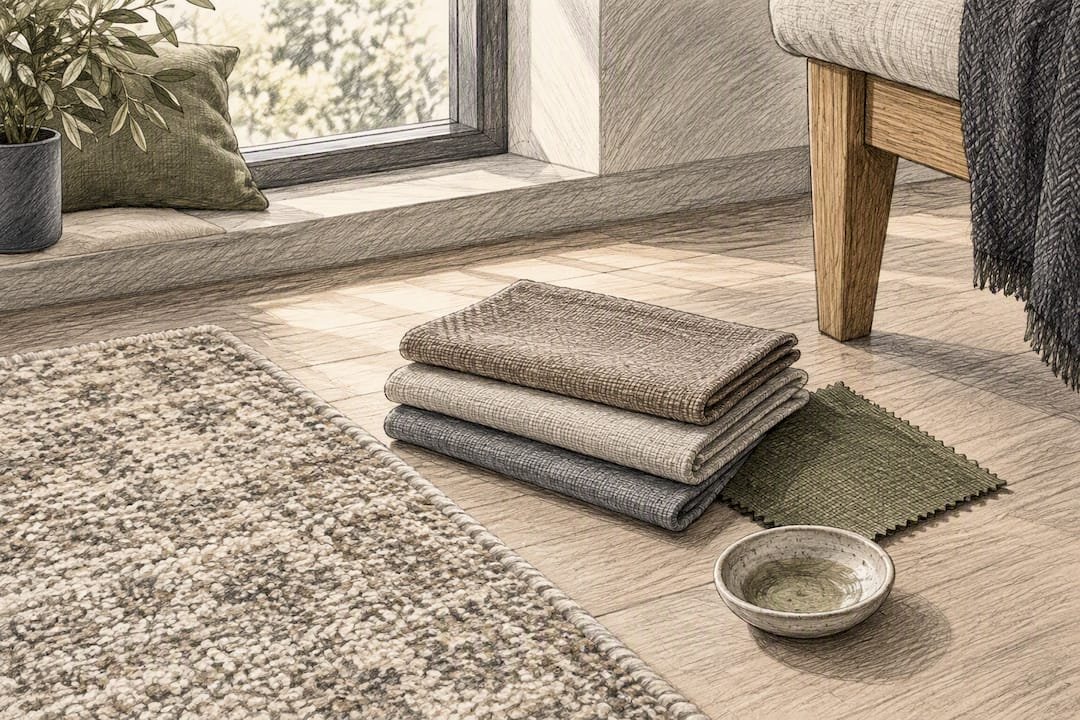
Darker rugs hide stains and shed less visible wear over time, which matters if pets share the room. Lighter rugs make a small bedroom feel more open but need more frequent cleaning. Neither choice is wrong, it depends on how much upkeep you’re willing to do versus how much visual weight you want on the floor.
What Most Rug Guides Get Wrong About Sizing
Most sizing advice treats the 18 to 24 inch rule like a formula to solve rather than a starting point to adjust. It isn’t. The rule assumes a rectangular room with no weird obstacles, and real bedrooms rarely cooperate. A closet door that swings the wrong way or a radiator under the window will override a textbook-perfect rug size every time, and no chart accounts for that.
The bigger issue is that people underestimate how much a rug that’s one size too small will bother them daily, not visually, but functionally. Stepping onto cold hardwood every morning because the rug stopped four inches short of where your foot lands is a small annoyance that compounds fast. That’s the real argument for sizing up when you’re stuck between two options, not aesthetics, but the lived experience of the room.
What the data actually supports is prioritizing the tape-out test over any chart, including the one earlier in this article. Charts give you a range. Your actual floor, your actual furniture, and your actual walking path give you the answer.
— Kian
Find the Right Queen Bed Rug Size at Rugsonlinemarket
Once you know whether you need an 8×10, a 9×12, or a pair of runners, the next step is browsing rugs that actually fit that size without settling for whatever a big-box store happens to stock that week. Rugsonlinemarket carries an extensive range of traditional rugs across the sizes covered in this guide, along with natural-material options in wool and silk for bedrooms where softness underfoot matters as much as looks.

If a 9×12 is your target size for a larger bedroom, the 9×12 area rugs category makes comparison easy without wading through irrelevant sizes. Going with side runners instead? The runner rugs selection covers the 2.5×8 and 3×10 lengths recommended earlier. Every order over $300 ships free, and if the size or color doesn’t work once it’s in your room, Rugsonlinemarket’s 30-day return window means the decision isn’t permanent. Measure your space, tape it out, then shop the size you already know fits.
Sources
- What Size Rug Should You Use for a Queen Bed?
- Bedroom rug size chart
- How to choose an area rug (Slumberland interior design blog)
FAQ
Is a 6×9 Rug Too Small for a Queen Bed?
Not necessarily. A 6×9 rug is listed as the minimum size for full under-bed coverage on a queen, and it works well with lower two-thirds or foot-of-bed placement. It’s only “too small” if you’re trying to center it under the whole bed and still hit the 18 to 24 inch exposure rule on every side.
Is an 8×10 Rug Too Big for a Queen Bed?
No, an 8×10 is considered the safest and most common size for a queen bed in a standard bedroom. It’s only too big if your room is genuinely small, under roughly 12 by 14 feet, in which case it may leave very little exposed floor around the edges.
Is a 5×7 Rug Too Small for a Queen Bed?
Yes, for full under-bed placement. A 5×8 doesn’t extend far enough to cover the mattress width plus the recommended overhang, so it only makes sense as a foot-of-bed accent rug rather than a rug meant to sit under the whole bed.
Should I Choose an 8×10 or 9×12 Rug for a Queen Bed?
Choose an 8×10 for a standard-sized bedroom, since it comfortably meets the 18 to 24 inch exposure guideline on all sides. Choose a 9×12 if your room is larger, roughly 15 by 18 feet or more, or if you specifically want your nightstands to sit fully on the rug. Rugsonlinemarket’s 9×12 category and traditional rug selection both cover this decision if you’re comparing options in person.
