




































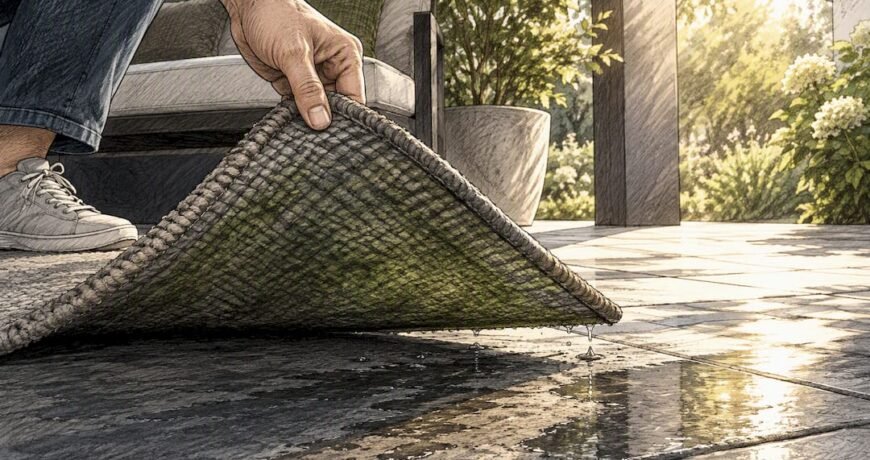
Keep outdoor rugs clean with a two-track routine: a weekly shake, sweep, or vacuum to stop grit from grinding into the fibers, plus a seasonal deep clean built on rinse, mild-detergent scrub, rinse again, then full air-dry within 24 hours. Skip that drying window and mildew moves in fast. When storage season comes, roll the rug instead of folding it, and keep it off the ground in a dry spot.
TL;DR:
- Regularly rotate the outdoor rug every few months to ensure even wear from foot traffic and sun exposure, prolonging its lifespan.
- Deep cleaning should be performed seasonally, involving rinsing, mild scrubbing, and thorough drying to prevent mold and mildew growth.
- Mildew removal requires multiple wash cycles with botanical cleaners, agitation, and proper drying; avoid bleach unless explicitly allowed by the manufacturer.
- Proper storage entails fully cleaning and drying the rug, rolling it with the backing outward, and keeping it in a breathable cover off the ground.
- Weather-resistant materials like polypropylene enable quicker drying, reduce mildew risk, and ease the maintenance routine compared to natural fibers.
Table of Contents
- Outdoor Rug Care Checklist: How Often to Clean
- How Do You Deep-Clean an Outdoor Rug?
- How Do You Remove Stains From an Outdoor Rug?
- My Outdoor Rug Is Turning Green. How Do I Fix It?
- Where and How Should You Dry an Outdoor Rug?
- How Should You Store an Outdoor Rug for Winter?
- What Tools and Cleaners Work Best for Outdoor Rugs?
- What Rugs Online Market Recommends for Easier Outdoor Rug Care
- What I’ve Learned Watching People Ruin Good Rugs
- Spend Less Time Cleaning With the Right Outdoor Rug
- Sources
- FAQ
Outdoor Rug Care Checklist: How Often to Clean
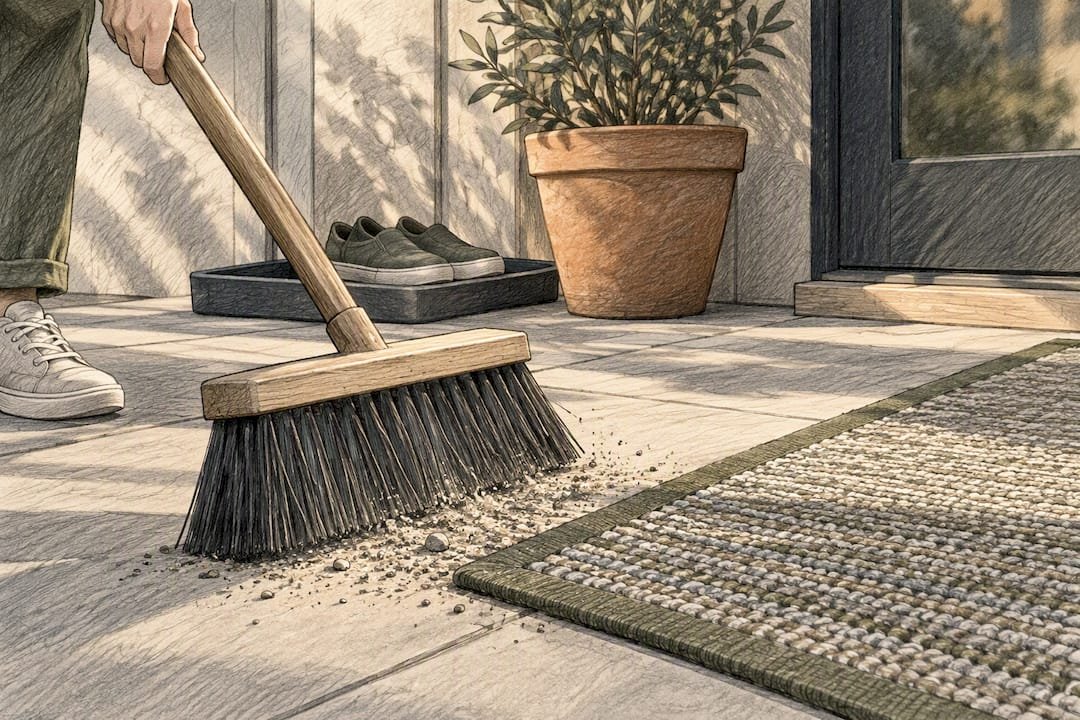
Most outdoor rug damage doesn’t come from one bad spill. It comes from months of sand, pollen, and grit working into the weave until the backing starts to break down. A short weekly routine stops that buildup before it starts.
- Weekly: shake out or sweep the rug, then vacuum both sides if you can flip it.
- As needed: spot treat spills the moment they happen, before they set into the fibers.
- Every few months: rotate the rug so foot traffic and sun exposure wear it evenly.
- Seasonally: run a full deep clean at the start and end of outdoor season.
- After storms: check for trapped moisture or debris and clean immediately if you find any.
Consumer Reports recommends this same combination for synthetic outdoor rugs: routine light cleaning paired with occasional power or hose washing, plus proper storage during colder months.
Pro Tip: Keep a stiff-bristle broom by the back door. A ten-second sweep after dinner outside prevents the kind of ground-in grit that eventually needs a power washer to remove.
How Do You Deep-Clean an Outdoor Rug?
A proper deep clean takes about 30 to 45 minutes of active work, plus drying time. Before you touch a hose, check the manufacturer’s care label. Some synthetic blends and specialty fabrics like Sunbrella have specific soap ratios and temperature limits, and Consumer Reports notes that a mild solution of about a quarter cup of soap per gallon of water works for many of these textiles.
- Remove loose debris. Shake the rug out or vacuum it to clear leaves, dirt, and pet hair before it turns into mud once wet.
- Position the rug. Drape it over a fence, deck railing, or an incline where water can run off freely. A flat driveway works if nothing else is available.
- Rinse first. Hose down the entire rug before applying any soap. This loosens surface dirt so you’re not just pushing grime deeper.
- Mix your cleaner. A few drops of dish soap per gallon of water handles most everyday grime, unless the care label specifies something different.
- Scrub section by section. Use a soft-bristle brush and work in overlapping passes rather than scrubbing the whole rug at once.
- Rinse until the water runs clear. This usually takes longer than people expect. Cloudy runoff means soap or dirt is still trapped in the pile.
- Repeat if the rug still looks dull. A second scrub-and-rinse cycle is common for rugs that haven’t been cleaned in a year or more.
If you’re using a power washer, keep it on the lowest safe pressure setting and test a corner first. Wirecutter points out that high pressure can fray synthetic fibers, and a garden hose does the job just as well for most residential rugs.
Here’s the part people skip: synthetic outdoor rugs made from polypropylene, polyester, or acrylic resist mold better than natural fibers, but they can hide dirt while still wet. Simple Green notes that you often can’t tell if a rug is actually clean until it’s fully dry, which is exactly why the rinse-and-recheck cycle matters more than a single pass with soap.
How Do You Remove Stains From an Outdoor Rug?
Every stain follows the same first rule: blot, don’t rub. Rubbing pushes the stain outward and deeper into the fibers, which is how a coffee spill turns into a permanent gray halo. Once you’ve blotted up the excess liquid, match the treatment to the stain type.
- Food and drink stains: blot with a clean towel, then scrub with a mild dish soap solution, working from the outside of the stain inward.
- Grease and oil: dish soap cuts grease effectively because it’s built to break down fats. Apply directly to the spot, let it sit for a few minutes, then scrub.
- Pet urine and other organic stains: an enzyme cleaner breaks down the proteins that cause odor and staining, which plain soap can’t fully address.
- Dye transfer or stubborn discoloration on white or light rugs: diluted hydrogen peroxide can help as a last resort, but only after testing.
Always spot-test any cleaner on a hidden corner first and give it a few minutes before committing to the whole stain. Once the stain lifts, rinse the area thoroughly. Leftover soap residue attracts dirt just as fast as the original spill did. For deeper or set-in marks, a dedicated stain-removal approach walks through longer soak times and repeat treatments for the stubborn cases.
My Outdoor Rug Is Turning Green. How Do I Fix It?
Mildew needs two things to grow: organic soil and moisture. Give it both, and it can establish itself in as little as 24 to 48 hours, which is why a rug left damp overnight after a rainstorm is far more vulnerable than one that dries within the day.
Removing it takes more than a quick spray. Textile restoration expert Michael Rubino outlines a repeat-clean sequence, reported by AOL, that goes beyond a single wash:
- Vacuum the rug with a HEPA filter to pull loose spores out before they spread further.
- Apply a botanical cleaner and let it sit with dwell time so it can break down the mildew at the root.
- Agitate the cleaner into the fibers with a microfiber towel rather than a stiff brush, which can spread spores instead of lifting them.
- Rinse thoroughly, then repeat the entire sequence at least twice.
A single wash might clear the visible green stain but leave mycotoxins behind, which can keep causing musty odors and irritation even after the color is gone. That’s why the repeat cycle matters more than the strength of any one cleaner. Skip the bleach unless the label explicitly allows it. Undiluted bleach can strip color and weaken fibers faster than the mildew itself. If the smell or discoloration keeps returning after two full cleaning cycles, that’s the point to call in a professional sanitizing service rather than escalating the chemicals yourself.
Pro Tip: Mildew almost always comes back in the same spot for the same reason. Fix the drainage or drying issue underneath the rug, or you’ll be running this cycle every season.
Where and How Should You Dry an Outdoor Rug?
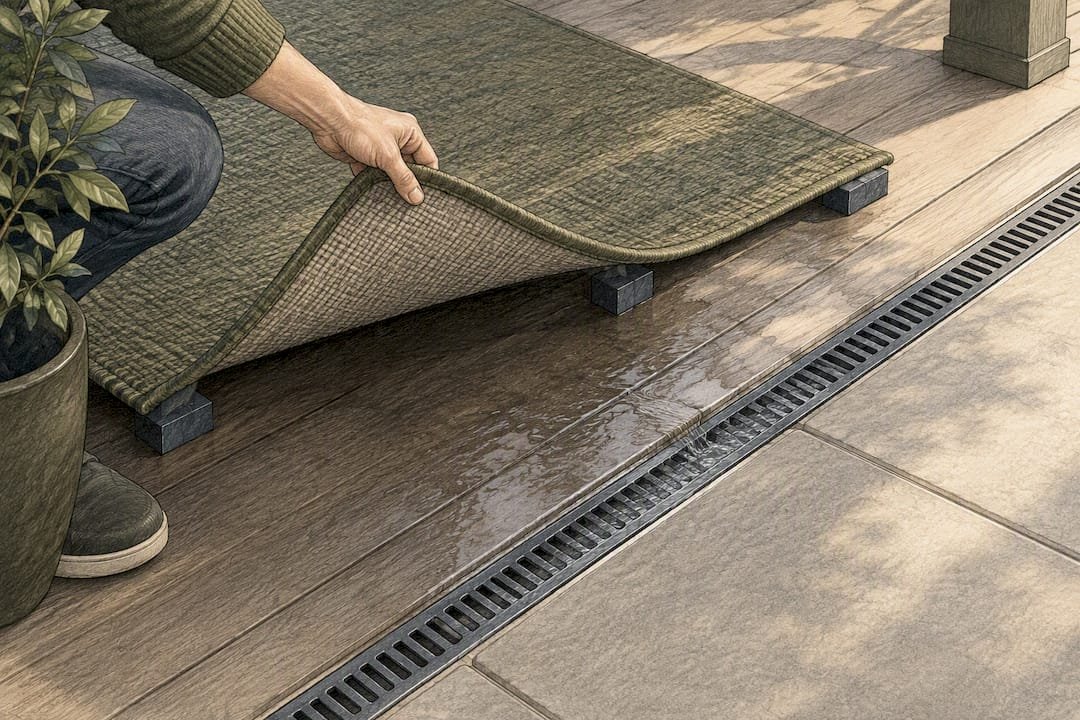
Drying is where most outdoor rug problems actually start, not in the cleaning itself. A rug that sits on a solid, impermeable surface with no airflow underneath traps moisture against the backing, and that’s exactly the environment mildew needs.
- Use a pad or underlayer that lets water drain and air circulate, rather than a solid mat that seals moisture in.
- Dry the rug flat in direct sun or hang it on a slight slope so water runs off instead of pooling.
- Flip it partway through so both sides get exposed to air, not just the top.
- Aim for full dryness within 24 hours. Anything longer and you’re back in mildew territory.
Placement affects how often you’ll need to repeat any of this. A rug under a covered patio stays drier longer but collects more dust and pollen since it never gets rinsed by rain. A rug in an exposed spot gets natural rinsing but needs faster drying attention after every storm.
How Should You Store an Outdoor Rug for Winter?
Storage mistakes show up months later, usually as creases that never fully relax or a musty smell that wasn’t there when you packed the rug away. The fix is simple, but it only works if the rug goes into storage completely dry.
- Clean and dry the rug fully. Any residual moisture or dirt left in the fibers becomes a mildew problem by spring.
- Roll it tightly with the backing facing outward. Southern Living is specific on this point: folding creates permanent creases and stresses the backing, while rolling distributes pressure evenly.
- Wrap it in breathable material, like a canvas tarp or cotton sheet, rather than sealing it in plastic if humidity is a concern in your storage area.
- Store it off the ground in a cool, dry space, away from direct contact with concrete floors that can wick up moisture.
If you use your patio or deck year round and hate the idea of an empty space for months, keeping a second rug in rotation means one is always drying or storing while the other is in use.
What Tools and Cleaners Work Best for Outdoor Rugs?
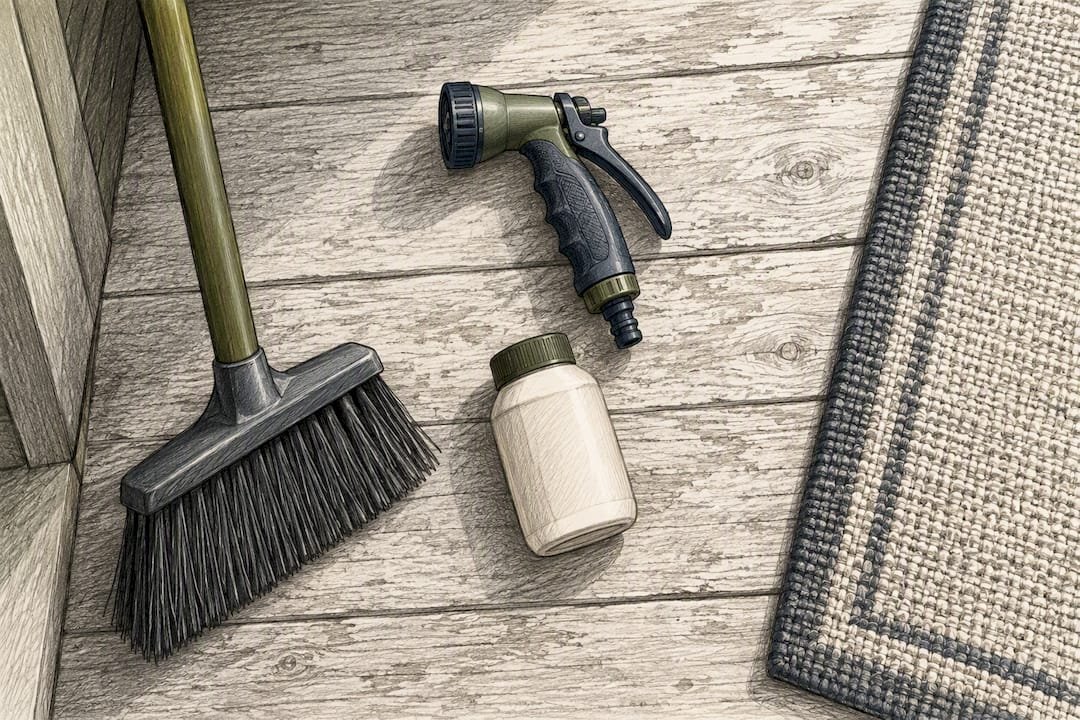
You don’t need a garage full of specialty products. A short, well-chosen kit handles nearly every cleaning situation an outdoor rug throws at you.
- HEPA vacuum: pulls dust, pollen, and mold spores out of the fibers instead of just pushing them around.
- Soft-bristle brush: agitates dirt loose without fraying synthetic fibers the way a stiff wire brush can.
- Microfiber towels: ideal for working cleaner into the pile during mildew treatment without spreading spores.
- Garden hose or low-pressure washer: a hose handles most rinsing needs; a power washer on its lowest setting speeds up heavily soiled rugs.
- Mild dish soap: the default cleaner for everyday grime at a few drops per gallon of water.
- All-purpose or degreasing cleaner: useful for grease spots or general grime where dish soap alone falls short.
- Enzyme cleaner: the right call for pet stains and other organic residue.
Avoid undiluted bleach on any dyed rug, since it strips color unevenly and weakens the fibers over repeated use. Natural-fiber rugs need even more caution. Harsh solvents that are safe on polypropylene can permanently damage wool or jute, so anything handmade or fiber-sensitive deserves a gentler preservation approach instead of the standard hose-and-scrub method. If you’re leaning toward gentler, plant-based formulas, this biodegradable outdoor cleaning guide breaks down which eco-friendly options actually cut cleaning time.
Pro Tip: Keep your cleaning kit in a bin near the outdoor storage area. The rugs that get maintained regularly are almost always the ones where the supplies are within arm’s reach.
What Rugs Online Market Recommends for Easier Outdoor Rug Care
Material choice determines how much work you’ll do later. A washable, synthetic outdoor rug built for weather resistance sheds water and dirt far more easily than a natural-fiber piece dragged outside for looks. Rugs Online Market’s outdoor rug collection is built around that logic: fade-resistant, quick-drying materials that hold up to sun and rain without demanding a weekly deep clean. Orders over $300 ship free, and every purchase comes with a 30-day hassle-free return window if the size or style doesn’t fit your space once it’s outside.
What I’ve Learned Watching People Ruin Good Rugs
The two mistakes I see most often aren’t about cleaning technique. They’re about patience. People fold rugs for storage because it’s faster, then wonder why there’s a permanent crease line every spring. And they crank a power washer to full pressure because it feels more thorough, when a garden hose would have done the job without fraying the fibers.
A realistic routine is boring by design: sweep weekly, deep clean twice a year, dry it fully before you store it. If you’d rather start with a rug built to make that routine shorter, our outdoor collection is worth a look.
— Kian
Spend Less Time Cleaning With the Right Outdoor Rug
Outdoor rugs made from weather-resistant weaves can shorten the maintenance routine this guide just walked you through. Polypropylene and other weather-resistant weaves shed water fast, dry within hours instead of overnight, and resist the mildew growth that comes from trapped moisture, so the deep-clean cycle you just learned gets easier every time you use it.

Browse the outdoor rug selection for weather-ready styles sized for patios, decks, and entryways, or check patio rug ideas if you’re still deciding what fits your space. Current shipping and return policies are detailed on the company’s website. Pick a rug now and put this care routine to work on something built to handle it.
Sources
Consumer Reports covers manufacturer-backed cleaning frequency and material care. Simple Green details rinse and drying best practices for synthetic fibers. AOL reports Michael Rubino’s expert mildew remediation sequence. Southern Living explains proper rolling and off-season storage technique.
- How to clean rugs and mats | Simple Green
- How to care for outdoor rugs | Consumer Reports
- How to get mildew out of outdoor rugs — and keep it from coming back | AOL
- How to clean outdoor rug | Southern Living
FAQ
How Do You Maintain an Outdoor Rug?
Maintain an outdoor rug with a weekly shake, sweep, or vacuum to prevent grit buildup, then a seasonal deep clean using rinse, mild-detergent scrub, rinse again, and full air-dry. Consumer Reports recommends this same combination alongside occasional power washing for synthetic materials.
What Is the Best Way to Clean an Outdoor Area Rug?
The most reliable method is a full rinse, a scrub with mild dish soap using a soft-bristle brush, a thorough second rinse until the water runs clear, and a complete air-dry. Simple Green notes that synthetic rugs can still look dirty while wet, so judge cleanliness only after the rug dries fully.
Can You Leave an Outdoor Rug Outside All Year?
You can, but exposed rugs collect more dirt and face more moisture cycles, which speeds up wear compared to storing them during off-season months. Rolling the rug and storing it in a dry spot during winter, as recommended by Southern Living, extends its lifespan considerably.
My Outdoor Rug Is Turning Green. How Can I Fix It?
Green discoloration is almost always mildew, which needs a repeat clean cycle rather than a single wash to fully clear. The remediation sequence reported by AOL, HEPA vacuum, botanical cleaner with dwell time, agitation, rinse, and repeating twice, removes both the visible mold and the mycotoxins a one-time wash leaves behind.
How Often Should You Deep-Clean an Outdoor Rug?
Most rugs need a full deep clean twice a year, once at the start of outdoor season and once before storage, with spot treatment for spills in between. Rugs exposed to heavy foot traffic or frequent storms may need an extra cycle after major weather events.
