













For a fully exposed patio, pick an outdoor-rated polypropylene flatweave. Save tufted styles or natural-fiber looks for a covered porch where rain and direct sun can’t reach them. Everything else in styling a patio rug flows from two decisions: get the size right for your furniture footprint, and pick a material that matches how much weather it’ll actually see. Rugs Online Market stocks outdoor-rated options built for both scenarios.
TL;DR:
- Polypropylene flatweaves are the top choice for fully exposed patios due to their water resistance and fade resistance.
- The ideal rug size depends on the zone: 6 by 9 to 8 by 10 feet for seating areas and 8 by 10 feet or larger for dining tables seating four to six people.
- Natural fibers like jute or sisal are suitable only for covered porches because constant dampness causes mold and fiber breakdown.
- Use a non-slip pad or anchors to prevent outdoor rugs from shifting, especially on decks or windy locations, to avoid tripping hazards.
- Regular maintenance includes sweeping, spot cleaning spills immediately, and airing out synthetic rugs after rain to prolong their lifespan.
Table of Contents
- Patio Rug Ideas for Every Zone and Style
- How to Choose the Right Material for Outdoor Use
- Outdoor Rug Size Guide by Layout
- Care, Maintenance, and Quick Cleaning Tactics
- Styling Tips and Common Mistakes to Avoid
- Why Rugs Online Market Is Built for This
- Choosing a Rug That Complements Your Outdoor Furniture
- Safety Considerations for Outdoor Rugs
- A Few Words From Kian
- Shop the Look: Outdoor Rugs Ready to Ship
- Sources
- FAQ
Patio Rug Ideas for Every Zone and Style
A patio rug does more than fill space. It draws a visual boundary around a seating cluster, a dining table, or a fire pit so the whole yard doesn’t read as one flat slab of concrete. Here’s how to think about it zone by zone.
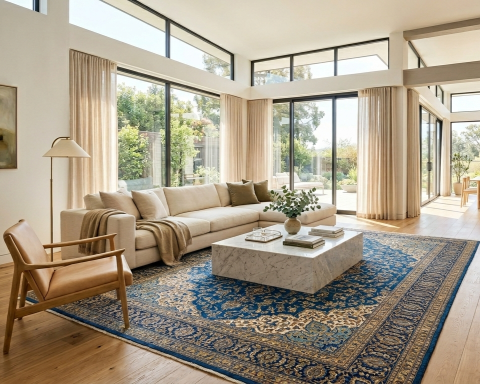
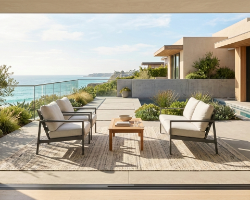
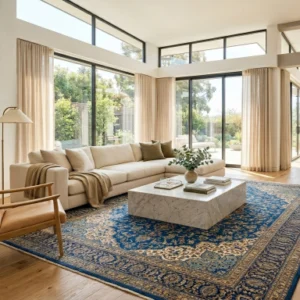
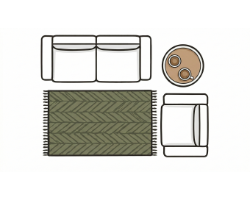
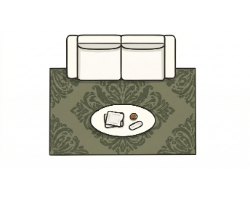
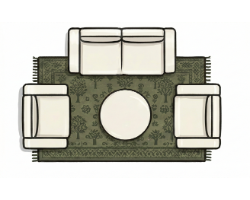
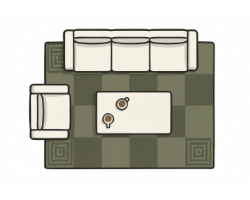
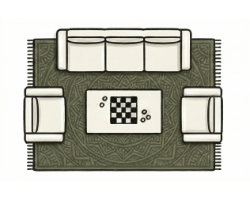
- Anchor the seating area with an oversized flatweave. Slide a low-pile synthetic rug under the sofa and coffee table so every piece touches it, at least at the front legs. This is the single move that makes a lounge area feel like a room instead of a random cluster of chairs.
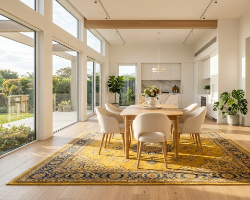
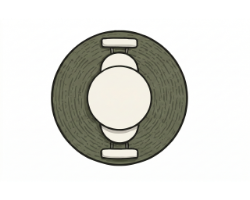
- Size the dining zone around the table, not the chairs. A medium-sized rectangular rug that extends beyond the chair legs is a typical starting point for a dining table seating several people, allowing chairs to be pulled back without slipping off.
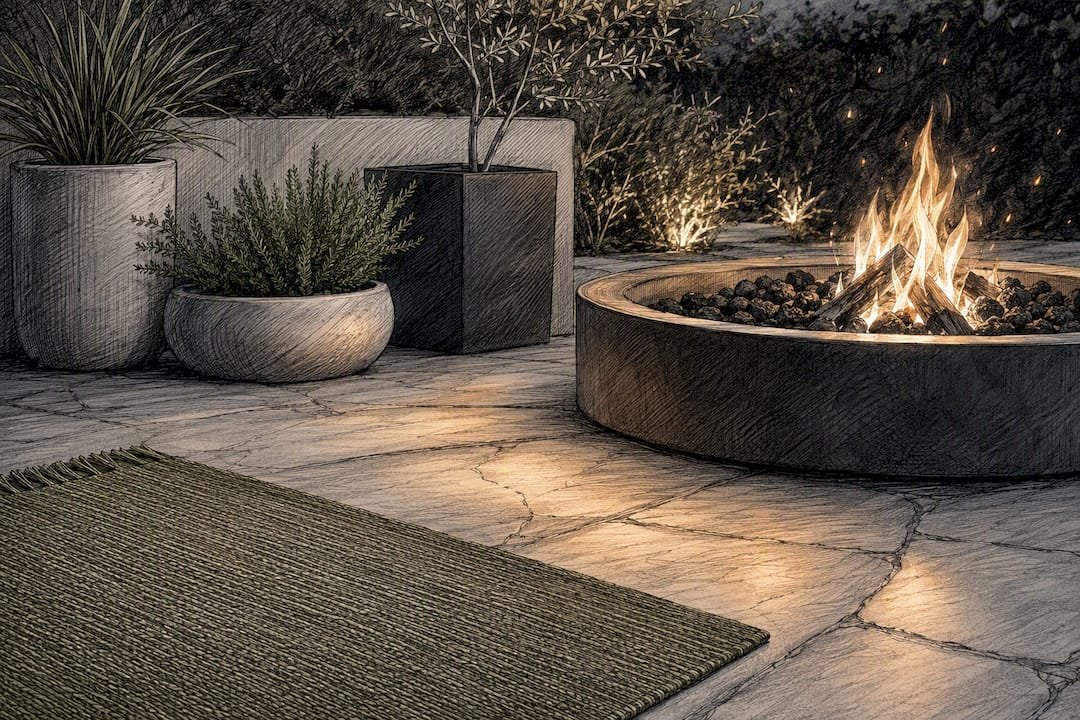
- Keep the fire pit lounge low and heat-safe. Choose a low-pile, heat-tolerant weave and leave clearance around the fire pit itself. Skip anything with loose fringe or high loops near an open flame.
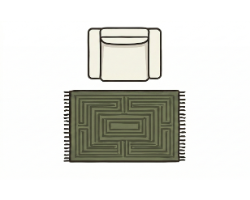
- Solve small spaces with runners and rounds. A narrow balcony calls for a runner rug rather than a square that eats the whole floor. Round rugs work well under bistro tables or circular seating clusters, softening tight corners.
- Play with pattern deliberately. Nautical stripes read as classic summer, a neutral rug with a bold border adds structure without overwhelming furniture, and bold geometrics or boho-inspired textures give a patio personality without needing new furniture at all. Layering rugs, oversized single rugs, and natural textures under cover are styles that appear repeatedly in current outdoor styling roundups.
- Finish with coordinating accents. Cushions, poufs, and a planted anchor (a large potted olive tree or grasses in a corner) tie the rug’s color story into the rest of the space without matching everything exactly.
How to Choose the Right Material for Outdoor Use
Material determines whether your rug survives its first real rainstorm or ends up curling and moldy by August. Match the fiber to your exposure level before you fall for a pattern.
- Polypropylene: Resists water and fading better than almost anything else at this price point, which is why it’s the material experts point to first for fully exposed patios.
- Acrylic and nylon: Dry quickly and hold color well in moderate rain, making them a solid second choice for patios with partial cover.
- Polyester: Comes in more colorways but sheds moisture more slowly, so it performs best on a covered porch rather than a spot that takes direct rain.
- Natural fibers (jute, sisal, hemp): Beautiful texture, but they belong under a roof. Constant dampness breaks down the fibers and invites mold within a season. If you already own one, safe cleaning steps matter more than usual.
- Pattern as function: A darker, textured weave hides tracked-in dirt and pollen far better than a pale, flat design.
Pro Tip: Check your climate before you fall for a color. IKEA’s own outdoor guidance recommends prioritizing UV resistance in sunny regions and water resistance wherever rain and puddling are common, since no single material wins at both.
Outdoor Rug Size Guide by Layout
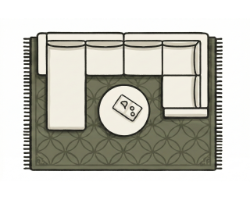
Getting the outdoor rug size wrong is the single most common styling mistake, and it’s an easy one to avoid with a few placement rules. Furniture front legs should sit on the rug at minimum; for a true anchor effect, all four legs stay on it. Dining chairs need 24 to 36 inches of rug beyond the table edge so they don’t scrape onto bare concrete when someone pulls out a seat. Narrow balconies do better with a runner than a square rug crammed into the space.
| Layout | Recommended size |
|---|---|
| Small bistro set or balcony | Runner or 3’×5’ |
| Sofa and coffee table | 6’×9’ to 8’×10’ |
| 5-seat sectional | 8’×10’ |
| large sectional or lounge | 9’×12’ or larger |
| Dining table for 4-6 | 8’×10’ |
| Dining table for 8 or more | 9’×12’ or larger |
| Fire pit seating cluster | 8’×10’ with clearance around the fire pit |
These starting points come from a widely used outdoor rug size guide, but leave a visible border of flooring around any rug rather than running it wall to wall. Check door swings and drainage channels before you commit to a size. Blocking a drain with a rug edge is a fast way to end up with standing water underneath it.
Care, Maintenance, and Quick Cleaning Tactics
Most outdoor rugs need less babying than an indoor one, but a few habits keep them looking new for years instead of one season.
- Sweep or vacuum weekly to keep grit from grinding into the fibers.
- Spot-treat spills the moment they happen, before they set into synthetic backing.
- Shake out or hose down synthetic rugs outdoors when they start looking dull.
- After heavy rain, lift the rug and let it air-dry flat or hang it over a rail. Synthetic materials can typically be hosed off and left to dry, but natural fibers need to dry fast to avoid mildew.
- Roll rugs for winter storage in a dry indoor spot. Folding creates creases that never fully release.
- If maintenance is the deciding factor, a washable rug option removes most of the guesswork.
Styling Tips and Common Mistakes to Avoid
A few small missteps show up constantly in patio setups, and they’re easy to fix before you buy.
- Skip the rug that’s too small. A rug floating under just the coffee table, with furniture legs hanging off every edge, reads as an afterthought rather than a design choice.
- Never block a doorway or drain. Measure thresholds and drainage paths before placing anything, especially on a deck.
- Add a rug pad underneath. It improves grip and lets air circulate below the rug, which matters on wood decking where trapped moisture invites mold.
- Match scale across textiles. A bold rug pattern pairs best with solid cushions, not another loud print.
- Keep planters off the direct water line. A dripping pot sitting on the rug edge will stain and rot that spot faster than anything else.
- Test color in real sunlight before buying. Swatches under indoor lighting almost never match how a color reads at noon on a west-facing patio.
Why Rugs Online Market Is Built for This
Rugs Online Market carries outdoor-rated flatweaves for exposed patios, washable styles for high-traffic zones, and natural-fiber options suited to covered porches. Kian’s related guides on sizing and care dig deeper into picking the right rug for your specific space.
Choosing a Rug That Complements Your Outdoor Furniture
Start with your furniture’s finish, not the rug. Dark wicker or black metal frames pair well with warmer rug tones like rust, terracotta, or olive, while light teak or whitewashed wood tends to look sharper against cooler neutrals like charcoal or navy. If your cushions already carry a strong color or pattern, let the rug play a supporting role in a neutral tone with texture instead of pattern.

The reverse works too: a neutral outdoor sectional gives you room to bring in a bold striped or geometric rug without the whole space feeling busy. Think of the rug as the largest single color block in the space; whatever tone dominates it will set the mood for everything else, from planters to throw pillows.
Repeating one accent color in two or three places, on the rug border, a cushion, and a planter, ties a patio together without matching everything piece for piece. If your outdoor kitchen or dining zone sits nearby, keep grease and food traffic in mind; a regular cleaning routine for that adjacent space keeps stains from migrating onto lighter rugs. For a patio with mixed metal, wood, and stone materials already in play, a rug in a muted, single-tone weave usually reads calmer than one trying to compete with three other textures at once.
Safety Considerations for Outdoor Rugs
A rug that shifts underfoot on a wet deck is a real fall hazard, not just an annoyance. Look for a rug with a non-slip or rubberized backing designed for outdoor use, since standard indoor rug backings tend to break down fast when exposed to moisture and temperature swings.

On decking or tile, a separate outdoor rug pad adds grip on top of whatever backing the rug already has, and it lifts the rug slightly so water and air can move underneath instead of pooling. For windy locations, rug tape or corner anchors keep edges from curling up and becoming a trip hazard, and they stop a lightweight rug from blowing across the yard entirely.
Check edges and corners periodically for fraying, since a curling edge is both a trip risk and the first sign a rug is wearing out. Near a fire pit specifically, stick to low-pile or flatweave rugs and keep enough clearance that a stray ember can’t reach the fibers. None of this is complicated, but skipping it is how a nice-looking patio turns into an ER visit waiting to happen.
A Few Words From Kian
Get the size and material right first. The pattern is the fun part, but it’s also the part you can change later without regret. Start with one zone, the seating area or the dining table, and build outward from there rather than trying to solve the whole patio at once.
— Kian
Shop the Look: Outdoor Rugs Ready to Ship
Once you know your size and material, the fastest path forward is browsing rugs built specifically for patios instead of hoping an indoor rug survives outside. Rugs Online Market’s outdoor rug collection is filtered by material and size, so you can jump straight to polypropylene flatweaves for an exposed deck or natural-fiber weaves for a covered porch.

Narrow balcony or entryway? The runner rug category solves the exact layout problem covered above without forcing a square rug into a space that needs a long, narrow one. Every order over $300 ships free, and if the color looks different once it’s outside in real sunlight, you have 30 days to send it back at no hassle. Browse the collection, filter by your patio’s size, and get a rug on its way this week.
Sources
- The 15 Best Outdoor Rugs, According to Experts
- Outdoor Rug Size Guide: How to Choose the Right Rug for Your Patio
- Outdoor Rug Ideas to Transform Your Patio, Terrace or Garden
- Outdoor rugs – Balcony and patio rugs – IKEA
FAQ
What is the best type of rug for an outdoor patio?
An outdoor-rated polypropylene flatweave is the best general-purpose choice for exposed patios because it resists water and fading better than most other synthetic materials.
What are the outdoor rug trends for 2026?
Layered rugs, oversized single rugs that anchor a whole lounge area, and natural-textured weaves reserved for covered spaces are the styles showing up most in current design coverage.
What are some ideas for outdoor porch rugs?
A covered porch is one of the few outdoor spots where a natural-fiber rug like jute or sisal can work, paired with layering a smaller patterned rug on top for texture.
What size outdoor rug do I need for a dining table?
An 8’×10’ rug typically fits a table seating 4 to 6, with 24 to 36 inches of rug extending beyond the table edge so chairs stay on the rug when pushed back.
How do I keep an outdoor rug from sliding or curling?
Use a non-slip outdoor rug pad for grip and airflow, and add corner anchors or rug tape in windy spots to keep edges from lifting.
