









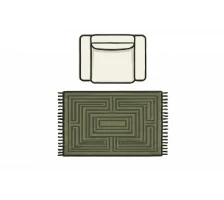





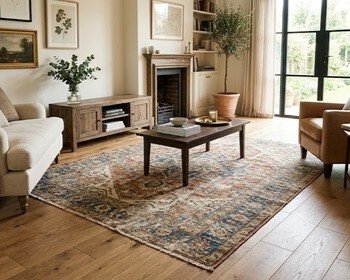







For a rug placed on top of wall-to-wall carpet, a low-profile felt-and-rubber dual-surface pad is your safest bet, and RugPadUSA’s Carpet Lock, the Mohawk Home Dual Surface, and Gorilla Grip’s Rug Pad for Carpet lead that category. Cut the pad about an inch smaller than the rug on every side, and always set the textured grip side facing down into the carpet fibers.
TL;DR:
- Felt-and-rubber dual-surface pads like Carpet Lock and Mohawk Home provide the best grip and cushioning on carpet, especially for larger rugs.
- Thickness should be moderate to avoid uneven edges or trip hazards, with low-pile carpets accommodating most grip pads and high-pile needing more textured options.
- Proper sizing involves trimming the pad about one inch smaller than the rug on all sides to hide the edges and prevent squeezing out of the pad material.
- Installation requires laying the textured side down into the carpet fibers and walking on the rug to test for shifting before final placement.
- Rug pads typically last three to five years under normal use, with higher-quality felt-rubber options offering better durability and performance data from independent testing.
Table of Contents
- Which Rug Pads Work Best on Carpet?
- How Do You Choose the Right Rug Pad for Carpet?
- How Do You Install and Maintain a Rug Pad on Carpet?
- Why Rugsonlinemarket’s Guidance Reflects Real Testing, Not Guesswork
- How Long Do Rug Pads Last, and What Do Warranties Cover?
- What Should You Budget for a Rug Pad on Carpet?
- Where Should You Buy a Rug Pad for Carpet?
- How Do You Match a Pad to Your Specific Carpet and Rug?
- What the Testing Actually Tells You
- A Simpler Way to Get the Rug and Pad Right From the Start
- Sources
- FAQ
Which Rug Pads Work Best on Carpet?
Not every pad built for hardwood works once you put it on top of carpet. Carpet fights back with its own pile, and a pad needs enough texture to bite into that fiber without adding so much bulk that the rug rocks like a seesaw. The products below are the ones that consistently show up in editorial testing and real-world use for carpet-over-carpet situations.
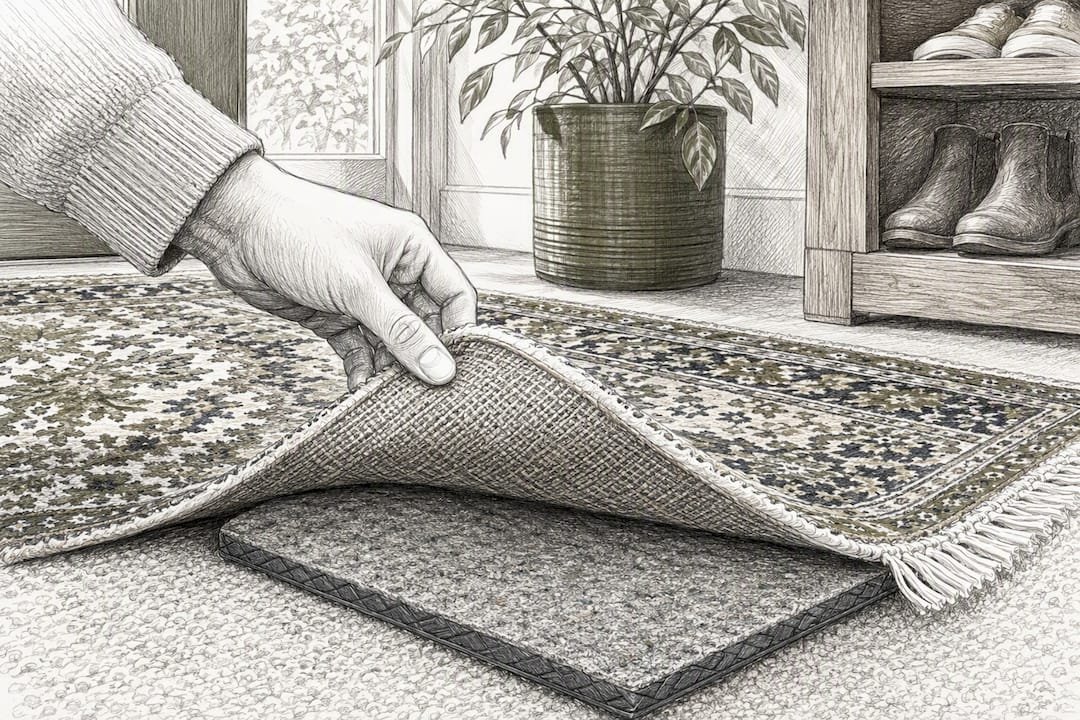
Carpet Lock (RugPadUSA) uses a needle-punched felt underside built specifically to grab wall-to-wall carpet fibers, paired with a rubber top layer. The manufacturer’s own product documentation describes the thermo-bonded felt construction as designed to stop rugs from buckling or sliding on carpet, and it works well under runners in hallways.
Gorilla Grip Rug Pad for Carpet takes a thinner approach: an adhesive-style grip layer that keeps low- and medium-pile carpet from letting a rug creep sideways. Independent testers who ran eight rug pads through real household use singled out Gorilla Grip for holding runners steady without the corner curling you get from cheaper thin pads.
Mohawk Home Dual Surface is the felt-and-rubber pad Wirecutter’s testers point to most often. Its combination of cushioning and nonskid grip held up across carpet and hard flooring alike, which makes it a practical pick if you plan to move a rug between rooms.
Grip-It (also sold as Slip-Stop Magic Stop) covers the low-profile end of the spectrum. Better Homes & Gardens tested double-sided adhesive versions and found they hold thin rugs on carpet without bunching, though the adhesive can wear faster under heavy foot traffic.
Loloi Loloi-Grip rounds out the shortlist as a rug-brand-specific pad, sized to match Loloi’s own rug dimensions and built with a similar felt-rubber approach for stability on carpet and hard floors.
Beyond this core five, you’ll also see Mohawk Felt + Rubber, Gorilla Grip Felt + Rubber, Gorilla Grip Rubber, Rug Pad USA Felt + Rubber, Techpro Grippers, Enjoy Holiday 1981 Felt + Rubber, nuLOOM Eco-Friendly Rug Pad, Mohawk Home Non Slip Rug Pad Gripper, RUGPADUSA Dual Surface, RUGPADUSA Memory Foam, RUGPADUSA Super Lock Natural, and Vekken Rug Pad Gripper widely available online. Most fall into the same two families: thin grip pads for lightweight rugs, or thicker felt-rubber combinations for larger area rugs that need real cushioning.
How Do You Choose the Right Rug Pad for Carpet?
Picking a pad comes down to four variables: material, thickness, carpet pile height, and how you’ll size the thing. Get those right and slipping stops being a problem you think about.
- Match the material to the job. Felt-and-rubber dual-surface pads perform the best all-around, combining cushion with grip. Pure rubber pads grip harder but trap moisture more easily. PET felt pads (made from recycled polyester fibers) offer a firmer, denser cushion and tend to hold their shape longer under furniture legs. Adhesive-backed pads grip aggressively but should stay off delicate or antique carpet, since repeated peeling can pull at carpet fibers.
- Pick a thickness that won’t create a trip hazard. Wirecutter’s testing points toward a modest range of thickness as the sweet spot for carpet applications. Thicker felt pads cushion well on hardwood, but on top of carpet they compress unevenly and can create a spongy, uneven edge that catches toes.
- Check pile height before you buy. Low-pile carpet (think Berber or commercial-grade loop) pairs well with almost any grip pad. Medium-pile plush carpet needs a pad with real texture, like Carpet Lock’s needle-punched felt, to bite through the fibers. High-pile or shag carpet is the hardest case. Even the best pad struggles here, and a slightly heavier rug with a wide-gripping dual-surface pad usually outperforms anything ultra-thin.
- Size it correctly. Trim your pad about one inch smaller than the rug on every edge. This keeps the pad hidden from view and prevents the “squeeze-out” look where pad material peeks past the rug’s border. If you need help nailing down rug dimensions before you cut anything, this guide to rug sizing and placement walks through the math room by room.
Reversible pads add one more decision: which side goes down. Dalton’s product documentation for its all-surface pad is explicit about this, stating that the fiber side faces up on hard floors and down on carpet. Flip that orientation and you’ll wonder why your “grip” pad isn’t gripping anything.
Pro Tip: Before you commit to trimming a pad down, lay it under the rug untrimmed and walk on it for a day. You’ll feel immediately if the thickness is wrong or if the grip side isn’t making contact, and it’s a lot easier to fix before you’ve cut it.
If you’re placing a rug on carpet in one room and hardwood in another, pad choice gets more complicated. Our guide on choosing safe pad options for hardwood floors breaks down how those requirements diverge from carpet.
How Do You Install and Maintain a Rug Pad on Carpet?
Getting the pad right matters less if you install it wrong. Here’s the process that actually holds up over time.
- Measure your rug’s exact dimensions, then cut the pad one inch smaller on all four sides.
- Lay the pad grip side down onto the carpet, smoothing out any folds before placing the rug on top.
- For runners, unroll the whole length first and let it sit flat for a few hours before final placement. This prevents the wrinkling that comes from unrolling a tightly packed pad straight into a hallway.
- Walk across the full rug surface to test for shifting, then adjust pad placement if one corner still lifts.
- Vacuum the rug regularly, but pull it up every few months to check the pad underneath for flattening or matting, particularly in high-traffic zones.
- Replace a pad once it’s visibly compressed or crumbling. A flattened felt pad loses its grip texture and stops doing its job.
Runners deserve extra attention since they see the most foot traffic and the most bunching. A pad that’s cut a hair too long will ripple at the ends within weeks.
Why Rugsonlinemarket’s Guidance Reflects Real Testing, Not Guesswork
Rugsonlinemarket built this guide around the same standards that guide our rug selection: durability, real-world performance, and materials that hold up under daily use. Our catalog spans traditional Persian weaves to modern minimalist pieces, and we back every purchase with free shipping on orders over $300 and 30-day hassle-free returns.
The pad recommendations above lean heavily on Wirecutter’s and BHG’s hands-on testing rather than manufacturer marketing alone. Both outlets ran pads through months of foot traffic before naming dual-surface felt-and-rubber construction as the strongest all-around performer. If slipping is still an issue after switching pads, our full guide to stopping rug slippage on any floor type covers fixes beyond just the pad itself.
How Long Do Rug Pads Last, and What Do Warranties Cover?
A quality felt-and-rubber pad typically holds its grip and shape for three to five years under normal residential traffic, though heavy-use areas like entryways will wear faster. Thin adhesive pads have a shorter practical lifespan. BHG’s testing found that while these thin adhesive-backed options grip well initially, they can wear out faster under heavy traffic and aren’t always the strongest long-term choice for large or heavy rugs.
Warranty coverage varies widely by brand. RugPadUSA backs several of its lines, including Carpet Lock, with manufacturer guarantees against material defects, though normal wear from foot traffic isn’t typically covered. Gorilla Grip and Mohawk Home both stand behind their pads with standard consumer guarantees against manufacturing defects as well, though exact terms differ by retailer and product line.
The real evidence for grip performance comes from independent testing rather than warranty language. Wirecutter’s editorial team specifically favored felt-and-rubber pads for their nonskid performance across surfaces, and that kind of hands-on, side-by-side testing tells you more about how a pad performs after a year of foot traffic than any warranty card. When you’re comparing two similarly priced pads, check whether the brand has published testing methodology or independent lab results. A pad with real performance data behind it is a safer bet than one relying purely on marketing copy.
What Should You Budget for a Rug Pad on Carpet?
Rug pads for carpet span a wide price range depending on material and size. Thin adhesive grip pads, like Grip-It or Slip-Stop, tend to sit at the lower end of the market, especially for smaller rug sizes under 5×8 feet. They’re a reasonable entry point if you’re testing whether a pad solves your slipping problem before investing more.

Felt-and-rubber dual-surface pads, including Carpet Lock and Mohawk Home Dual Surface, cost more but scale with rug size, since larger rugs need proportionally more material. For a standard living room rug in the 8×10 range, expect to pay meaningfully more than for a small accent rug pad. Memory foam pads, like RUGPADUSA’s Memory Foam line, typically land in a similar or slightly higher bracket thanks to the added cushioning layer.
Runner-specific pads are usually priced by the linear foot, which means a long hallway runner pad can cost more in total than a pad for a compact area rug, even though the material per square foot is comparable.
The cheapest option isn’t always the best value. A $15 adhesive pad that needs replacing every year costs more over five years than a single well-made felt-and-rubber pad that lasts through several rug rotations. When you’re budgeting, weigh the pad against the rug it’s protecting. A high-value wool or silk rug justifies spending more on a pad that actually preserves the fibers and prevents the friction damage that comes from a rug sliding against carpet day after day.
Where Should You Buy a Rug Pad for Carpet?
Online retailers give you the widest selection and the easiest way to compare specs side by side. RugPadUSA, Gorilla Grip, and Mohawk Home all sell directly through their own sites and through major online marketplaces, which means you can typically find manufacturer specs, thickness details, and customer reviews all in one place before buying.
Big box home stores and carpet retailers carry a narrower selection in person, usually limited to one or two thickness options per brand. That works fine if you already know exactly what you need and want to feel the material before buying, but it limits your ability to compare across brands like Loloi, nuLOOM, or Techpro in a single trip.
Specialty rug retailers, including Rugsonlinemarket, often bundle pad recommendations alongside rug purchases, which helps if you’re buying a new rug and want a pad sized correctly from the start rather than guessing dimensions later. Buying rug and pad together also reduces the odds of a sizing mismatch, since retailers who sell both know how much to trim off a standard pad for a given rug size.
Whichever route you choose, check the return policy before buying a pad you haven’t tested at home. Carpet pile varies enough from house to house that even a well-reviewed pad can underperform on unusually thick or high pile carpet, and a flexible return window protects you from getting stuck with the wrong fit.
How Do You Match a Pad to Your Specific Carpet and Rug?
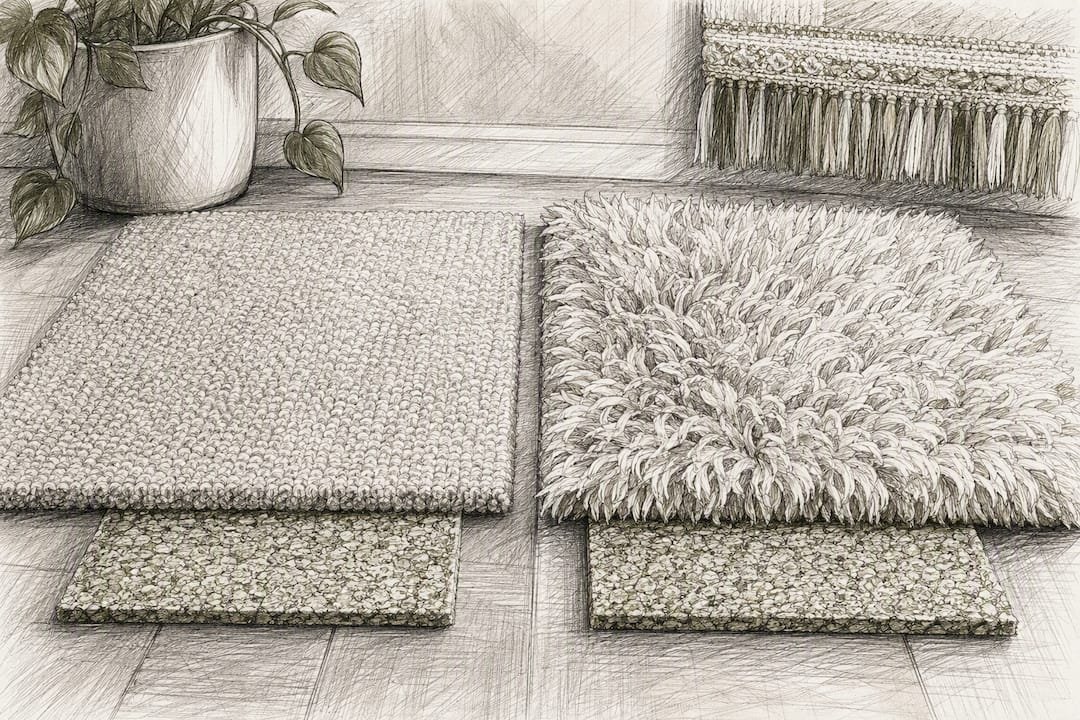
Every combination of rug weight, carpet pile, and room traffic changes which pad makes sense. Start with the heaviest variable: your carpet’s pile height. Low-pile carpet gives almost any grip pad something to hold onto. High-pile or shag carpet limits your options to pads with aggressive texture, since a smooth-backed pad simply floats on top of long fibers without gripping anything underneath.
Next, weigh your rug itself. A heavy wool rug adds its own stability and needs less from the pad. A lightweight cotton or synthetic rug, especially a small accent piece, needs a pad with strong grip on both sides since the rug alone won’t hold position through normal foot traffic.
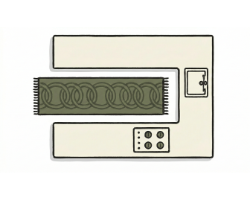
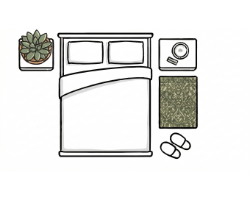
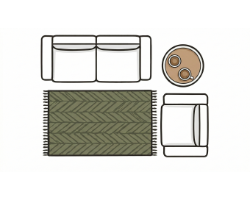
Room function matters too. An entryway or hallway runner needs a pad built for repeated, direct foot traffic and quick direction changes. A bedroom accent rug under a nightstand doesn’t face the same stress, so a lighter, thinner pad works fine there. For furniture placement, consider how a rug pad interacts with the way you’ve arranged furniture around the rug, since a pad that’s too thick can make furniture legs sit unevenly.
Finally, factor in maintenance realities. Homes with pets or kids benefit from pads that lift easily for cleaning underneath, since moisture trapped against carpet fibers can cause staining and odor problems that get worse the longer they sit. A pad you can pull up in thirty seconds for a quick inspection beats one that’s semi-permanently stuck down with heavy adhesive.
What the Testing Actually Tells You
Most rug pad advice online repeats the same “best overall” list without asking whether the reader even has carpet underneath. That’s backwards. Pile height, not brand reputation, decides whether a pad grips or slides, and the conventional shopping advice skips that step entirely.
The editorial testing from Wirecutter and BHG is useful precisely because it separates surfaces instead of blending them into one generic ranking. A pad that performs beautifully on hardwood can underperform badly on plush carpet, and vice versa. If there’s one thing homeowners consistently get wrong, it’s assuming a “top rated” pad works everywhere.
Prioritize orientation and sizing before brand name. A correctly trimmed, properly oriented mid-tier pad will outperform a premium pad installed backwards or cut too large. Once those basics are locked in, then it’s worth spending more on material quality, especially for a rug that matters to you.
— Kian
A Simpler Way to Get the Rug and Pad Right From the Start
Picking a pad after you’ve already bought a rug means measuring, guessing, and sometimes returning the wrong size. Rugsonlinemarket removes that guesswork by pairing rug and pad guidance from the same place you’re shopping for the rug itself, so sizing questions get answered before you’re stuck trimming a pad on your living room floor.

Our collection spans traditional Persian and Oushak designs to modern abstract and washable options, all sized clearly so you know exactly what pad dimensions to buy alongside them. Every order over $300 ships free, and if a rug doesn’t work in your space, you have 30 days to return it, no complicated exceptions. Whether you’re outfitting a hallway with a runner rug or looking for a natural-fiber piece that pairs well with a low-profile pad, browse our natural rugs collection and get the sizing right the first time.
FAQ
Should You Use a Rug Pad on Carpet?
Yes. A rug pad on carpet prevents sliding, cushions the rug, and stops the friction that wears down fibers on both the rug and the carpet underneath over time.
What Kind of Rug Pad Should You Use on Carpet?
A dual-surface felt-and-rubber pad or a carpet-specific gripper pad, like Carpet Lock or Mohawk Home Dual Surface, works best because the textured underside grips carpet fibers instead of sliding across them.
What Do You Put Under a Rug on Carpet?
Put a felt-and-rubber or carpet-gripper pad between the rug and the carpet, with the textured or grip side facing down into the carpet pile, not up toward the rug.
Should Your Rug Pad Be the Same Size as Your Rug?
No. Cut the pad about one inch smaller than the rug on every side so it stays hidden underneath and doesn’t create a visible edge or trip hazard.
