












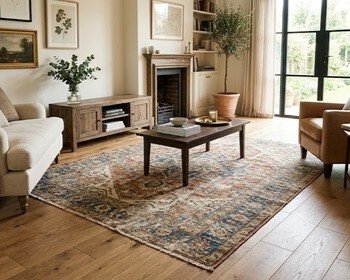







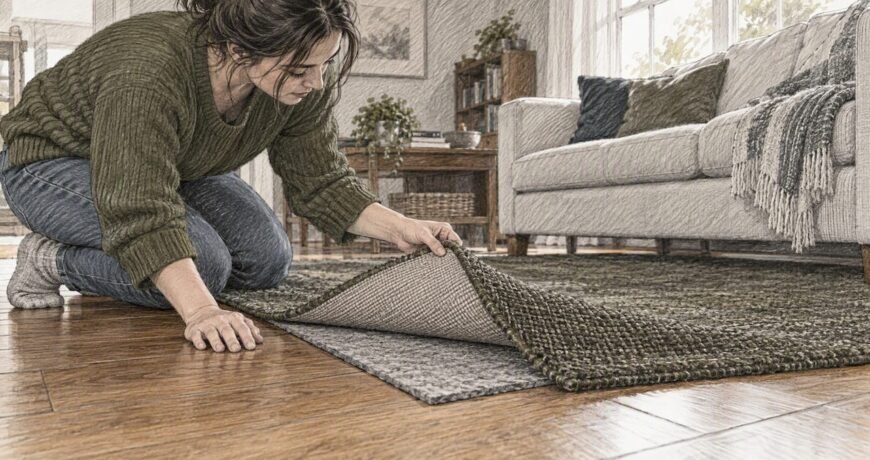
For hardwood floors, a felt and natural rubber pad gives you the best mix of cushion and grip while keeping your finish safe. If grip matters most, a natural rubber option anchors rugs without slipping, and a tape style gripper covers small rugs and runners on a budget, with one caveat: skip PVC-heavy versions on finished wood. Check the comparison below before you buy.
Key Takeaways
Choosing the right rug pad for hardwood floors involves matching material, thickness, and installation to protect the finish and ensure safety and comfort.
| Point | Details |
|---|---|
| Material compatibility | Felt, rubber, or a combination of both are safest and most effective for hardwood floors. |
| Appropriate thickness | Use 1/8 inch for flatweave rugs, 1/4 inch for general areas, and 3/8 inch for plush, cushioned feel. |
| Timing for rubber pads | Wait at least 30 days after refinishing before using rubber or PVC-backed pads to avoid damaging the finish. |
| Regular inspection and rotation | Check pads every 3 to 6 months for hardening or stickiness and rotate rugs to prevent floor imprinting. |
| Recommended approach by Rugsonlinemarket | We advise selecting felt and natural rubber pads for optimal floor protection and longevity. |
Table of Contents
- How the Top Rug Pads for Hardwood Compare
- What Each Rug Pad Is Made Of and Where It Fits
- How to Choose the Right Rug Pad for Hardwood Floors
- Our Advice on Rug and Pad Pairing and Upkeep
- Balancing Cost, Grip, and Long-Term Floor Health
- Pairing the Right Rug With Your Hardwood Floor
- FAQ
- Sources
How the Top Rug Pads for Hardwood Compare
Five pads come up again and again in product roundups and bestseller lists, each built for a different job. The table below lines them up on what actually matters for hardwood floors: what they’re made of, how thick they come, and whether they’re sold for grip, cushion, or both.
A few quick notes on when to reach for each one:
- Loloi Loloi-Grip Rug Pad: a solid everyday choice for living rooms and bedrooms where you want both cushion and hold.
- GORILLA GRIP Extra Long Rug Grippers: best for hallway runners that keep sliding out of place; avoid on rugs that need full-surface cushioning.
- Rabenda Rug Tape Gripper: fine for a small entry rug, but not a substitute for a full pad under a large area rug.
- ZONGOOL Rug Tape Non Slip Rug Pad Grippers: useful as a cheap fix, but check the material before using it on a freshly refinished floor.
- Muddy Mat Rug Pad: a strong pick for high-traffic rooms, though its grip-first design means less plush underfoot feel than a dedicated cushioning pad.
What Each Rug Pad Is Made Of and Where It Fits
Materials, not brand names, decide whether a pad is safe for your floor. Felt pads are typically wool or recycled fiber and work well under heavy rugs anchored by furniture, since they protect the finish without much tack. Natural rubber pads grip aggressively and suit rooms where rugs move around, like living rooms with foot traffic, but they should be kept off floors that were refinished in the last month.
- Loloi Loloi-Grip Rug Pad: a felt and rubber hybrid built for general living spaces; the dual material gives cushion from the felt side and hold from the rubber side.
- GORILLA GRIP Extra Long Rug Grippers: a rubber-based tape and gripper format meant for edges and corners rather than full rug coverage, so it suits runners in hallways and on stairs.
- Rabenda Rug Tape Gripper: an adhesive tape gripper sized for small mats and doorway rugs, where a full pad would be overkill.
- ZONGOOL Rug Tape Non Slip Rug Pad Grippers: another tape and gripper entrant aimed at budget anti-slip fixes for small rugs.
- Muddy Mat Rug Pad: an open-weave rubber or felt-rubber pad marketed for heavy-duty grip in high-traffic rooms.
A few practical issues show up across pad types regardless of brand. Rubber and tape adhesives can leave a faint odor when new, which usually fades within a few days of airing the room. Rubber-backed pads placed over radiant heat systems can soften or harden unevenly with repeated temperature cycles, so check compatibility before installing one over heated flooring. Older rubber and latex formulations also tend to harden or grow tacky after a few years, which is why editorial testing increasingly favors natural rubber and high-density felt over cheaper synthetic blends.
How to Choose the Right Rug Pad for Hardwood Floors
Picking the right pad comes down to three decisions: material, thickness, and how you install it. Get those right and you protect both your floor’s finish and your investment in the rug itself.
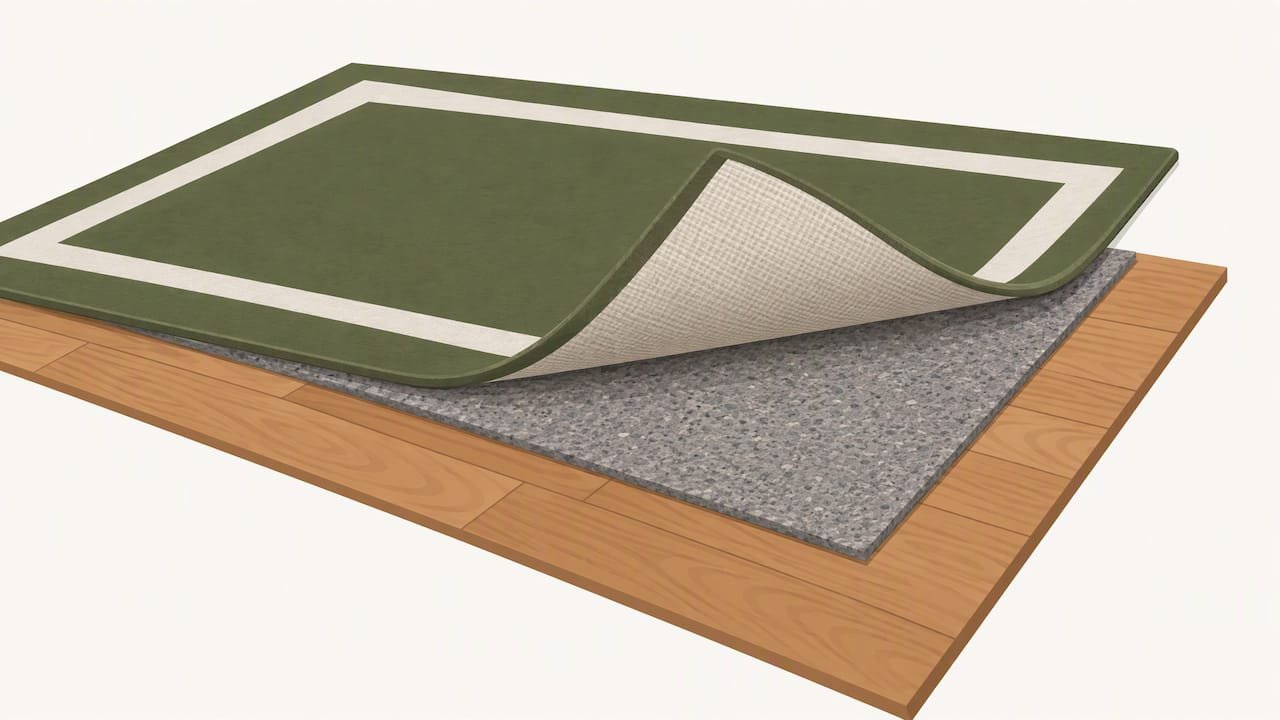
- Match material to need. Felt protects the finish with minimal risk; natural rubber adds grip; a felt and natural rubber combination covers both. Editorial tests consistently favor this dual-surface combination for hardwood because it balances cushion and hold without relying on heavy plasticizers.
- Pick thickness by room. Use 1/8 inch under flatweave rugs so doors still clear them, 1/4 inch for most living spaces as the most versatile option, and 3/8 inch where you want a plush, cushioned feel. Avoid anything thicker than 1/2 inch unless you have a specific comfort need, since very thick pads can create a trip hazard at the edges.
- Respect finish timing. Wait at least 30 days after refinishing hardwood before placing a rubber or PVC-backed pad on it, since fresh finish can react with adhesives and leave a cloudy mark.
- Inspect and rotate. Check pads periodically for hardening or stickiness and rotate rugs occasionally so one spot doesn’t develop a visible outline in the finish.
- Size and install carefully. Cut the pad about 1 inch smaller than the rug on every side so no pad edge is exposed to foot traffic, which keeps the installation flat and trip-free.
Pro Tip: Before committing to a new pad, test a small corner against an inconspicuous section of flooring for 48 hours; if you notice staining, stickiness, or an odor that doesn’t fade, remove it and switch to a felt-only option.
Our Advice on Rug and Pad Pairing and Upkeep
As a buyer’s guide writer who works on rug and floor-care content for our team, I focus on matching the pad’s chemistry to the floor’s finish before thickness or brand ever enters the conversation. We help shoppers choose rugs that sit safely on hardwood and walk them through which pad type fits their rug and room.
A simple upkeep routine keeps both rug and floor in good shape; learn the importance of floor protection during moves to preserve your hardwood finish.
- Lift the rug every 3 to 6 months and check the pad underneath for hardening, stickiness, or discoloration.
- Clean a felt pad by vacuuming it and spot-wiping with a barely damp cloth, never soaking it, since excess moisture can seep into the wood.
- Air out the room for a day after installing a new pad to let any adhesive or rubber odor dissipate.
For more detail, see our guides on safe rug choices for hardwood, stopping rug slippage, and rug compatibility with heated floors.
Balancing Cost, Grip, and Long-Term Floor Health
The most common mistake we see is grabbing the cheapest PVC tape at checkout and regretting it a year later when it leaves a tacky outline on the floor. Spending a bit more on natural rubber and felt almost always pays off once you count the cost of refinishing a damaged section. Our rule of thumb: prioritize floor protection over price whenever the rug sits in a high-traffic or sun-exposed room. That’s exactly why a felt and natural rubber pad remains the safest all-around pick for most hardwood floors.
— Kian
Pairing the Right Rug With Your Hardwood Floor
Choosing a pad is only half the job. We help customers pick rugs suitable for hardwood floors and guide you toward pairings that protect your finish while giving you the look you want.

Our collection includes various rugs sized for every room, and our team can help you find constructions that work well with the pad types covered above. Browse our traditional rugs to find a piece that fits your space, and reach out if you want guidance on matching it with a safe pad.
FAQ
Is waterproof carpet padding worth it?
Waterproof padding helps mainly in rooms prone to spills or moisture, like kitchens or entryways, but it isn’t necessary for most living rooms or bedrooms. For hardwood specifically, breathability matters more than waterproofing, since trapped moisture under a non-breathable pad can cause finish issues over time.
What rug backing is best for hardwood floors?
Felt and natural rubber backings are the safest choices for hardwood, since they protect the finish while still offering grip. Testing from BHG found felt plus natural rubber combinations performed best for both cushion and hold on hardwood.
What rugs should not be used on vinyl planks?
Rugs with PVC or rubber backings containing plasticizers can discolor vinyl plank flooring over time, especially in sunny or warm rooms. A felt-only pad under the rug is a safer choice for vinyl, since it avoids direct chemical contact between backing and floor.
Do anti-slip rug pads work?
Yes, rubber and felt-rubber pads significantly reduce rug movement and sliding on hardwood when sized and installed correctly. Tape-style grippers work well for runners and small mats but are not a substitute for a full pad under a larger area rug.
Sources
- The 6 Best Rug Pads of 2026, Tested by BHG
- 8 Best Rug Pads for Hardwood Floors (October 2026) Tested Picks
