

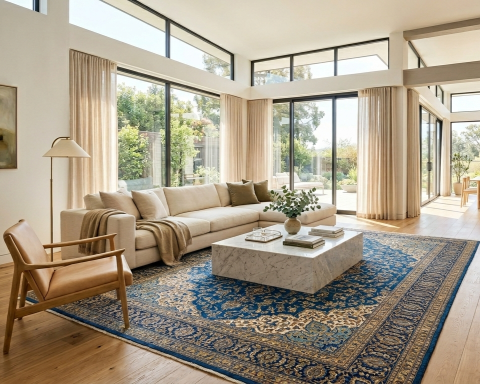
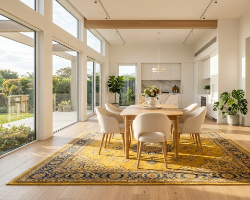
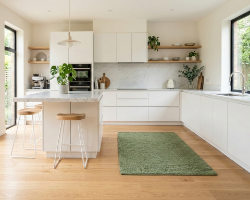
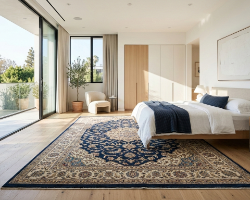
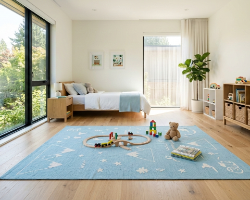
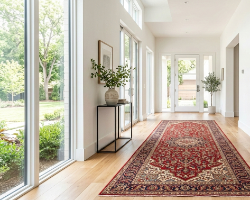
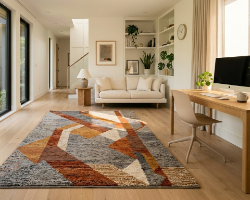
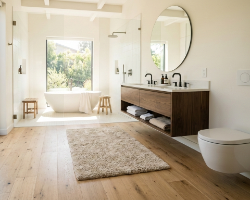

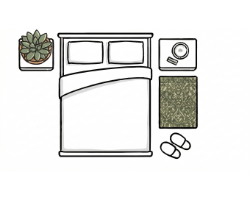
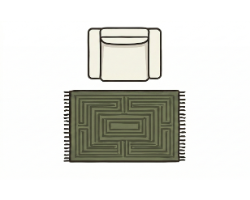
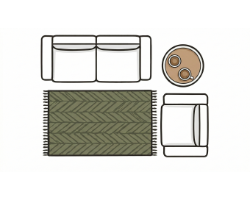
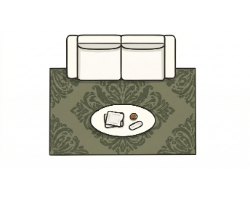
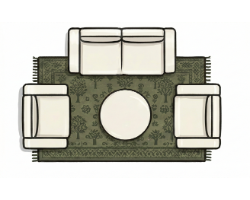
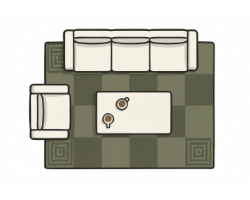
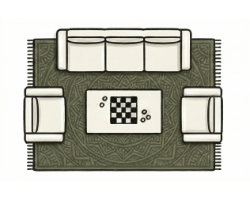
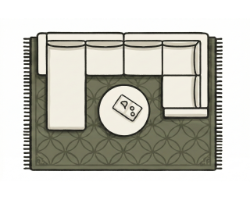








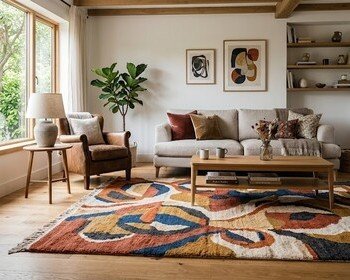

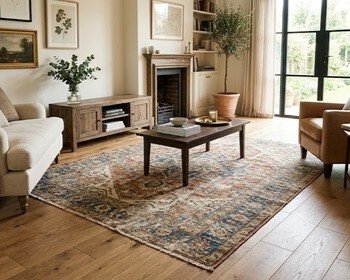
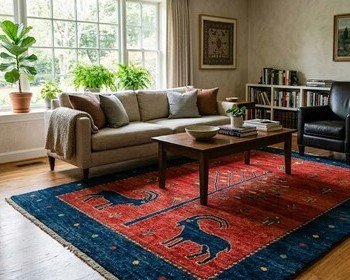
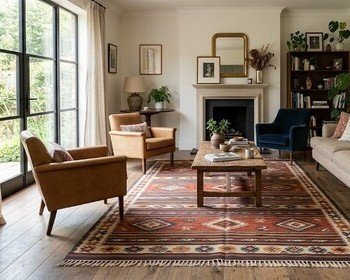
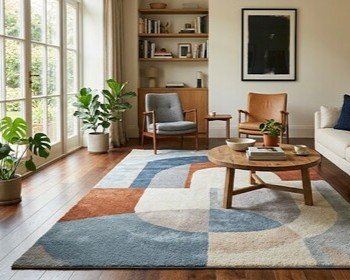


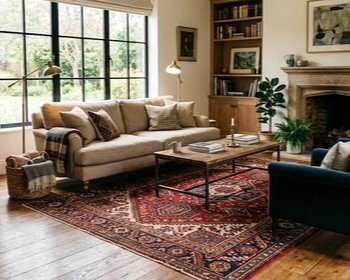
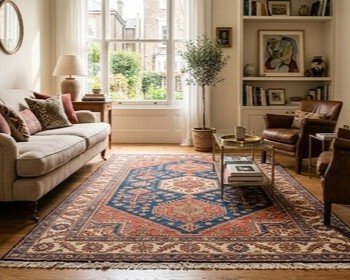
Yes, two rugs can work in one room when you use them to define separate zones or to intentionally layer a base and topper. Keep to one clear purpose per pair, follow the 8 to 12 inch reveal rule for layering, anchor each rug to furniture, and share at least one color between them so the pairing reads as a choice rather than a mismatch.
TL;DR:
- Use two rugs to either define separate zones in open-plan spaces or layer a base and topper for added texture within a single zone, avoiding mixed purposes.
- Proper sizing relies on marking out rug footprints with painter’s tape to ensure furniture and sightlines are correctly anchored, with specific measurements for seating and dining areas.
- Layered rugs should have an 8 to 12 inch reveal all around, with the base being 2 to 3 feet larger than the topper in each direction, and centered on seating arrangements.
- Coordinating two rugs involves sharing one or two colors, contrasting patterns or textures, and avoiding matching completely to keep the pairing deliberate and balanced.
- Common mistakes include rugs being too small, pattern clashes, uneven layering, and pile mismatches, which can be fixed by re-measuring, muting patterns, or adding non-slip pads.
Table of Contents
- When to use two rugs: zoning vs. layering
- How to place and size two rugs for distinct zones
- Layering technique: the base and topper formula
- How to coordinate color, pattern, scale, and texture
- Common mistakes and quick fixes
- Practical choices for a confident two-rug setup
- Find base and topper rugs that fit these rules
- FAQ
- Sources
When to use two rugs: zoning vs. layering
The first decision is purpose, not pattern. Two rugs usually serve one of two jobs: splitting a large or open room into distinct activity zones, or stacking a base and topper for texture and coverage in a single zone. Mixing the two goals in one space is what makes a room feel cluttered instead of considered.
Zoning works best in open floor plans or rooms with more than one function:
- A living and dining combination, where each furniture group gets its own rug.
- A main seating area paired with a smaller reading nook or window bench.
- A play area set apart from an adjoining family room.
Layering makes more sense when the room has only one real zone but needs more texture, a wider footprint, or coverage over dated flooring. If you are weighing both setups for a single open living and dining area, our guide to sizing, placement, and style walks through the layout math in more detail.
How to place and size two rugs for distinct zones
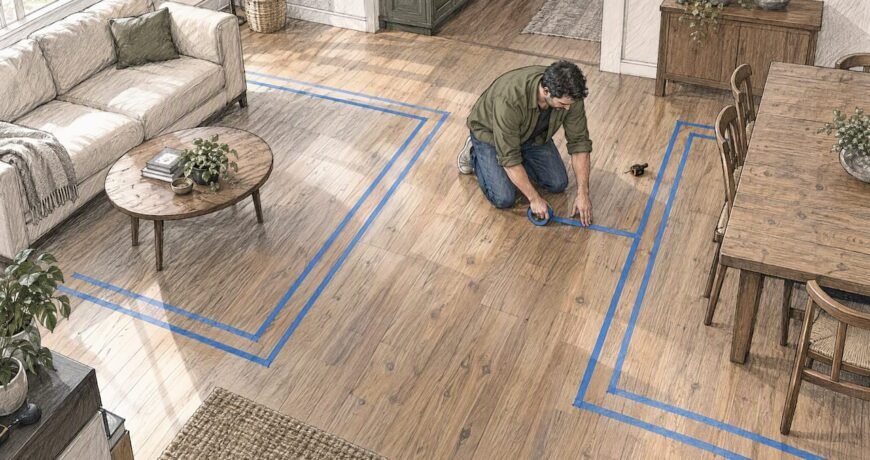
Before buying anything, mark out both rug footprints with painter’s tape on the floor. This tape-out method lets you check sightlines, walking paths, and furniture overlap without committing to a size you cannot return. Designers who review finished rooms consistently flag undersized rugs and poor furniture anchoring as the two most common errors, so this is the step most worth the extra ten minutes.
- Tape out each rug’s exact length and width on the floor, including the corners.
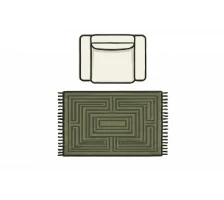
- For a living room zone, size the rug so at least the front legs of every seating piece rest on it; an 8×10 or 9×12 rug usually covers a standard sofa and two chairs.
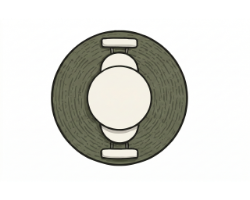
- For a dining zone, size the rug to extend about 24 inches beyond the table’s edge on all sides so chairs stay on the rug even when pulled out.
- In entries or hallways, use a runner or a smaller rug sized to the walking path rather than the full room width.
- Check the gap between the two rug zones: leave a deliberate visual break, and align at least one shared edge, like the seating wall, so the two areas read as connected rather than as separate islands.
Our placement guide for living rooms includes photo examples of this front-leg rule in practice, which helps when you are picturing it against your own furniture.
Pro Tip: Lay the tape out a day before you shop and walk through the space at different times; natural light shifts how a rug’s edge reads against the floor.
Layering technique: the base and topper formula
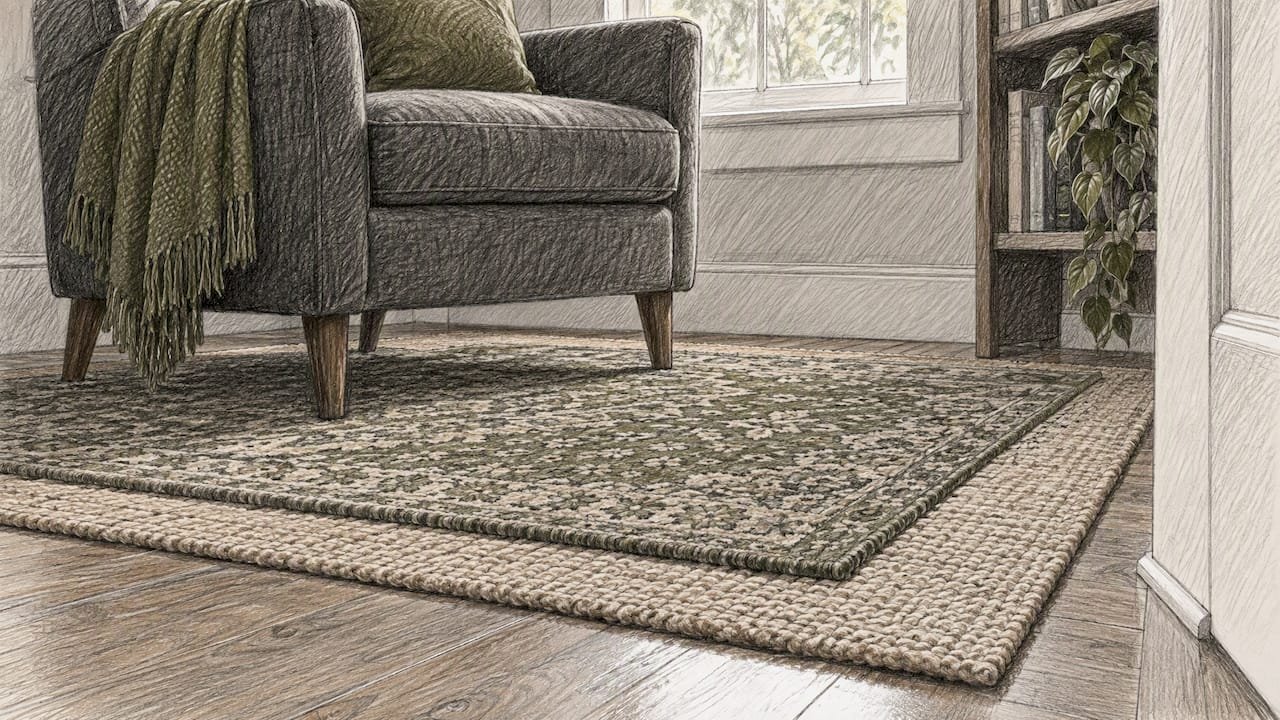
Layering is its own technique, separate from zoning, and it has a specific formula worth following to the inch. Size the base rug 2 to 3 feet larger than the topper in each direction, which produces an even 8 to 12 inch border of base rug showing all the way around the topper. A consistent 8 to 12 inch reveal is what separates intentional layering from a rug that just looks too small, according to the two-rug layering technique.
A few points make the formula work in practice:
- Choose a low-pile, flatwoven base like jute or sisal, which sits flat and reduces the tripping hazard a thick topper edge can create.
- Pick a topper with more pattern, color, or texture since it becomes the visual focal point against the plain base.
- Square both rugs to the seating arrangement rather than to the walls, then center the topper within the base before checking the reveal on all four sides.
- Anchor at least the front furniture legs on the topper so the layer looks load-bearing, not decorative.
Our practical layering rules cover a few more room-specific variations on this same base-and-topper math. A third layer is sometimes used in very large, casual, or boho-style rooms, but most interior spaces look best stopping at two, since each added layer increases both visual noise and tripping risk near the edges.
How to coordinate color, pattern, scale, and texture
Two rugs read as a set when they share something, not when they match. The simplest approach is sharing one or two colors, or at least a common undertone, between the rugs while letting everything else differ. Designer guidance on open floor plans notes that an exact match between two rugs often looks accidental or dated, while a shared palette with varied pattern or texture looks deliberate.
A few rules keep the pairing balanced:
- Pick one rug to be the “loud” piece with the bolder pattern, and let the other stay quieter so they do not compete for attention.
- Vary either pattern or texture between the two rugs, not both at once, so there is still a visual thread connecting them.
- Pair a large-scale pattern with a smaller, tighter repeat rather than two bold patterns of similar size.
- When two rugs feel unresolved, use the room’s other finishes, sofa upholstery, drapery, or floor tone, as the tiebreaker for which color family to lean on.
Designer Shea McGee’s approach to combining rugs follows this same logic: share color, contrast texture and pattern. If you are also working on wall art or lighting in the same room, matching those finishes to your rug palette, as covered in this guide to measurable decorating moves, can help settle a close call between two rug options.
Common mistakes and quick fixes
Most two-rug problems trace back to one of four fixable issues.
- Rugs too small: redo the tape-out at a larger size, or shift furniture inward so the existing rug covers more of the seating group.
- Clashing patterns: mute one rug with a solid or low-pattern alternative, or add a neutral flatweave base beneath both to visually ground them.
- Uneven reveals or crooked layering: re-square the topper to the seating line and re-measure all four sides until the border is consistent.
- Pile mismatches and slipping: swap a thick-pile base for a low-pile option, and secure both layers with a rug pad rather than relying on weight alone; our guide to stopping rug slipping covers pad options by floor type.
Practical choices for a confident two-rug setup
After working through enough layouts, I’ve landed on a simple default: pick one rug to be loud and let the other do the quiet work of grounding the room. Repeating the same rug across two mirror-image zones, like matching nightstand-adjacent runners, is one of the safer moves for resale, since it reads as planned rather than mismatched to a future buyer. Tape it out before you buy, and never let a layered edge sit close enough to a walking path to become a trip risk.
— Kian
Find base and topper rugs that fit these rules
Once you know your sizes from the tape-out, the next step is finding rugs that actually fit the formula instead of guessing from product photos. Our natural rugs collection covers jute and sisal flatweaves sized to work as layering bases, while our handmade rugs and traditional rugs categories offer the patterned, textured pieces that work well as toppers or standalone zone rugs.

Orders over a certain threshold ship free, and any rug that does not work once it is on the floor can be returned within 30 days, which takes the pressure off getting the exact size right on the first try. Tape out your zones, then browse the full rug collection to match what you measured.
FAQ
Is layering rugs still in style in 2026?
Layering remains a standard design technique when done with a clear base-and-topper structure and an even reveal. The style holds up because it solves a real problem, adding texture and coverage, rather than functioning as a passing trend.
Can I use the same rug twice in the same room?
Yes, repeating the same rug across two matching zones, like a pair of reading nooks or symmetrical hallway runners, is a common and resale-friendly choice. It works best when the two areas mirror each other in function and layout.
What is the rule with rugs?
The most widely cited rule is one rug per defined zone in open floor plans, with furniture front legs resting on each rug. For layered pairs, the base should be 2 to 3 feet larger than the topper on each side to produce an even 8 to 12 inch reveal.
How can I layer multiple rugs in one space?
Start with a low-pile flatweave base like jute or sisal, then center a smaller, more textured or patterned topper on top. Square both rugs to the seating arrangement and check that the reveal around the topper measures evenly on all four sides before anchoring furniture legs on top.
Sources
- How to layer rugs guide: The two-rug technique
- 6 common rug mistakes interior designers always notice
- How to coordinate rugs in an open floor plan: 11 rules
- How do you combine two rugs in one room? Shea McGee’s formula
