









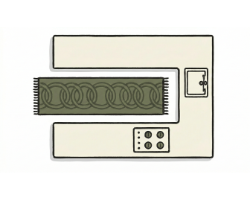
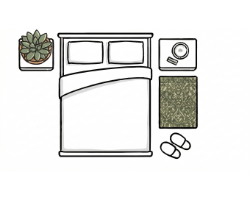
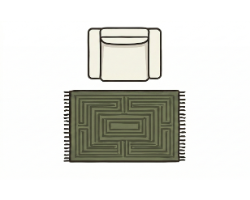
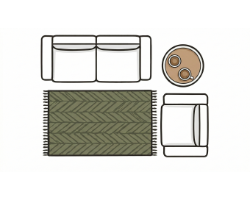
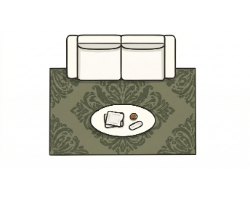
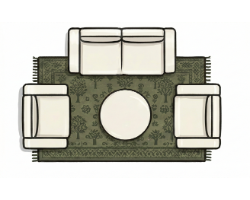
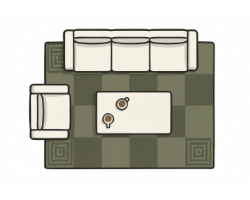
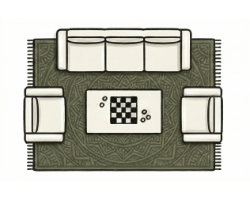
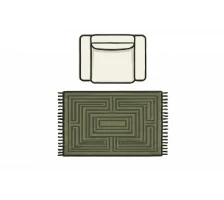














For most rooms, a felt-and-rubber rug pad stops a rug from sliding with the least risk to your floor’s finish. It grips the floor, cushions your steps, and stays invisible under the rug edge. If you need something faster or cheaper, two runner-up fixes work well too: double-sided rug tape for a temporary hold, and reusable corner grippers paired with furniture anchoring for rugs you reposition often.
Before you commit to any fix, test it on a hidden corner of both the rug and the floor. Adhesives and rubber pads can react differently with sealants, wax finishes, and vinyl than they do with bare wood or tile, so a five-minute test saves you a ruined floor patch.
- Best long-term fix: felt-and-rubber or natural rubber rug pad, sized about 1 inch smaller than the rug on all sides
- Fastest temporary fix: double-sided rug tape along the rug perimeter
- Best for renters: reusable corner grippers plus anchoring rug edges under furniture legs
- Skip if: you have engineered wood, luxury vinyl, or an unknown floor finish, until you’ve tested a small patch
A loose rug is also a real trip hazard, not just an annoyance. If anyone in the house uses a walker, cane, or is unsteady on their feet, choose a non-adhesive pad over tape or caulk. Non-slip rug pads made from natural rubber or felt-and-rubber blends remain one of the most dependable widely used fixes precisely because they don’t rely on tack that wears out.
Key Takeaways
A felt-and-rubber rug pad sized about 1 inch inside the rug’s edges solves rug slipping more reliably than tape, grippers, or DIY adhesives on nearly every floor type.
| Point | Details |
|---|---|
| Best all-around fix | Felt-and-rubber or natural rubber pads grip the floor and rug simultaneously without adhesive residue. |
| Renter-safe option | Corner grippers and furniture anchoring hold rugs without leaving marks when a lease ends. |
| Test before committing | Check adhesives and pads on a hidden patch first, since floor finishes react differently. |
| Match pad to floor | Vinyl, heated floors, and carpet-over-carpet each need a specific pad type, not a generic one. |
| Shop risk-free | Rugsonlinemarket offers free shipping over $300 and 30-day returns for testing rugs and pads at home. |
Table of Contents
- Why Rug Pads Are the Best Long-Term Solution
- Renter-Friendly Quick Fixes: Tape, Grippers, and Velcro
- DIY Adhesives: Using Silicone Caulk or Hot Glue
- Matching Your Fix to Your Floor Type
- How to Install and Maintain Your Anti-Slip Setup
- Fast Fixes for Recurring Problems
- Rugs Online Market Guidance: Buying With Confidence
- How Rugs Online Market Can Help You Get It Right the First Time
- Sources
- FAQ
Why Rug Pads Are the Best Long-Term Solution
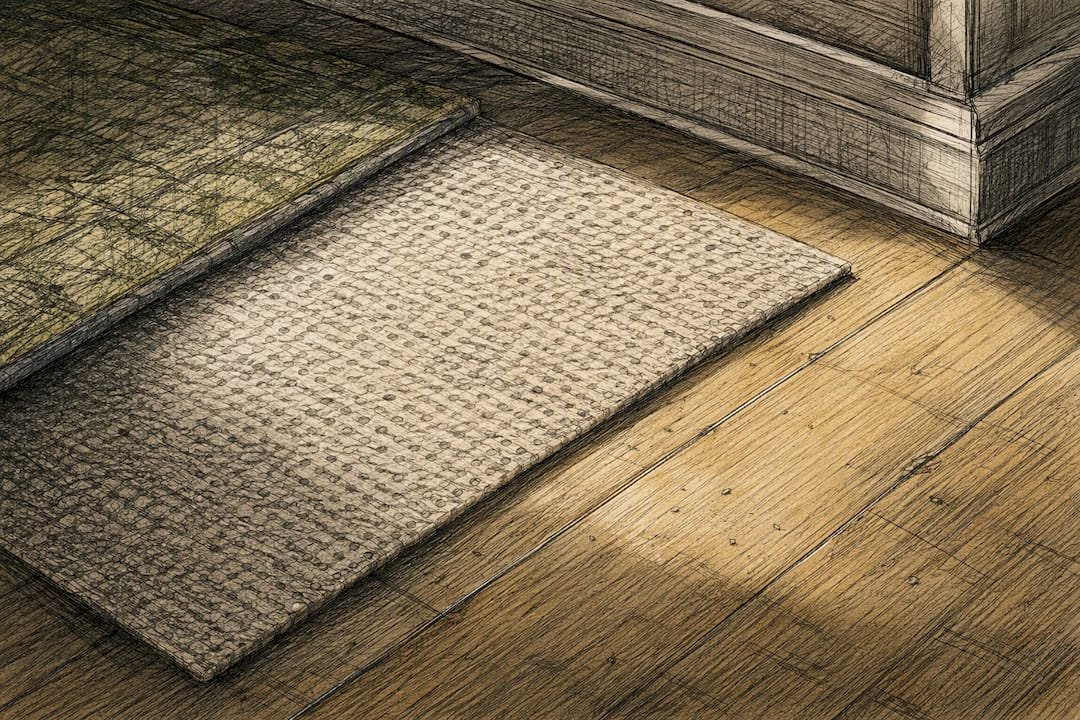
A rug pad works on friction, not stickiness. The rubber or felt surface grips both the floor and the rug backing, so the rug can’t creep even under foot traffic or a dragging chair. That’s a fundamentally different mechanism than tape or caulk, which rely on adhesive bond and eventually fail as dust and oils build up underneath.
Several pad types exist, and picking the wrong one for your floor is the single most common mistake homeowners make.
- Natural rubber pads offer the strongest grip and hold up for years on hardwood, tile, and laminate when the rubber is rated safe for finished floors.
- Felt pads add cushioning and a bit of insulation but provide weaker grip alone, which is why they’re often paired with rubber.
- Felt-and-rubber combo pads are the most versatile choice: felt on top cushions the rug, rubber on the bottom grips the floor.
- Waffle-grid PVC pads feel gripping at first but tend to degrade over a year or two, trap dirt in the grid pattern, and can chemically interact with certain floor sealants over time, according to The Spruce.
- Low-profile pads work best for spaces with tight door clearance, like under an interior door swing.
- Breathable, heat-rated pads are required for radiant-heated floors, since standard foam traps heat and can damage both the pad and the flooring underneath.
Sizing matters more than most buying guides admit. The rule that actually works: cut or buy your pad about 1 inch smaller than the rug on every side, so it stays hidden under the rug edge but still covers the high-traffic center where slipping starts. Thickness typically runs from about 1/8 inch for low-profile pads to over 1/4 inch for cushioned felt-and-rubber combos. If your rug sits near a doorway, measure door clearance before buying a thick pad. A quarter-inch pad under a rug can be just enough to make an interior door drag on carpet or scuff against the rug surface every time it swings.
Longevity varies a lot by pad type. Natural rubber pads, kept clean, can last five to ten years. Felt alone wears down faster under heavy foot traffic. Cheap PVC waffle pads are often the first to fail, sometimes within a single season in a high-traffic entryway.
Pro Tip: Keep the pad receipt or packaging until you’ve lived with it through one full season. If the rubber starts crumbling or leaving marks on your floor finish, most manufacturers will honor a return or warranty claim, but only within a limited window.
Homeowners with hardwood floors especially benefit from choosing a pad explicitly labeled safe for wood finishes, since some rubber compounds can discolor or soften certain polyurethane coatings over time.
Renter-Friendly Quick Fixes: Tape, Grippers, and Velcro
Renters and anyone who doesn’t want a permanent floor commitment have real options that don’t involve gluing anything down. These fixes trade a little bit of long-term grip for the ability to remove them without a trace.
- Double-sided rug tape: Apply short strips, not a full perimeter seal, along the rug edges and at the center if the rug is large. Press firmly and let it set for a few minutes before walking on it. It performs best on smooth, sealed floors and struggles on textured tile or unfinished wood.
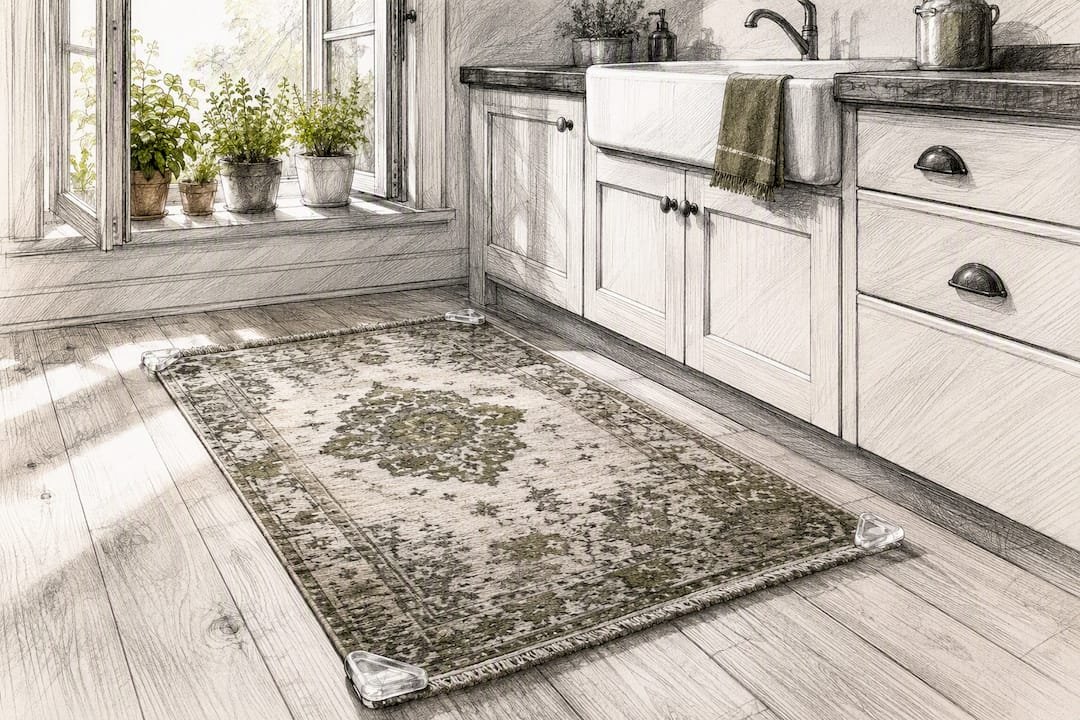
- Reusable corner grippers: These small rubber or gel pads stick to the underside of each rug corner and to the floor, holding the corner flat without adhesive residue. Peel them up, rinse under warm water, and let them air dry to restore the tack for reuse.
- Hook-and-loop anchors: Similar to Velcro, these work well for rugs you reposition seasonally, since one side stays on the rug and the other on a removable floor strip.
- Spray-on rug grippers: A liquid grip coating applied to the rug backing, better suited to lightweight throw rugs than large area rugs, and it wears off faster than a physical pad.
Reusable corner grippers, rug pins, and furniture anchoring are especially effective for renters who need something removable at the end of a lease. Whatever you choose, test it on a hidden patch of both the rug backing and the floor first. Adhesive-based products can damage certain floor finishes or leave a sticky residue if left in place too long, especially on vinyl, laminate, and older hardwood with a worn topcoat. Limit adhesive use on those surfaces, or stick to grippers and pins instead.
Small rugs in high-moisture rooms, like a kitchen mat near the sink, do better with washable options plus corner grippers than with tape, which loosens faster when it gets damp repeatedly.
DIY Adhesives: Using Silicone Caulk or Hot Glue
Silicone caulk applied to the rug’s underside works like a semi-permanent adhesive layer, and it’s the closest DIY method to a professional non-slip backing. Run a bead in a zigzag or dot pattern across the back of the rug, staying an inch or two in from the edges. Let it cure fully, usually 24 hours, before you flip the rug back over and walk on it. Caulk applied this way can hold a rug in place effectively on tile and stone, but treat it as close to permanent. Peeling it off later can pull up finish or leave a shadow on some floors.
Hot glue is a rougher substitute some people try on smaller rugs or runners. It sets faster than caulk, but it’s also more brittle. It cracks and loses grip sooner, especially in rooms with temperature swings near windows or exterior doors. Always test a glue gun on a rug scrap first. Some synthetic rug backings melt or scorch at typical hot glue temperatures.
- Never use silicone caulk or hot glue on unsealed hardwood, where either can soak into the grain and stain it permanently.
- Avoid strong adhesives on luxury vinyl and LVP, which can discolor or lift at the seams.
- Skip adhesives entirely on rented properties unless your lease explicitly allows it. Removal often means a call to a floor-restoration professional.
- If you need to remove caulk or glue, work slowly with a plastic scraper and warm soapy water rather than solvents, which can damage the floor finish faster than the adhesive itself.
Pro Tip: If you’re unsure whether your floor can handle an adhesive fix, ask a flooring protection specialist about your specific finish before applying anything permanent. A five-minute question beats a floor refinishing bill.
Matching Your Fix to Your Floor Type
Not every anti-slip method works equally on every surface, and this is where most one-size-fits-all advice falls apart. Floor material changes both the grip mechanics and the damage risk.
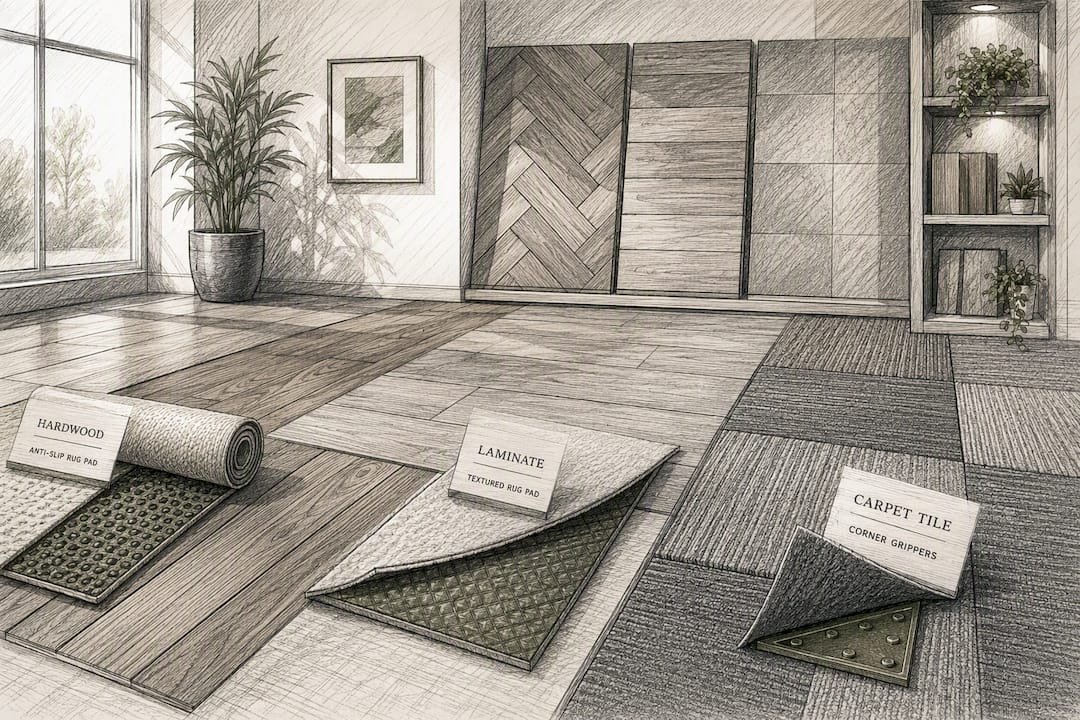
Hardwood and engineered wood need the gentlest touch. Stick with felt-and-rubber or natural rubber pads explicitly labeled safe for wood finishes. Skip unlabeled PVC grid pads and strong tape unless you’ve tested them on an inconspicuous spot first, since some rubber compounds react with polyurethane coatings over months of contact.
Tile and stone floors handle rubber pads and corner grippers well because the hard surface doesn’t scratch easily. The catch is grout lines, which create tiny gaps that reduce contact area for grippers on small rugs. A full-size rug pad that covers the whole rug footprint, rather than just the corners, performs better here than spot grippers alone. For tile specifically, non-slip pads, non-slip backed rugs, silicone caulk, and grippers all work, and the right pick depends on your budget and how permanent you want the fix.
Vinyl and laminate flooring can stain or discolor under some adhesives, so test first. Felt-and-rubber combination pads with lower adhesive content tend to be safer than straight rubber pads, and if you use tape at all, treat it as short-term only after a patch test.
Carpet-over-carpet situations, like a smaller area rug on top of wall-to-wall carpet, need a different approach entirely. Standard rubber pads often shift because carpet fibers don’t grip the same way hard flooring does. Rug-to-carpet pads with a grippy mesh design, rug pins pushed through both layers, or furniture anchoring at the corners hold much better than a rubber pad alone.
Radiant-heated floors are the one category where the wrong pad can cause real damage over time. Thick foam or non-breathable pads trap heat, which can degrade both the pad material and, in some cases, the flooring finish above the heating elements. Look specifically for pads rated breathable and heat-safe, and check your floor manufacturer’s temperature guidance before installing anything.
- Hardwood/engineered wood: felt-and-rubber pad, tested first
- Tile/stone: full-size rubber pad or silicone caulk
- Vinyl/LVP: low-adhesive felt-and-rubber combo
- Carpet-over-carpet: rug-to-carpet pad or rug pins
- Radiant-heated floors: breathable, heat-rated pad only
How to Install and Maintain Your Anti-Slip Setup
Preparation determines whether any fix actually works, more than the product you buy. Dust, grit, and old residue on the rug backing or the floor can prevent a friction-based pad from ever forming a real seal, which is why a pad that worked fine in the store sometimes slides right away at home.
- Vacuum both surfaces. Flip the rug and vacuum the backing, then vacuum or damp-mop the floor underneath. Let both dry completely before proceeding.
- Test the adhesive or pad on a hidden patch, letting it sit for the full recommended time before judging results.
- Lay the pad centered under the rug, then trim it to size so it sits roughly 1 inch inside the rug’s edges on all sides.
- Apply tape or grippers at the corners and, for larger rugs, along the midpoints of each edge, pressing firmly for several seconds each.
- Walk the rug flat from center to edges to eliminate air pockets or wrinkles before placing furniture back on top.
Maintenance is where most people quietly let their setup fail. Lifting and vacuuming the rug underside every few months clears the dust buildup that gradually kills a pad’s grip. Rinse gel corner grippers under warm water every month or two to restore their tack. Plan to replace a rubber pad once it starts feeling stiff, cracked, or crumbly at the edges, generally somewhere between three and eight years depending on quality and foot traffic.
Pro Tip: Mark a reminder on your calendar to check pad condition every six months. A pad that’s failing rarely announces itself until the rug has already started sliding again.
Fast Fixes for Recurring Problems
A rug that keeps creeping in one direction usually means the pad is undersized or the anchoring is uneven. Add a corner gripper or furniture anchor point specifically on the forward edge, the side the rug drifts toward, and double check your pad extends close to the full rug footprint rather than just the middle.
Residue left behind by old tape or a failed pad needs a slow, patient approach: peel gently at a low angle, then clean the spot with warm water and a mild dish soap. If residue won’t budge or you notice discoloration underneath, stop and call a floor-restoration professional rather than reaching for a stronger solvent.
- Pad sliding: clean both the rug backing and floor, since dust is the most common cause
- Pad crumbling or flattening: replace with a higher-quality felt-and-rubber combo pad
- Curling corners: add a small corner gripper or a dot of removable adhesive
- Persistent bunching: check that furniture legs are anchoring the rug evenly on all sides, not just one
Rugs Online Market Guidance: Buying With Confidence
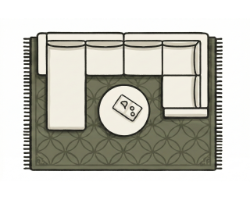
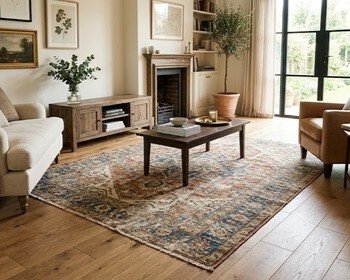
Getting the size and placement right matters as much as the pad itself. Rugsonlinemarket recommends extending your rug far enough that front furniture legs rest on top of it wherever the room layout allows, since that weight does real anchoring work on top of whatever pad or gripper you’re using. A living room rug sized and placed correctly reduces slipping before you even add a pad.
Material choice plays into slip resistance too. Wool rugs have natural weight and texture that resist shifting better than thin flatweaves, while washable rugs suit kitchens, entryways, and kids’ rooms where moisture and frequent cleaning make adhesive-based fixes impractical.
- Wool and higher-pile rugs hold position better on their own, needing less aggressive gripping
- Flatweave and washable rugs benefit most from a dedicated pad, since they have less natural weight
- Runner-sized rugs in hallways need grippers at both ends, not just the center
If you’re not sure whether a rug or pad combination will work in your space, Rugsonlinemarket’s free shipping on orders over $300 and 30-day hassle-free returns make it low-risk to test one before committing.
A tested combo worth copying
The setup I’d point most readers toward is simple: a felt-and-rubber pad sized to the rug, corner grippers at all four points, and the rug positioned so at least one piece of furniture anchors an edge. I’ve seen this combination hold steady in high-traffic hallways where a pad alone eventually let go. The anecdote worth repeating: a wool runner in a doorway stayed put for over a year with just grippers and a properly sized pad, no tape, no caulk, nothing permanent. That’s the version of “fixed” most homeowners actually want.
— Kian
How Rugs Online Market Can Help You Get It Right the First Time
Buying the right rug and pad together beats guessing at fixes after the fact. Rugsonlinemarket carries runner rugs, natural-fiber options in wool and cotton, and washable styles built for households where slipping and moisture are both concerns.

Every purchase comes with free shipping on orders over $300 and a 30-day hassle-free return window, so testing a rug and pad combination in your actual room, on your actual floor, carries almost no risk if it doesn’t work out the way you expected. Browse the washable rug collection if slipping and cleanup are both on your mind, and pair whatever you choose with the pad type that matches your floor from this guide.
Sources
- 11 Ways to Keep Rugs From Sliding – The Spruce
- How to Keep Rugs From Slipping on Tile: 5 Easy Solutions – RugPadUSA
- Rug Installation Manual for Wood Floors | Signature Innovations
- How to Keep Rugs From Sliding on the Floor | Lowe’s
FAQ
Do Rug Grippers Really Work?
Yes, reusable corner grippers work well for small to medium rugs and renters, though they hold less securely than a full-size rug pad on large area rugs.
What Can I Put Under My Rug to Stop It From Sliding?
A felt-and-rubber or natural rubber rug pad sized about 1 inch smaller than the rug on all sides is the most reliable option, with double-sided tape or corner grippers as lighter alternatives.
How Can I Prevent My Rug From Slipping on a Wood Floor?
Use a rubber or felt-and-rubber pad explicitly labeled safe for wood finishes, and vacuum both the rug backing and floor thoroughly before installing it so dust doesn’t block the grip.
Is Silicone Caulk Safe for All Floor Types?
No. Silicone caulk works well on tile and stone but can stain unsealed hardwood and should always be tested on a hidden patch before full application.
How Do I Know if My Rug Slipping Fix Actually Worked?
Walk across the rug at an angle and tug a corner firmly after a day or two; if it stays flat and doesn’t shift underfoot, the fix is holding.
