














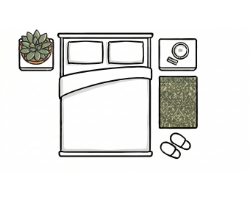



































The backing is the layer under a rug’s pile, and it decides how the rug grips, wears and treats your floor. The main types are latex (rubber-based), jute, felt, cotton or canvas, synthetic polypropylene and no backing at all. Latex grips best on smooth floors. Felt is gentle and cushioned. Jute is a natural fiber that pairs well with a pad. Synthetics stand up to moisture. The right pick depends on the floor underneath and the room above it. If you are choosing a rug for a specific room, the sections below show which backing fits and when a separate pad is still worth adding.
Key Takeaways
- Backing supports the pile, holds the rug together and sets how the rug behaves on the floor: grip, wear and floor compatibility.
- Latex gives the strongest grip, felt is the gentlest on wood, jute is a natural fiber that slides more easily, and synthetic backings handle damp rooms best.
- A non-slip backing helps, but a separate pad of at least 0.25 inch adds cushion, protects the floor and extends the life of the rug.
- Match the backing to the room first: kitchens, bathrooms and entryways need moisture-resistant backing, while living rooms and bedrooms give you more freedom.
- Check the product page for the backing material before you buy, because it matters as much as pile height and size.
Table of Contents
- What a Rug Backing Actually Does
- The Main Rug Backing Types
- Rug Backing Types Compared
- Non-Slip Backing: What It Does and When You Still Need a Pad
- Choosing a Backing by Room
- How to Read a Rug Listing for Backing
- Caring for Different Backings
- Find a Rug With the Backing Your Room Needs
- Our Perspective
- FAQ
- Sources
What a Rug Backing Actually Does
Pick up a corner of any rug and look at the underside. What you see is the backing, and its job is bigger than most shoppers expect. According to the Carpet and Rug Institute (CRI), the U.S. carpet industry’s trade body, backing systems have up to three elements: a primary backing that the yarn is secured into, a bonding adhesive, and a secondary backing or cushion. In the most common system, the yarn is locked into the primary backing with synthetic latex or vinyl, and a secondary fabric backing is attached to keep the pile yarn and the overall shape stable.
That is why backing is not a cosmetic detail. The same CRI primer notes that the laminating material influences dimensional stability, tuft-bind, pilling and fuzzing, durability and resistance to edge ravel. In plain terms, backing chemistry affects whether the rug keeps its shape, holds on to its pile and stays flat for years, not only how it feels underfoot.
For a shopper, backing answers three practical questions:
- Will the rug stay put on my floor?
- Will it damage or mark the floor?
- Will it hold up in this room, with its traffic, spills and humidity?
The Main Rug Backing Types
Backing names overlap in product listings, so here is what each one means and where it works.
Latex (rubber-based) backing
Latex is a rubber-type coating applied to the underside. CRI defines latex as a synthetic-rubber compound used to coat the back of carpet or rugs so that components and secondary backing stick together. It adds that most carpet latex is synthetic styrene-butadiene latex, while natural latex is used only on small, washable rugs.
On the floor, latex has high friction, so it resists sliding on smooth surfaces such as tile, vinyl and sealed wood. RugAZ’s 2026 backing guide adds that latex can break down in high heat or humidity and that rubber or latex can leave marks if the rug is not lifted regularly. Lifting the rug and airing the floor now and then keeps the finish clean. Latex suits small rugs, entryways, bathrooms and any spot where a rug that creeps is a nuisance.

Jute backing
Jute is a plant fiber, woven into a flat, breathable base. It is a classic choice for traditional rugs and feels at home beside wool and cotton. It does not grip as firmly as latex, and RugAZ notes it can be abrasive on sealed hardwood and can become brittle with repeated moisture. Rug-Carpet-Guide.com adds that untreated jute or cotton backings absorb moisture readily, which is why they belong in dry rooms such as living rooms, bedrooms and studies rather than bathrooms or covered porches.
The simple fix for a jute-backed rug is a quality pad underneath. It adds the grip that jute lacks and puts a smooth layer between the rug and a hardwood finish.
Felt backing
Felt is a dense layer of wool or synthetic fibers that adds cushioning and floor protection. It is gentle on wood, and the added layer takes some of the wear that would otherwise land on the floor. On the downside for grip, felt slides more easily than latex on hardwood or tile, and it compresses with use. For bedrooms and living rooms with hardwood or laminate, felt works well, especially with a rug pad for anti-slip. Our guide to rug pads for hardwood and which materials risk the finish goes deeper on that pairing.
Cotton or canvas backing
In woven rugs, a single cloth backing is often enough. Rug-Carpet-Guide.com explains that the tight construction of a woven rug secures the pile by itself, while tufted rugs need a secondary backing glued on with a latex layer to stop punched pile from falling out. Cotton and canvas backings are common on flat-weave and tufted rugs, are comfortable against floors and keep their shape well. Like jute, they prefer dry conditions, so treat spills quickly.
Synthetic backing (polypropylene and similar)
Polypropylene and other synthetics resist moisture and stains and hold their shape in damp environments. In tufted carpet, CRI says the primary backing is usually woven, slit-film polypropylene or polyester fabric, so synthetics are an established, standard material, not an exotic one. RugAZ describes them as practical for kitchens, entryways and outdoor areas, and some carry an added non-slip coating. They are the sensible default for mudrooms, patios and bathrooms.
Unbacked and unitary rugs
Some rugs have no applied backing: the foundation is the rug’s own weave, as in many handmade and flat-woven pieces. These lie flat, breathe well and, in the case of handmade rugs, show the craft of the construction on the underside. They almost always want a pad.
A related term is the unitary backing. CRI calls tufted constructions with only a chemical backing and no secondary backing unitary backings, appropriate only for glue-down installations. That is a carpet-installation term, so you will rarely meet it when shopping for a loose area rug.
Rug Backing Types Compared
| Backing | Grip on hard floors | Floor friendliness | Moisture tolerance | Best rooms |
|---|---|---|---|---|
| Latex (rubber-based) | High | Good with periodic lifting | Moderate, can degrade in heat or humidity | Entryways, bathrooms, small rugs |
| Jute | Low to moderate | Pair with a pad on sealed wood | Low | Living rooms, bedrooms |
| Felt | Low to moderate | Gentle, cushioned | Low to moderate | Bedrooms, living rooms |
| Cotton or canvas | Low to moderate | Soft, stable | Low | Dry interior rooms |
| Polypropylene or synthetic | Moderate, higher with a coating | Good | High | Kitchens, mudrooms, patios |
| No backing | Low | Depends on the weave | Depends on fibers | Anywhere a pad is added |
Grip and moisture ratings here follow the general descriptions in the RugAZ backing guide. Individual products vary with the exact coating and construction.
Non-Slip Backing: What It Does and When You Still Need a Pad
A non-slip backing is the most searched-for feature in this category, and for good reason. A rug that shifts is a trip hazard. NYT Wirecutter notes that falls are a leading cause of accidental injury in older adults and loose rugs are a big part of that, and recommends a good rug pad for any floor covering that does not already have a nonskid rubberized backing. RugAZ makes a related point: the interaction between backing and floor matters more than the size of the rug, and a small rug can become a hazard if it shifts underfoot.
If your rug already has a rubberized nonskid backing, Wirecutter’s best-rugs testing says you may not need a pad, but a pad still keeps the rug in place, protects floors and the rug from wear and adds cushion. Their testers also found that even latex backs can be rough enough that a pad is worth considering to protect delicate floors.
What should a good pad have? Wirecutter’s rug-pad guide says the two most important things are thickness of at least 0.25 inch and adequate grip. It also explains why this matters for the rug itself: friction between a hard floor and a rug’s backing slowly grinds down the fibers, so a grippy pad helps a rug last longer, not only prevents slips. For thickness choices by room and door clearance, see our guide to rug pad thickness. For every floor type and every slipping scenario, how to stop a rug slipping on any floor covers the options.

Pad materials that protect the floor
Not every non-slip layer is gentle. Wirecutter reports that thin rubber or waffle-style PVC mats can leave sticky residue, yellowing or permanent imprints, and cites the National Wood Flooring Association’s advice to look for non-staining materials labeled safe for hardwood. If your floors are hardwood, read our page on rugs on hardwood before choosing a pad. If the floor is carpet, a rug pad for carpet should be cut about an inch smaller than the rug, and our guide to layering rugs on carpet walks through the steps.
Choosing a Backing by Room
Start with the room, then the floor. These pairings follow the material behavior described above.
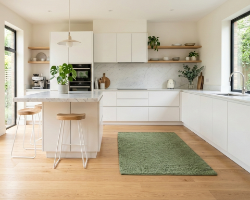
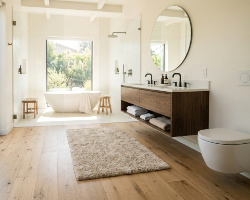
Kitchens and bathrooms. Spills, splashes and humidity are the issue. Choose a moisture-resistant synthetic or latex-type backing and dry spills quickly. RugAZ says a moisture-resistant synthetic is safer than jute or felt in kitchens and bathrooms. Browse our kitchen rugs with that in mind.
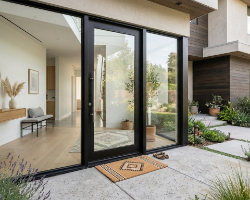
Entryways and mudrooms. Wet boots, snow and pet paws mean you want a backing that tolerates moisture and stays put. Our best mudroom rugs guide covers what to look for.
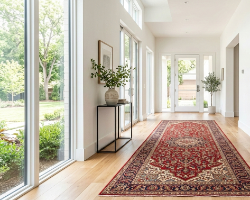
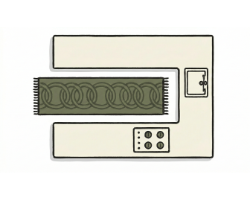
Hallways and stair runners. A runner is not anchored by furniture, so it is the rug most likely to wander. Wirecutter recommends adhesive-free rug gripper stickers for uniquely shaped rugs that standard pads do not fit, especially in high-traffic hallways. For stairs, see stair runner safety.
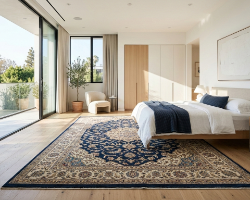
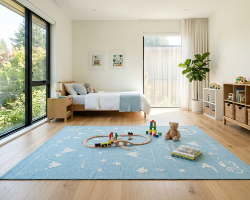
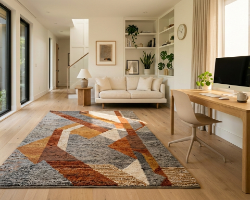
Living rooms and bedrooms. Furniture legs help hold a rug down, so you have the widest choice here. Jute, felt, cotton and unbacked handmade rugs all work, ideally over a pad. This is where traditional and handmade pieces shine, since natural-fiber construction and a pad make a pairing that is both beautiful and stable.
Outdoor areas. Choose synthetic constructions that dry quickly, and lift the rug periodically. Our outdoor rug care page explains drying and cleaning, and the outdoor rugs collection is the place to start shopping.
Commercial spaces. Offices and shops put more traffic and more cleaning on a rug. CRI notes that backing systems with moisture barriers prevent spills from penetrating to the sub-floor, a feature it describes as valuable where spills are inevitable and cleaning is frequent. For entrances and high-traffic floors, prioritize a durable, moisture-resistant backing and a firm grip.
How to Read a Rug Listing for Backing
A few habits make backing easy to judge online.
- Find the construction line. Woven, hand-knotted, tufted and flat-weave rugs use different foundations. A tufted rug will have a secondary backing, and a woven rug may have only its own weave or a single cloth backing.
- Look for the backing material by name. Latex, jute, felt, cotton, polypropylene or “non-slip” are all things you should be able to find in the specifications.
- Check whether a pad is recommended. If the listing mentions one, use it. If not, a pad of at least 0.25 inch is a safe default for a hard floor.
- Match to your floor. Sealed hardwood, tile, vinyl, laminate and carpet each pair best with different backings and pads, as covered above.
- Think about heat and humidity. Rugs over heated floors or in humid rooms need materials suited to it. Our guide to rugs for heated floors lists the specs to check.
If the page leaves a question open, ask before you order. We would rather you know exactly what is under your rug than learn it after it arrives.
Caring for Different Backings
Care follows the backing. Dry natural-fiber backings (jute, cotton) promptly after a spill, since moisture is what shortens their life. Lift latex-backed rugs now and then so the floor can breathe and any marks do not set. Vacuum felt-backed rugs regularly because dust collects in the layer. For synthetics, a quick wipe is usually enough. Regardless of backing, rotating a rug and lifting it for cleaning keeps wear even, and a pad underneath cuts the friction that wears fibers down.
Find a Rug With the Backing Your Room Needs
Our collection spans traditional, handmade and natural rugs, plus runners, round rugs, bath mats, doormats and outdoor rugs, so there is a fit for every room above. Start with the handmade rugs or natural rugs for living areas and bedrooms, or go to the kitchen and outdoor collections for rooms that need moisture-ready construction. Orders over $300 ship free, and you have 30 days for hassle-free returns.

If you are shopping for a particular room, browse the full shop and filter by room, size and material.
Our Perspective
We think of backing as the part of a rug you only notice when it goes wrong: the corner that curls, the rug that creeps across the hallway, the mark left on a floor. That is why we put so much weight on education before the sale. Style gets you to a rug, but the underside decides whether you live with it happily.
Our collection runs from traditional Persian and handmade pieces to natural-fiber rugs in wool, silk and cotton, and to practical runners, doormats, bath mats and outdoor rugs. Each of those wants a different foundation, and a different pad or none. Our aim is a wide selection and clear guidance, so that a customer furnishing a living room, a designer staging a client’s home or a small business outfitting an entrance can match the rug to the floor and the traffic.
Our advice is simple. Choose the rug for the room you love, then choose its backing, and a pad where it helps, for the floor you have. Pair them well and the rug stays flat, the floor stays clean and the weave lasts.
ROM team
FAQ
What is the best backing for a rug?
It depends on the floor and room. Latex gives the most grip on smooth floors, felt is the gentlest on wood, and synthetic backings tolerate moisture best. For a rug with a natural backing like jute or cotton, a separate pad of at least 0.25 inch gives you the grip and floor protection in one step.
What is the backing on a rug called?
In tufted rugs, the layer the yarn is stitched into is the primary backing, and the fabric glued on behind it is the secondary backing. Together with the bonding adhesive, these make up the backing system, as CRI describes it. Listings usually name the visible layer by its material, such as latex, jute or cotton.
Do all area rugs have a non-slip backing?
No. Many rugs, especially handmade, flat-woven and natural-fiber rugs, have no rubber or latex layer. Wirecutter advises that a rug with a nonskid rubberized backing may not need a pad, while any other rug on a hard floor should get one for safety and floor protection.
Can a rubber or latex backing damage my floor?
Some materials can. Wirecutter reports that thin rubber or waffle-style PVC mats can leave residue, yellowing or imprints, so look for non-staining pads labeled safe for hardwood, and lift the rug regularly so the floor can breathe.
Which backing is best for a kitchen or bathroom rug?
Choose a moisture-resistant backing, such as a synthetic or latex-type construction, rather than untreated jute or felt. Dry spills quickly, and lift the rug now and then to let the floor dry underneath.
Sources
- The Carpet Primer, Carpet and Rug Institute
- Get Thee a Rug Pad, NYT Wirecutter
- The 12 Best Area Rugs of 2026, NYT Wirecutter
- 11 Life Hacks to Kick Off 2026, NYT Wirecutter
- 15 Cheap(ish) Things We Can’t Stop Raving About, NYT Wirecutter
- Rug Backing Types Explained, RugAZ
- Rug and carpet backing, Rug-Carpet-Guide.com
