





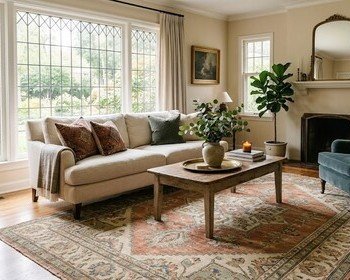
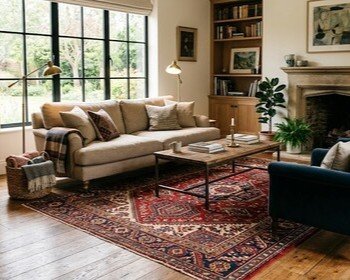
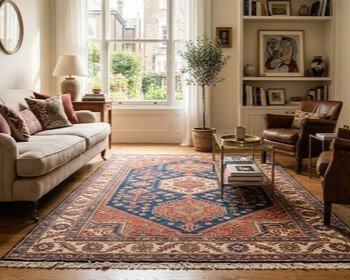

A Moroccan rug works best when it is the one piece in the room with a story. Pick a size that lets your furniture sit on it, let its color and pattern set the mood, and keep the rest of the room quieter or deliberately layered around it. The rest of this guide shows how, room by room.
Key takeaways
- Size comes first. In a living room, the sofa should extend onto the rug, and a rug that is too small makes the whole room feel cramped.
- Moroccan rugs suit both minimalist and maximalist rooms, because each one is handmade and reads as art for the floor.
- Match the rug to the job: a plush neutral style for a bedroom, a bold, colorful one for a hallway runner or a quiet room that needs personality.
- Wool hand-knotted rugs need gentle care: cold-water cleaning, bare-floor vacuum settings and a specialist for serious stains.
- Keep Moroccan rugs indoors or in covered spaces. Real outdoor rugs are made from different fibers.
Table of Contents
- Why Moroccan rugs work in American homes
- Choose the style first: neutral, bold or in between
- Get the size right
- Styling a Moroccan rug room by room
- Combine it with the rest of the room
- Perspective: how we choose a rug for decor
- Care for your Moroccan rug
- Shop Moroccan-inspired looks with us
- FAQ
- Sources
Why Moroccan rugs work in American homes
Designers keep returning to Moroccan rugs for one reason: they fit almost anywhere. Architectural Digest notes that they sit comfortably in both contemporary maximalist interiors and neutral, minimalist ones, and that their hand-made variations in form and color give a room personality that a uniform machine-made rug cannot.
The patterns are not random either. According to the Smithsonian’s African Art Museum, Moroccan weavings vary from region to region, and their designs and colors can be linked to a specific area. Diamonds, stars, chevrons and zigzags were once believed to carry protective blessings. That is a good thing to know when you choose: you are not buying a generic “Moroccan look” but a piece with a regional design language behind it.
If you want the deeper background on styles before you shop, our Moroccan rug styles guide for buyers and collectors covers the main types, and our Best Moroccan Rugs buying guide helps you compare them.
Choose the style first: neutral, bold or in between
Before you think about the sofa or the wall color, decide what job the rug has to do.
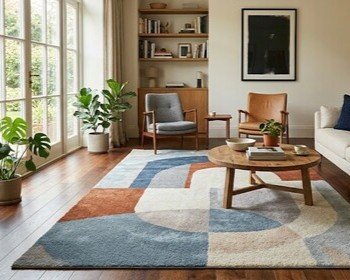
A calm, neutral rug. Cream and charcoal tones with simple geometric lines act as texture rather than as a focal point. They suit a bedroom, a Scandinavian-leaning living room, or any space where you want warmth without visual noise.
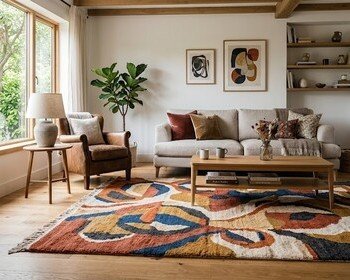
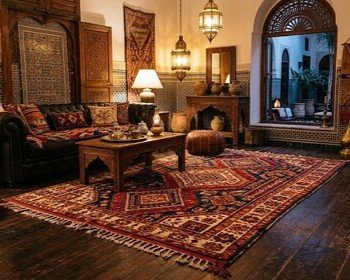
A colorful, high-energy rug. Multicolor and densely patterned pieces become the focal point. Keep the sofa and curtains simple, and let the rug carry the color.
A striped or lightly patterned rug. This is the middle path. It adds movement without dominating, and it plays well with art on the walls.
A simple rule helps: if the rug is loud, quiet the furniture. If the rug is quiet, bring color in through pillows, a throw or a lamp.

Read the pattern before you buy
Regional origin affects how a rug looks. The Smithsonian Folklife Festival describes weaving in the Middle Atlas, where regional cooperatives help train younger weavers in traditional techniques. When a listing names a specific origin or weaving tradition rather than just “Moroccan,” you have a better chance of understanding what you are buying. Ask for the construction (hand-knotted, hand-woven or machine-made) and the material before you order.
Get the size right
Most disappointing rug purchases come down to size. Designer David Thompson says the most common mistake is a “postage stamp” rug that makes a room feel cramped and disconnected. His fix is cheap: mark out the dimensions on the floor with painter’s tape or string before you buy.
Here are the guidelines Architectural Digest gives for each room:
| Room | Sizing guideline |
|---|---|
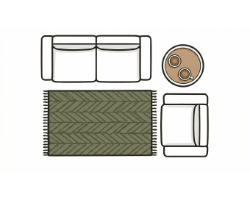
| Living room, sofa against a wall | All furniture on the rug ideally; at least 12 inches under the sofa |
| Living room, floating furniture | Rug extends at least 8 inches beyond the back of all pieces |
| Dining room | Rug extends 3 feet from the table edge on all sides |
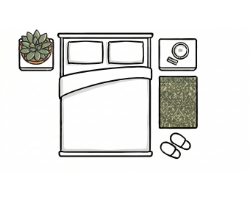
| Bedroom | Rug width aligns with the nightstands and extends at least 3 feet out from the foot of the bed |
If you are torn between two common sizes, our guide on taping out a 5×7 versus an 8×10 rug walks through the floor-space difference. For a full room-by-room walkthrough, see our guide to rug size, placement and style.
When your favorite rug is too small
Many vintage-style handmade rugs come in smaller dimensions than a typical American living room needs. Two solutions work well.
- Layer it. Put the Moroccan rug on top of a larger neutral base such as jute or sisal. The base frames the room, and the Moroccan piece becomes the accent. Our natural rugs collection is a good place to find a base layer.
- Use it in a smaller zone. A reading corner, a bedside spot or the space in front of a console is a perfect home for a smaller rug, with no need to stretch it across a whole room.
Styling a Moroccan rug room by room
Living room
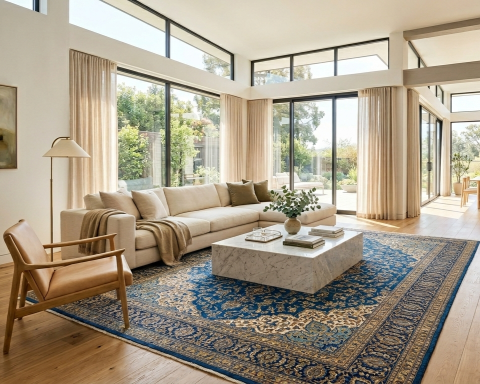
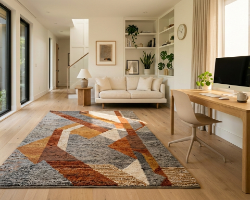
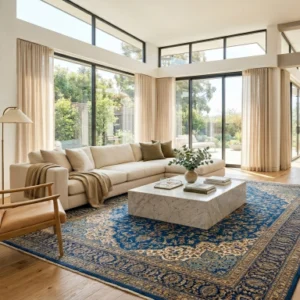
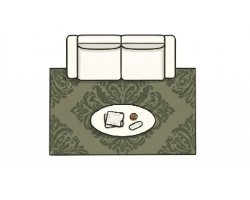
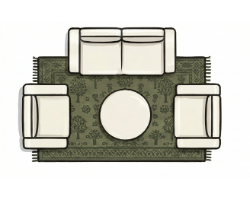
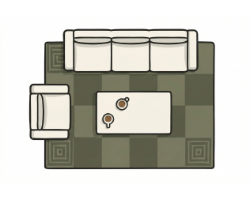
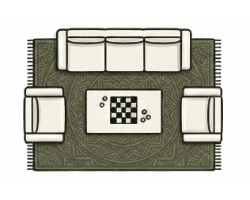
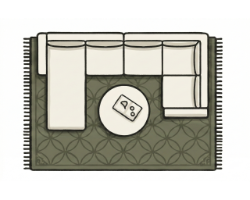
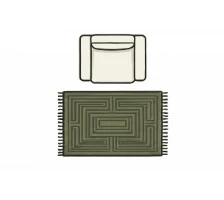
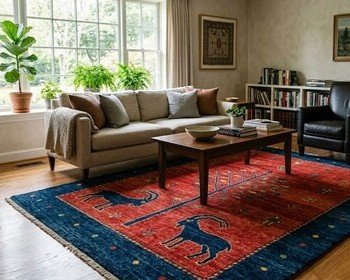
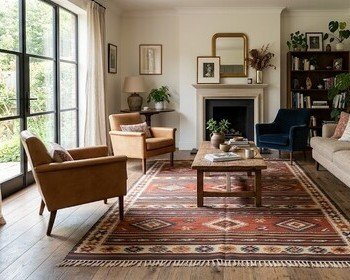
This is where a Moroccan rug does the most work. Anchor the seating group by placing at least the front legs of every piece on the rug, or all of them if the size allows. Then use the rug as your palette: pull one or two colors from it into pillows or a throw, and leave everything else calm.
If you like collected, layered interiors, many of the same ideas appear in easy unique home decor ideas, where a distinctive rug sits alongside other personal pieces. Browse our living room rugs to see how different styles look in the room.
Bedroom
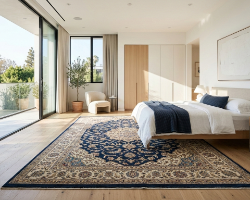
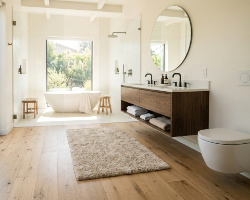
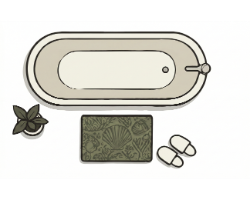
Choose softness and a quieter palette. Let the rug extend at least 3 feet past the foot of the bed and line up with the nightstands, as the size table above suggests. A neutral, lightly textured rug here helps the room feel restful, and bare feet will thank you in the morning.

Dining room
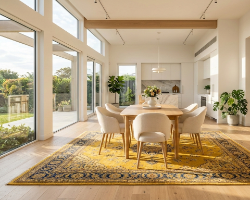
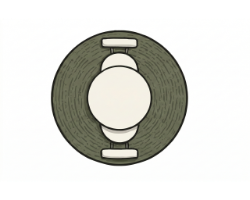
Chairs need to stay on the rug when pulled out, which is why the 3-foot rule matters. Flat, tightly woven styles are easier to slide chairs over than a thick pile. Take a look at our dining room rugs for sizes that suit a table.
Hallway and entryway
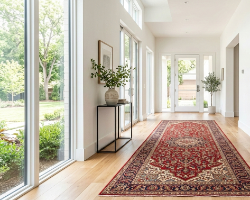
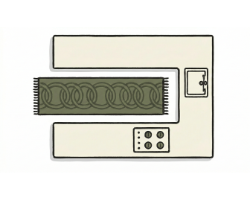
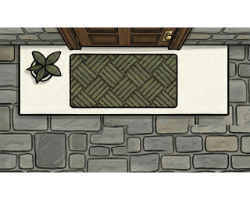
A narrow, colorful Moroccan-style runner can turn a plain passage into a welcoming one. Use a runner rug and leave a few inches of bare floor on each side. For entries, our entryway rug ideas suggest a 3 by 5 foot minimum, and our guide on stopping a rug from slipping matters most on hardwood and tile.
Home office and commercial spaces
A handmade rug adds warmth to a desk area or a boutique entry. For high-traffic business use, see our commercial entry rug guide and browse office rugs.
Combine it with the rest of the room
Pair it with other styles
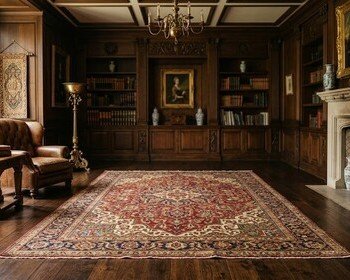
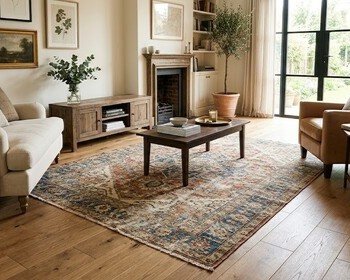
Moroccan rugs mix well with other traditions. A Persian rug and a Moroccan rug share a handmade character but differ in pattern density, so keep them in separate rooms or separate zones. For ideas on bringing older rugs into contemporary rooms, read about Persian rug looks for modern living rooms. If you love the relaxed, eclectic side of Moroccan decor, our guide to boho area rugs goes further.
Furniture, walls and texture
- Wood and leather warm up a cream-and-charcoal rug.
- Clean-lined sofas in white, gray or oatmeal let a colorful rug lead.
- Wall art should echo one color from the rug rather than compete with its pattern.
- Plants, woven baskets and ceramics add texture without adding another pattern.
Should you hang it on the wall?
Some rugs can be displayed as textiles on a wall, which suits a piece you do not want to walk on. That is a reasonable choice for a fragile antique, and it echoes the idea of the rug as art. For floor rugs that you do use, follow the care steps below.
Perspective: how we choose a rug for decor
We sell rugs of many kinds, from traditional Persian and Oushak to Moroccan, Turkish, Kilim and modern, and the advice we repeat most often is simple: start with the room, not the rug. Measure the floor, tape out the shape, and decide whether you want the rug to be the star or the supporting actor.
Then look at construction and materials. We want shoppers to understand the difference between hand-knotted, hand-tufted, hand-loomed and machine-made, because it affects how a rug looks, feels and wears. Wool and other natural fibers reward you with durability and character, and a rug that fits your room and your life will outlast a trend.
If you are unsure between two options, ask us. Expert customer service is part of what we offer, and we would rather you choose the right rug than the quick one.
— ROM team
Care for your Moroccan rug
Care depends on the rug’s material, and most Moroccan rugs are wool.
- Vacuum gently. Architectural Digest advises using the bare-floor setting on a wool rug to limit abrasive wear.
- Blot spills at once. Use a damp, undyed cloth. Do not rub.
- Call a specialist for big stains. The same guide says significant stains on valuable antique or silk and viscose rugs need professional cleaners, not standard carpet machines.
- Use cold water only. Wool should be cleaned with cold-water processes, according to the same source, to prevent fiber damage and distortion.
- Rotate it and limit traffic. On antique pieces, conservator Kelly Vittengl says that less foot traffic is better, even though old rugs are often sturdier than they look.
What about outdoors?
Keep your Moroccan rug inside. Consumer Reports quotes a National Institute of Rug Cleaners specialist who says no outdoor rug is truly weatherproof, and that glue-based or rubber backings trap water and speed up mildew. The same guide gives a typical outdoor rug life of about 3 to 7 years, shorter in humid climates. For a patio or porch, choose a purpose-made option from our outdoor rugs and, if you want a Moroccan feel, look for a Moroccan-inspired pattern.
Shop Moroccan-inspired looks with us
At Rugs Online Market you can browse handmade rugs and traditional rugs in a range of sizes, shapes and materials, including wool, silk and cotton. Orders over $300 ship free, returns are hassle-free within 30 days, and we stand behind a 100% feedback guarantee. Start at our home page to see everything we carry.
FAQ
What size Moroccan rug should I buy for a living room?
Choose a rug large enough for your furniture to rest on. If the sofa is against a wall, the rug should extend at least 12 inches beneath it, and for floating arrangements at least 8 inches beyond the back of every piece, per Architectural Digest. Tape the size out on the floor first.
Do Moroccan rugs go with modern decor?
Yes. Designers use them in both minimalist and maximalist rooms because each handmade rug adds character without needing a matching set. Keep the rest of the room simple if the rug is colorful, and add color elsewhere if the rug is neutral.
Can I use a Moroccan rug in a dining room or hallway?
Yes, with the right size and weave. In a dining room the rug should extend 3 feet from the table on every side so chairs stay on it. In a hallway, use a runner and a non-slip pad so it stays put.
How do I clean a wool Moroccan rug?
Blot spills with a damp, undyed cloth, vacuum on the bare-floor setting, and use only cold-water cleaning methods. For big stains or valuable antique rugs, hire a professional rug cleaner instead of renting a carpet machine.
Sources
- Moroccan Rugs Styled 23 Different Ways, Architectural Digest
- Rug Sizes: How to Figure Out the Best Area Rug for Your Space, Architectural Digest
- How to Clean a Rug in 9 Simple Steps, Architectural Digest
- How to Care for Your Antique Rugs, Architectural Digest
- Rural, Part Two, The Fabric of Moroccan Life, Smithsonian
- Moroccan Weaving, Smithsonian Folklife Festival
- How to Choose the Best Outdoor Rugs, Consumer Reports
