






























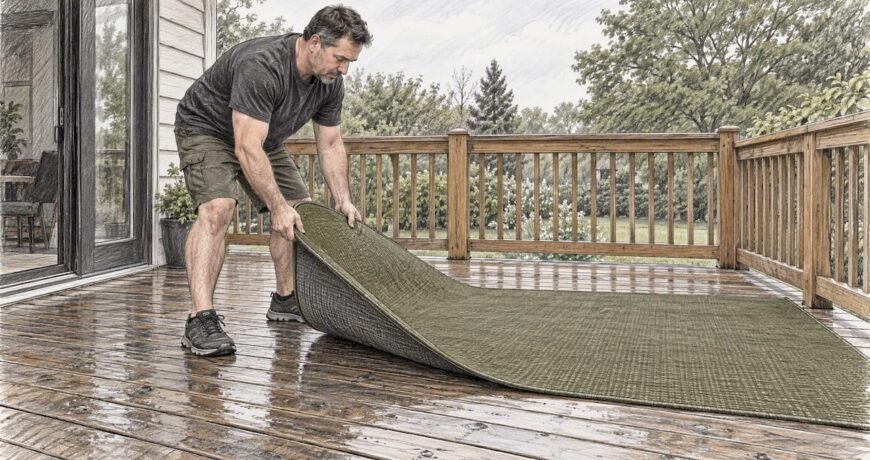
Yes, an outdoor rug is safe on a wood or composite deck as long as you manage airflow underneath it. The biggest risk is moisture getting trapped between the rug and the boards, so the single best habit is pairing the rug with a breathable, outdoor-rated pad and lifting it every few weeks to check for dampness or debris.
TL;DR:
- Using a breathable outdoor-rated pad under the rug helps promote airflow and reduces the risk of trapped moisture that can cause wood rot.
- Flatweave synthetic rugs made from polypropylene or PET are ideal for decks because they dry quickly and resist water absorption, unlike natural fibers.
- Place the rug so it leaves a few inches of bare board edges for drainage and avoid covering joist lines to prevent water pooling and prolonged dampness.
- Lift and inspect the rug and deck underneath every two to four weeks during humid weather or after storms to prevent mold and early decay.
- Perforated mats or smaller accent rugs are better alternatives when moisture control is a priority, as they allow water and air to pass through more easily than solid-backed rugs.
Table of Contents
- Why outdoor rugs can damage decks: moisture, capillary action, and vulnerable materials
- Best rug materials and constructions for decks
- How to place and secure an outdoor rug on a deck without harming the wood
- Maintenance routine: lifting, cleaning, rotating, and inspecting under rugs
- Alternatives to full-area outdoor rugs when airflow matters
- Publisher perspective and product-care guidance
- What homeowners get wrong about outdoor rugs on decks
- How Rugs Online Market helps: where to find suitable outdoor rugs
- Sources
- FAQ
Why outdoor rugs can damage decks: moisture, capillary action, and vulnerable materials
A rug itself rarely harms a deck. The problem is what happens underneath it when water has nowhere to go. Building science guidance from UC ANR explains that any spot where wood rests against another material, including a rug, becomes a contact area that holds moisture through capillary action and dries far more slowly than exposed boards. That slow drying is what invites rot and mold, not the rug’s presence alone.
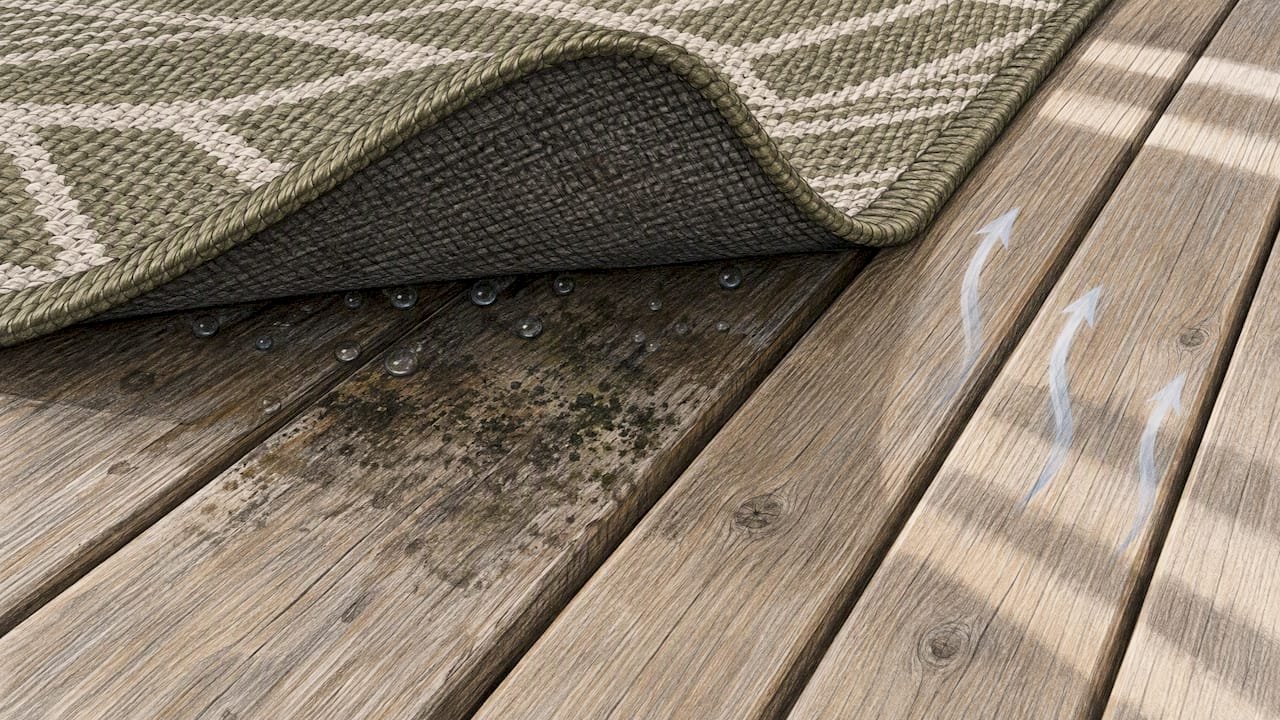
Deck contact areas are flagged as especially vulnerable to decay according to UC ANR’s wood deck guidance, which recommends construction details that avoid trapping water against the surface in the first place.
Some conditions make this worse:
- Softwood decking (cedar, pine, pressure-treated lumber) absorbs and holds moisture more readily than composite boards.
- Warm, humid weather speeds mold growth under anything that blocks sunlight and airflow.
- Leaves, dirt, and pollen trapped under a rug hold water like a sponge against the boards.
- Planters, pet bowls, and pet urine add extra moisture that a rug can seal in rather than let evaporate.
Composite decking tolerates sustained dampness better than wood, but it is not immune. Mold can still grow on a damp composite surface left covered for too long.
Best rug materials and constructions for decks
Fiber choice matters more than almost anything else when a rug lives outdoors. Synthetic fibers built for exterior use, especially polypropylene and PET (recycled polyester), resist water absorption and will not rot, so they survive rain and humidity without breaking down.
Construction matters just as much as fiber:
- Flatweave rugs dry faster because water has less fiber mass to soak into and fewer places to pool.
- Thick pile rugs look plush but hold moisture longer, which works against you on an exposed deck.
- Natural fibers like jute, sisal, and cotton stain, mildew, and weaken quickly outdoors unless the rug sits under full cover with no rain exposure.
- Rugs with solid rubber or latex backing block airflow entirely and trap water directly against the boards, often causing more damage than no rug at all.
Breathable backings, or no backing beyond the weave itself, let air move and let the deck surface dry between uses. If you already own a natural-fiber rug you love, save it for a covered porch rather than an open deck, and reserve the deck for a flatweave synthetic outdoor rug built to handle direct weather.
How to place and secure an outdoor rug on a deck without harming the wood
Getting placement right prevents most of the moisture and slip problems homeowners run into.
- Start with an outdoor-rated, breathable rug pad instead of a solid rubber one. It lifts the rug slightly and lets air circulate underneath.
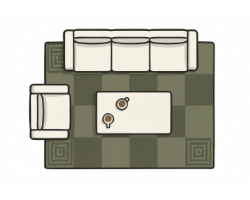
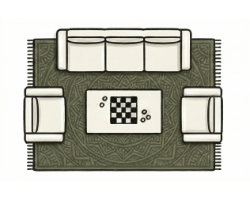
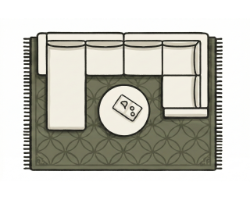
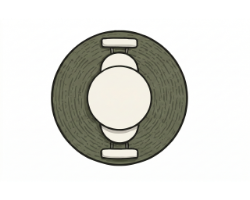
- Position the rug so it does not cover the full width of the deck. Leave a few inches of bare board around the edges for drainage and drying.
- Where possible, avoid laying a rug flush over the joist lines beneath the boards. Water that seeps through tends to collect there longest.
- Skip adhesive tape on finished or painted wood. Peeling tape can pull up stain or sealant along with it.
- Use corner weights, furniture, or a nonadhesive gripper pad to anchor the rug in windy spots instead.
- Keep the rug out of the heaviest runoff path from gutters or planters, and set potted plants on trays rather than directly on the rug.
Pro Tip: Angle planters and furniture legs slightly off the rug’s edge so rainwater drains past it instead of pooling in a corner.
A little morning sun on the rug’s surface also helps, since UV exposure speeds up drying after a storm even as it slowly fades color over time.
Maintenance routine: lifting, cleaning, rotating, and inspecting under rugs
A simple seasonal routine catches problems long before they become expensive ones. Lift the rug every two to four weeks during rainy or humid stretches, and after any heavy storm, to let both the rug and the deck underneath air out fully.
Regular cleaning and drying reduces the debris and surface contaminants that trap moisture against decking, according to deck cleaning guidance, which recommends sweeping and rinsing on a consistent schedule rather than waiting until buildup is visible.
A practical cleaning sequence:
- Sweep loose debris from both the rug and the boards before rinsing.
- Rinse the deck with a hose and let it dry fully before replacing the rug.
- Spot-clean the rug with a mild detergent and soft brush, rinsing thoroughly afterward.
- Check the underside of the rug and the boards beneath it for dark spots, a musty smell, or soft wood, all early signs of mold or decay.
If you spot soft or discolored boards, light sanding and resealing may fix early-stage damage. Boards that feel spongy or crumble under light pressure need replacement, and that is a job for a contractor rather than a weekend project.
Alternatives to full-area outdoor rugs when airflow matters
If moisture control is your main concern, a full rug is not the only option for softening a deck’s look underfoot.
- Interlocking perforated deck tiles sit above the surface and let water and air pass through, though they cost more per square foot than a rug.
- Perforated rubber mats and runners give slip resistance in high-traffic spots without sealing off a large area.
- Smaller accent rugs near seating or a grill reduce total covered area, which limits how much moisture can get trapped at once.
- A full-size rug works best in covered, well-drained spots like a screened porch or a deck section protected from direct rain.
Publisher perspective and product-care guidance
For an open deck, we recommend a flatweave synthetic outdoor rug paired with a breathable outdoor pad over any plush or natural-fiber option. That combination handles rain, sun, and foot traffic without the drying problems heavier or more absorbent rugs run into. Browse the outdoor rugs collection for weather-ready options, and see our patio rug guidance for sizing and placement tied to your deck’s exposure and drainage.
What homeowners get wrong about outdoor rugs on decks
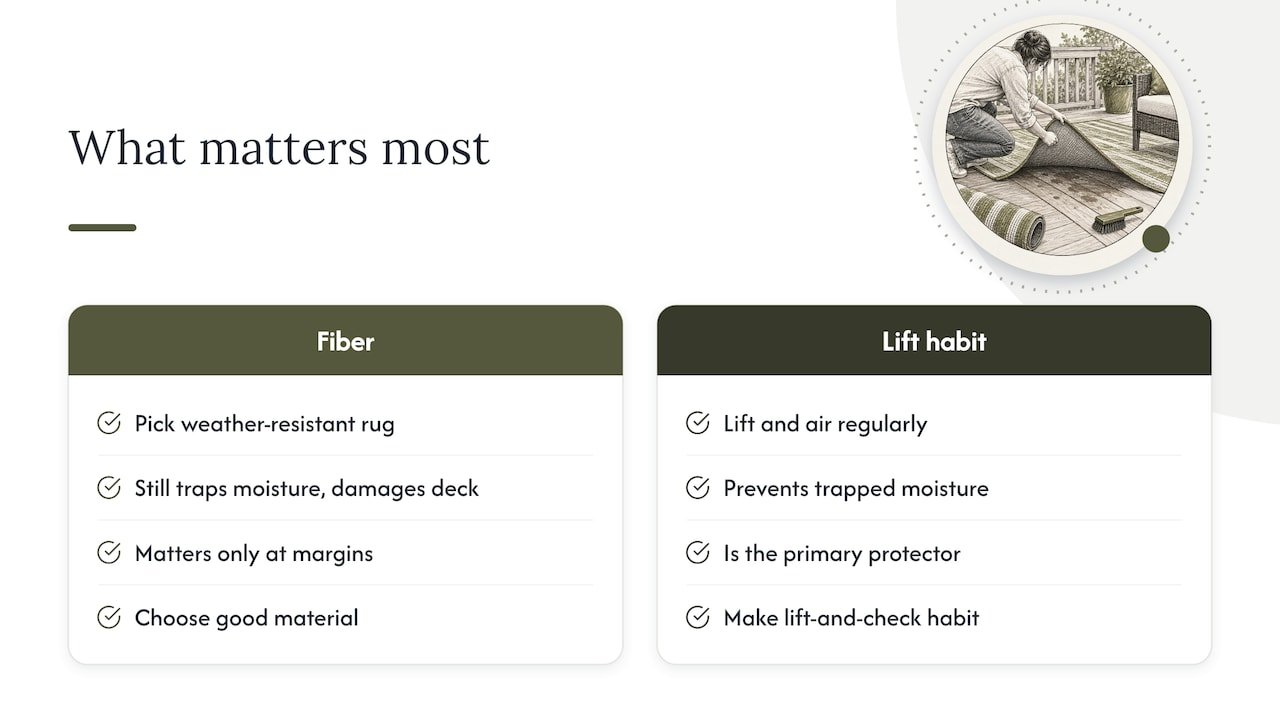
Most advice on this topic treats the rug as the villain, when the real issue is almost always what is happening underneath it. A $20 jute rug and a $200 synthetic one can cause the same trapped-moisture damage if neither one ever gets lifted. The fiber matters, but the habit of airing the rug out matters more.
The conventional advice to just “pick a weather-resistant rug and forget it” undersells how much a few minutes of seasonal maintenance protects the deck beneath. If you only do one thing differently after reading this, make it the lift-and-check habit rather than agonizing over which synthetic fiber is marginally more water resistant than another. The materials matter at the margins. The airflow habit is what actually prevents rot.
— Kian
How Rugs Online Market helps: where to find suitable outdoor rugs
Shopping for a deck-safe rug gets simpler once you know what to filter for: a weather-resistant synthetic material, a breathable backing, and a size that leaves bare board around the edges for drainage. Our outdoor rugs category is built around exactly those criteria, so you can compare flatweave and PET options without guessing at durability.

Before you buy, run through this quick checklist:
- Confirm the material is a weather-resistant synthetic like polypropylene or PET, not natural fiber.
- Check the backing is breathable or pair the rug with a separate outdoor-rated pad.
- Measure your deck so the rug leaves a few inches of boards exposed at the edges.
- Pick a size that matches your furniture layout rather than covering the whole deck.
Orders above a certain amount may qualify for free shipping, and the company offers a return policy allowing exchanges within 30 days. Start with the outdoor rugs collection and narrow it down from there.
Sources
UC ANR’s guidance on exposed wood assemblies explains why deck contact areas trap moisture and decay faster. For hands-on maintenance, see this deck cleaning checklist, this composite deck cleaning guide, and these rug cleaning tips for keeping rugs themselves in good shape.
- Decks, stairs, and other exposed wood assemblies (UC ANR)
FAQ
Is it okay to put an outdoor rug on a deck?
Yes, as long as the rug is a weather-resistant material and you manage airflow underneath it with a breathable pad. The risk is not the rug itself but trapped moisture, which building science guidance ties to slow drying in contact areas.
How can I secure my outdoor rug to my deck?
Use an outdoor-rated, breathable rug pad or nonadhesive gripper strips rather than solid rubber backing or adhesive tape. Furniture, corner weights, or a gripper pad also work well in windy spots without damaging the deck’s finish.
Can you put a rubber mat on a wood deck?
A solid rubber mat with no perforations can trap moisture against wood just like an impermeable-backed rug and raise the risk of decay underneath. A perforated rubber mat is a better choice since it allows some airflow while still adding slip resistance.
What is the best type of rug to put on a wood deck?
A flatweave rug made from polypropylene or PET holds up best outdoors because it resists water absorption and dries quickly. Natural fibers like jute or cotton are better saved for covered porches where they stay dry.
