

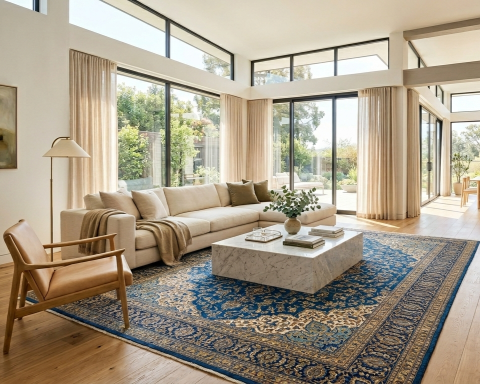
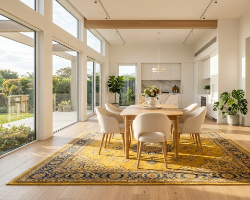
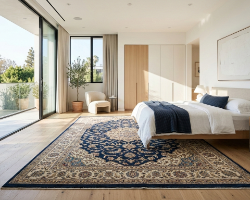



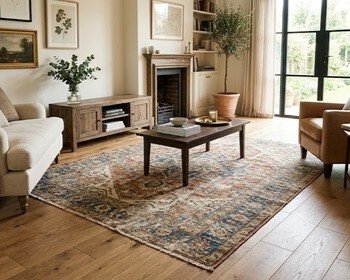
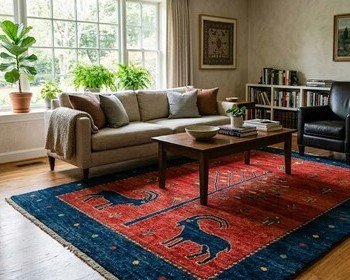
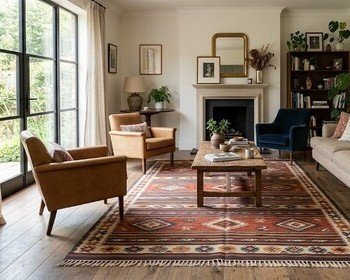
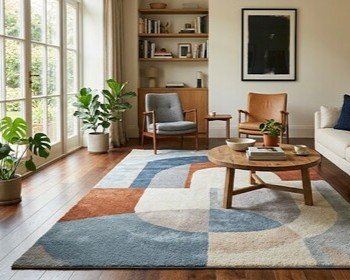



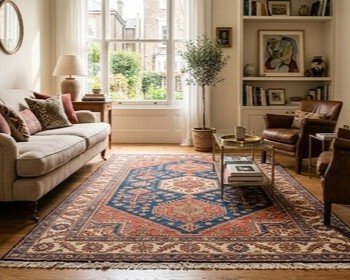
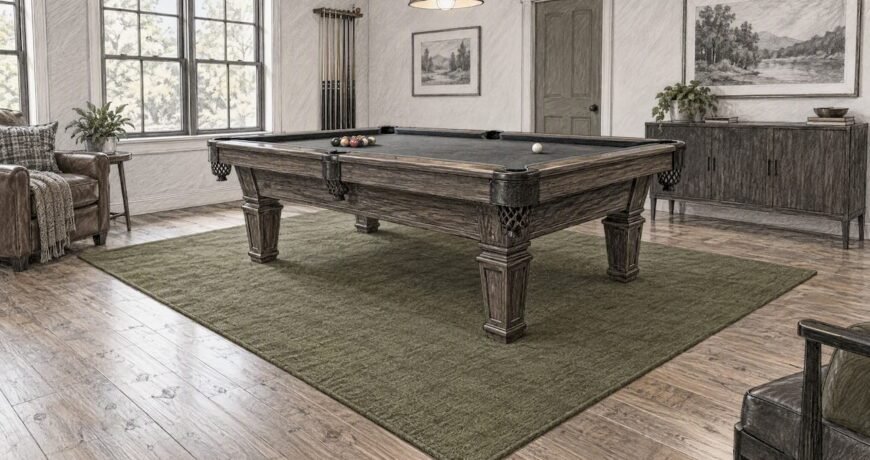
Yes, in most home game rooms a low- to medium-pile area rug with a dense non-slip pad works well: it protects the floor, cuts down on noise, and adds comfort underfoot. The catch is sizing and setup. All four legs need to sit on the rug, and you should re-check the table’s level after the rug settles. We carry several rug styles that fit this exact use case.
TL;DR:
- A rug should extend at least 2 to 3 feet beyond each table leg to prevent tipping and uneven wear, requiring careful measurement and room clearance.
- Low- to medium-pile rugs made of nylon or polypropylene offer durability and stability, reducing the need for frequent re-leveling.
- Use a dense, thin rug pad rated for heavy furniture to prevent shifting and ensure consistent table leveling over time.
- Expect the table to settle and necessitate re-leveling after 2 to 3 weeks of regular use due to rug compression.
- Rug edges should be secured with low-profile binding or tape to prevent tripping hazards while maintaining a clean, safe playing environment.
Table of Contents
- How big should the rug be for 7, 8, and 9 foot tables?
- Which fibers and pile heights work best under a pool table?
- Which rug pads and non-slip solutions work under a pool table?
- How do you place the rug and re-level the table afterward?
- How do you handle tripping hazards and rug edges?
- How do you maintain a rug under heavy game room use?
- What design choices work for a game room rug?
- Our take on choosing a game room rug
- Where to shop for a pool table rug that fits
- FAQ
- Sources
How big should the rug be for 7, 8, and 9 foot tables?
Getting the size right matters more than the rug itself. A rug that’s too small leaves legs hanging off the edge, which invites tipping and uneven wear. A good rule of thumb is to add 2 to 3 feet of rug on each side of the table’s footprint, not the playing surface alone, since the legs sit outside the rails.
For a 7-foot table, which typically measures around 4 feet by 8 feet including the frame, aim for a rug large enough to extend a couple of feet beyond the legs on every side, such as an 8 by 10 to 9 by 12 range. An 8-foot table, closer to 4.5 by 9 feet, usually requires a proportionally larger rug. A 9-foot table, the standard size for tournament play, generally needs an even bigger rug to accommodate players comfortably.
Room size still comes first. Professional installers at Brunswick Billiards recommend treating room dimensions as the primary constraint, since a rug should complement a space that already has the clearance for a full cue stroke, not try to make up for a room that’s too tight. Before you buy a rug, confirm your cues have room to extend on every side.
The tape-out method takes the guesswork out of this:
- Measure the table’s full footprint, including where the legs land, not just the playing surface.
- Mark that footprint on the floor with painter’s tape.
- Add 2 to 3 feet of tape around the perimeter to represent the rug’s edge.
- Walk the room with a cue to check that your stroke clears the taped boundary.
- Match the taped area to the nearest standard rug size, rounding up rather than down.
Our rug size chart can help you translate those tape-out measurements into a standard size before you shop.
Which fibers and pile heights work best under a pool table?
Pile height has a direct effect on table stability. A thick shag rug might feel plush underfoot, but it lets the legs sink unevenly, which throws off the level almost immediately. Low- to medium-pile rugs keep the table’s footing consistent and are far easier to re-level if needed.
Material choice matters just as much as pile height. According to research on pool table rugs, nylon and polypropylene are both strong choices for durability and stain resistance, while wool holds up well structurally but demands more upkeep and costs more.
- Nylon resists stains and holds up under heavy foot traffic, making it a solid pick for a room that sees regular use.
- Polypropylene costs less and resists moisture, which helps in game rooms where drinks are common.
- Wool feels warmer and wears well over time, though it needs more careful cleaning and a bigger budget.
- Flatwoven and rubber-backed rugs add grip and tend to compress less than piled options, which keeps leg leveling more consistent.
Washable rugs are worth a look if your game room sees regular food and drink traffic. They let you deal with spills without worrying about permanent stains, and several of our washable styles use the same low-pile construction recommended for stability. For color and pattern, medium tones with some texture or a busy design hide scuffs, dust, and the occasional drink spill far better than a solid light color.
Which rug pads and non-slip solutions work under a pool table?
A rug pad isn’t optional here. Without one, the rug shifts every time someone leans on the table or walks past it, and that movement eventually throws off the level. The type of pad matters as much as having one at all.
Guidance on billiard room flooring recommends a thin, dense pad rather than a thick cushy one, since a table’s weight compresses soft padding unevenly over time and forces repeated re-leveling. A dense felt-rubber combo pad resists that compression better than foam.
- Choose a thin, dense felt and rubber pad over anything marketed as extra plush or cushioned.
- Use PVC or rubber grip pads under rugs that see a lot of foot traffic around the table.
- Rugs with integrated non-slip backing can skip a separate pad, as long as the backing is rated for heavy furniture.
- Add felt furniture pads under the table’s own feet on hardwood floors for an extra layer of scratch protection.
If you need to trim a pad to fit, cut it an inch smaller than the rug on all sides so no edge peeks out from under the rug.
Pro Tip: Buy the rug pad after you’ve settled on a rug size, not before, since pad dimensions vary and a slightly undersized pad defeats the purpose.
How do you place the rug and re-level the table afterward?
Sequence matters here. Laying the rug after the table is in place means dragging a few hundred pounds across your floor, which risks scratches and makes it nearly impossible to get the pad flat. Do it in this order instead:
- Clean and clear the floor completely, including any old padding or adhesive residue.
- Lay the rug pad first, then the rug on top, smoothing out any wrinkles or bunching.
- Move the table into position so all four legs land on the rug, not just near its edge.
- Perform an initial leveling check once the table is fully assembled and resting on the rug.
Expect to revisit that leveling. Billiard Beast’s guidance on pool table rugs notes that rugs typically compress and settle within 2 to 3 weeks of regular use, so the level you set on day one often shifts slightly as the pad and fibers compact under the legs.
When you re-check, measure level across both diagonals of the playing surface, not just side to side, and adjust the leg levelers in small increments. It helps to note your original leg heights before you start, so you have a reference point if something needs to go back.
If your table has a slate bed or you’re not confident working with leg levelers, hiring a professional installer is worth the cost. A slightly uneven slate bed affects every shot on the table, and a pro can usually spot an issue in minutes that would take you hours to diagnose.
How do you handle tripping hazards and rug edges?
Rug edges around a pool table create a real tripping risk, especially when players step back for a shot without looking down. Player communities frequently report edge-tripping as one of the most common complaints after installing a rug, and the fixes tend to fall into two camps.
- A large rug that extends well past the typical stance area keeps feet on fabric at all times, which eliminates most trip points but costs more and is harder to size correctly.
- A smaller rug or runner that stops short of where players stand avoids the edge problem near the table but leaves a visible boundary that some still catch a toe on.
- Low-profile binding or double-sided carpet tape along the rug’s edge keeps it from curling up over time.
- Foam transition strips work well where a rug meets bare flooring in a doorway or walkway.
- Carpet tiles or rubber tiles make sense in garages or multi-use rooms where you want flooring protection without committing to one large rug.
Our guide on stopping rug slipping covers additional backing and tape options if edges continue to lift.
How do you maintain a rug under heavy game room use?
A pool table rug takes more abuse than a typical living room rug, between foot traffic, dropped cues, and the occasional spilled drink. A simple routine keeps it looking decent for years instead of months.
- Vacuum weekly to keep dust and grit from working into the fibers and wearing them down faster.
- Blot spills immediately with a clean cloth instead of rubbing, which pushes liquid deeper into the pile.
- Follow the manufacturer’s cleaning instructions for your specific fiber, since wool and synthetic blends respond differently to the same cleaning products.
- Call in a professional cleaner for a deep clean on high-traffic rugs, particularly natural fiber ones that can’t go in a washing machine.
Washable rugs cut down on both the cost and hassle of keeping a game room rug clean, since many can go straight into a standard washing machine. For stains that need fast action, our red wine stain guide walks through the blotting and treatment steps, and our Persian rug care guide covers natural fiber maintenance in more detail. A professional carpet cleaning service can also handle deep cleans on a schedule if you’d rather not do it yourself.
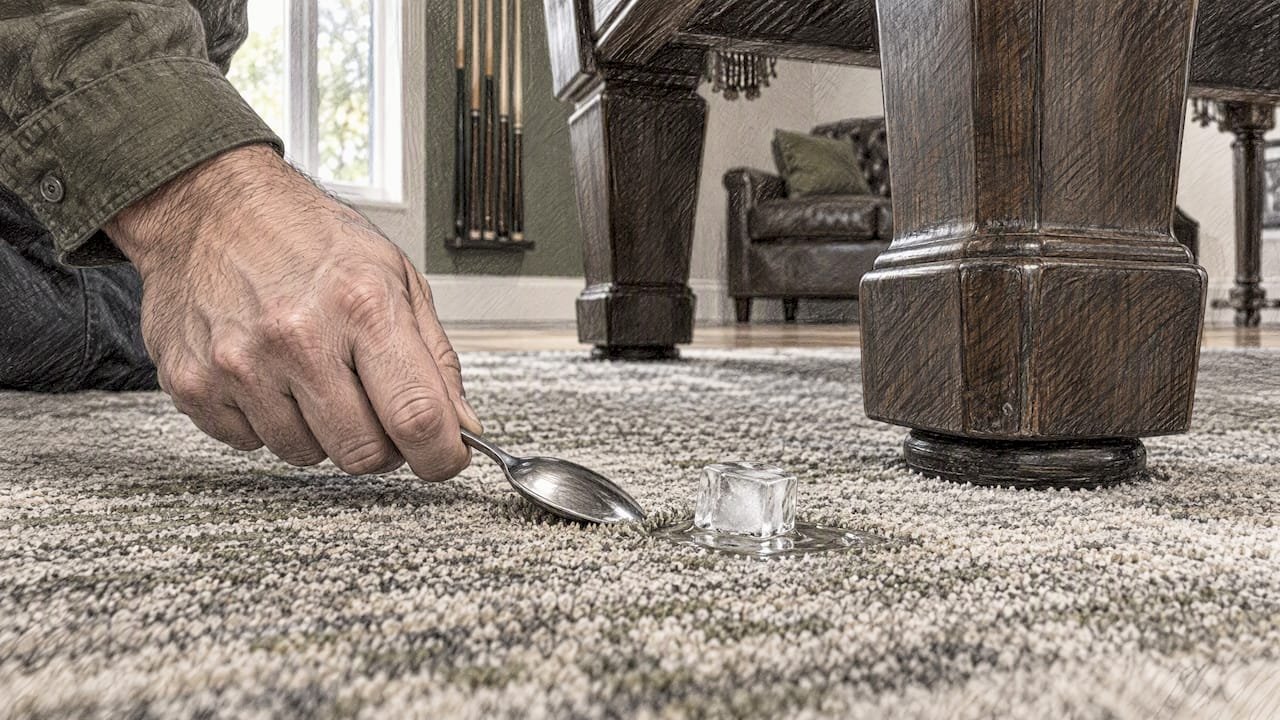
Pro Tip: If you notice dents where the table legs sit, rotate the rug occasionally and use a spoon or ice cube to help the fibers spring back when you do move the table.
What design choices work for a game room rug?
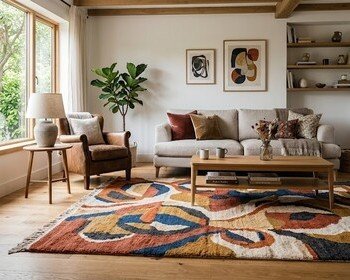
Function and style don’t have to compete here. Medium-toned patterns, geometrics, or anything with some visual texture hide scuffs, dust, and wear far better than a solid pale color, which shows every mark within weeks.
- A single large area rug under the entire table creates a clean, unified look and keeps feet off bare floor at every angle.
- Runners work well for connecting a game room to an adjacent hallway or seating area without covering the whole floor.
- Flatwoven synthetics hold color and shape under heavy use, while low-pile patterned wool blends offer a step up in look without sacrificing stability.
- Order a few swatches and tape out your candidate sizes on the floor before committing, since color and scale often read differently in a room than they do on a screen.
Our take on choosing a game room rug
Our collection spans traditional, handmade, and natural fiber styles alongside washable options built for rooms that see spills and heavy foot traffic. We offer free shipping on orders over a certain amount, and returns are accepted within 30 days if a size or texture doesn’t work out once it’s on the floor. Our own buying advice echoes what we’ve covered above: measure twice using the tape-out method, lean toward low-pile with a dense pad underneath, and consider a washable fiber if your game room doubles as a hangout spot.
— Kian
Where to shop for a pool table rug that fits
Picking the right category makes this a lot faster than scrolling through everything at once. Our runner rugs work well if your game room connects to a hallway or open living space and you want to guide foot traffic without covering the whole floor. Our traditional rugs collection includes plenty of low- to medium-pile options with patterns that hide wear, which suits a table that gets used often.

If spills are a bigger concern than pattern, our washable rug alternatives are worth a look, since several styles go straight into a washing machine once the game room gets messy. Our natural rugs category covers wool and other natural fibers for anyone prioritizing feel and durability over easy cleaning.
- Runner rugs: best for connecting rooms and guiding traffic around the table.
- Traditional rugs: patterned, low-pile options that hide wear well.
- Washable rugs: practical for rooms with frequent food or drink traffic.
- Natural rugs: wool and natural fiber options for durability and feel.
We offer free shipping on orders over a certain amount, and you have 30 days to send a rug back if it’s not the right fit. Browse the full collection at Rugs Online Market to compare sizes side by side.
FAQ
Should you put an area rug under a pool table?
Yes, a low- to medium-pile area rug with a dense non-slip pad protects hard flooring, reduces noise, and adds comfort, as long as all four legs sit fully on the rug. Avoid thick plush rugs, since they let the table settle unevenly and force repeated re-leveling.
What size rug under a 7 foot pool table?
A 7-foot table typically has a footprint of about 4 by 8 feet including the frame, so a rug in the 8 by 10 or 9 by 12 range usually works. The goal is 2 to 3 feet of rug extending past each side of the table’s legs.
How big should a rug be underneath a table?
A good rule of thumb is to add 2 to 3 feet of rug around the table’s full footprint on every side, not just the playing surface. Use painter’s tape to mark the footprint first, then confirm your cues still have room to extend fully before choosing a final size.
What is the best rug for a pool deck or game room?
Low- to medium-pile rugs made from nylon or polypropylene tend to perform best, since both resist stains and hold up under regular foot traffic. Wool is a durable alternative with a warmer feel, though it costs more and needs more careful cleaning.
How often should you re-level a pool table after adding a rug?
Rugs typically compress and settle within 2 to 3 weeks of regular use, so plan to re-check the table’s level around that point. Measure across both diagonals of the playing surface and adjust the leg levelers in small increments rather than all at once.
Sources
- Pool Table Room Size Guide: room size requirements
- Should you put a rug under a pool table?
- Pool Table Rug – Great Research
- Billiard room flooring guidance
