

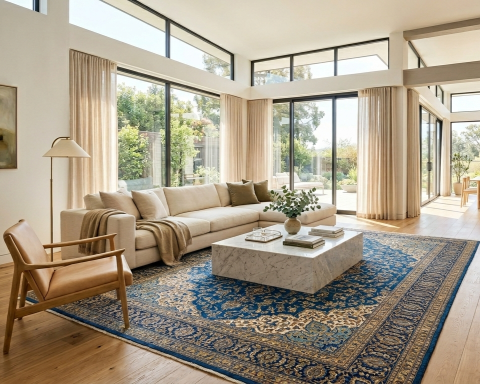
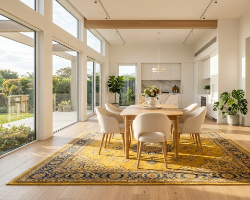
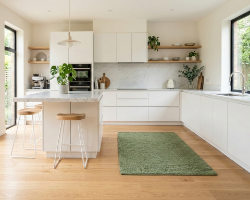
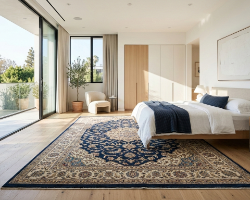
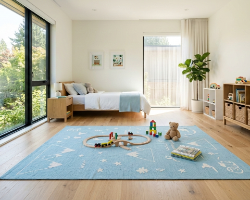
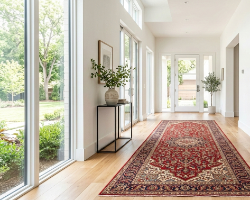
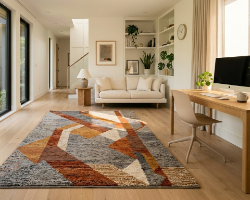
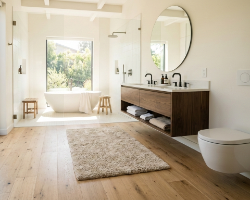
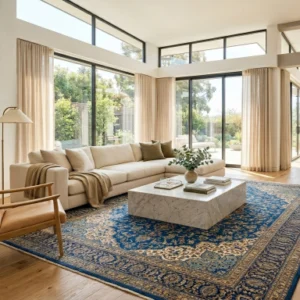
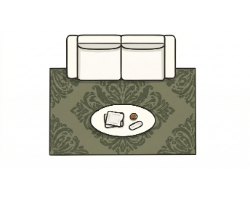
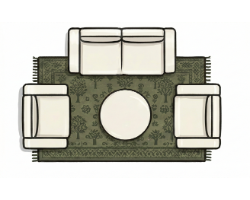
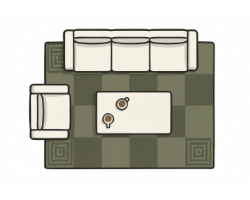
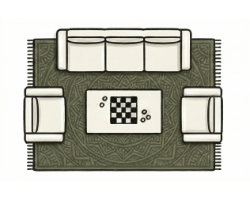







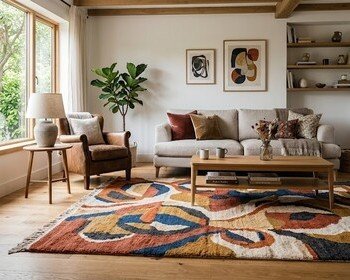
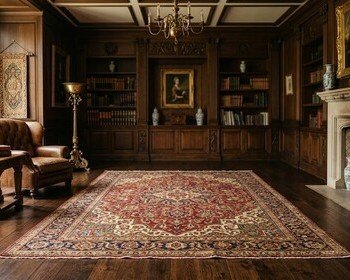
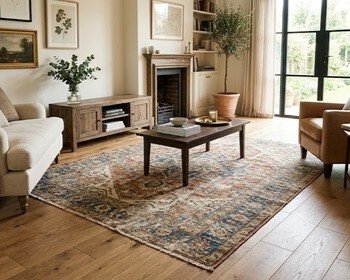
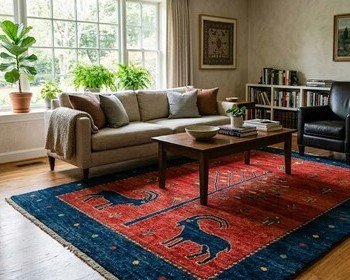
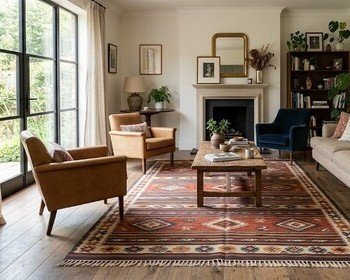
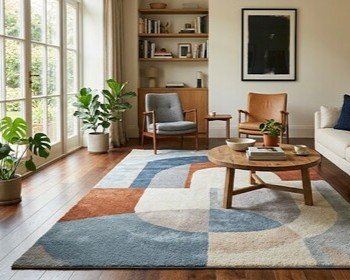
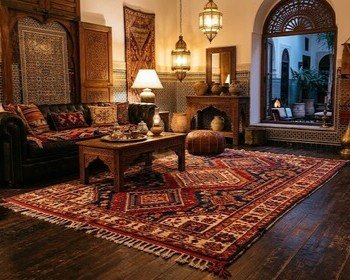
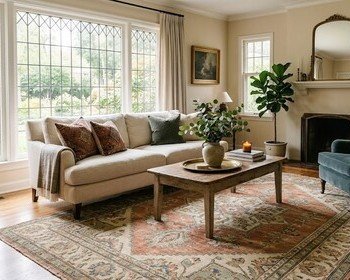
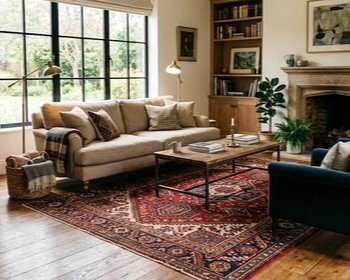
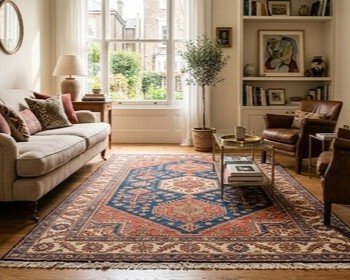
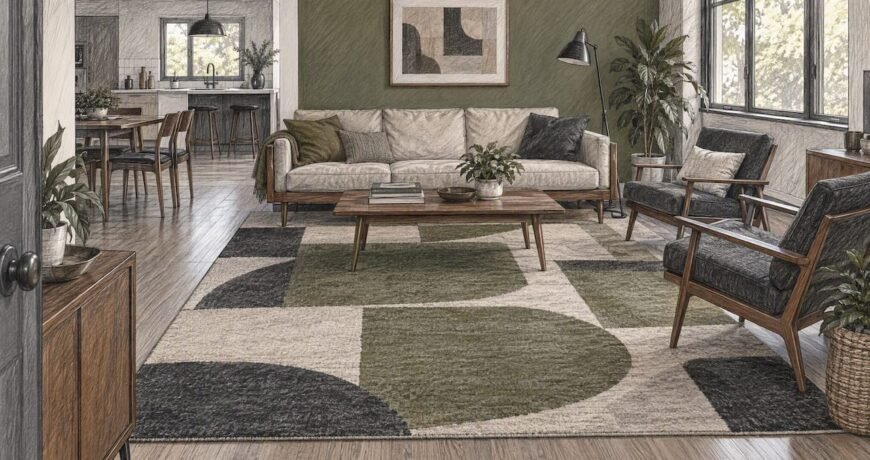
The best place to start is a low-pile wool or low-pile performance rug sized at 8×10 or 9×12 for an oversized, grounded look that fits current mid-century rooms. We carry curated options across both materials, and free shipping and hassle-free returns make it easy to order, test the fit at home, and return the rug if the scale is off.
TL;DR:
- Choose an 8×10 or 9×12 rug with 12 to 24 inches of exposed floor for most living rooms to achieve a balanced, framed look.
- Opt for wool for durability in low-traffic areas or performance fibers like polypropylene if the home experiences heavy traffic, pets, or kids.
- Measure and tape out your selected size before purchasing, and review the seller’s return policies to ensure fit and material suitability.
- Larger rugs with layered textures and earth tones dominate current mid-century styling, emphasizing scale and architecture over mere decoration.
- Standard sizes ship faster and are more readily available, but custom sizes are necessary for irregular or oversized rooms and may require longer lead times.
Table of Contents
- Curated mid-century modern picks by use-case and size
- How to choose the right mid-century modern rug
- Sizing and placement for every room in the house
- Material choices and realistic care expectations
- Mid-century rug styles that feel current in 2026
- Our take on building a mid-century rug collection
- Shop our curated mid-century modern collection
- FAQ
- Sources
Curated mid-century modern picks by use-case and size
Picking the right rug starts with matching the category to how you actually use the room, not just how it looks in a photo. Here are the five categories we see mid-century shoppers reach for most, organized by what each one solves.
- Best performance rug for busy homes: polypropylene and other performance fibers in the same standard sizes, built to resist stains and handle foot traffic without the upkeep wool demands; priced lower than wool as a rule. These sit well in our Traditional Rugs category alongside pattern-forward options.
- Best statement patterned rug: bold geometric or atomic-era motifs sized to anchor a seating group, usually 8×10 and up, meant to be the first thing a guest notices when they walk in.
- Best neutral textured base rug for layering: a larger, plain-weave rug in a muted earth tone, meant to sit underneath a smaller patterned piece for a collected, vintage-inspired layout.
- Runner and round picks for hallways and dining nooks: narrower widths for corridors and round shapes for breakfast nooks or circular dining tables, both sized to the specific footprint rather than the room overall.
Each category spans multiple sizes and constructions, so what you find under Handmade Rugs ranges from hand-knotted wool pieces with visible texture to flatter weaves that read more minimal. Our best living room rugs roundup groups several of these by room type if you want a shorter list to start from.
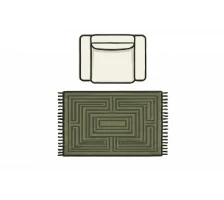
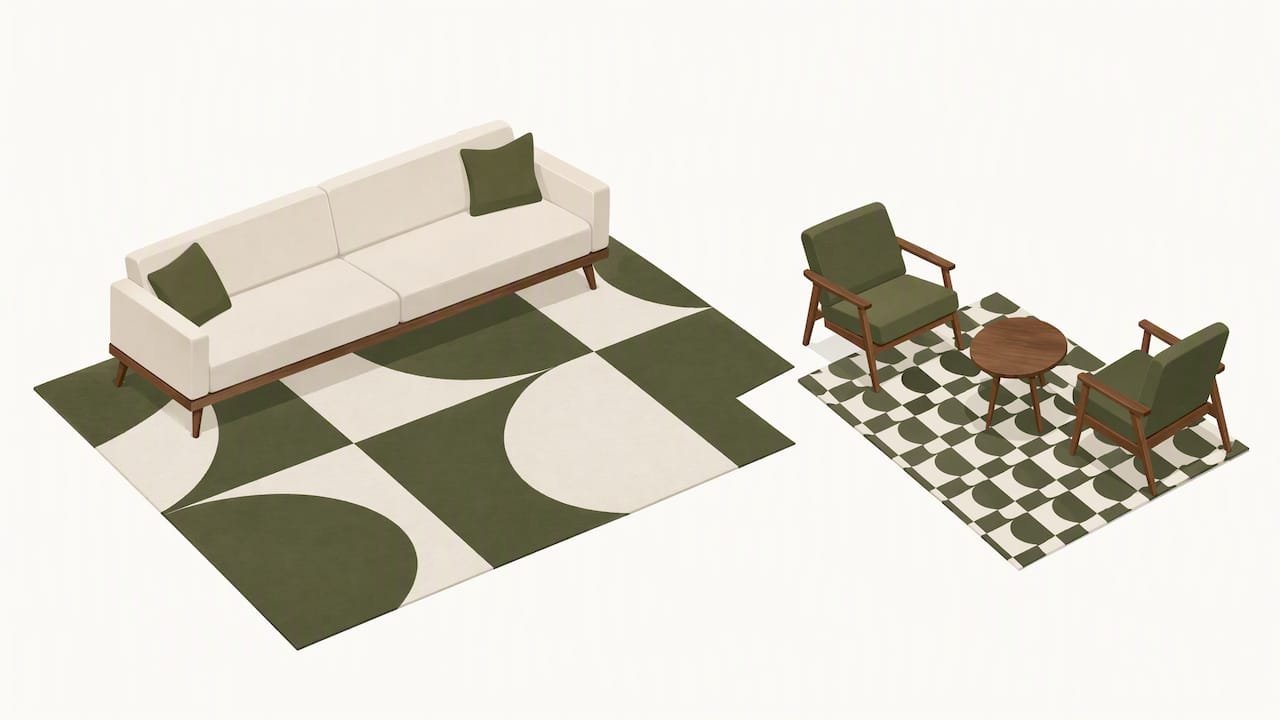
Pro Tip: Match pattern scale to your furniture: a low, wide mid-century sofa reads best against a large-scale geometric print, while smaller accent chairs pair better with a tighter repeat so the pattern does not compete with the furniture’s own lines.
How to choose the right mid-century modern rug
A rug decision usually comes down to five things: size, material, pile height, budget, and whether the seller’s policies protect you if something does not work out. Get these right and the rug will look intentional instead of accidental.
- Measure the room and tape it out. Use painter’s tape on the floor to outline your candidate size before ordering. This single step prevents the most common rug mistake: buying something too small for the space.
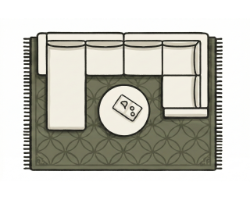
- Leave 12 to 24 inches of bare floor around the perimeter in a living room for a framed look, a range design guidance backs consistently across standard room sizes.
- Match material to traffic. Wool handles low to medium traffic with natural stain resistance and long-term durability, while polypropylene and other performance fibers suit high-traffic households with kids or pets and need less maintenance.
- Choose low pile for mid-century furniture. Low pile keeps the clean, architectural lines that define the style and makes vacuuming and furniture placement easier than a plush, high pile would.
- Decide where to spend and where to save. Material and size are where quality shows up most; a machine-made pattern in the right size and fiber often outperforms a hand-knotted rug that is too small for the room.
Our 2026 design coverage frames rugs as the room’s foundation rather than an accessory, favoring oversized formats, layering, and texture over smaller, purely decorative pieces, according to area rug trend reporting.
Before you check out, run through a short list: confirm the exact dimensions against your tape-out, check the fiber against your household’s traffic level, review the seller’s return window and shipping timeline, and decide upfront if you plan to layer a smaller rug on top later. Layering changes the base rug you need, since a base rug for layering can run larger and more neutral than a rug meant to stand alone.
Sizing and placement for every room in the house
Standard sizes exist because they work for most floor plans, and sizing up is almost always the safer call when you are between two options. The four sizes worth knowing are 5×7, 6×9, 8×10, and 9×12, with the larger two fitting most living rooms better than people expect.
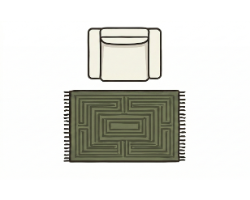
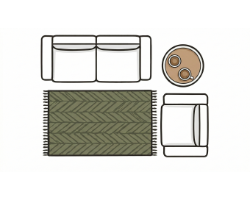
- Living rooms: choose 8×10 or 9×12, and keep furniture placement consistent, either all legs on the rug or just the front legs on the rug across the whole seating group, never a mix of both within one arrangement.
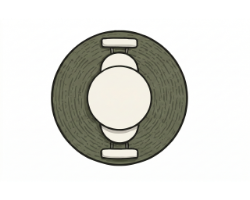
- Dining rooms: size the rug to extend about 24 inches beyond the table on every side so chairs stay on the rug even when pulled back from the table.
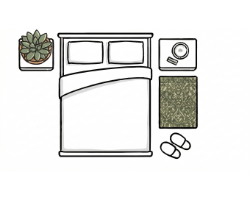
- Bedrooms: a rug under the bottom two-thirds of the bed, extending past the sides, reads more intentional than a small rug centered under just the nightstands.
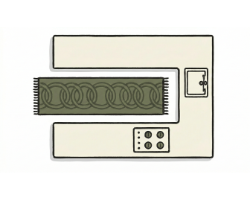
- Hallways and runners: leave a few inches of floor visible on each side of a runner rather than stretching it edge to edge, and measure the narrowest point of the hallway before ordering.
- Custom sizes: oversized or irregular rooms sometimes need custom dimensions, and custom sizing typically carries a longer lead time than a standard stock size.
| Room | Recommended size | Placement rule |
|---|---|---|
| Living room | 8×10 or 9×12 | 12 to 24 inches of floor visible around the edge |
| Dining room | Table size plus 24 inches per side | Chairs stay on the rug when pulled out |
| Bedroom | 6×9 or 9×12 | Rug extends under the lower two-thirds of the bed |
| Hallway (runner) | Width minus a few inches on each side | A few inches of floor visible along both edges |
If you are torn between two standard sizes, our guide on tape-out sizing for 5×7 versus 8×10 walks through the exact measuring steps, and our broader sizing and placement guide covers less common room shapes. A rug size chart is also worth bookmarking for quick reference while you shop.
Material choices and realistic care expectations
The material you choose determines how the rug looks in five years, not just how it looks on delivery day. Wool, performance fibers, and natural textures each solve a different problem.
- Wool offers natural stain resistance and holds up well over years of use, making it the better long-term choice for a living room that sees moderate traffic and where you want the rug to still look sharp in a decade.
- Polypropylene and other performance fibers cost less upfront and shrug off spills, which makes them the practical pick for homes with young kids, pets, or a high-traffic entry into the living room; many performance rugs are also machine washable.
- Jute and sisal bring strong mid-century texture and a warm, organic feel, but they stain more easily and are harder to clean, so they work best as a layered base rug rather than the sole rug in a high-use room.
- Cleaning routine: vacuum weekly, blot spills immediately rather than rubbing them in, and call a professional cleaner for wool rugs once every year or two depending on traffic.
- Where to browse: wool and natural-fiber options live in our Natural rugs category, while easier-care picks sit across our broader style collections.
Pro Tip: A low-pile or flatweave construction, regardless of fiber, gives you the cleanest mid-century silhouette and the easiest maintenance, since there is less pile to trap dirt or flatten under furniture legs.
Color and texture also affect how a room feels day to day. Our guide on choosing rug size and color breaks down how a darker, textured rug can make a large room feel more grounded, while a lighter neutral opens up a smaller space.
Mid-century rug styles that feel current in 2026
Classic mid-century patterns, geometric repeats, and organic curved motifs still define the look, but 2026 rooms wear them differently than a decade ago. Earth tones (rust, olive, mustard, warm brown) paired with one strategic accent color remain the dominant palette, now set against larger, more tactile rugs than before.
- Go oversized. Current design coverage favors rugs that cover most of the floor rather than floating in the center of the room, with oversized formats and layering named as defining traits of the look.
- Layer textures. A large neutral, textured base rug topped with a smaller patterned layer gives you the vintage, collected feel without committing the whole floor to one bold print.
- Choose statement or neutral based on your furniture. A patterned rug works best with restrained, simple furniture; a neutral textured rug gives you room to add pattern through pillows or art instead.
- Think of the rug as architecture, not decoration. The style’s roots treat rugs as grounding, architectural planes within a room rather than an afterthought, which is part of why scale matters so much to the finished look.
A low-profile sofa paired with an oversized neutral rug lets the furniture’s lines do the talking, while a patterned statement rug works better when the rest of the furniture stays simple and low-contrast. If you are also hanging art above the sofa, keeping the art’s scale proportional to the rug below it, rather than to the wall alone, keeps the whole wall from looking either cramped or sparse, a principle covered well in this wall art sizing guide.
Our take on building a mid-century rug collection
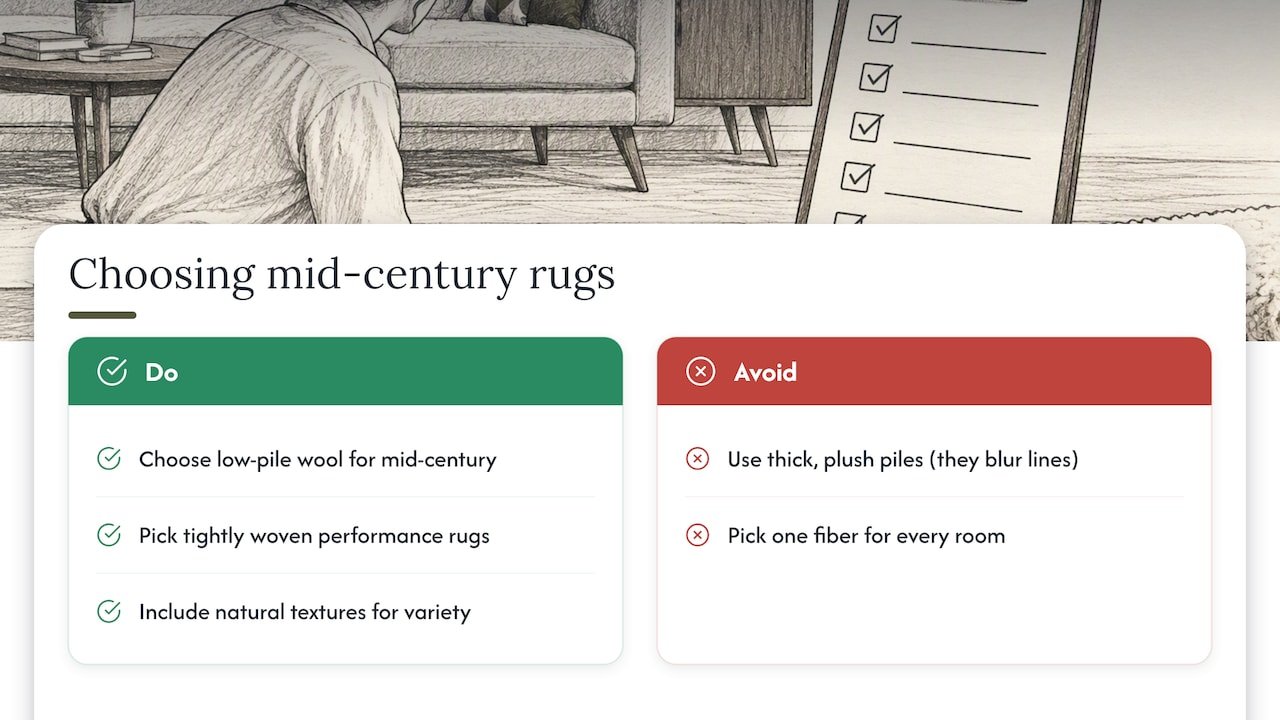
A good mid-century rug should look like it was chosen on purpose, which is why we built out our selection across wool, performance fibers, and natural textures rather than picking one material and calling it done. Different rooms and households need different trade-offs, and we would rather carry options for both than push everyone toward the same fiber.
We lean toward low-pile wool and tightly woven performance rugs for the mid-century category specifically, since the style depends on clean lines that a thick, plush pile tends to blur.
— Kian
Shop our curated mid-century modern collection
Measuring and tape-out take ten minutes and save you a return later, so start there before you browse. Once you know your size, our Traditional Rugs category covers geometric and pattern-forward mid-century picks, while Handmade Rugs and Natural rugs cover wool and textured bases for layering.
- Measure your room and tape out your top size choice before ordering.
- Pick wool for longevity or a performance fiber for easy care, based on your household’s traffic.
- Current shipping and return policies are available on our website, allowing you to return a rug that does not fit the space within the seller’s return window.
FAQ
What size rug works best for a mid-century modern living room?
Most living rooms look best with an 8×10 or 9×12 rug, leaving about 12 to 24 inches of bare floor around the perimeter for a framed look, according to sizing guidance from Emily Henderson’s team. Sizing up rather than down is usually the safer choice when a room falls between two standard sizes.
Is wool or polypropylene better for a mid-century rug?
Wool offers natural stain resistance and holds up longer, making it the better fit for lower-traffic living rooms where you want the rug to last for years, while polypropylene and other performance fibers cost less and need less maintenance in homes with kids or pets. Choose based on how much daily wear the rug will actually see rather than looks alone.
How can I tell if a mid-century rug is authentic vintage or a reproduction?
Authentic vintage pieces tend to show irregularities in knotting and slight variations in color from natural dyes, while reproductions are typically machine-made with a more uniform, repeating pattern. Asking a seller directly about construction method, knot density, and country of origin before buying is the most reliable way to confirm which you are getting.
What questions should I ask before buying a mid-century rug online?
Ask about exact dimensions, fiber content, construction method (hand-knotted versus machine-made), and the seller’s return window and shipping timeline before you commit. A seller unwilling to confirm these details in writing is a reasonable red flag to walk away from.
How long does it take to receive a custom-sized mid-century rug?
Custom sizes generally take longer to produce and ship than standard stock sizes like 8×10 or 9×12, since custom orders require additional production time. Standard sizes ship faster because they are already in stock, so choosing a standard size is the quicker route when timing matters.
Sources
- Choosing THE RIGHT Rug Size For Every Room (All Of Our Tips And Tricks) – Emily Henderson
- Wool rugs vs synthetic rugs — living rooms – Nordic Design Blog
- Area Rug living room guide 2026: sizes, styles & expert tips – TheRoomsArt
